
ʻĀ
Cocos Booby
Sula brewsteri
A newly recognized booby from the eastern Pacific that has nested on Hōlanikū for years, long known as Brewster's Booby.
| Status in Hawaiʻi | Native; nesting since 1998 |
|---|---|
| On Hōlanikū | Nests in small numbers |
| IUCN Red List | Not yet assessed as a separate species |

Species Information
The ʻā, or Cocos Booby (Sula brewsteri), is a large booby (family Sulidae) of the eastern and central Pacific. It was first described as a separate species, Brewster's Booby, in 1888, then treated as a subspecies of the Brown Booby from 1944. In 2024 the American Ornithological Society recognized it as its own species again and renamed it for Cocos Island, Costa Rica, where it nests.
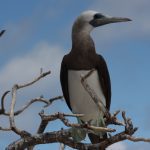
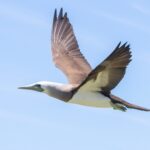
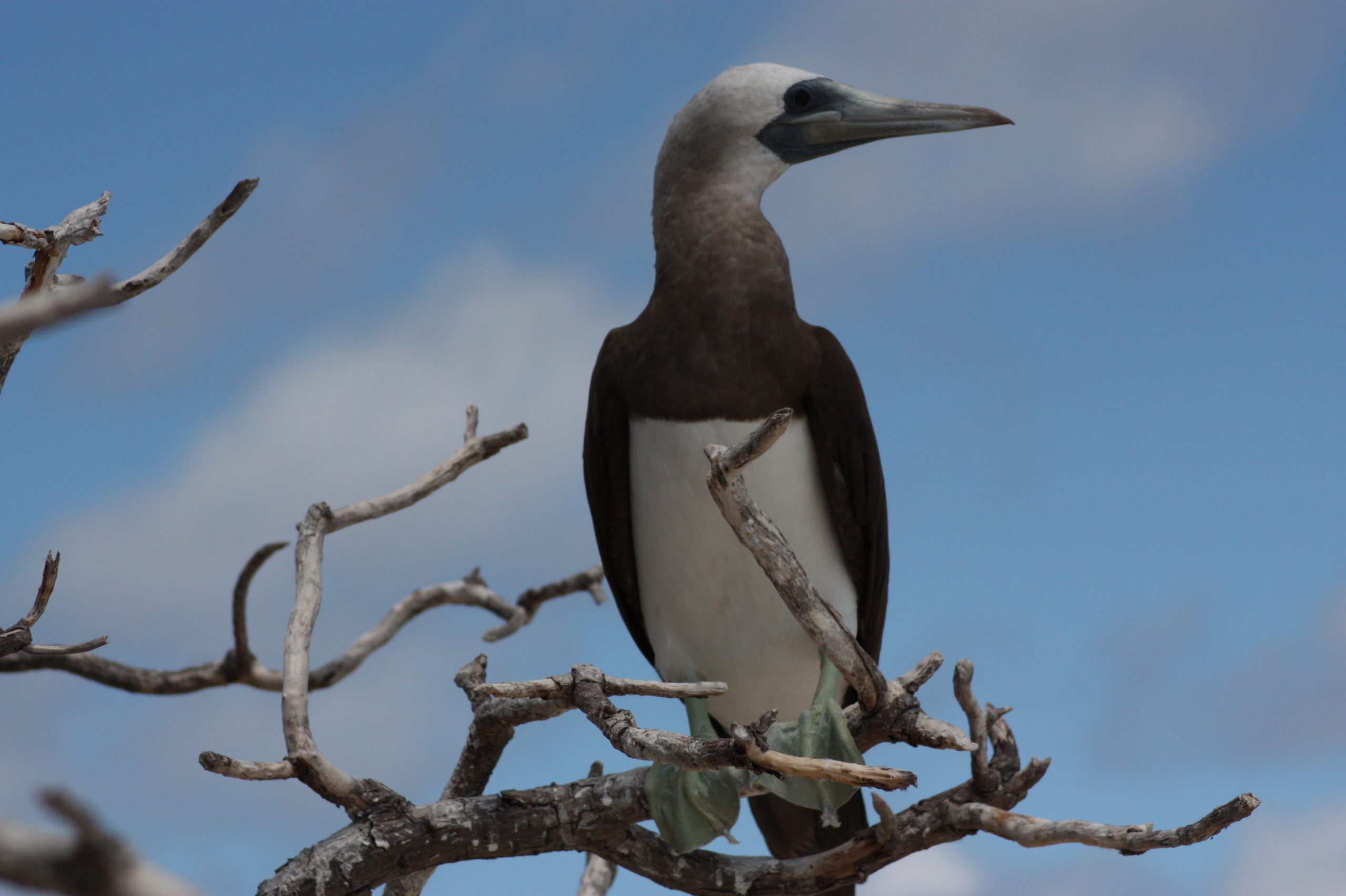
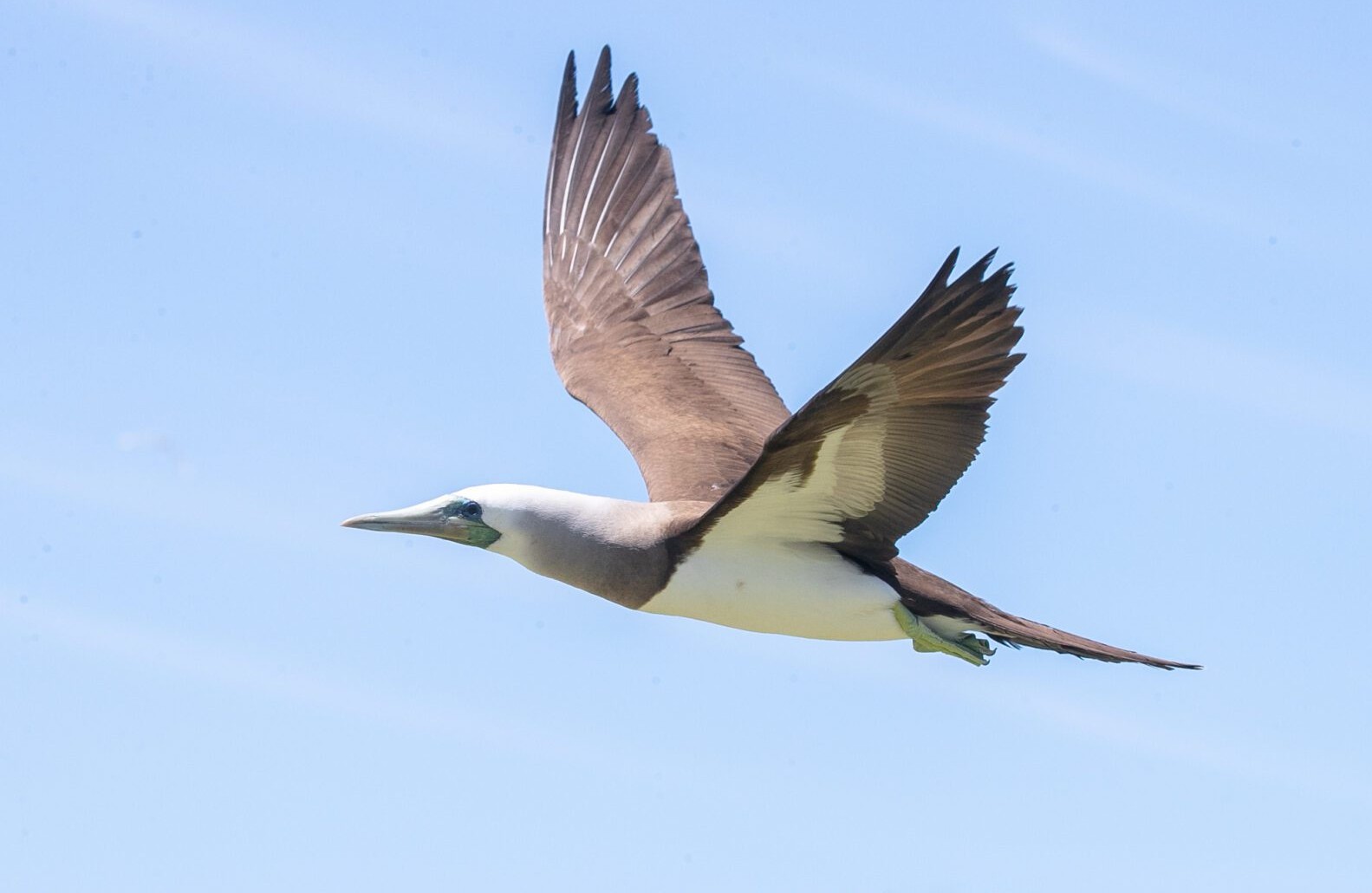
Cocos Boobies look much like Brown Boobies: dark chocolate brown above, with a sharp line between the brown chest and the white belly. Adult males are easy to pick out by their frosty white to pale gray-brown head and neck and their gray bill. Females are harder to tell from female Brown Boobies; look for a slightly paler forehead, a darker eye and a bill that is partly pinkish. Three subspecies are named, and the amount of white on the male's head differs among them.
The Hawaiian name ʻā is shared by all the boobies that nest in Hawaiʻi.
Foraging & Nesting
Like Brown Boobies, Cocos Boobies plunge-dive from the air to catch fish and squid, and they usually feed closer to shore than Masked or Red-footed Boobies.
They nest in colonies on islands, usually on the ground, and both parents share incubation and chick care. Where Cocos and Brown Boobies nest together, birds almost always pair with their own kind. On Wake Island, male and female Cocos Boobies paired with each other even inside large Brown Booby colonies. Mixed pairs have been found mainly where a male Cocos Booby had no female Cocos Booby to pair with.
Distribution & Abundance
Cocos Boobies nest on islands in the Gulf of California and off western Mexico, Central America and Colombia, including Clipperton, Socorro and Cocos Island. Since 2017 a few have also nested in the Channel Islands of California.
The species is spreading west across the Pacific. By 2023, at least 65 males and 53 females had been recorded on 20 islands in the central and western Pacific. In Hawaiʻi, nests have been found on Laysan (1998), Lisianski (2000), Midway (2020, a male paired with a Brown Booby) and Moku Manu off Oʻahu (2021). In 2021 Moku Mana off Maui held 12 Cocos Booby pairs.
Conservation Actions
Because it was split so recently, the Cocos Booby has not yet been assessed on its own for the IUCN Red List. The Brown Booby, which included it until 2024, is listed as Least Concern.
Cocos Boobies benefit from the same work that protects other ground-nesting seabirds in Hawaiʻi: keeping islands free of rats and other introduced predators, removing invasive plants such as golden crownbeard (Verbesina encelioides) from nesting areas and continuing regular surveys. Photos of Cocos Boobies, especially of banded birds and of females, help researchers follow the species as it spreads west.
Current Threats
In Hawaiʻi most Cocos Boobies nest on low islands and islets, where storms and rising seas can wash over nests. Invasive plants can cover open nesting ground, and boobies can be caught in fishing line or marine debris. Because so few Cocos Boobies nest in Hawaiʻi, losing even a few nests matters.
On Hōlanikū
Cocos Boobies, then called Brewster's Boobies, have visited and nested on Hōlanikū for years, often perching in dead tree heliotrope at North Point. In 2013, for example, a male paired with a Brown Booby and raised a chick.
In 2025 the crew saw three Cocos Boobies (two males and a female) at North Point on 28 May. On 7 June one was incubating an egg in Booby Acres, the first nest recorded on Hōlanikū since the Cocos Booby became its own species. On 18 June, Cocos, Brown, Masked, Nazca and Red-footed Boobies were all seen in one place at the same time. In November 2025 the Winter crew saw a male and female together at North Point and followed one possible Cocos × Brown Booby nest.
Learn more
How to tell Cocos and Brown Boobies apart, and why the American Ornithological Society split them in 2024.
Respecting wildlife
Protected on Hōlanikū
All wildlife on Hōlanikū is protected. The island is the Kure Atoll State Wildlife Sanctuary, inside Papahānaumokuākea Marine National Monument and National Marine Sanctuary, and entry is allowed only by permit. KAC/DLNR work on Hōlanikū is done under the Papahānaumokuākea co-managers' permits, along with other permits where needed, such as NOAA Fisheries permits for monk seal and sea turtle work and federal bird banding permits.
About our photos
Photos and video on this site were taken by permitted crews and partners during research and management work, usually from a distance with zoom or telephoto lenses so animals are not disturbed. Close-ups of animals being handled show permitted work such as banding, tagging, rescue or disentanglement.
Seeing birds elsewhere in Hawaiʻi
- Keep your distance and use binoculars or a telephoto lens instead of walking closer. If a bird changes its behavior, you are too close.
- Stay on trails, never touch, feed or move birds, eggs or chicks, and don't fly drones near nesting areas.
- Keep cats indoors and dogs on a leash, especially near ground-nesting seabirds.
- Disturbing or harming protected birds is against State and federal law. Report injured birds or violations to DLNR Forestry and Wildlife or 643-DLNR.
More seabirds of Hōlanikū
-
 ʻĀ
Masked Booby
-
 ʻĀ
Red-footed Booby
-
 ʻĀ
Brown Booby
-
 ʻAkihikēʻehiʻale
Tristram's Storm-Petrel
-
 ʻAoʻū
Christmas Shearwater
-
 ʻEwaʻewa
Sooty Tern
-
 ʻIwa
Great Frigatebird
-
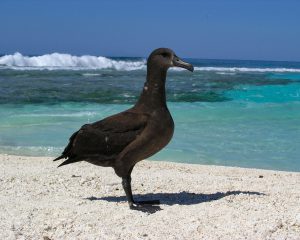 Kaʻupu
Black-footed Albatross
-
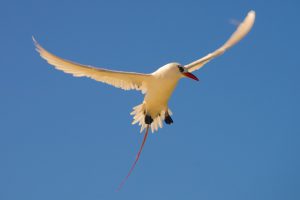 Koaʻe ʻula
Red-tailed Tropicbird
-
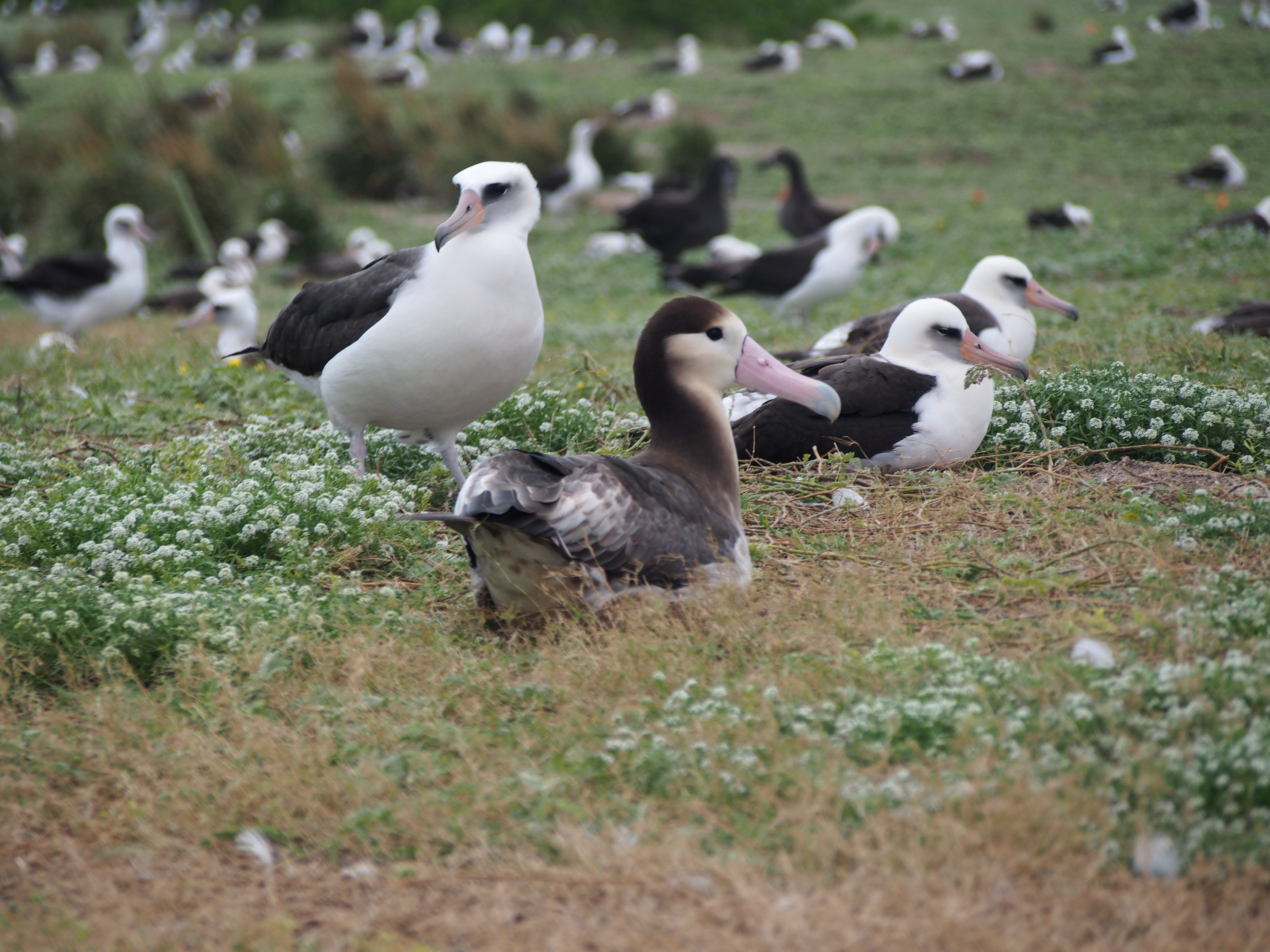 Makalena
Short-tailed Albatross
-
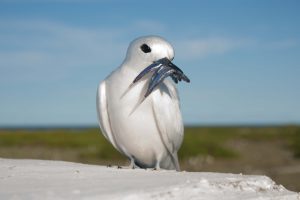 Manu-o-Kū
Blue-billed White-Tern
-
 Mōlī
Laysan Albatross
-
 Noio
Black Noddy
-
 Noio kōhā
Brown Noddy
-
 Nunulu
Bonin Petrel
-
 ʻOu
Bulwer's Petrel
-
 Pākalakala
Gray-backed Tern
-
 ʻUaʻu kani
Wedge-tailed Shearwater
Help protect seabirds and shorebirds on Hōlanikū
KAC/DLNR field crews monitor wildlife and restore habitat year-round. Your support keeps them on the island.