
Koaʻe ʻula
Red-tailed Tropicbird
Phaethon rubricauda
A brilliant white seabird with two long red tail streamers that nests in the shade of naupaka and trees.
| State recognized | Indigenous |
|---|---|
| NatureServe Global Rank | G4G5 Apparently secure/Secure |
| North American Waterbird Conservation Plan | Moderate concern |
| USFWS Bird of Conservation Concern | Yes (2021) |
| IUCN Red List | Least concern |

Species Information
The koaʻe ʻula, or Red-tailed Tropicbird, is a striking white seabird in the tropicbird family (Phaethontidae). Four subspecies are recognized, and one, Phaethon rubricauda roseotincta, nests in Hawaiʻi.
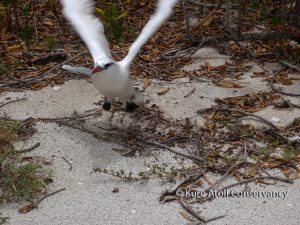
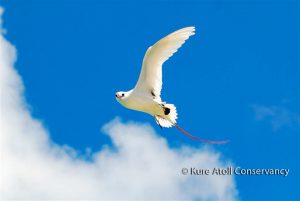
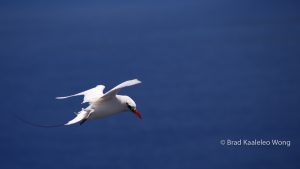
Adults are white, sometimes with a soft pink tint, with a partial black eye ring and short eye line, black flank marks and black shafts on the outer wing feathers. Both sexes have two long, narrow red tail streamers. The large bill is reddish orange, and the legs and feet are very small. Koaʻe ʻula fly with strong wingbeats and glides that carry them long distances.
Foraging & Nesting
Koaʻe ʻula usually feed alone, often far from land, and sometimes follow ships. They catch prey by plunge-diving. In Hawaiʻi they eat mainly flying fish, along with squid, mackerel scad, dolphinfish, sunfish and balloonfish.
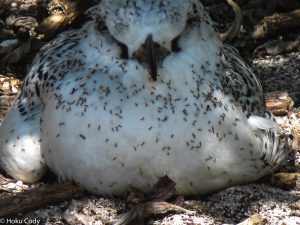
Koaʻe ʻula nest in colonies, and pairs usually stay together for many years. At the start of the nesting season they put on dramatic aerial courtship displays, flying in circles and even backward over the colony. Nests are simple scrapes on the ground, usually under shrubs, trees or rock ledges for shade. In Hawaiʻi they can nest year-round, though most nests are active from February to June. Each pair lays one egg, and both parents incubate it and brood and feed the chick, but there is no care after the chick leaves the nest.
Distribution & Abundance
Koaʻe ʻula nest throughout the Northwestern Hawaiian Islands and at a few sites on the main islands, mostly offshore islets; they may also nest on Niʻihau, Kaʻula, Lānaʻi and Kahoʻolawe. Elsewhere they nest on oceanic islands of the Indian and Pacific Oceans. Outside the nesting season adults live alone far out at sea, and their range is not well known.
Conservation Actions
Koaʻe ʻula are protected under the federal Migratory Bird Treaty Act and State of Hawaiʻi law, and the U.S. Fish and Wildlife Service lists them as a Bird of Conservation Concern. Hawaiʻi's State Wildlife Action Plan calls for removing and controlling predators, controlling invasive plants where they affect nesting sites, protecting refuges, reducing bycatch and improving oil spill response.
Current Threats
Like all ground-nesting seabirds, koaʻe ʻula are vulnerable to rats and cats; all of the Northwestern Hawaiian Islands are now free of both. Invasive plants can crowd out the shaded nesting spots they need, and nests at the edge of the vegetation can be lost to storms and rising seas. At sea they can be caught in fishing gear and harmed by oil spills.
On Hōlanikū
Koaʻe ʻula nest under naupaka and trees all around Hōlanikū, including near the pier and camp. Hōlanikū's koaʻe ʻula are among the best studied in the world: in 1964 and 1965, biologist Robert Fleet followed marked nests on Green Island and found that the nesting season begins in late February with courtship flights, that parents incubate the egg for about six weeks and that chicks leave the island about 12 weeks after hatching. Pairs that lose an egg early often nest again.
Crews today see the first chicks in spring, and by late May many are fully feathered. A rare koaʻe kea (White-tailed Tropicbird) is sometimes seen flying with them over camp.
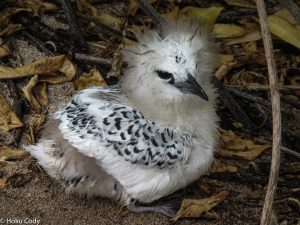
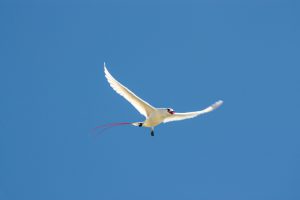
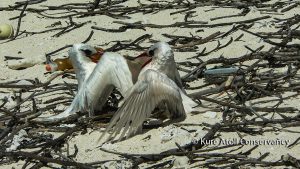
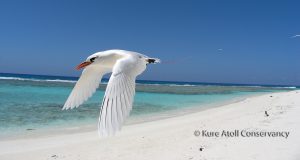
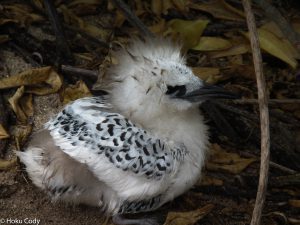
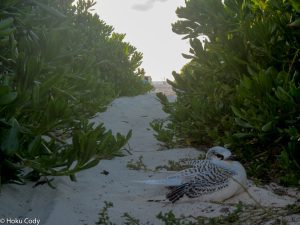
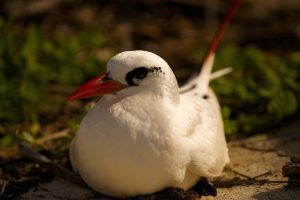
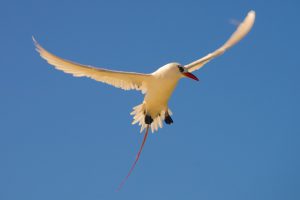

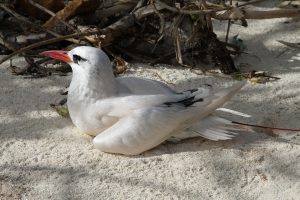
koaʻe ʻula
koaʻe
n. 1. The tropic or boatswain bird, particularly the white-tailed tropic bird (Phaethon lepturus dorotheae), which inhabits cliffs of the high islands. The red-tailed tropic bird (P. rubricauda rothschildi) is koaʻe ʻula; the white is koaʻe kea. Ka pali lele koaʻe, cliff [where] tropic birds fly. (PPN tawake.) 2. A variety of banana. (Neal 249.) Also aʻeaʻe and manini. 3. A taro; varieties are qualified by the colors ʻeleʻele, keʻokeʻo, ʻulaʻula. 4. A snapper, probably Etelis Coruscans, an important commercial fish also known as onaga (Japanese). 5. A variety of sweet potato.
What's in a Name?
A webinar related to the research of the Papahānaumokuākea Native Hawaiian Cultural Working Group tasked with giving Hawaiian names to numerous other bird, plant, limu, and coral species unique to PMNM
More seabirds of Hōlanikū
-
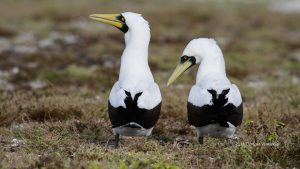 ʻĀ
Masked Booby
-
 ʻĀ
Red-footed Booby
-
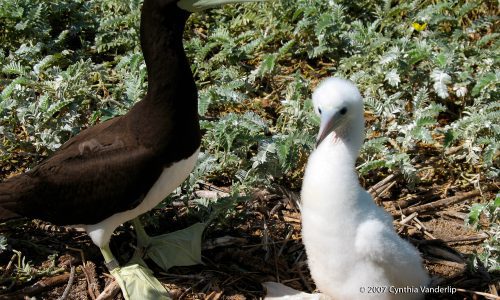 ʻĀ
Brown Booby
-
 ʻAkihikēʻehiʻale
Tristram's Storm-Petrel
-
 ʻAoʻū
Christmas Shearwater
-
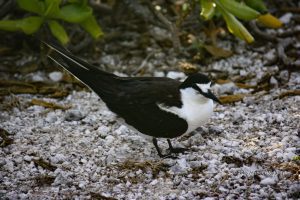 ʻEwaʻewa
Sooty Tern
-
 ʻIwa
Great Frigatebird
-
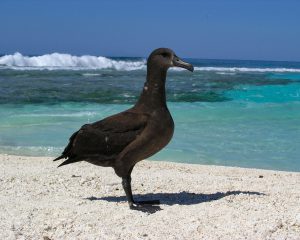 Kaʻupu
Black-footed Albatross
-
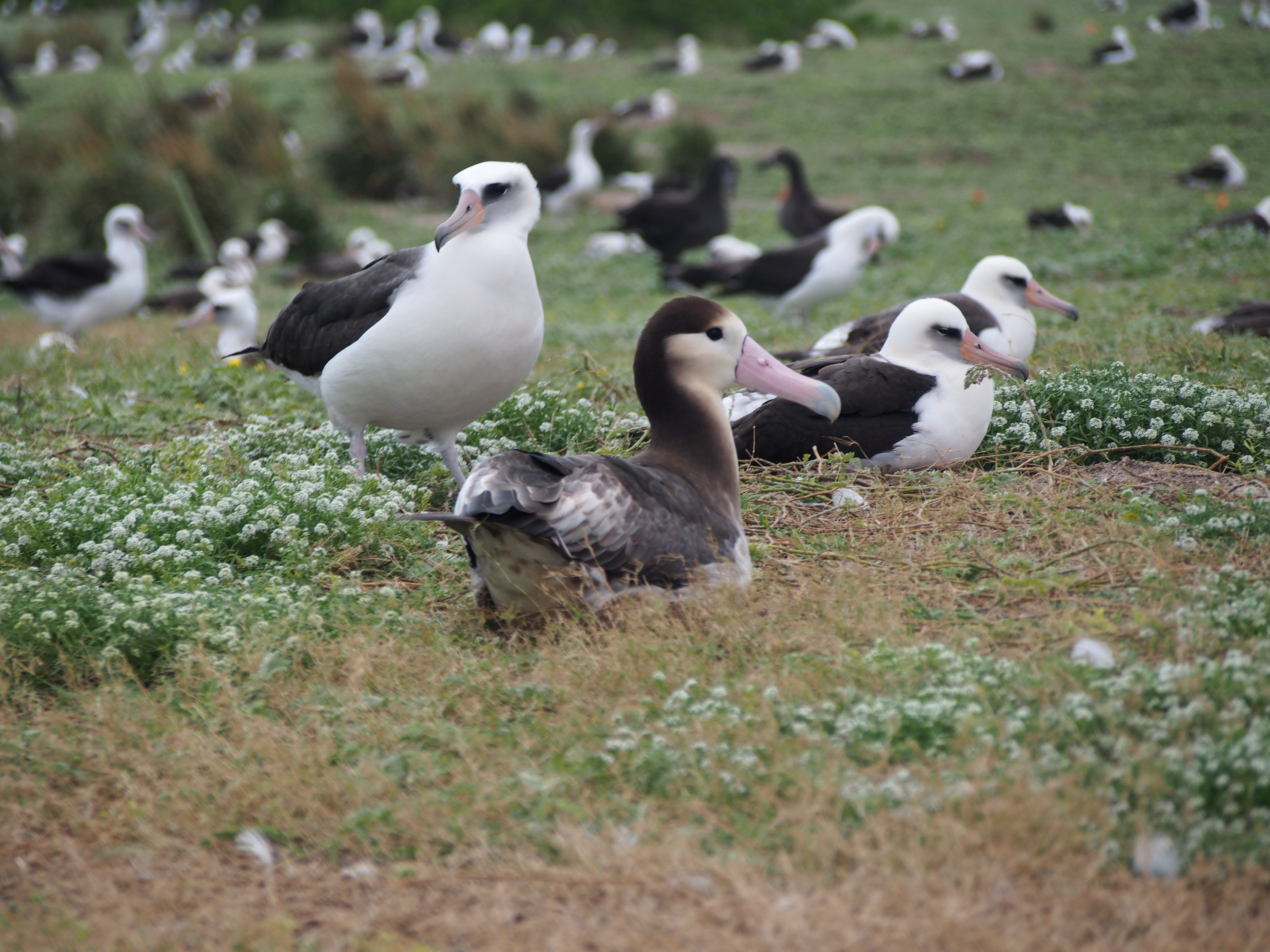 Makalena
Short-tailed Albatross
-
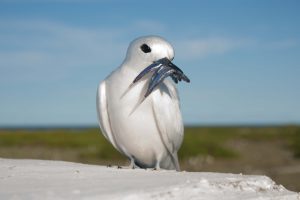 Manu-o-Kū
Blue-billed White-Tern
-
 Mōlī
Laysan Albatross
-
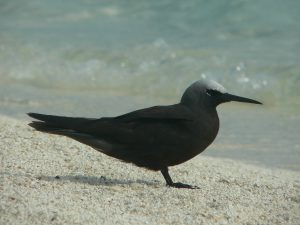 Noio
Black Noddy
-
 Noio kōhā
Brown Noddy
-
 Nunulu
Bonin Petrel
-
 ʻOu
Bulwer's Petrel
-
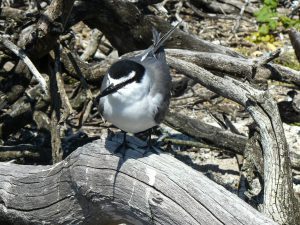 Pākalakala
Gray-backed Tern
-
 ʻUaʻu kani
Wedge-tailed Shearwater
Help protect seabirds and shorebirds on Hōlanikū
KAC/DLNR field crews monitor wildlife and restore habitat year-round. Your support keeps them on the island.


