
Our work
Natural Resource Protection & Monitoring
Watching over the seabirds, monk seals, sea turtles and other wildlife of Hōlanikū (Kure Atoll), and the habitats they depend on.
← Back to Our WorkOverview
The eyes and ears on the ground
One of the main goals of State management on Hōlanikū is to monitor the populations and health of its birds, plants, invertebrates and marine life. The Papahānaumokuākea Marine National Monument co-managing agencies lead recovery work for many endangered species, and DLNR/DOFAW and Kure Atoll Conservancy crews serve as their eyes and ears on the island.
Monitoring follows the latest species recovery plans under the Endangered Species Act, the Marine Mammal Protection Act and State law. The results guide management decisions, from restoration priorities to emergency response.
Monitoring focuses on
- Biodiversity: which species are present and how many
- Connections between species and their habitats
- Environmental change, from storms to rising seas
- Human impacts, past and present
Wherever possible, each step is planned to benefit several species at once.
Since 2000
Seabird Monitoring
Eighteen seabird species nest on Hōlanikū. The seabird monitoring program, established in 2000, tracks nesting success and survival so problems can be spotted and addressed. Kure seabird and shorebird counts also feed into U.S. Fish and Wildlife Service inventories, giving a fuller picture of each species across its range.
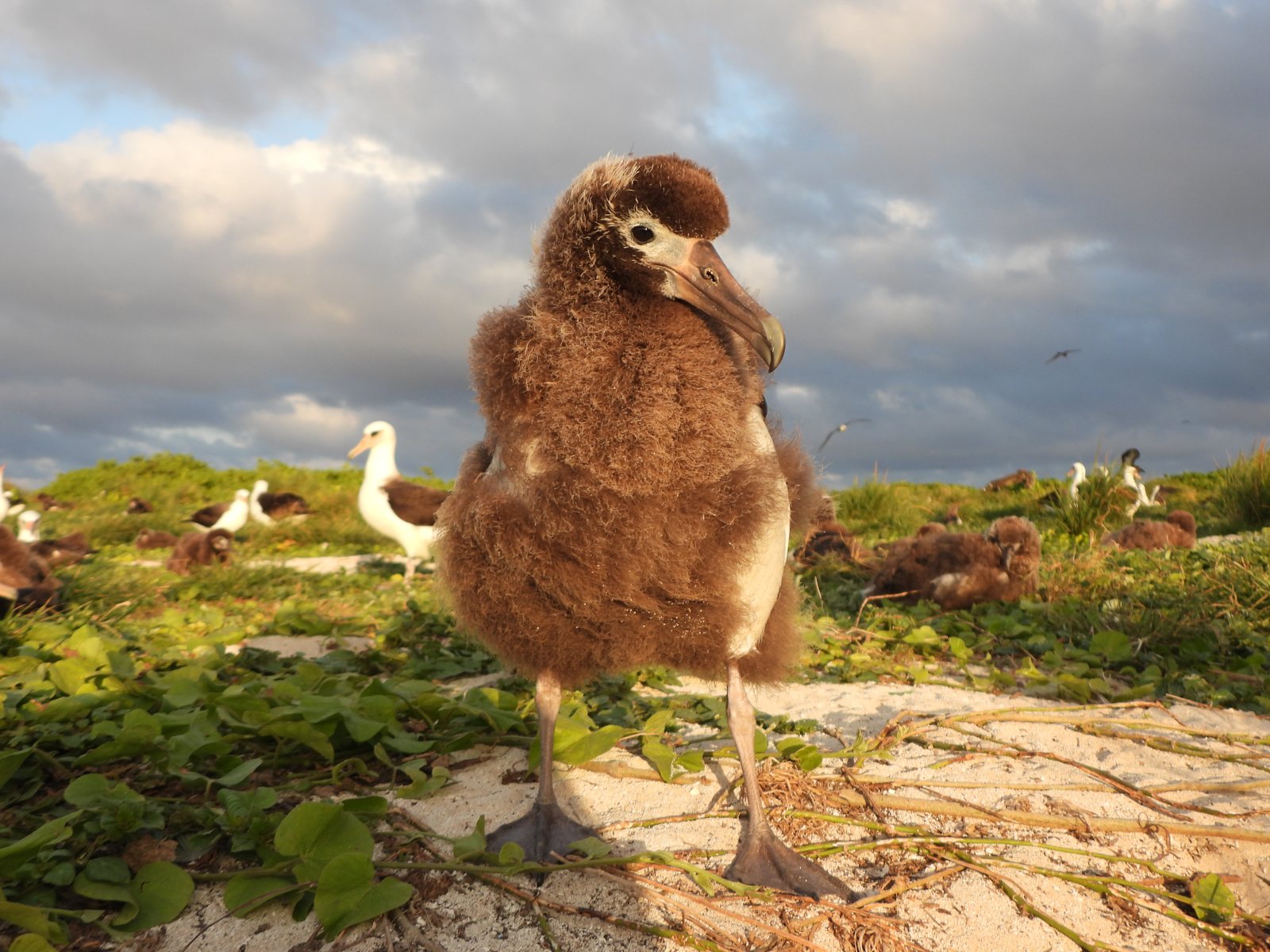
Albatrosses return to the same nesting areas year after year and nest on the ground, so they are among the first to show the effects of a changing landscape. Crews conduct all-island nest and fledgling counts for mōlī (Laysan Albatrosses), kaʻupu (Black-footed Albatrosses) and ʻā (Masked and Brown Boobies).
Bird banding
Banding lets researchers identify individual birds, providing data on dispersal and migration, behavior, lifespan, survival and breeding success. Banded species include ʻā (Brown Boobies), ʻakihikēʻehiʻale (Tristram's Storm-Petrels), mōlī and kaʻupu.
Makalena (Short-tailed Albatross)
The endangered makalena has been seen on Hōlanikū many times since 2000. A pair nested here for many years but never produced a chick. Monument partners work with international recovery teams to grow the population beyond its main breeding colonies on islands off Japan.
Tracking albatrosses at sea
A 2005–06 tracking study with the University of Hawaiʻi found that mōlī from Kure forage mainly in the western Pacific near Japan and are genetically distinct from other colonies, exposing them to different fisheries risks and more plastic. From 2011 to 2013, the State, Oikonos, Hawaiʻi Pacific University and NOAA tracked kaʻupu to map their foraging hot spots.
ʻĪlioholoikauaua
Monk Seal Monitoring
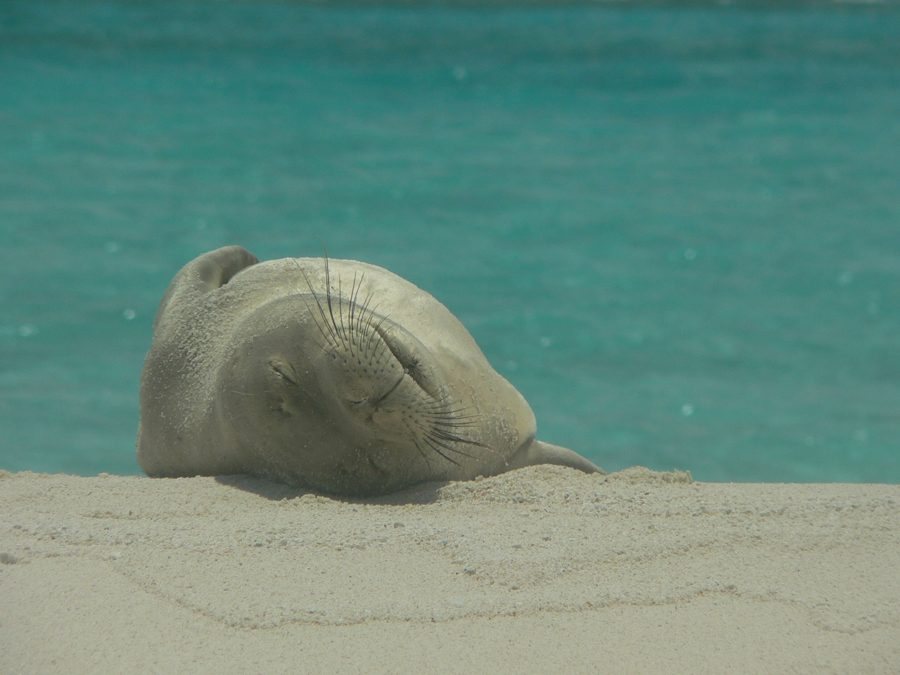
The ʻīlioholoikauaua (Hawaiian monk seal) is the only seal native to Hawaiʻi and the official state mammal. Hunted nearly to extinction in the 1800s, the species was listed as endangered in 1976. After decades of decline, the population has grown slowly since 2013 thanks to intensive recovery efforts, but it remains endangered.
The State of Hawaiʻi has long supported the NOAA Hawaiian Monk Seal Research Program on Hōlanikū, and Kure Atoll Conservancy has contributed since 2010 by hiring staff and supporting volunteers.
Sources: NOAA Fisheries stock assessment and Hawaiian Monk Seal Research Program.
How crews help seals recover
- Supporting emergency response for injured or entangled seals
- Preventing entanglement by removing marine debris
- Protecting beach and dune habitat through restoration
- Following NOAA protocols and limiting disturbance on beaches
- Maintaining a year-round presence for monitoring and protection
- Training all staff and volunteers on monk seal conservation
Working with NOAA
NOAA biologists typically spend part of the summer on Hōlanikū monitoring seals, sharing the field station with State and KAC crews. Monitoring documents births, pregnant females, survival and the condition of young seals, and includes tagging weaned pups and freeing entangled animals.
When NOAA staff are not on the island, KAC and DLNR crews continue regular surveys as Cooperating Investigators under NOAA's research permit, reporting to NOAA and helping catch injured or entangled seals early.
The bigger picture
Ecological Monitoring
Wildlife communities are interconnected, and there is always more to learn than crews can survey. These programs help track the health of the whole ecosystem.
Shorebirds
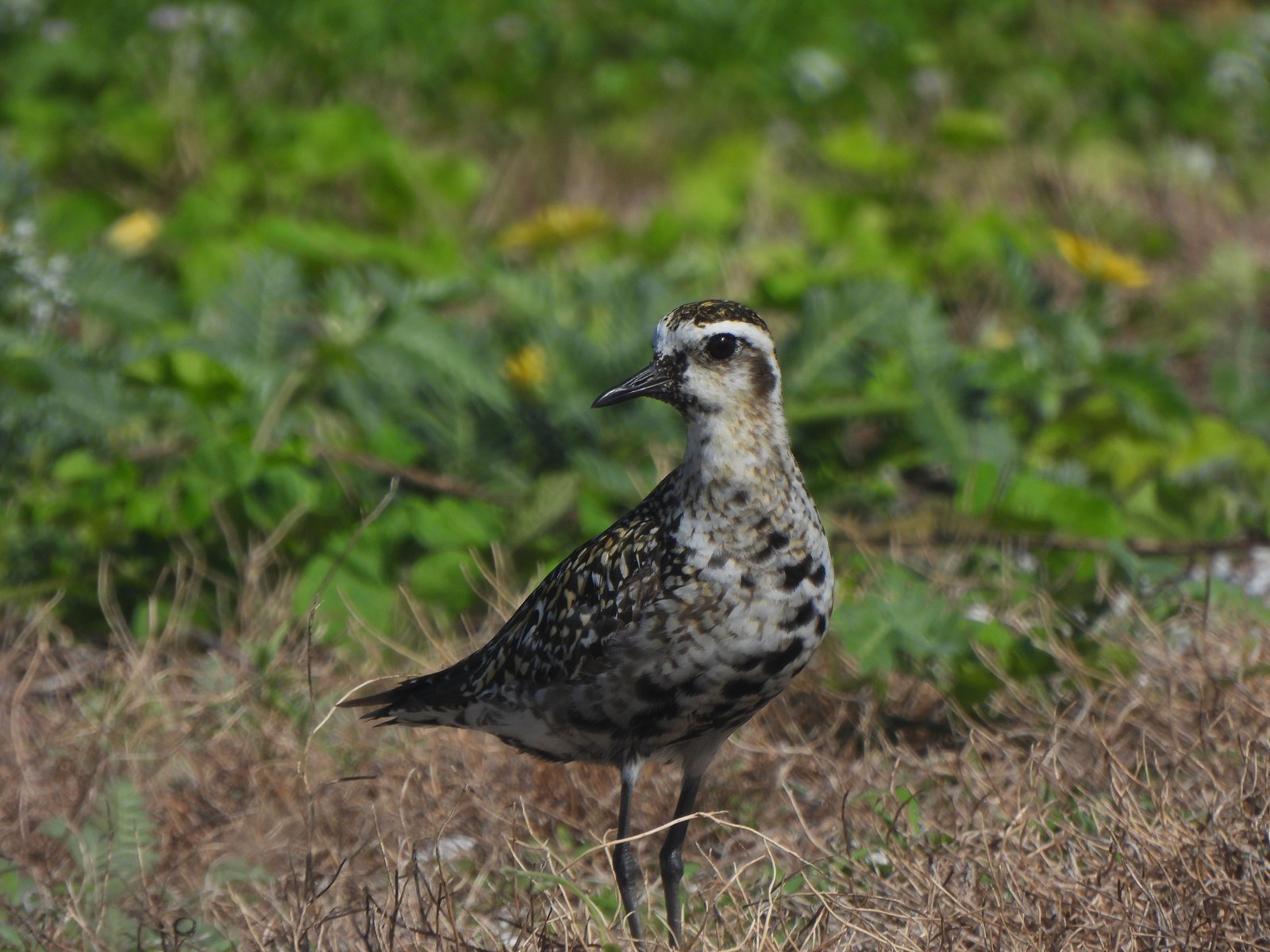
Five migratory shorebirds spend the winter on Hōlanikū: kōlea (Pacific Golden-Plover), ʻakekeke (Ruddy Turnstone), ʻūlili (Wandering Tattler), hunakai (Sanderling) and kioea (Bristle-thighed Curlew). Surveys along the beach, runway and interior trails track their numbers.
Honu (green sea turtles)
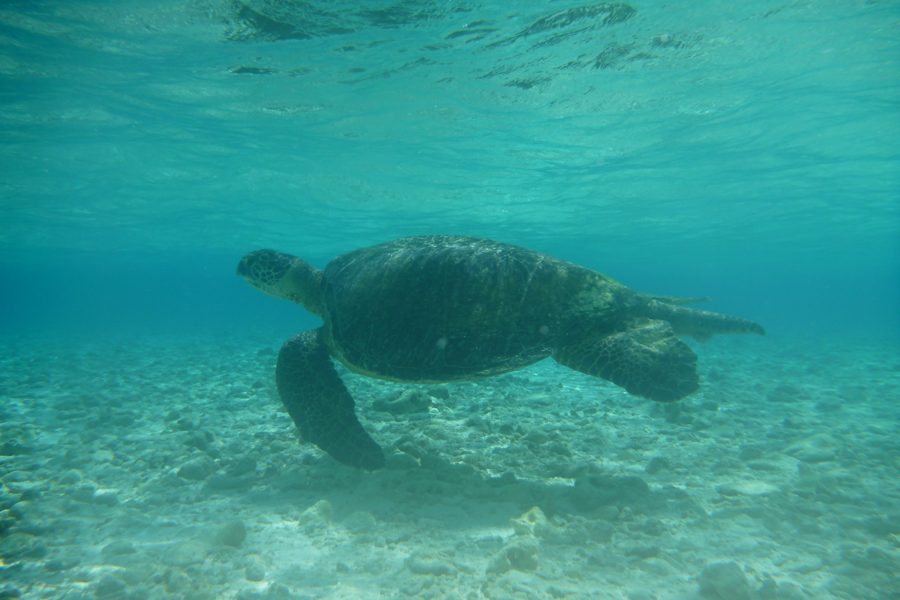
Sailors' journals from the 1800s describe many turtles on Kure, but honu are rarely seen here today. The first documented nest was in 2009, with no recorded hatchings since. Removing invasive tree heliotrope (Tournefortia argentea), whose roots destabilize beaches, helps improve potential nesting habitat.
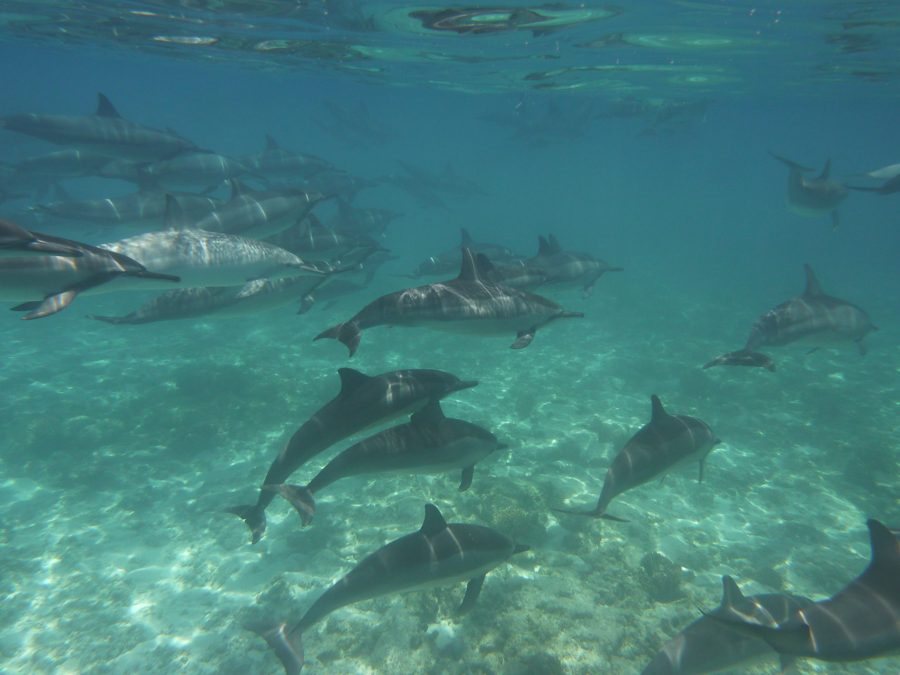
Naiʻa (spinner dolphins)
From 2001 to 2011, DLNR/DOFAW and Prof. Leszek Karczmarski of the University of Hong Kong studied the population structure, ecology and social behavior of the spinner dolphins that rest in the lagoon.
Koloa pōhaka (Laysan Ducks)
Crews monitor the health, breeding and numbers of the koloa pōhaka population established in 2014, around 100 birds in 2026.
Read the translocation story →Pests
Since rats were eradicated in the 1990s, crews have watched for pests that could undo restoration, including big-headed ants and avian ticks, both of which can harm nesting seabirds.
See pest management →Vagrant birds
Rare visitors often travel great distances to reach Hōlanikū. Recording when they arrive, how long they stay and when they leave adds to what we know about weather, migration and the birds themselves.
Habitat
Vegetation Monitoring
Healthy plant communities are the foundation for nesting seabirds. From 2012 to 2015, crews measured plant cover twice a year at 80 randomly placed 2 × 2 m quadrats in four restoration areas once heavily invaded by golden crownbeard (Verbesina encelioides). Over that time, golden crownbeard cover fell from 21.9% to less than 0.1%, and native plant cover rose from 8.4% to 73.9%. Since 2017, photo points and 2 × 2 m subplots have tracked runway reclamation plots, and photo points taken from the same spots since 2006 add a visual record of change.
See the vegetation plot results →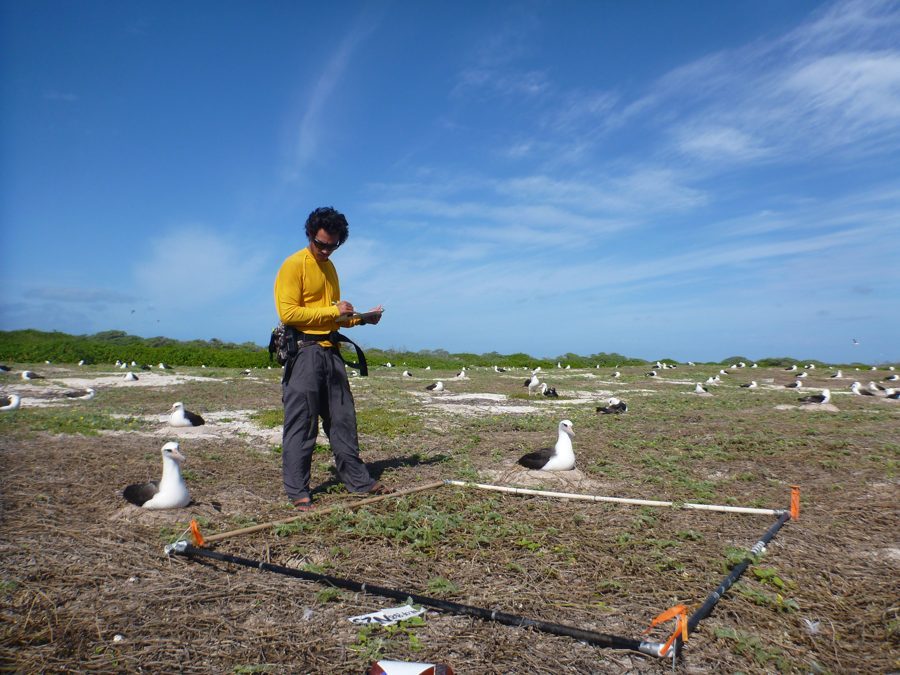
Get involved
Support Wildlife on Hōlanikū
Year-round monitoring depends on crews on the island. Your support helps keep watch over the wildlife of Hōlanikū.