
ʻUaʻu kani
Wedge-tailed Shearwater
Ardenna pacifica
A large shearwater whose eerie moaning calls fill the night on Hōlanikū in summer.
| State recognized | Indigenous |
|---|---|
| NatureServe Global Rank | G5 Apparently secure/Secure |
| IUCN Red List | Least concern |

Species Information
The ʻuaʻu kani, or Wedge-tailed Shearwater, is a large, abundant seabird (family Procellariidae). Its many wails and moans surely inspired the Hawaiian name, which means "calling petrel." ʻUaʻu kani have long, thin wings, a wedge-shaped tail and a hooked bill. They come in two color forms: light birds are grayish brown above and white below with dark wing edges and tail, and dark birds are sooty brown all over. Males and females look alike. They fly much like albatrosses but flap more often.
Foraging & Nesting
ʻUaʻu kani often feed in large, mixed-species flocks over schools of predatory fish that drive prey to the surface. They usually plunge head-first into the water from flight, but also seize prey while sitting on the water, and they often follow fishing boats. In Hawaiʻi they eat mainly young goatfish, flying fish, squirrelfish and flying squid.
Like most seabirds, ʻuaʻu kani return to the colony where they hatched, keep the same mate for years (though pairs may split after a failed nesting attempt), reuse the same nest site and lay one egg a season. Both parents share all the work of raising the chick. They dig burrows or nest in rock crevices. In Hawaiʻi, nesting is closely synchronized: most eggs are laid in June and most young fledge in November. ʻUaʻu kani first breed at about four years old, and the oldest known bird lived to 29.
Distribution & Abundance
ʻUaʻu kani nest throughout the Northwestern Hawaiian Islands and on offshore islets of most of the main islands, as well as on islands across the tropical and subtropical Indian and Pacific Oceans. Outside the nesting season, Hawaiian birds migrate to the eastern Pacific.
Conservation Actions
ʻUaʻu kani are protected under the federal Migratory Bird Treaty Act and State of Hawaiʻi law. Hawaiʻi's State Wildlife Action Plan calls for continued control of predators and grazing animals at main-island colonies, limiting human access to colonies, supporting programs such as Save Our Shearwaters that rescue grounded fledglings, and reducing light pollution and collisions with power lines.
Current Threats
On the main islands, ʻuaʻu kani are killed by introduced predators such as rats, cats, dogs, pigs and mongooses, and bright coastal lights confuse fledglings, which fall to the ground and are hit by cars or eaten by predators. People walking through colonies can collapse burrows. Because ʻuaʻu kani rely on schools of predatory fish to drive prey to the surface, overfishing may also affect them. Mercury, lead and other contaminants have been found in Hawaiian seabirds.
In the past, feather hunters and wartime activities killed vast numbers of seabirds across the Pacific, and high-seas drift nets killed many each year until they were banned in 1993.
On Hōlanikū
ʻUaʻu kani nest all over Hōlanikū: under naupaka and other plants, in open areas, on rubbly ground and in burrows, including old nunulu (Bonin Petrel) burrows. The first adults return in March, pairs court in May and most eggs are laid in June. Active by day and night, they are easy to see and especially easy to hear on summer nights.
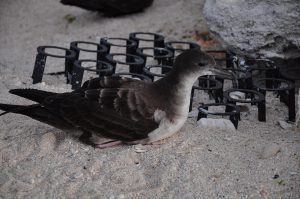
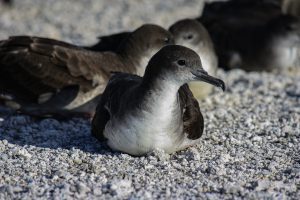

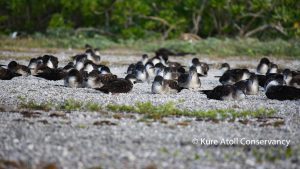
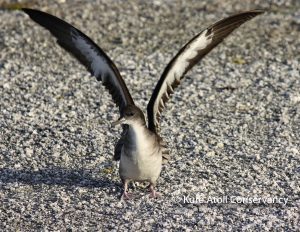
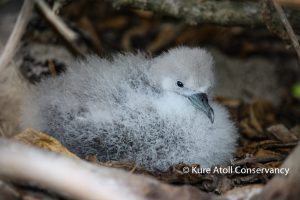
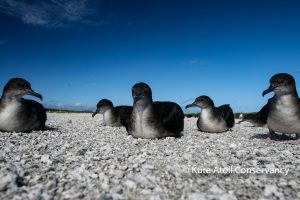
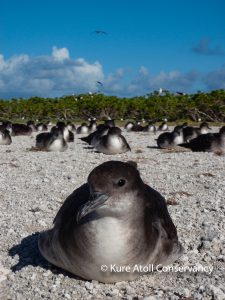
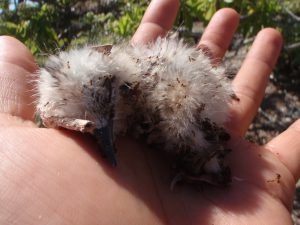
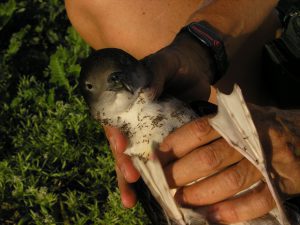
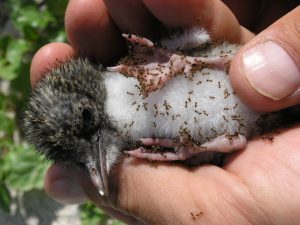
ʻuaʻu kani
n. Wedge-tailed shearwater or moaning bird (Puffinus pacificus chlororhynchus). Lit., calling ʻuaʻu. Also hōʻio.
More seabirds of Hōlanikū
-
 ʻĀ
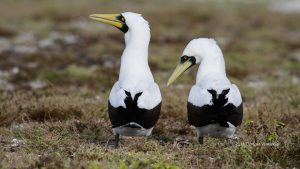
Masked Booby
-
 ʻĀ
Red-footed Booby
-
 ʻĀ
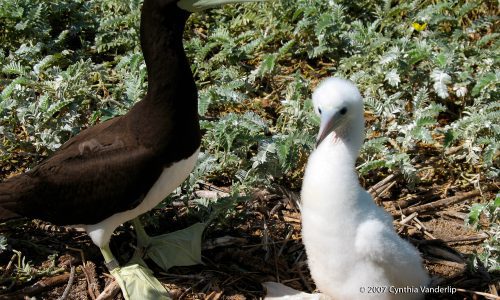
Brown Booby
-
 ʻAkihikēʻehiʻale
Tristram's Storm-Petrel
-
 ʻAoʻū
Christmas Shearwater
-
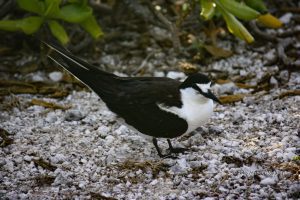 ʻEwaʻewa
Sooty Tern
-
 ʻIwa
Great Frigatebird
-
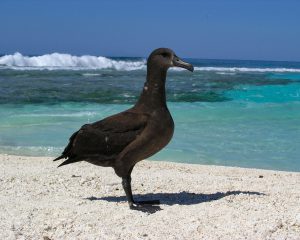 Kaʻupu
Black-footed Albatross
-
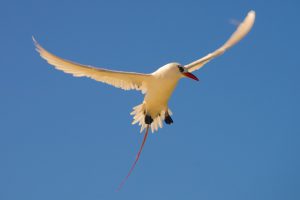 Koaʻe ʻula
Red-tailed Tropicbird
-
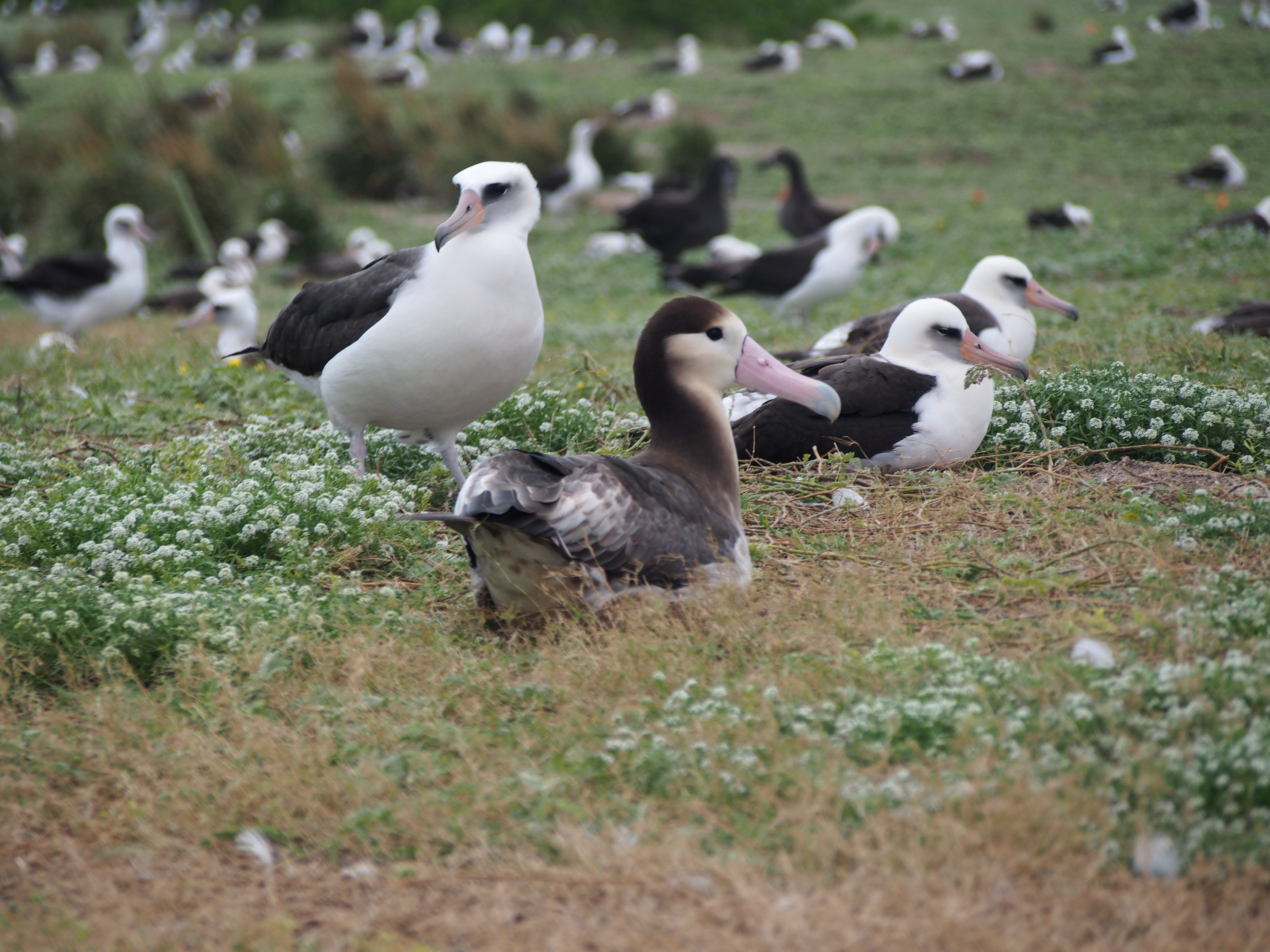 Makalena
Short-tailed Albatross
-
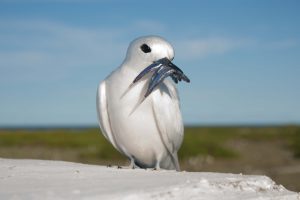 Manu-o-Kū
Blue-billed White-Tern
-
 Mōlī
Laysan Albatross
-
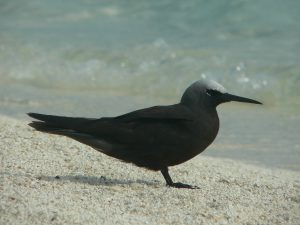 Noio
Black Noddy
-
 Noio kōhā
Brown Noddy
-
 Nunulu
Bonin Petrel
-
 ʻOu
Bulwer's Petrel
-
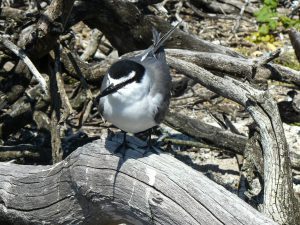 Pākalakala
Gray-backed Tern
Help protect seabirds and shorebirds on Hōlanikū
KAC/DLNR field crews monitor wildlife and restore habitat year-round. Your support keeps them on the island.


