Pākalakala
Gray-backed Tern
Onychoprion lunatus
A pale gray tern of the central Pacific that nests on open sand and on the old runway of Hōlanikū.
| State recognized | Indigenous |
|---|---|
| NatureServe Global Rank | G3G4 Vulnerable/Apparently secure |
| North American Waterbird Conservation Plan | Moderate concern |
| USFWS Bird of Conservation Concern | Yes (2021) |
| IUCN Red List | Least concern |

Species Information
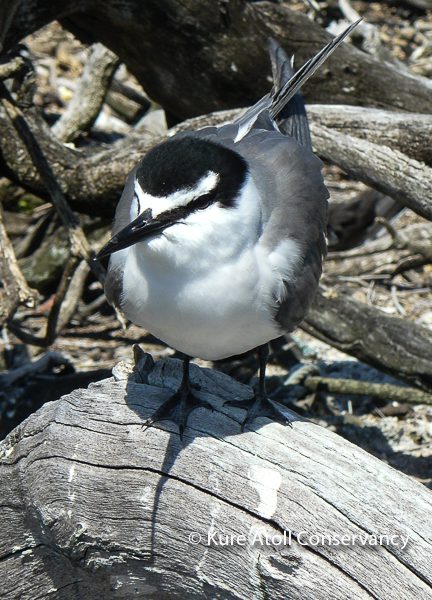
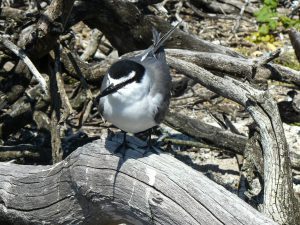
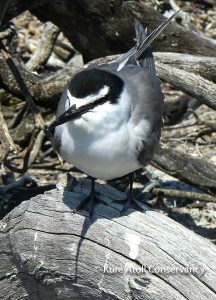
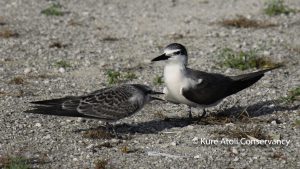
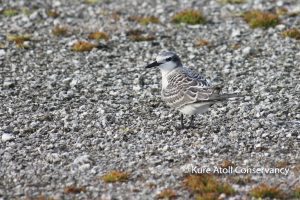
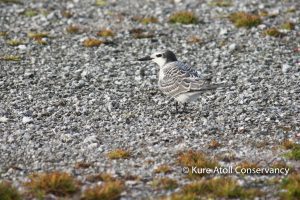
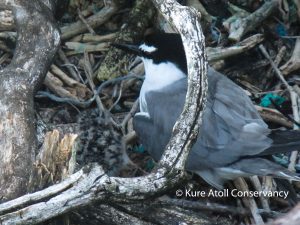
The pākalakala, or Gray-backed Tern (family Laridae), lives only in the central Pacific, where it nests on small, remote islands and atolls. Its past and present range are poorly known. Adults are slate gray above and white below with a black crown and nape. A narrow white forehead patch continues into a white eyebrow that extends past the eye, outlined in black. Their flight is direct and graceful, the body rising and falling with each wingbeat. Outside the nesting season they may stay in the air for long periods.
Foraging & Nesting
Pākalakala often feed with ʻewaʻewa (Sooty Terns) and ʻuaʻu kani (Wedge-tailed Shearwaters), catching prey by plunge-diving or by dipping to the surface while hovering. They eat mostly fish, especially young cowfish, flying fish, goatfish, herring and dolphinfish, as well as squid, crustaceans, mollusks and insects.
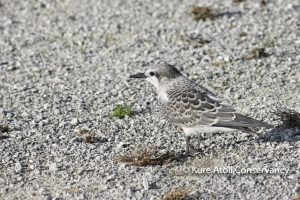
Pākalakala nest in shallow scrapes in sand or gravel and lay a single egg. In Hawaiʻi the timing varies from year to year, but most eggs are laid in February and March and most chicks fledge by late July. Both parents incubate the egg and brood and feed the chick. The oldest known bird lived to 25.
Distribution & Abundance
Pākalakala nest throughout the Northwestern Hawaiian Islands, and a few pairs have nested on Moku Manu off Oʻahu. Elsewhere they nest in the Mariana Islands, on Howland, Baker, Johnston, Wake and Jarvis islands, in the Line Islands, American Samoa, the Marquesas and the Tuamotus. Outside the nesting season they stay in the central Pacific.
Hawaiʻi has an estimated 44,000 breeding pairs, with the largest colonies on Lisianski (about 20,000 pairs), Nihoa (12,000) and Kamole (Laysan Island, 10,000). The world population is unknown but likely around 70,000 pairs.
Pākalakala nest on rocky ledges, open beaches and other open ground, often at the base of shrubs or debris. On Kuaihelani (Midway Atoll) and Hōlanikū they also nest on the old runways. Because many nests are close to the shore, they are vulnerable to storm tides.
Conservation Actions
Pākalakala are protected under the federal Migratory Bird Treaty Act and State of Hawaiʻi law, and the U.S. Fish and Wildlife Service lists them as a Bird of Conservation Concern. Hawaiʻi's State Wildlife Action Plan calls for removing cats, mice and rats from islets off the main islands, protecting colonies from human disturbance, continuing to protect sanctuaries and running long-term population studies.
Current Threats
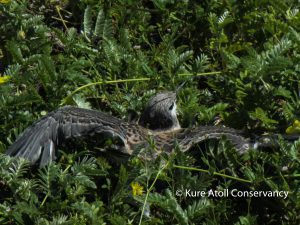
Pākalakala are easily disturbed and leave their nests when people approach, exposing eggs and chicks to ʻiwa (Great Frigatebirds), ʻakekeke (Ruddy Turnstones), kioea (Bristle-thighed Curlews) and, on some islands, finches. Their nests near the shore are vulnerable to storm tides and rising seas. On Hōlanikū, some birds have died after colliding with structures.
In the past, feather hunters and wartime activities killed vast numbers of seabirds across the Pacific.
On Hōlanikū
Pākalakala nest on Hōlanikū each spring and summer, especially on the old runway and in open, sandy areas. In 2025 the crew found the first egg in early April, the first downy chicks in early May and the first fledgling flying in July. About 200 adults were counted around the runway and Booby Acres on 7 June 2025, and in 2025 crews also recorded 310 breeding birds. One evening a pākalakala was seen snatching a moth out of the air above Camp Beach.
More seabirds of Hōlanikū
-
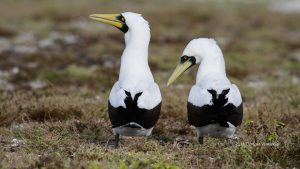 ʻĀ
Masked Booby
-
 ʻĀ
Red-footed Booby
-
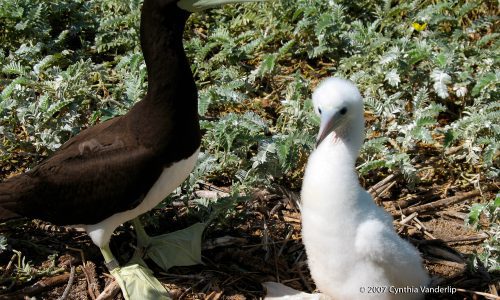 ʻĀ
Brown Booby
-
 ʻAkihikēʻehiʻale
Tristram's Storm-Petrel
-
 ʻAoʻū
Christmas Shearwater
-
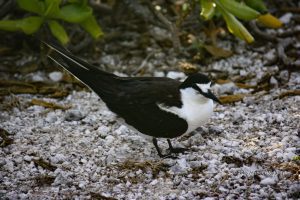 ʻEwaʻewa
Sooty Tern
-
 ʻIwa
Great Frigatebird
-
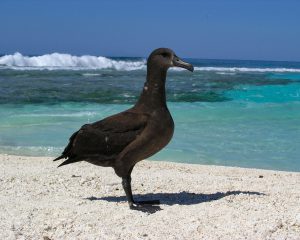 Kaʻupu
Black-footed Albatross
-
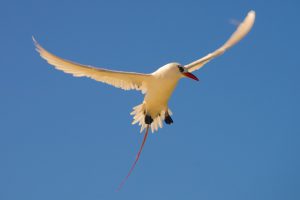 Koaʻe ʻula
Red-tailed Tropicbird
-
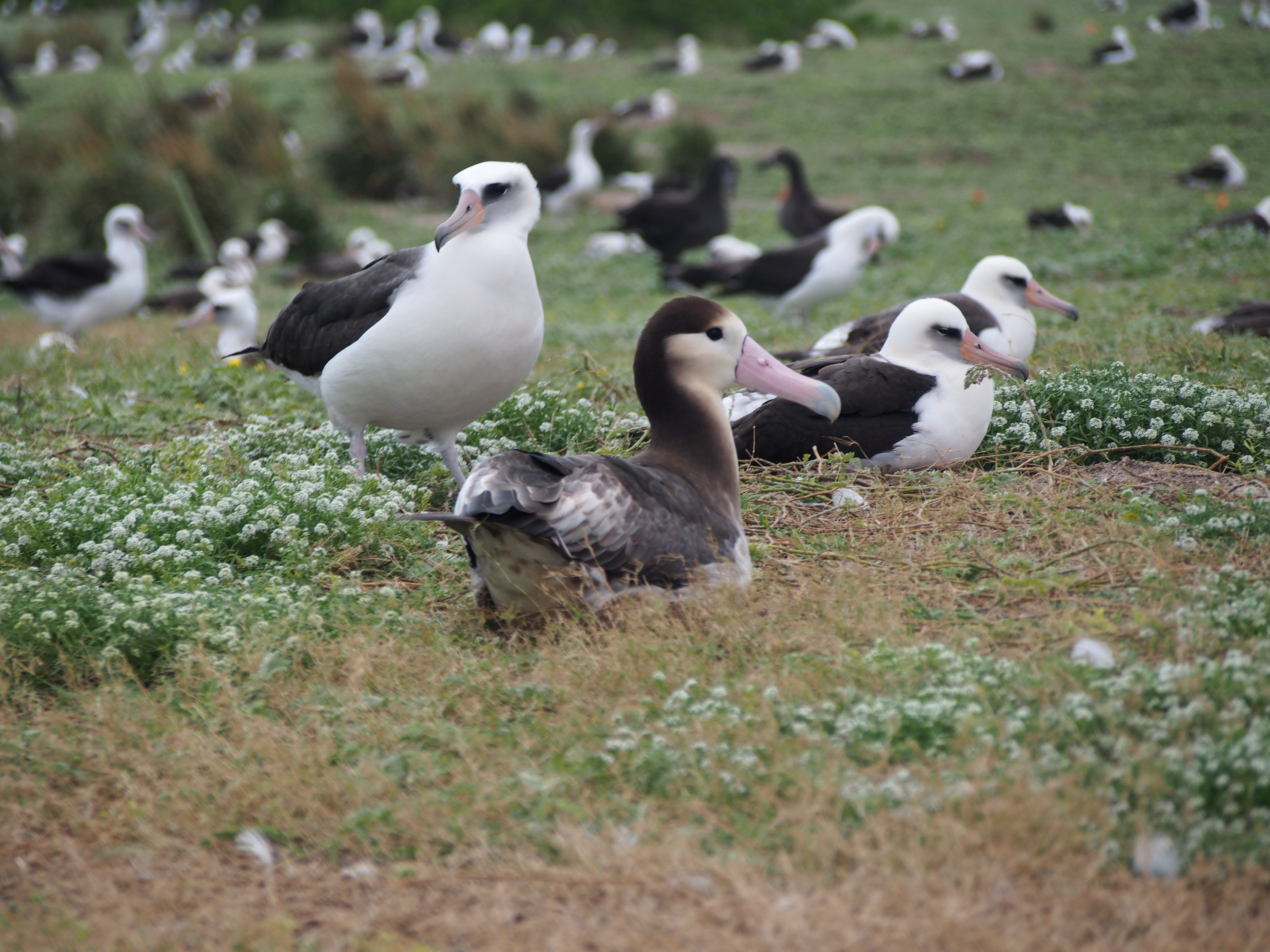 Makalena
Short-tailed Albatross
-
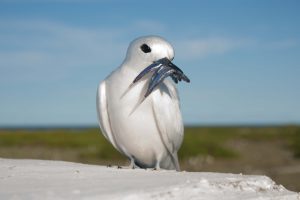 Manu-o-Kū
Blue-billed White-Tern
-
 Mōlī
Laysan Albatross
-
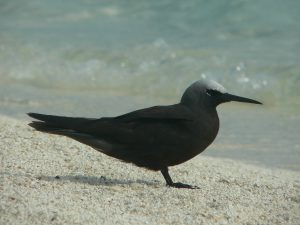 Noio
Black Noddy
-
 Noio kōhā
Brown Noddy
-
 Nunulu
Bonin Petrel
-
 ʻOu
Bulwer's Petrel
-
 ʻUaʻu kani
Wedge-tailed Shearwater
Help protect seabirds and shorebirds on Hōlanikū
KAC/DLNR field crews monitor wildlife and restore habitat year-round. Your support keeps them on the island.