ʻEwaʻewa
Sooty Tern
Onychoprion fuscatus
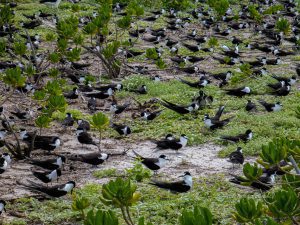
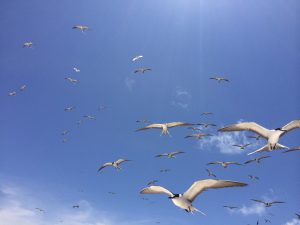
A noisy, black-and-white tern that nests by the thousands in dense colonies on Hōlanikū each summer.
| State recognized | Indigenous |
|---|---|
| NatureServe Global Rank | G5 Secure |
| North American Waterbird Conservation Plan | Moderate concern |
| IUCN Red List | Least concern |

Species Information
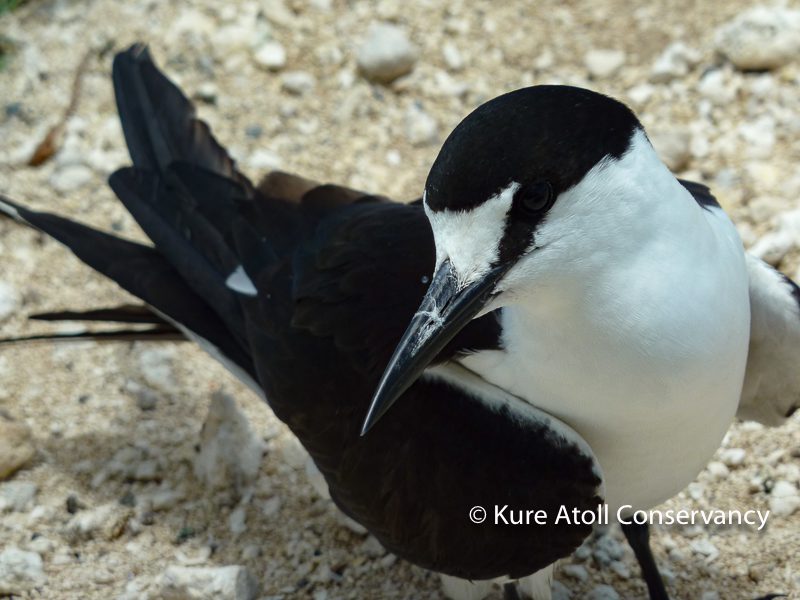
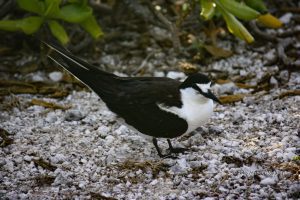
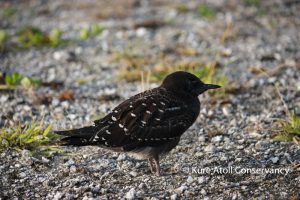
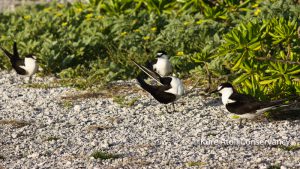
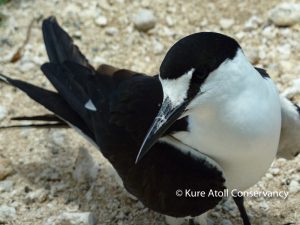
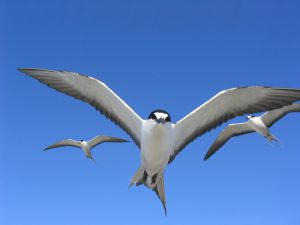
The ʻewaʻewa, or Sooty Tern, is an abundant, social tern (family Laridae) found across the tropical oceans. Eight subspecies are recognized, and one, Onychoprion fuscatus oahuensis, nests in Hawaiʻi. ʻEwaʻewa have long, slender wings and a deeply forked tail. Adults are blackish above with a white forehead and white edges on the outer tail feathers, and white below. The sharp bill, legs and feet are black.
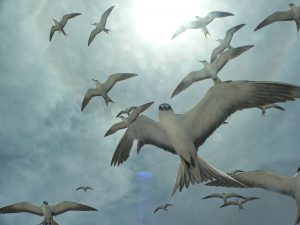
ʻEwaʻewa fly with strong wingbeats, gliding and soaring, and can travel great distances. Outside the nesting season they stay in the air over the open ocean, and young birds may remain at sea for years before returning to land.
Foraging & Nesting
ʻEwaʻewa usually feed in large, mixed-species flocks over schools of predatory fish, especially yellowfin and skipjack tuna. They snatch prey from the surface or the air in flight and rarely dive, because their feathers are not very waterproof and soak through easily. In Hawaiʻi they eat squid, goatfish, flying fish and mackerel scad.
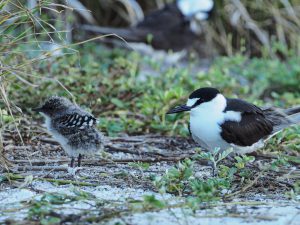
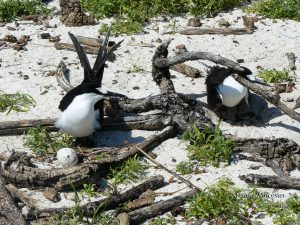
ʻEwaʻewa nest in large, dense colonies of thousands to a million pairs. Most return to the colony where they hatched, and many reuse earlier nest sites. Nests are shallow scrapes, sometimes lined with bits of shell or plants. The timing of nesting varies from year to year and place to place, but eggs are generally laid from February and most young fledge by July. Both parents incubate the single egg and brood and feed the chick, and they keep feeding it for about two weeks after it fledges. ʻEwaʻewa first breed at four to ten years old, and the oldest known bird lived to 32.
Distribution & Abundance
ʻEwaʻewa nest throughout the Northwestern Hawaiian Islands and on Moku Manu off Oʻahu, and on most islands across the world's tropical oceans. Outside the nesting season they live far out at sea.
Hawaiʻi has more than one million breeding pairs, with about 500,000 pairs each on Kamole (Laysan Island) and Lisianski.
Conservation Actions
ʻEwaʻewa are protected under the federal Migratory Bird Treaty Act and State of Hawaiʻi law. Hawaiʻi's State Wildlife Action Plan calls for removing and controlling introduced predators at current and potential nesting sites, continuing to protect sanctuaries and refuges and studying how overfishing affects the fish schools that terns depend on.
On Hōlanikū, KAC/DLNR crews change how they work while ʻewaʻewa are nesting: they stay out of dense colonies and pause herbicide treatments of kaunaʻoa pehu (Cassytha filiformis) there until the chicks are mobile.
Current Threats
Because ʻewaʻewa depend on schools of tuna and other predatory fish to drive prey to the surface, overfishing may affect them. Large, dense colonies on low islands are vulnerable to oil spills, storms and rising seas. Eggs and chicks are taken by ʻiwa (Great Frigatebirds), ʻakekeke (Ruddy Turnstones) and, on some islands, Cattle Egrets, night-herons and finches. Rats and cats once devastated tern colonies, but all of the Northwestern Hawaiian Islands are now free of both.
In the past, feather hunters wiped out tern colonies on Johnston, Wake and Marcus islands around 1900, and many seabirds were killed during World War II and in high-seas drift nets until those were banned in 1993.
On Hōlanikū
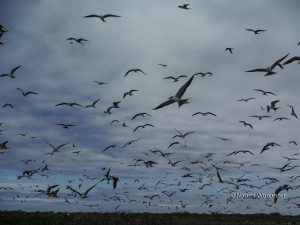
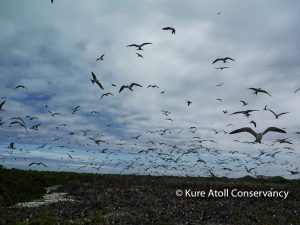
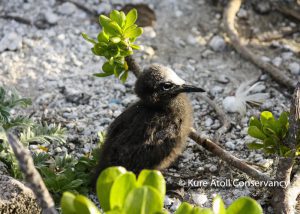
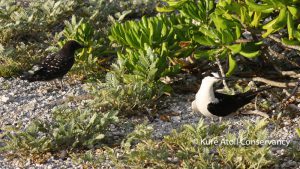
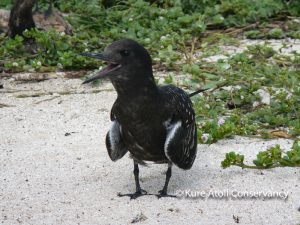
The first ʻewaʻewa return to Hōlanikū in April, and by June dense, noisy colonies cover open areas across the north and center of the island and along the runway. Thousands swirl over camp and the north end, and on 8 August 2025 crews counted about 8,350 adults and fledglings around the runway alone. The first chicks hatch in early June. In August 2025 the crew spotted an unusual silvery, pale-feathered chick in one colony.
ʻŌlelo Noʻeau
Oʻahu maka ʻewaʻewa, Oʻahu with indifferent eyes [a term of reproach to Oʻahu people, said to have been said by Hiʻiaka when her Oʻahu relatives refused to help her mend a canoe for a journey to Kauaʻi]. ʻAʻole anei ʻewaʻewa ʻole ko ʻu mau ʻaoʻao? ʻAʻole anei ʻo kō ʻoukou mau ʻaoʻao ka i ʻewaʻewa? (Ezek. 18.25) Is not my way just? Are not your ways unjust? Hoʻokō au ia kauoha me ka ʻewaʻewa ʻole (Kel. 125), I carried out this instruction without a flaw.
ʻewa.ʻewa
1. Redup. of ʻewa 1; irregular, biased, unequal, unjust. Maka ʻewaʻewa ʻia, looked at with disfavor, eyed askance.
2. n. Sooty tern (Sterna fuscata oahuensis); forehead and sides of head white, rest of head black; upper parts black, white beneath. Also ʻewaʻewa iki.
More seabirds of Hōlanikū
-
 ʻĀ
Masked Booby
-
 ʻĀ
Red-footed Booby
-
 ʻĀ
Brown Booby
-
 ʻAkihikēʻehiʻale
Tristram's Storm-Petrel
-
 ʻAoʻū
Christmas Shearwater
-
 ʻIwa
Great Frigatebird
-
 Kaʻupu
Black-footed Albatross
-
 Koaʻe ʻula
Red-tailed Tropicbird
-
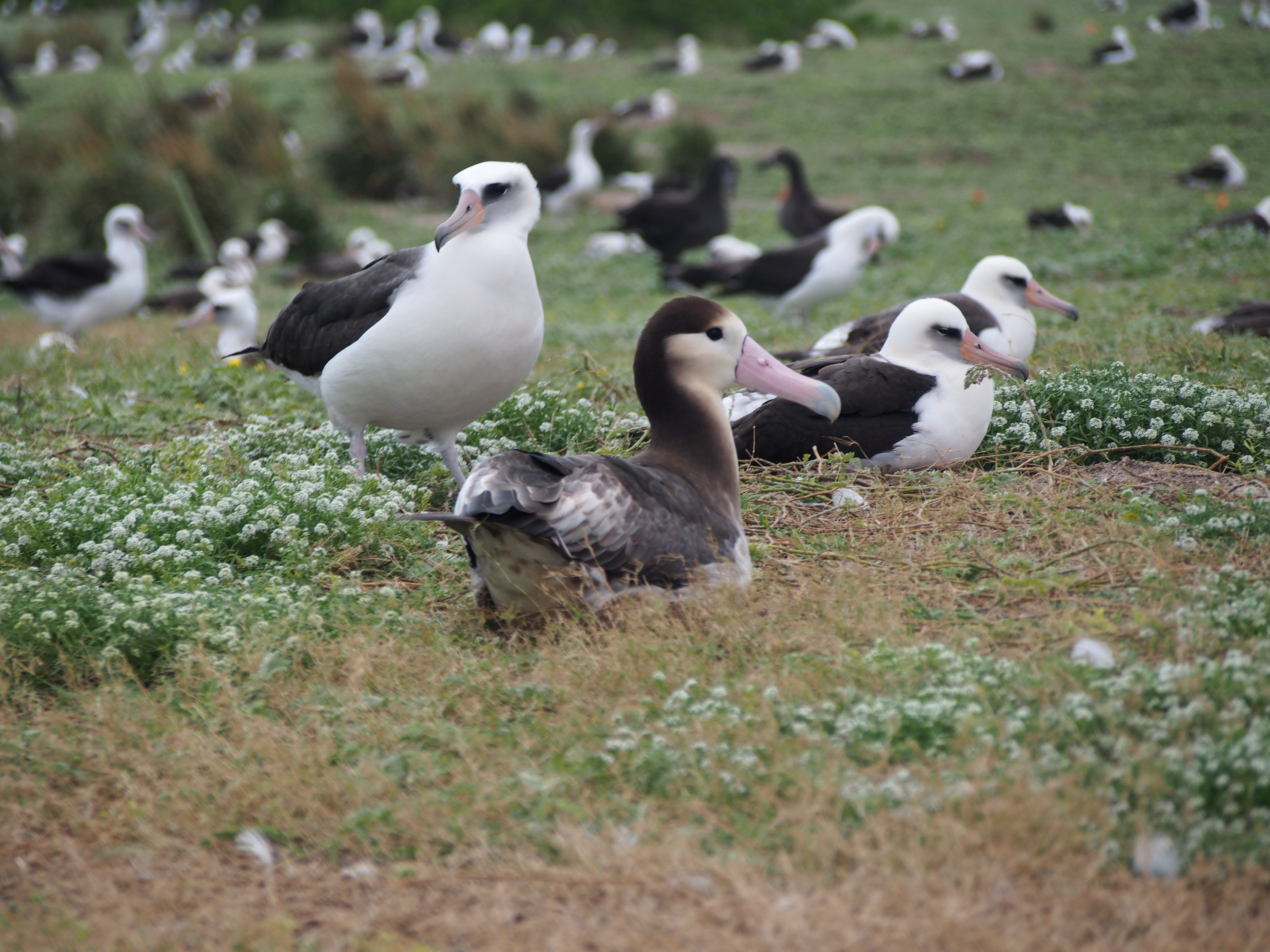 Makalena
Short-tailed Albatross
-
 Manu-o-Kū
Blue-billed White-Tern
-
 Mōlī
Laysan Albatross
-
 Noio
Black Noddy
-
 Noio kōhā
Brown Noddy
-
 Nunulu
Bonin Petrel
-
 ʻOu
Bulwer's Petrel
-
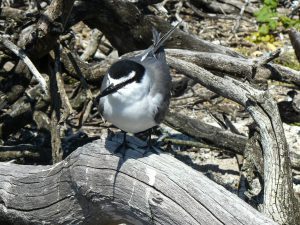 Pākalakala
Gray-backed Tern
-
 ʻUaʻu kani
Wedge-tailed Shearwater
Help protect seabirds and shorebirds on Hōlanikū
KAC/DLNR field crews monitor wildlife and restore habitat year-round. Your support keeps them on the island.