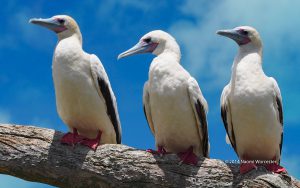
Makalena – Short-tailed Albatross
Phoebastria albatrus
| Federally Listed | Endangered |
| NatureServe Heritage Rank | G1 – Critically Imperiled |
| IUCN Red List Ranking | Vulnerable |
| Federally Listed | Endangered |
| NatureServe Heritage Rank | G1 – Critically Imperiled |
| IUCN Red List Ranking | Vulnerable |
Makalena (Short-tailed Albatross) are the largest seabird found in Hawai‘i (Family: Diomedeidae). Adult males and females primarily have white plumage, with varying amounts of black, mainly on the upper side of their wings and a golden wash on their heads. They have a large pink bill with a bluish tip, and their legs and feet are pale pink. Like other albatrosses, Short-tailed Albatross use air currents to glide and soar for long periods, feeding by seizing prey from the surface while resting on the water.
They forage closer to land than other albatross species and often scavenge from carrion or follow fishing boats. In Japan, their diet mainly consists of shrimp, squid, and fish, including bonito, flying fish, and sardines.
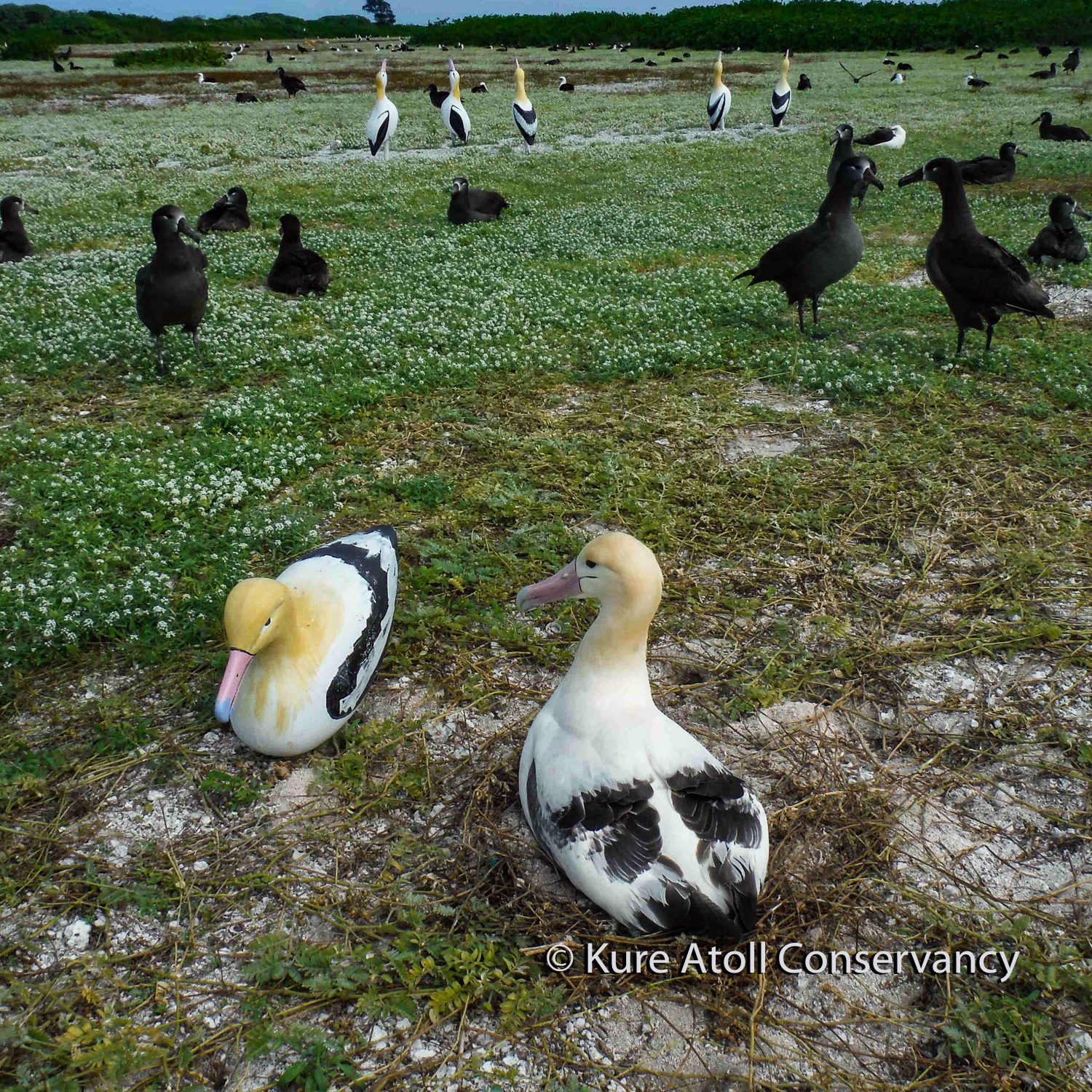
Since the 1930s, individuals have been observed nesting alongside Mōlī (Laysan Albatross, P. immutabilis) and Ka‘upu (Black-footed Albatross, P. nigripes) at Midway Atoll. For details on breeding biology, refer to the fact sheets for Mōlī or Ka‘upu. Like other albatrosses, the Short-tailed Albatross likely has a lifespan of at least 50 years.
The Short-tailed Albatross is an opportunistic feeder, primarily consuming invertebrates and fish. Their diet includes squid—especially the Japanese common squid (Todarodes pacificus)—as well as shrimp, fish, sardines, flying fish, flying fish eggs, and other crustaceans. These albatross forage both during the day and possibly at night, either alone or in groups, and they predominantly hunt for prey by surface-seizing. Their chicks are fed a mixture of stomach oil and partially digested, regurgitated food.
As expert soaring birds, Short-tailed Albatross glide on air currents over marine waters while searching for prey. They do not dive for food but instead feed opportunistically on prey that floats to the surface. Unfortunately, they can mistakenly consume floating debris such as plastics and other trash found on the ocean’s surface, and this can also be fed to their chicks. Ingesting plastic can be fatal for both adult albatrosses and their chicks.
Historically, Short-tailed Albatross followed whaling vessels, and more recently, they have been seen following commercial fishing boats in search of small scraps, such as discards from seafood processing and bait used in commercial longlining fishing. They are sometimes hooked or entangled in longline fishing gear, which can result in drowning. Bait and scraps from fishing vessels, known as offal, now make up a significant portion of the calorie intake for these birds.
The Short-tailed Albatross is monogamous and returns to the same breeding site year after year. However, young birds may occasionally disperse from their natal colonies to attempt breeding elsewhere. During the non-breeding season, Short-tailed Albatross disperse widely throughout the North Pacific Ocean.
Parents take turns alternating foraging trips, which can last two to three weeks, while also sharing the responsibility of incubating their egg. In the first few days after hatching, the chick is fed on stomach oil, which is rich in calories and vitamin A. This oil also serves as a source of water once it is metabolized. Soon after, the chicks are fed more solid food, such as squid and flying fish eggs.
Small numbers of Short-tailed Albatross nest on Midway Atoll and Kure Atoll in the Northwestern Hawaiian Islands. Outside of Hawaii, the species nests on several small islands off the coast of Japan. At sea, the short-tailed albatross ranges widely across the North Pacific Ocean.
The 2020 five-year review indicates that the short-tailed albatross population is growing, with an estimated 7,365 individuals and a growth rate of 8.9%.
The short-tailed albatross was designated as an endangered species by the U.S. Fish and Wildlife Service in 2000. At the turn of the 20th century, millions of these birds were hunted for their feathers, which nearly led to their extinction. The species primarily breeds on remote islands in the western Pacific Ocean. Currently, the two main breeding areas that host most of the remaining pairs are Torishima Island in Japan, an active volcano, and the Senkaku Islands, located northwest of Taiwan.
From 2008 to 2012, the U.S. Fish and Wildlife Service collaborated with the Yamashina Institute for Ornithology in Japan to establish a third breeding colony by translocating chicks from Torishima to a historic breeding site on Mukojima Island. Recently, there has been limited but successful breeding of the short-tailed albatross on Midway Atoll in Hawaii.
The highest concentrations of short-tailed albatrosses are found in the Aleutian Islands and the Bering Sea regions, mainly along Alaska’s outer shelf. Juveniles and younger sub-adult birds, up to 2 years old, have a wider geographic range than adults. Post-fledging juvenile birds have been observed roaming extensively throughout the North Pacific Rim, with some individuals spending time in the oceanic waters between Hawaii and Alaska.
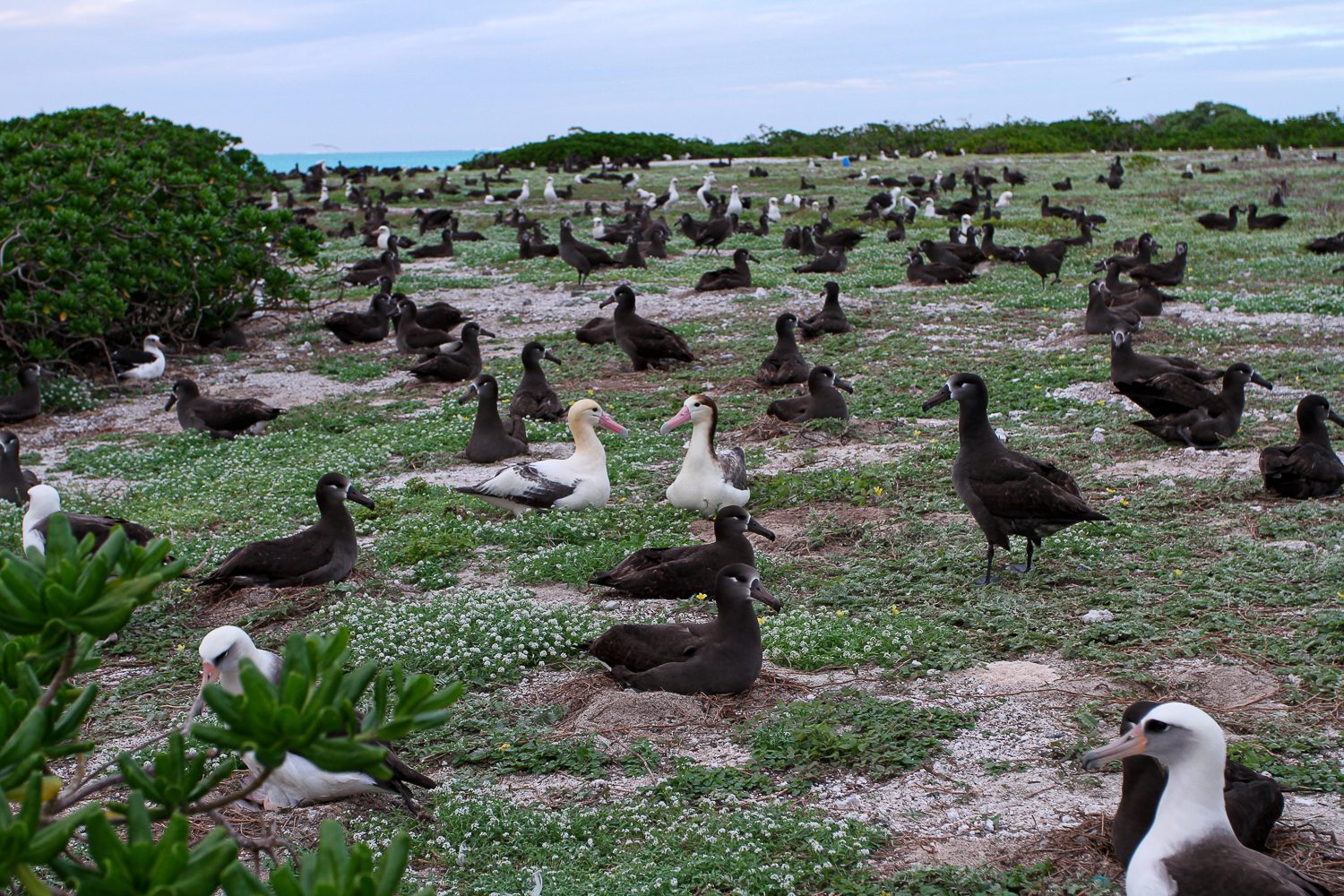
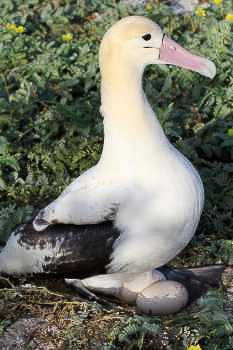
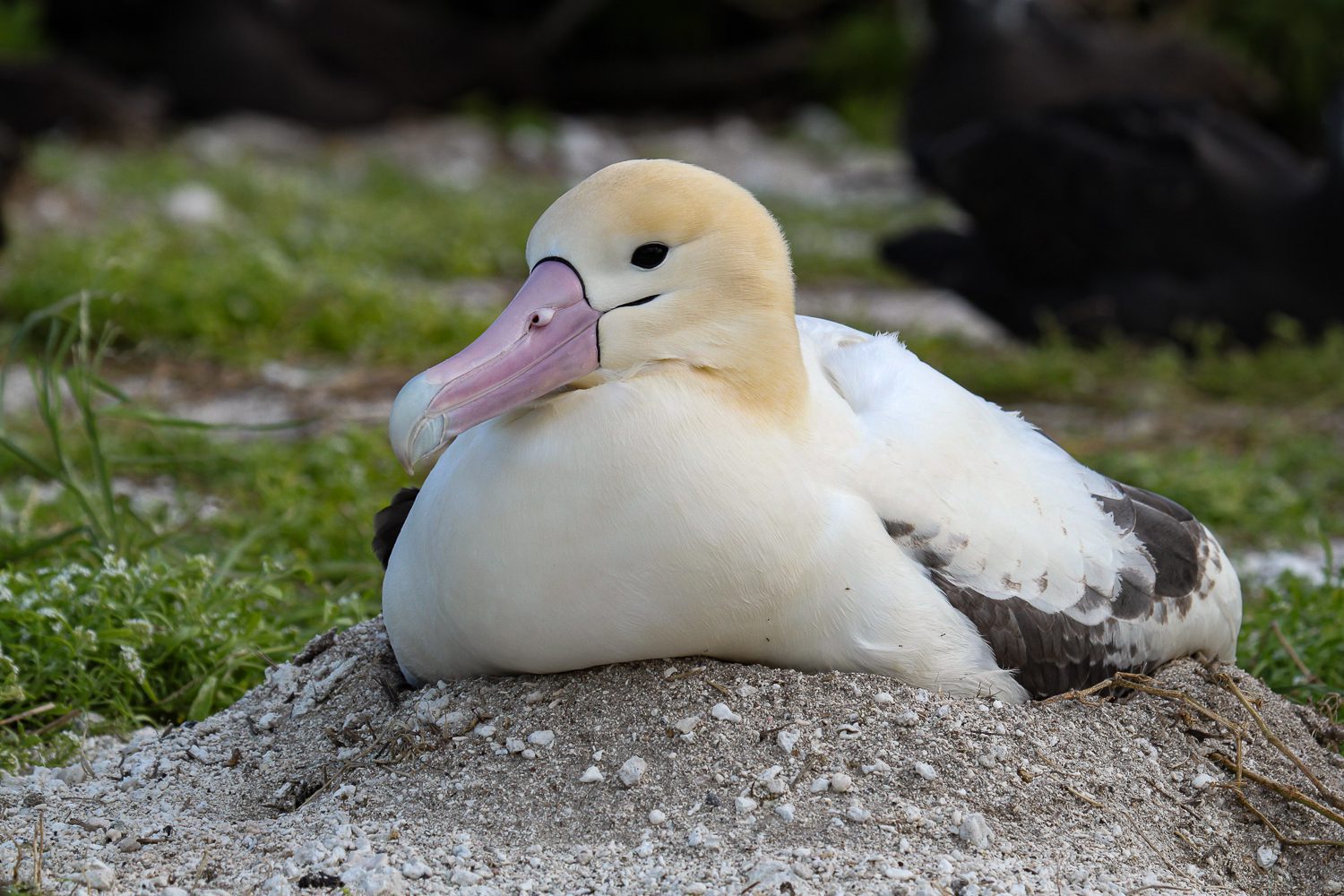
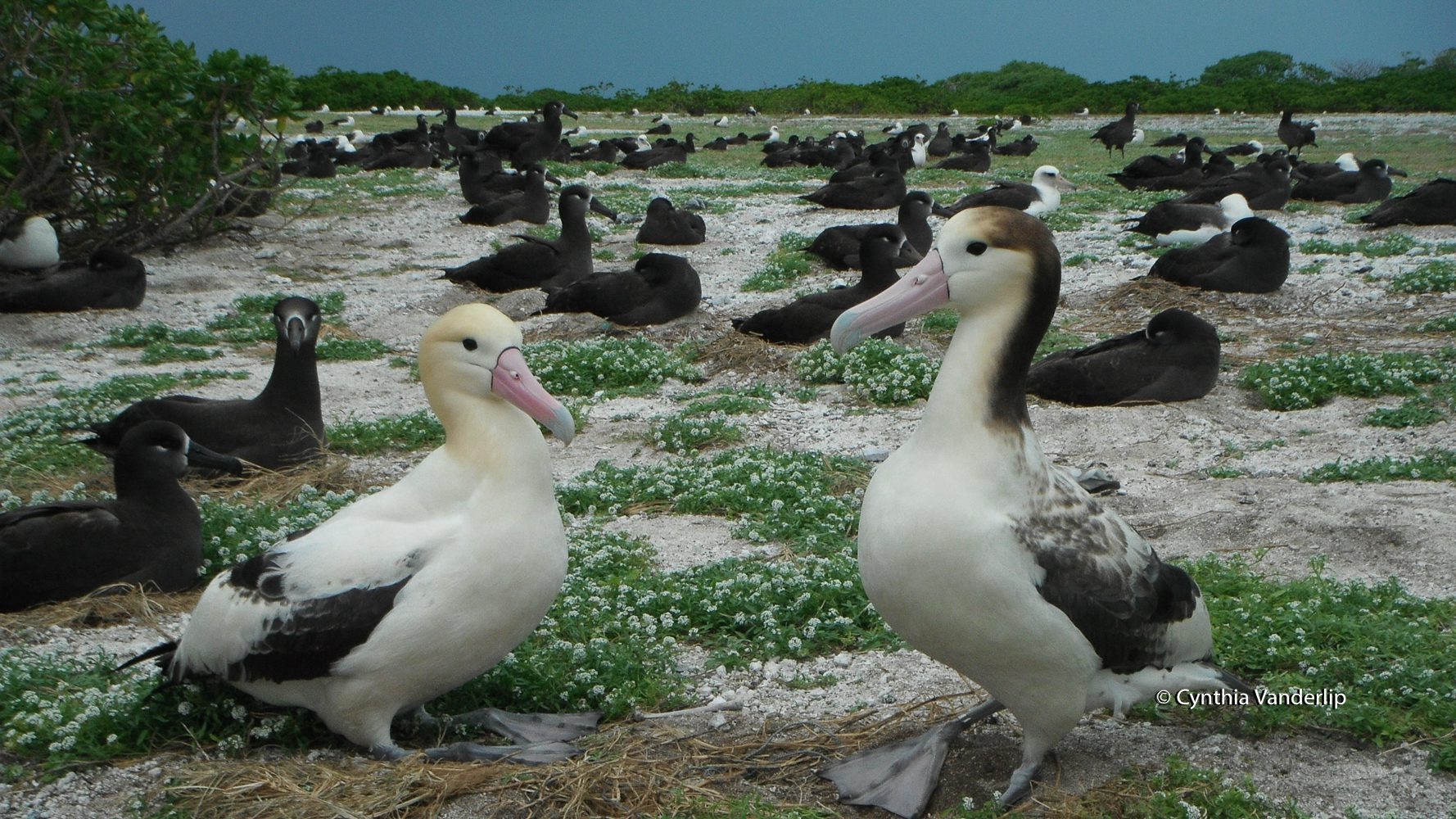
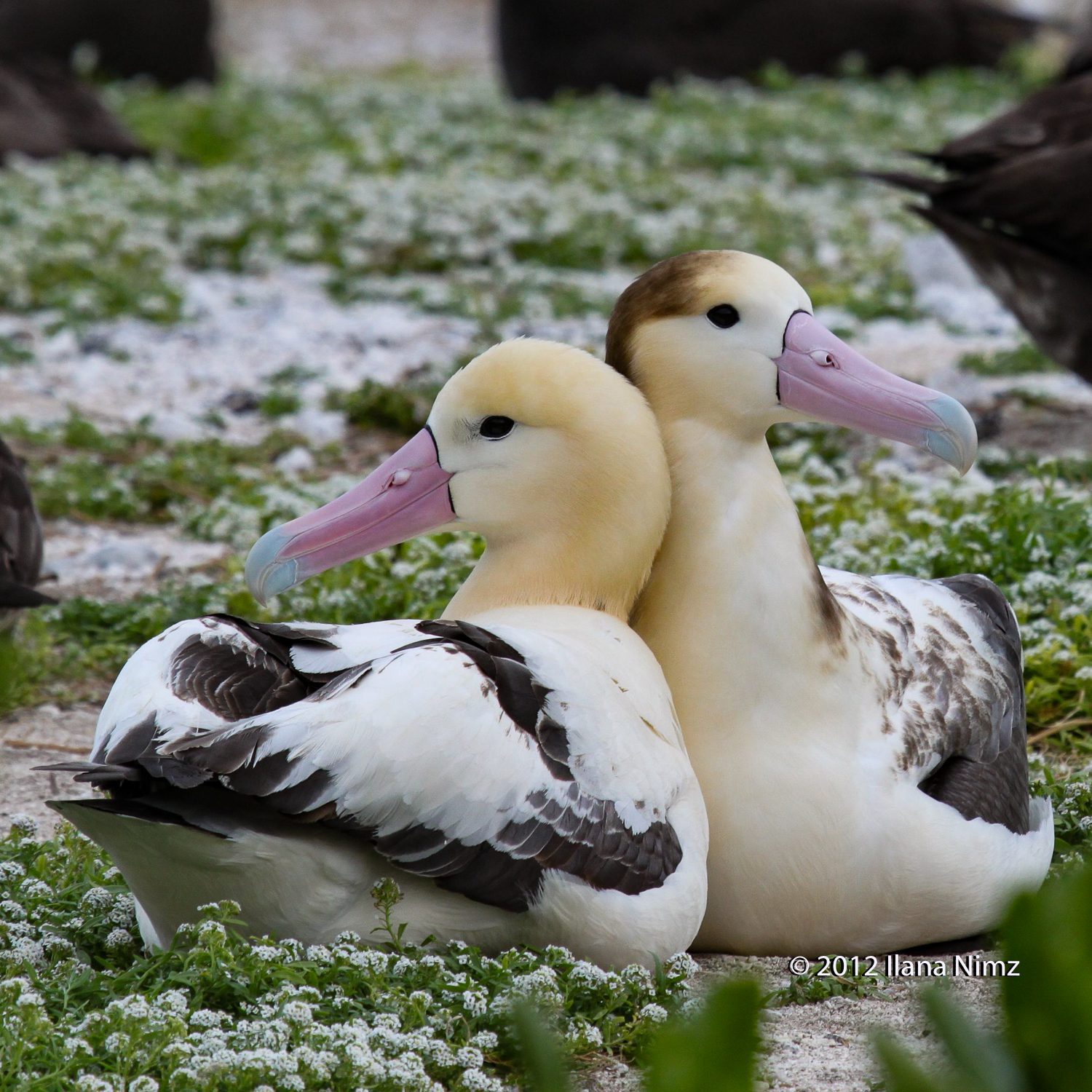
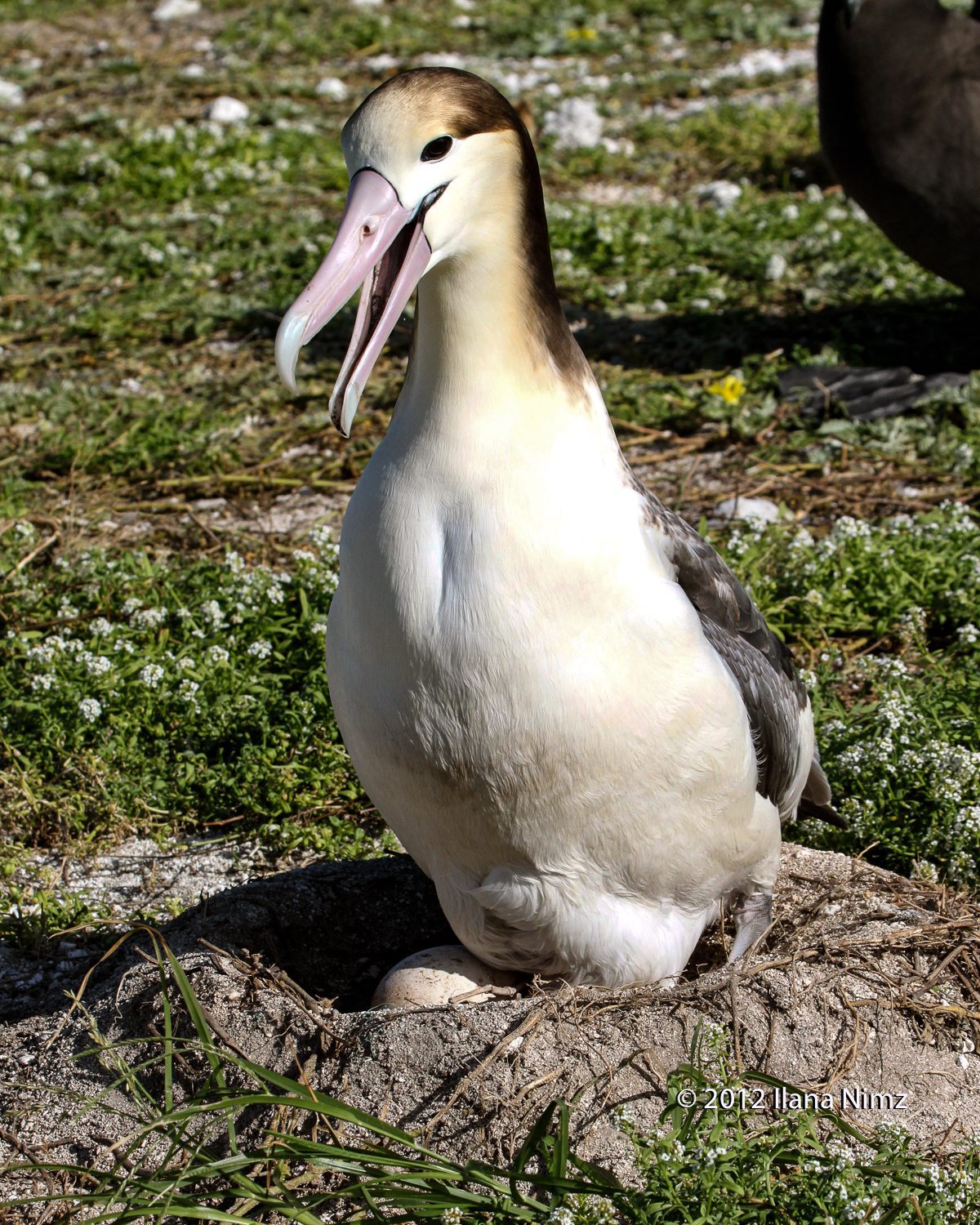
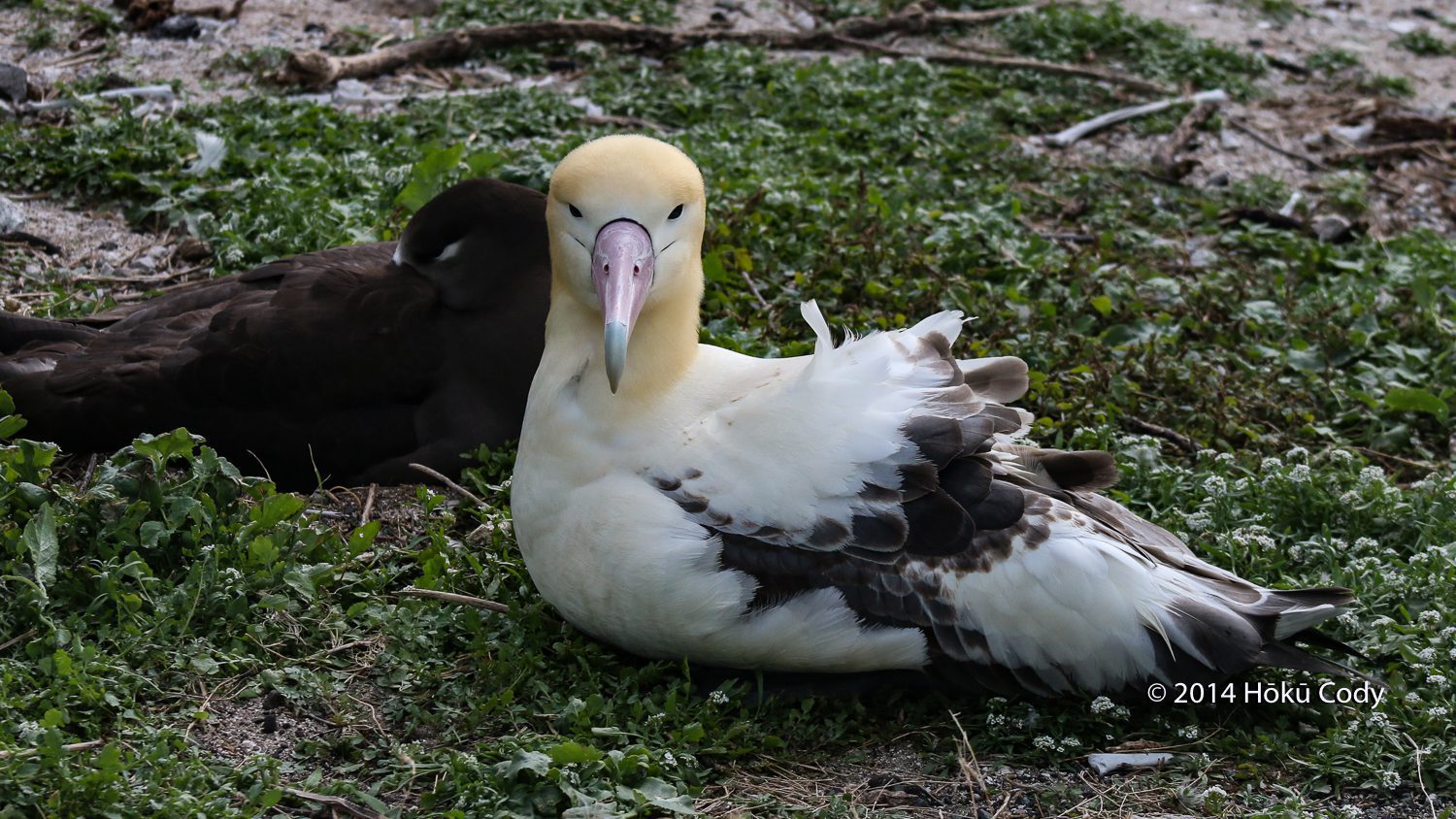
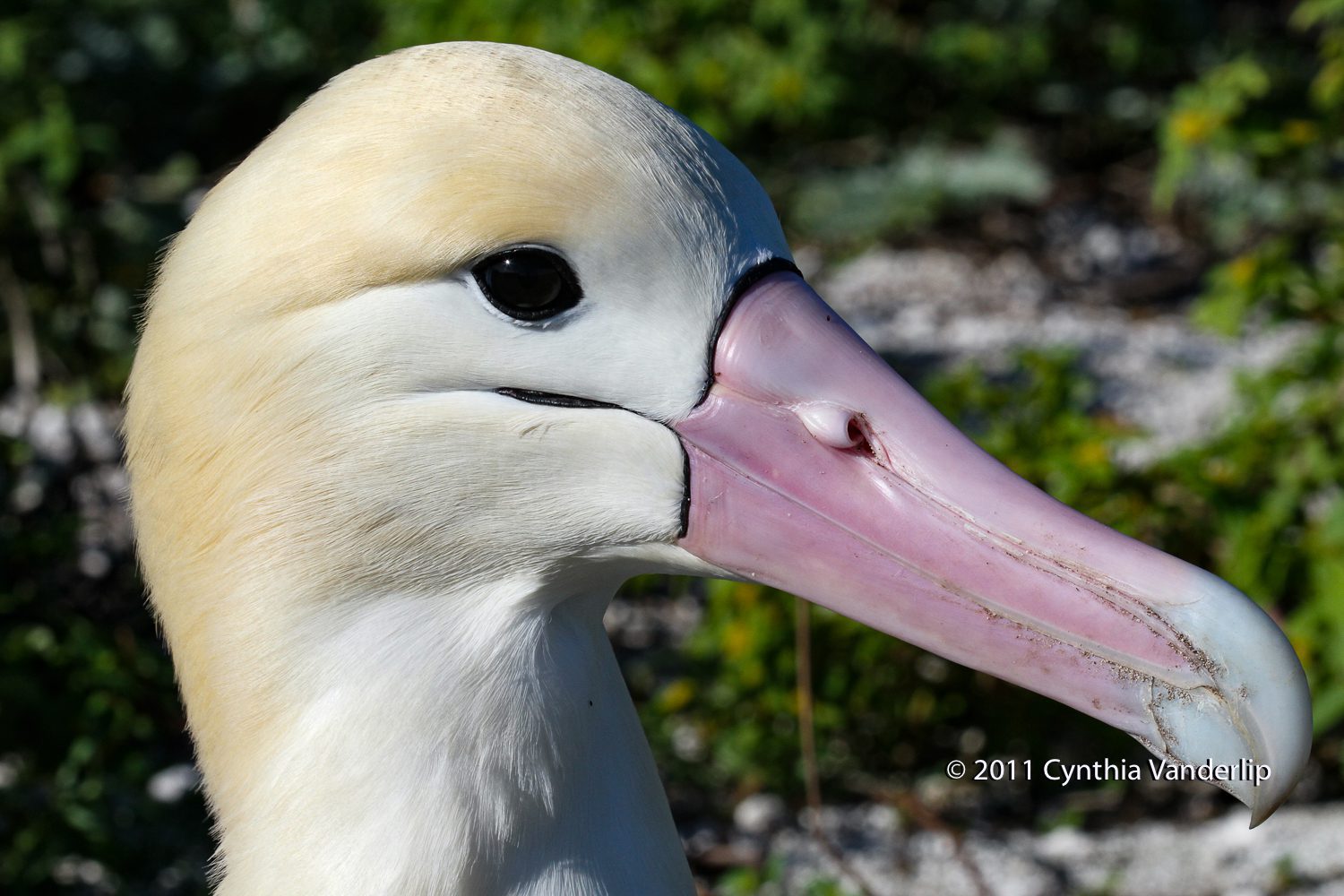
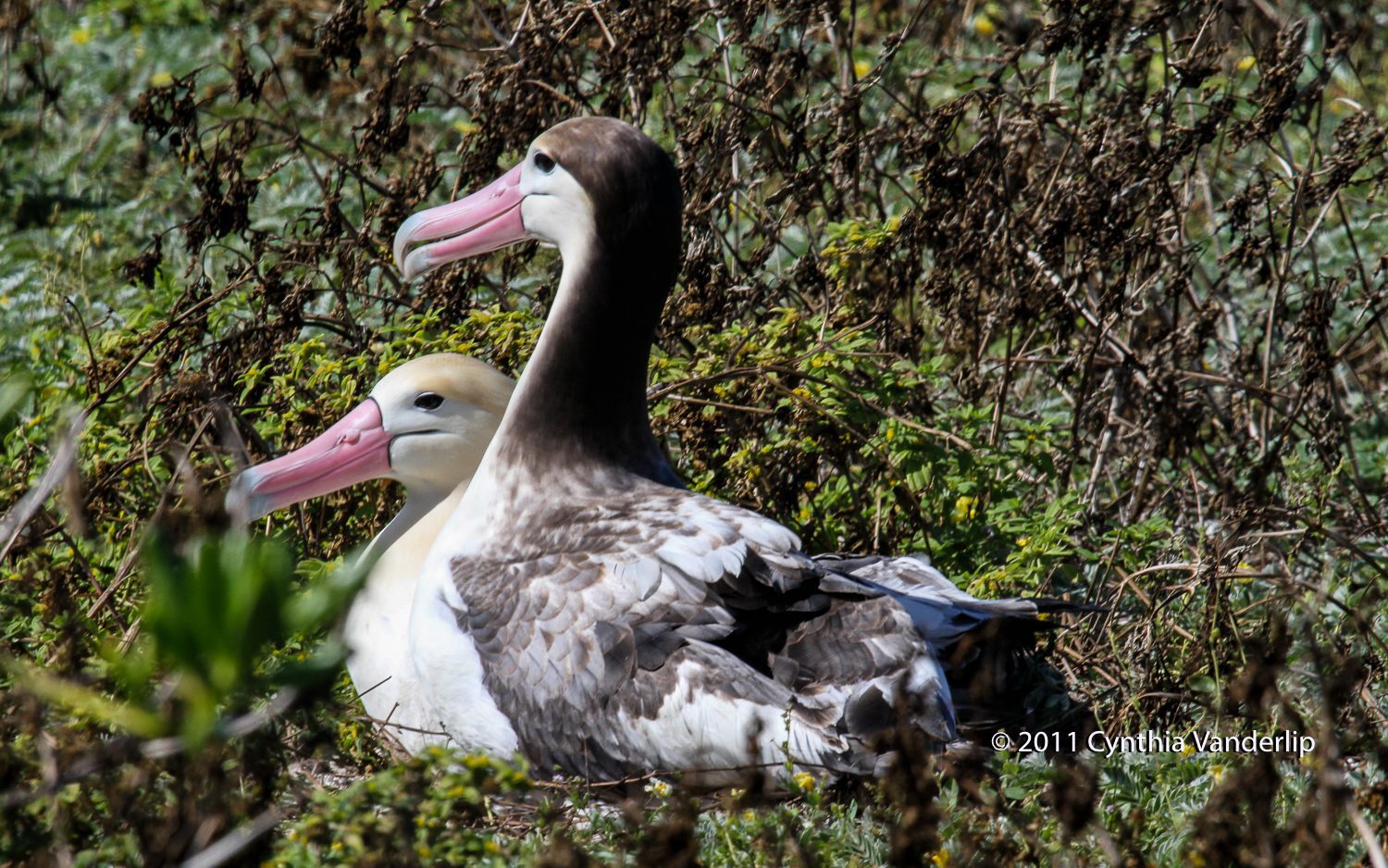
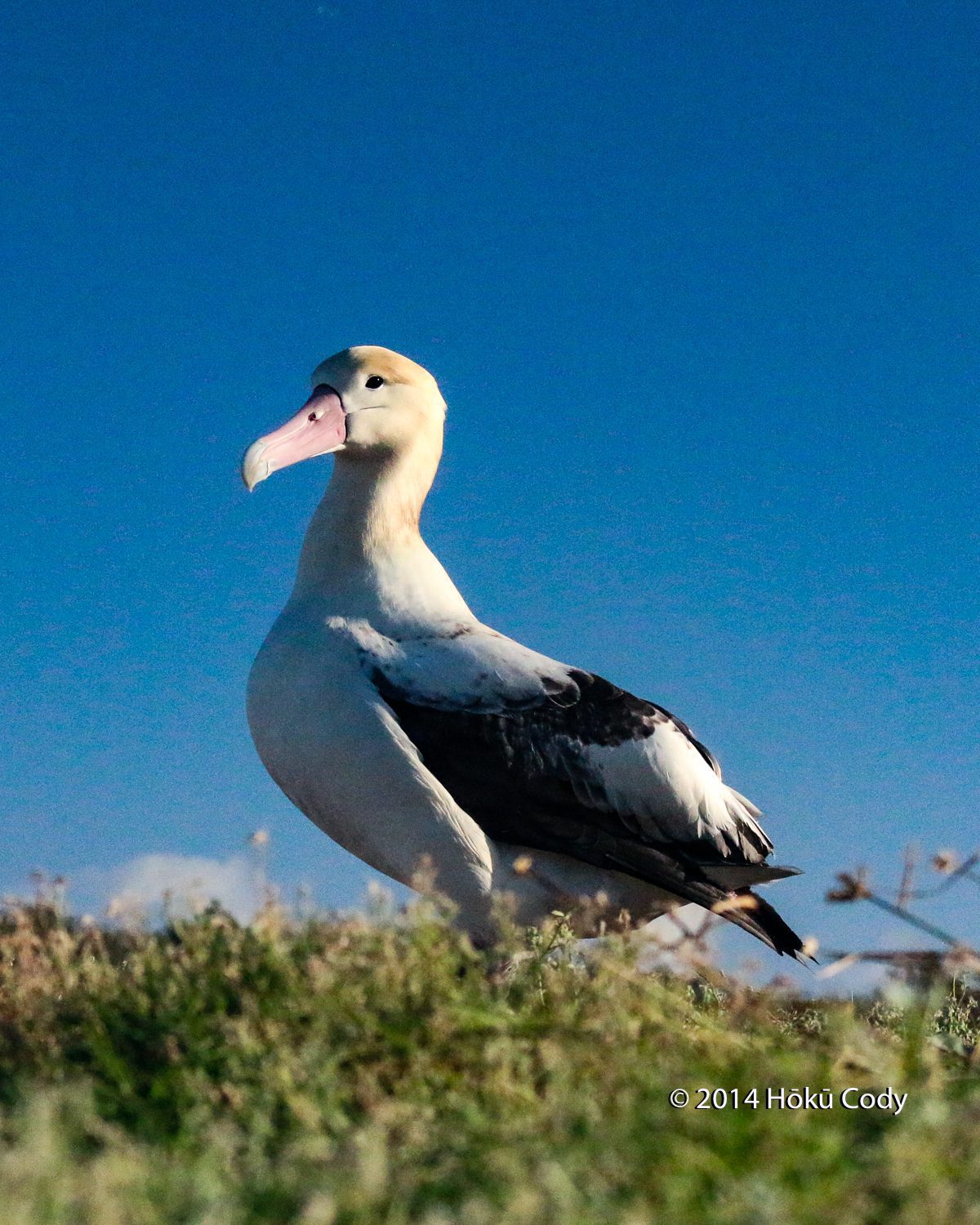
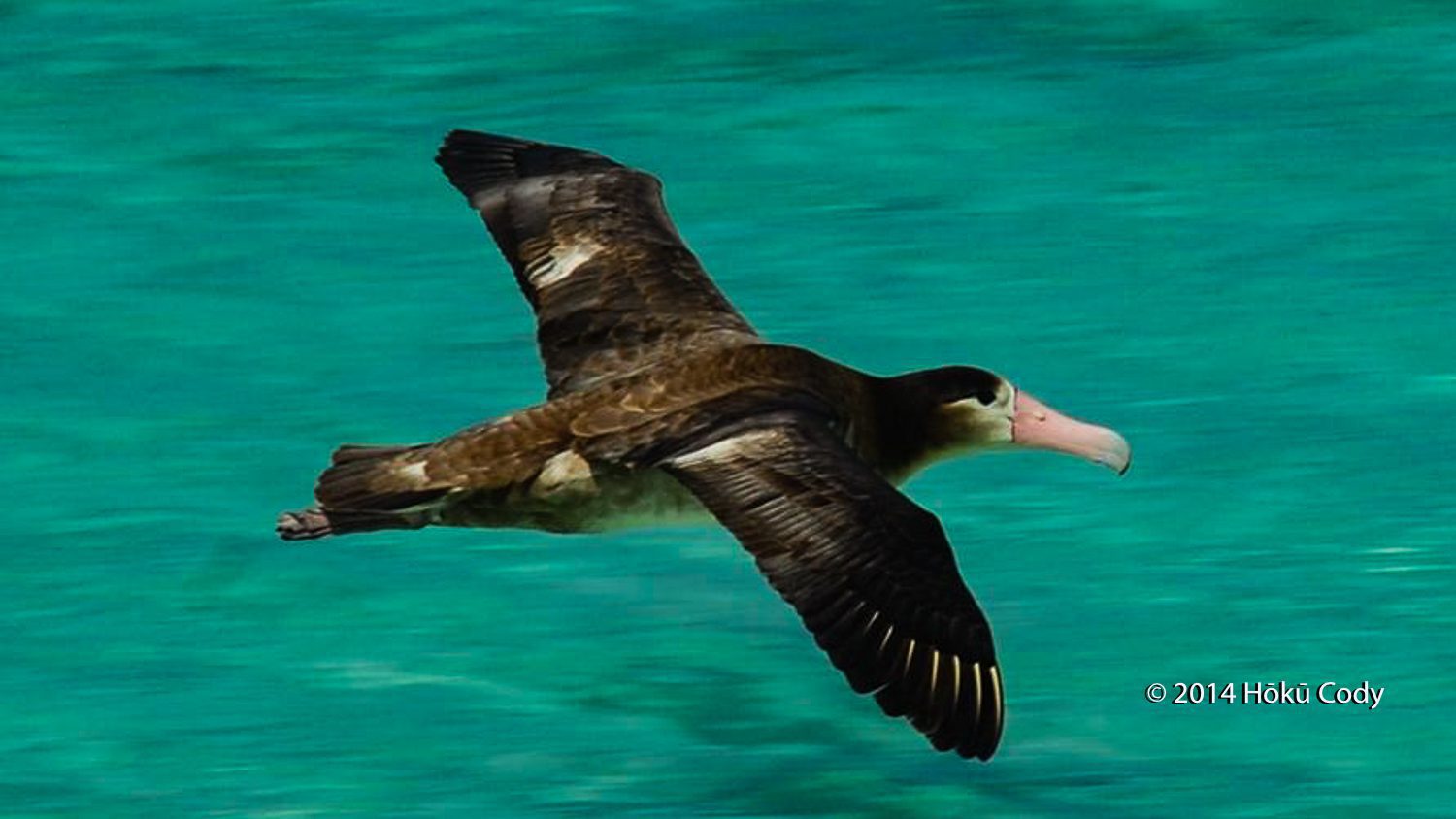
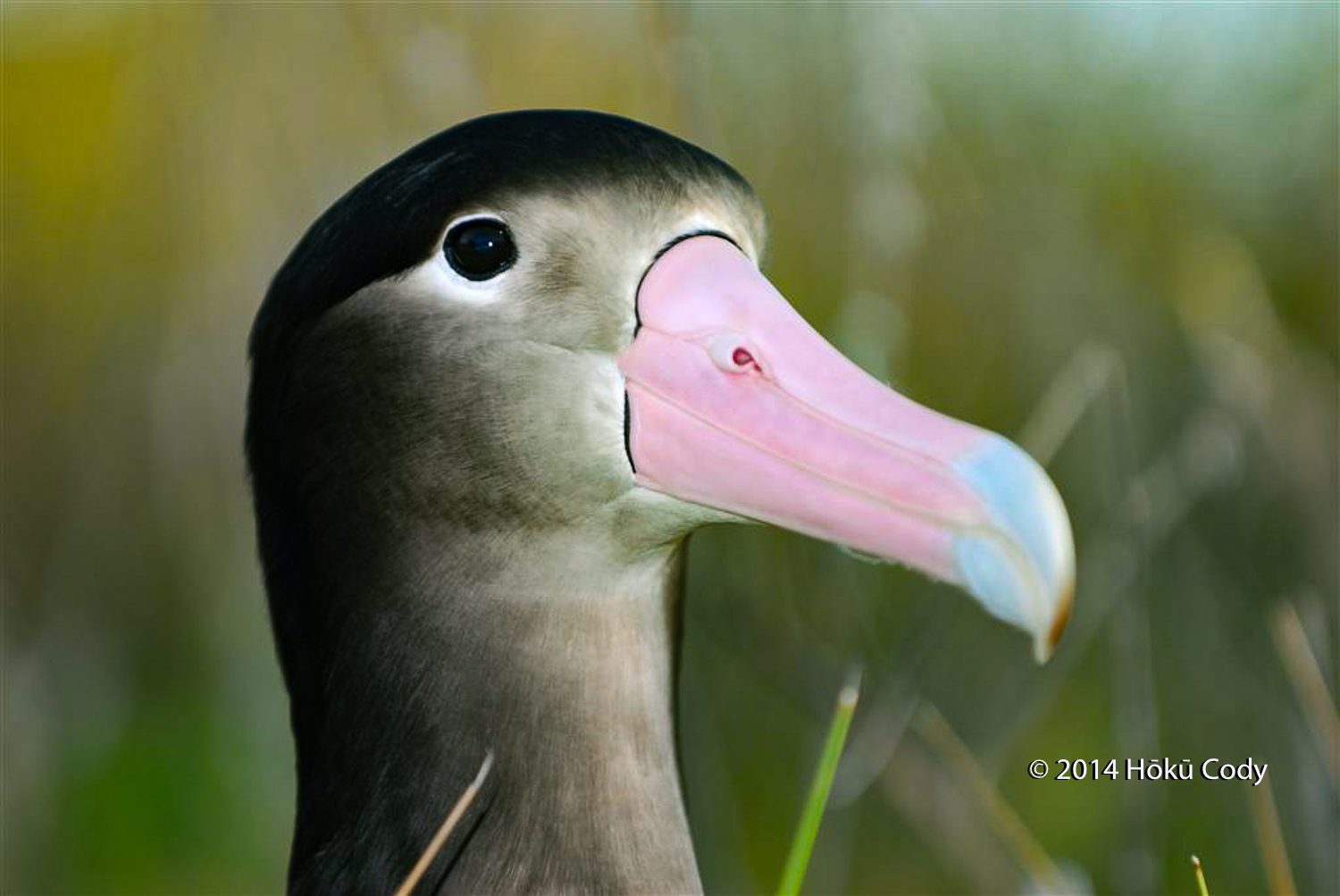
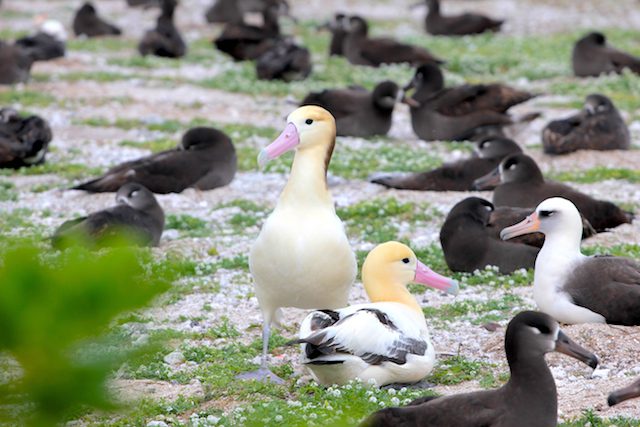
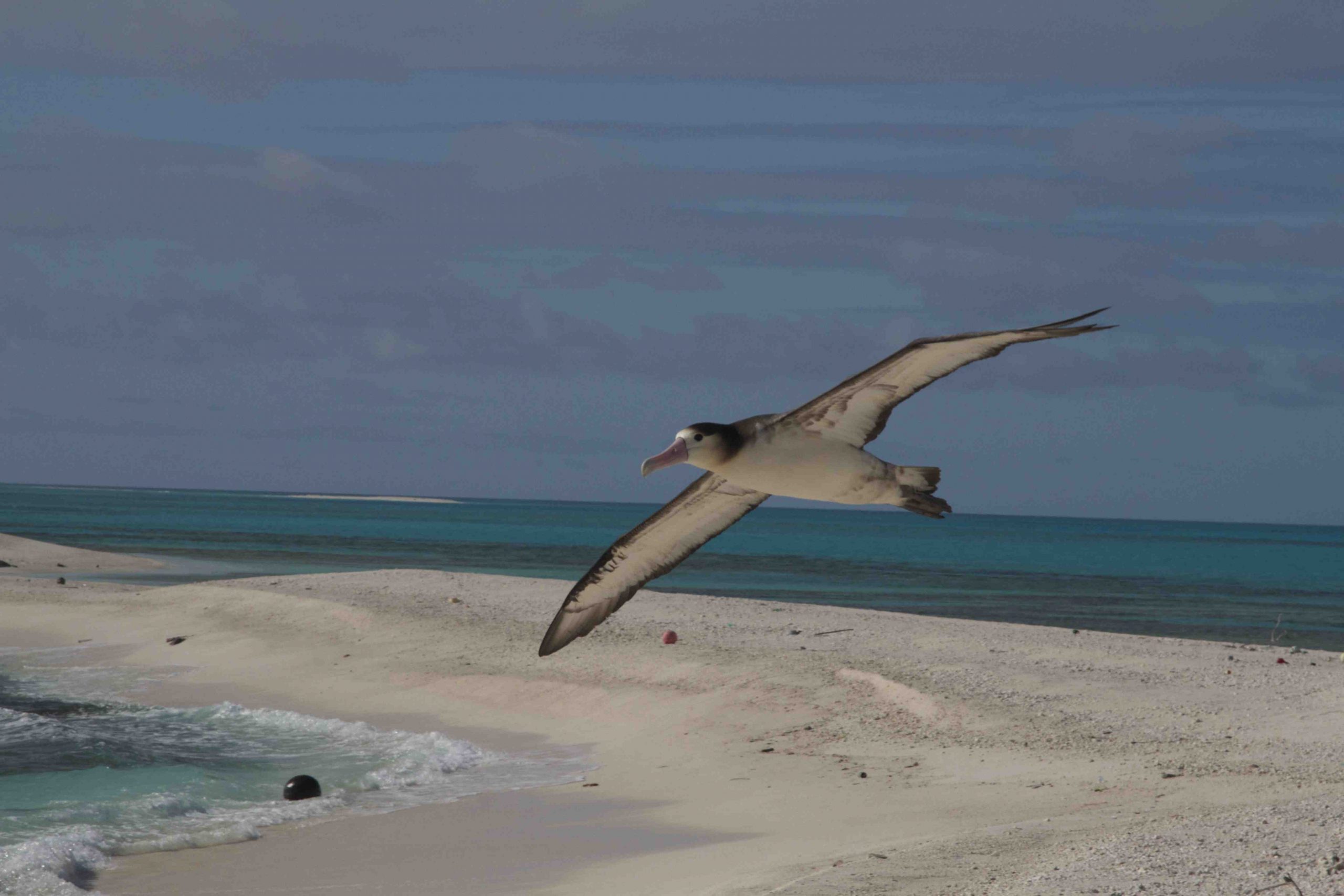
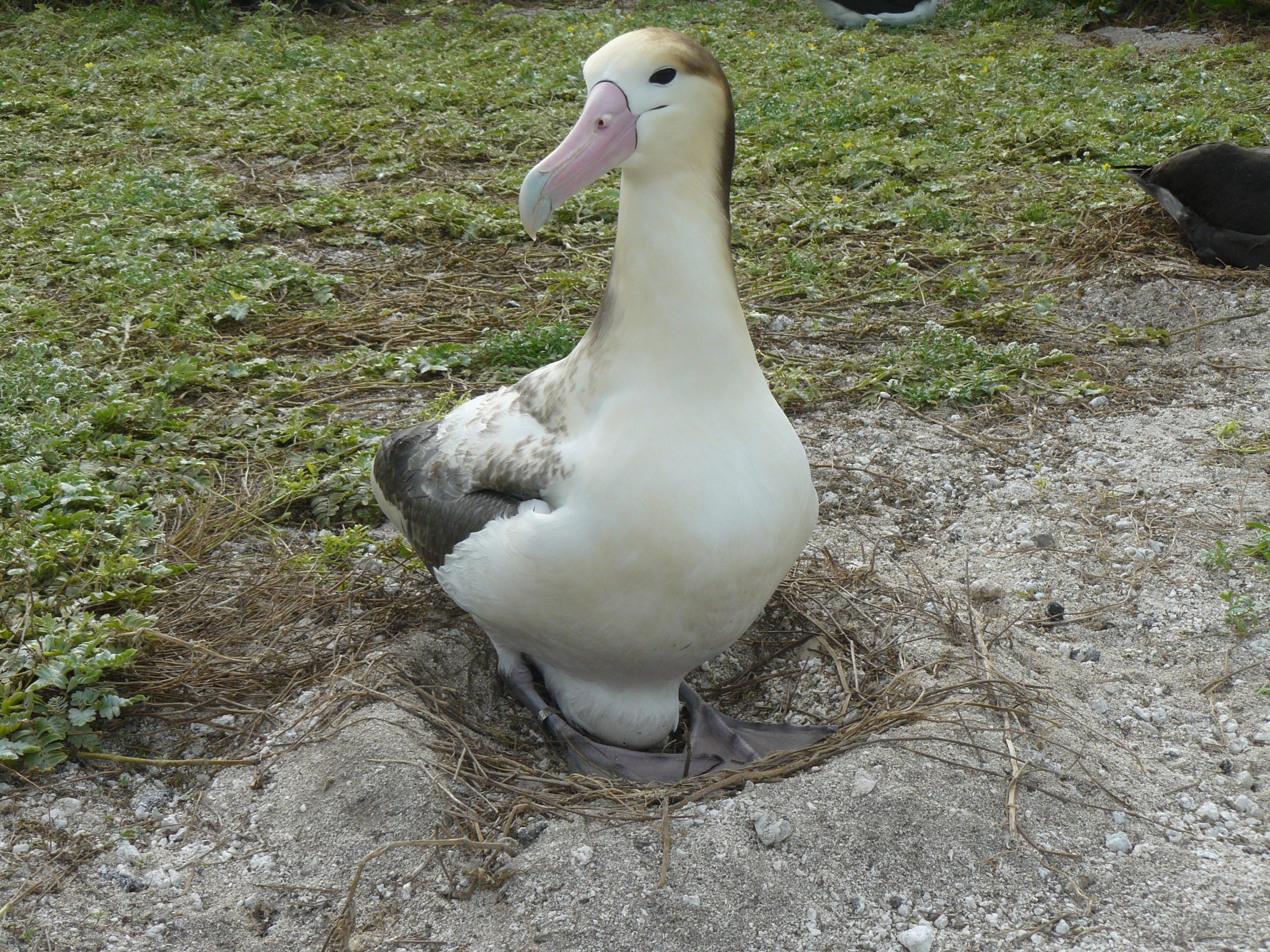
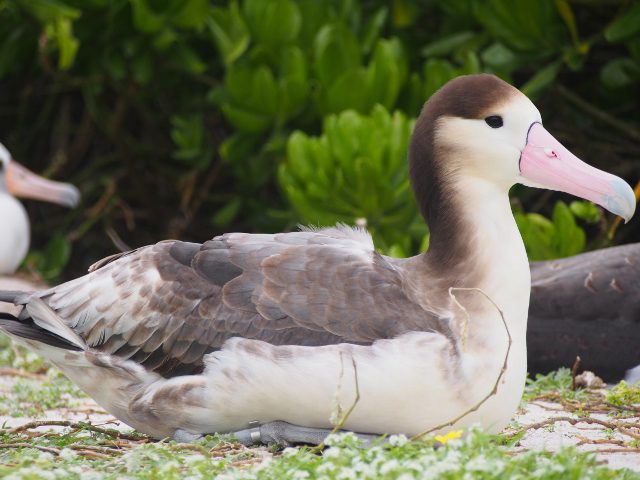
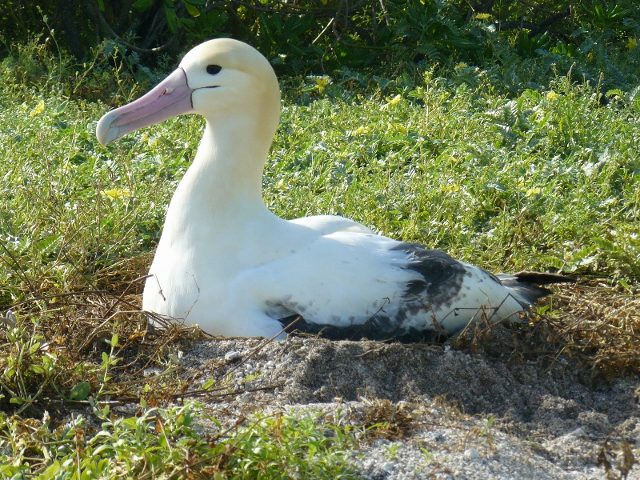
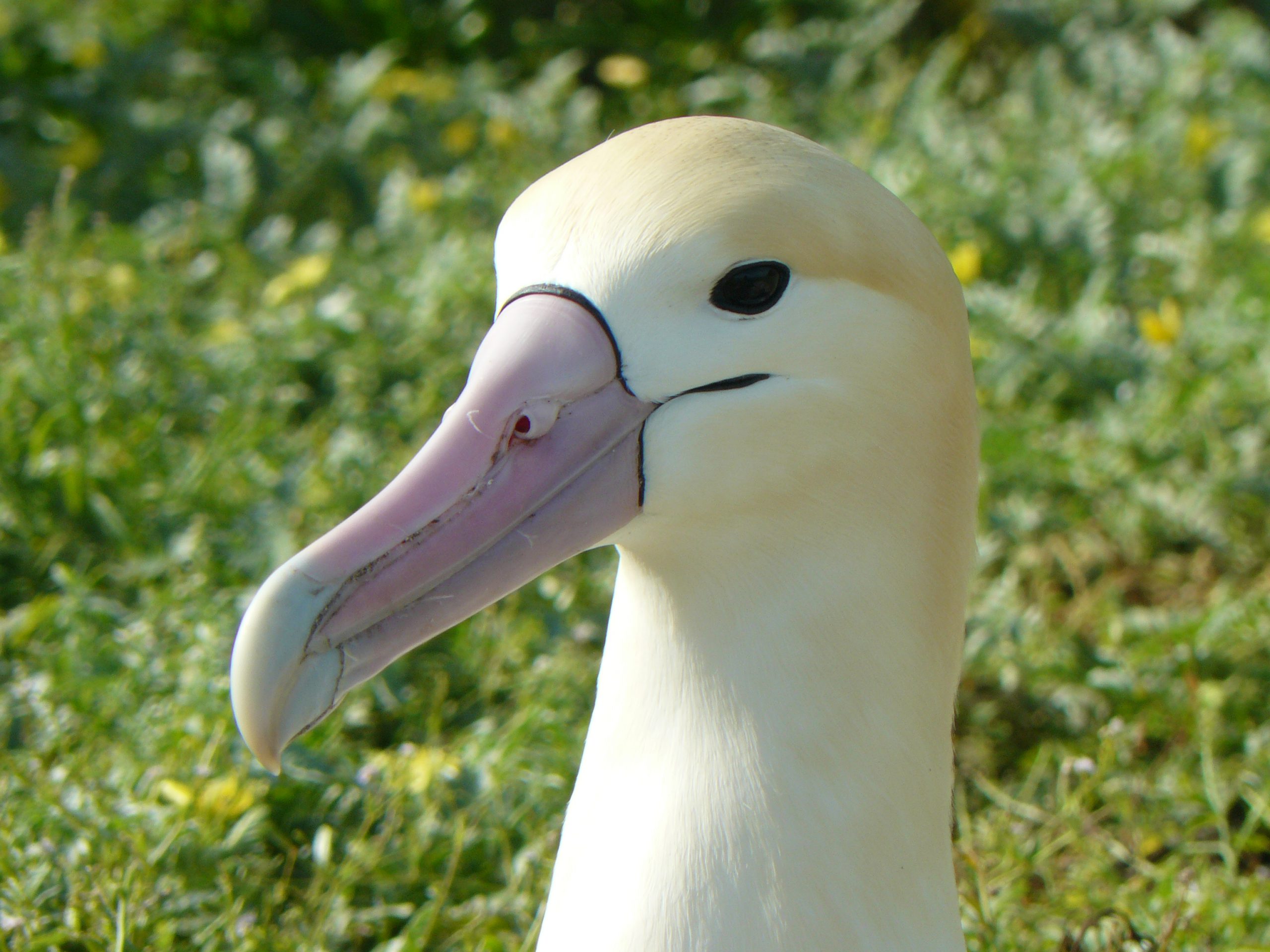
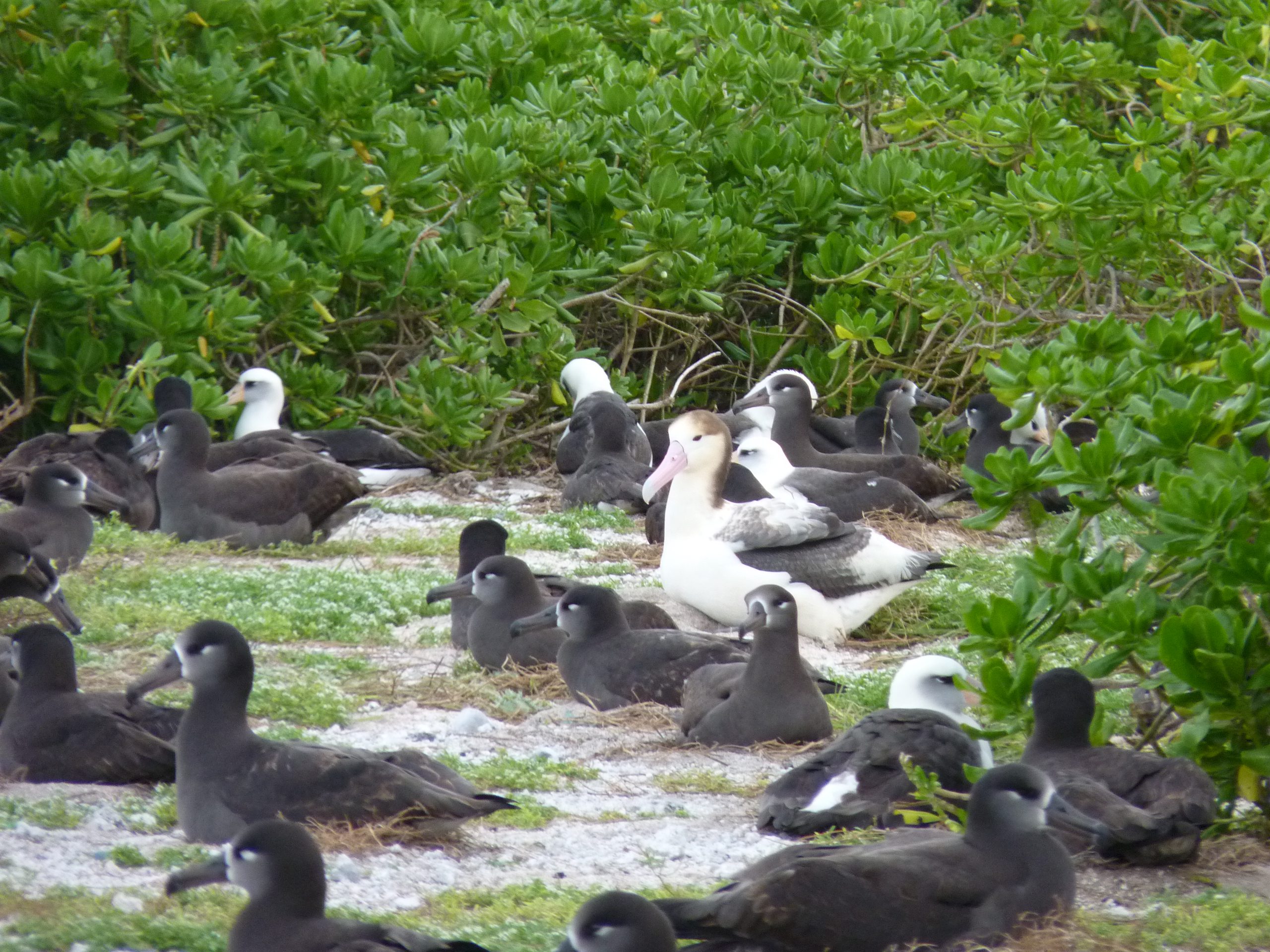
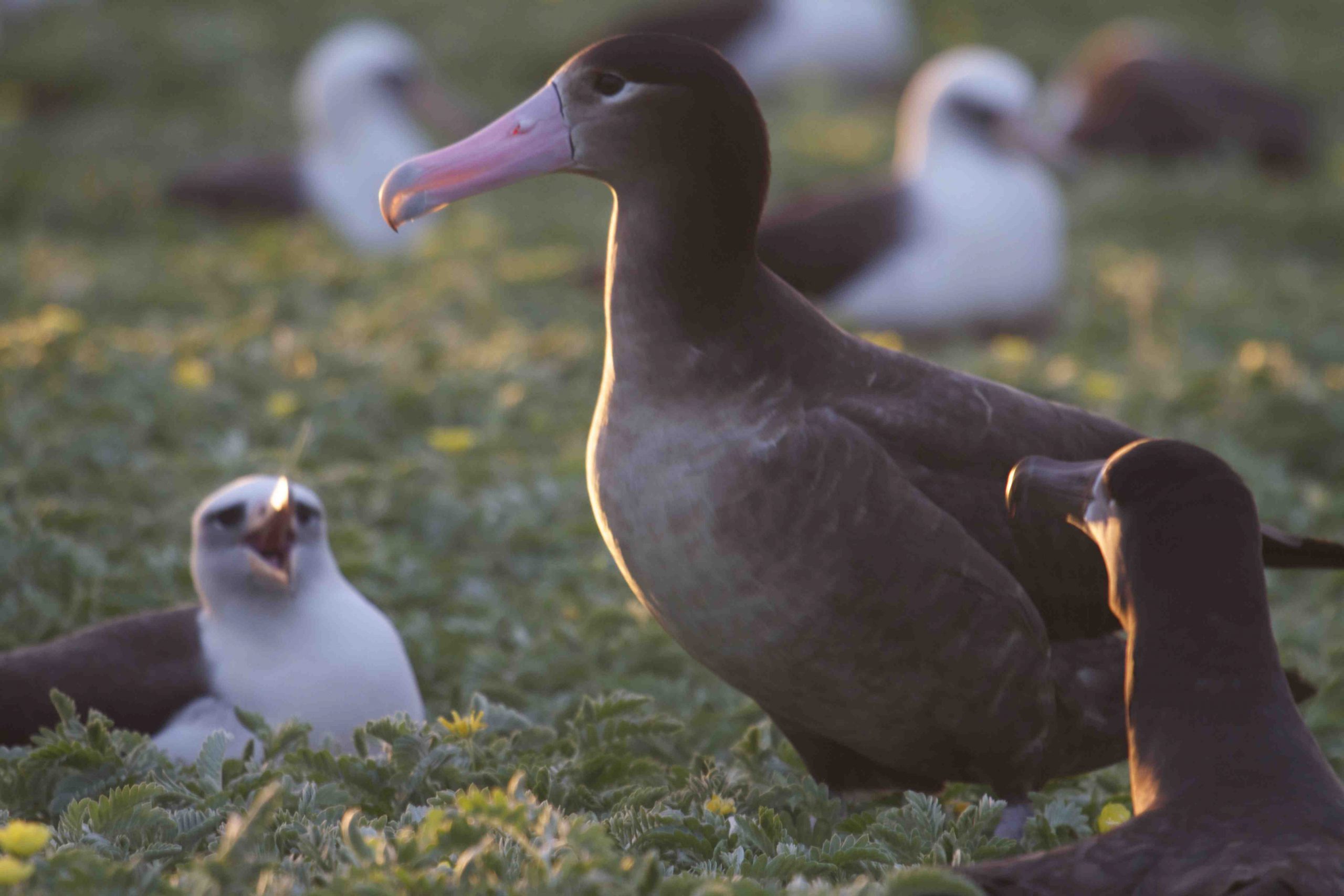
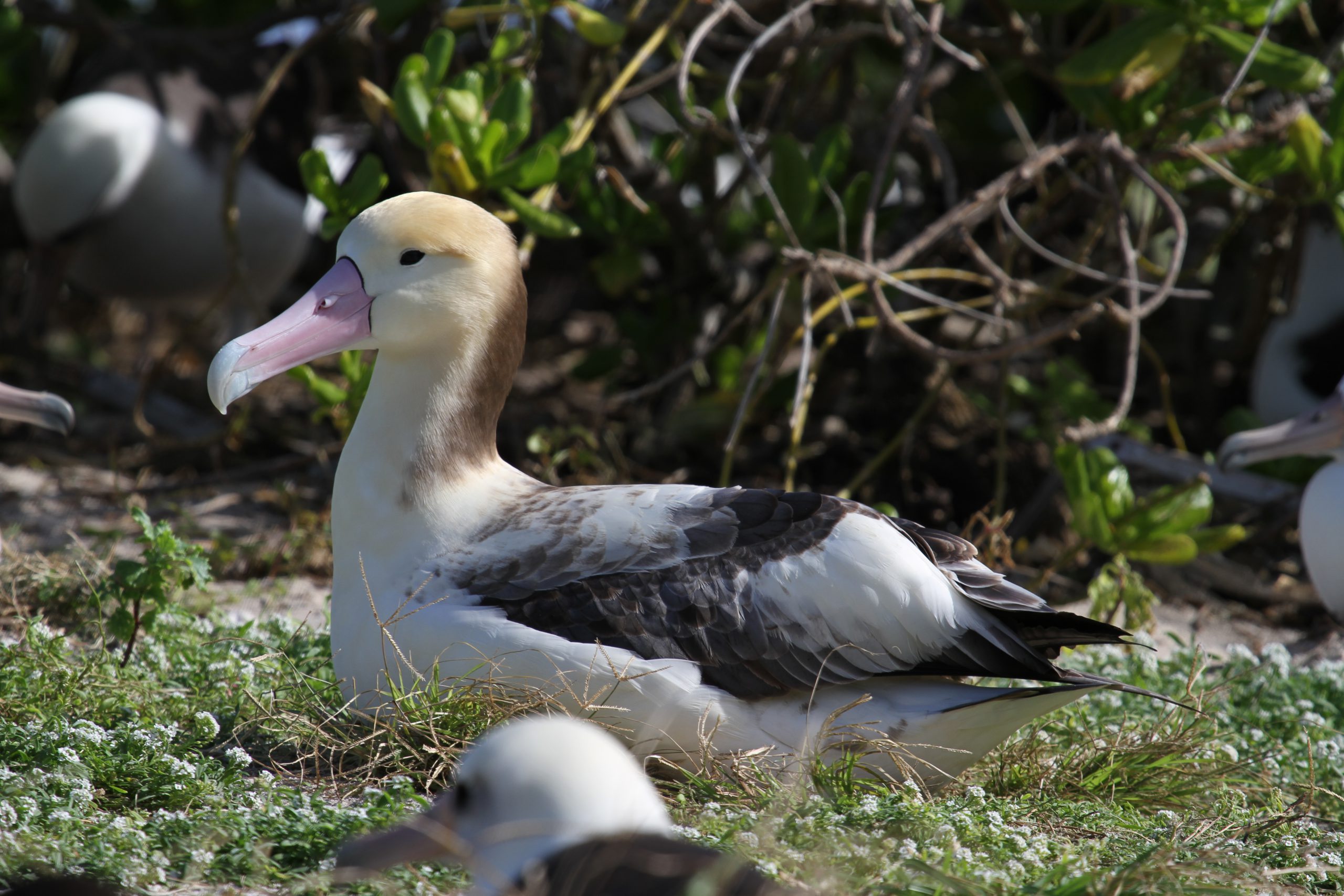
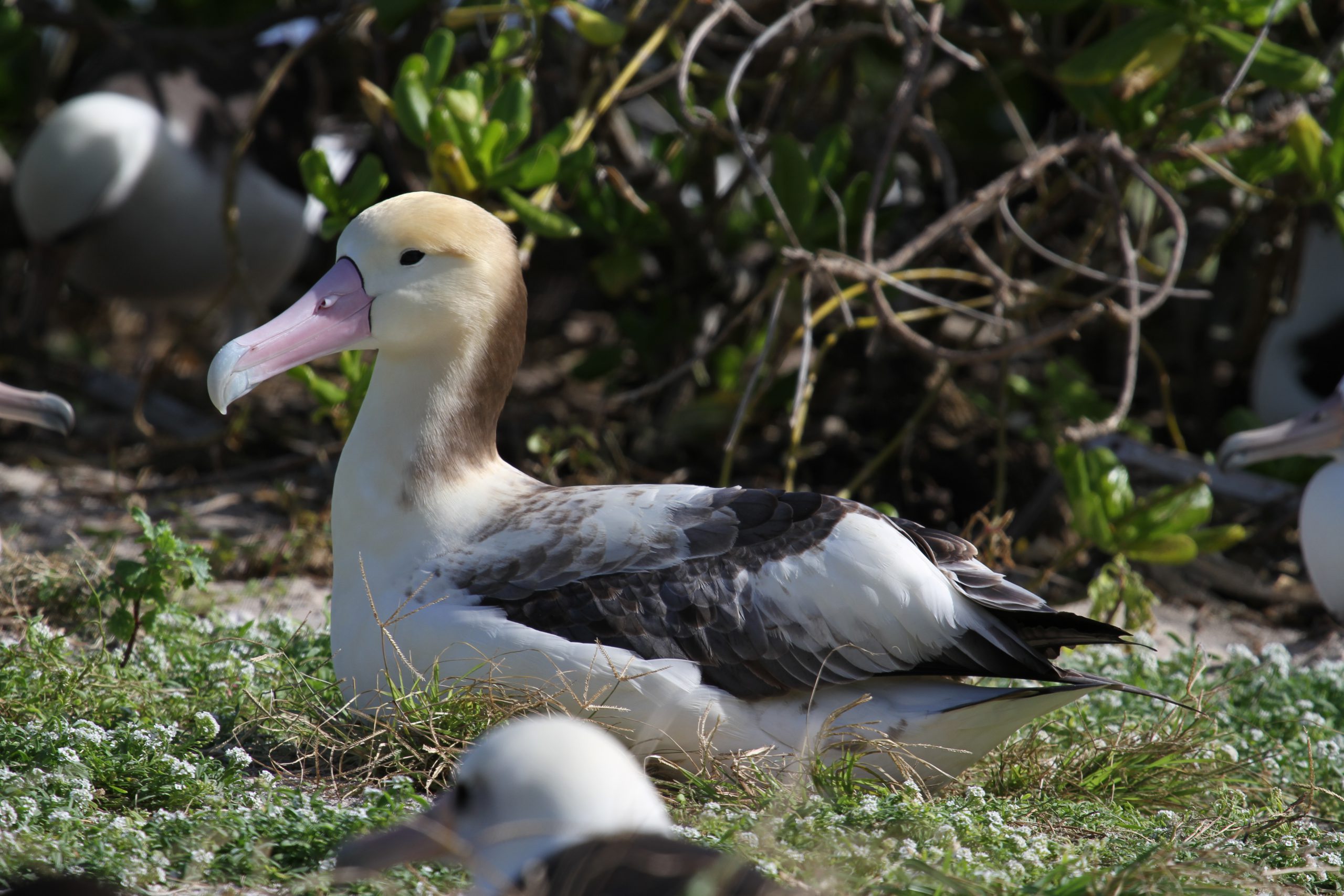
Due to the differences within the juvenile and adult stages, a name was given to each. Makalena refers to the physical features of the adult Short-tailed Albatross that is reflected in the “lena” (yellowish hue) that is seen around the “maka” (eyes). Maka also refers to the blossoming, transitioning, and blooming which are reflected in the physical changes the Short-tailed Albatross experiences from its juvenile to adult growth stages. Ka‘upu‘ākala is for the juvenile of this species, which is similar in appearance and references the Ka‘upu, the adult Black-footed Albatross.
A webinar related to the research of the Papahānaumokuākea Native Hawaiian Cultural Working Group tasked with giving Hawaiian names to numerous other bird, plant, limu, and coral species unique to PMNM.