
Naiʻa
Spinner dolphin
Stenella longirostris longirostris
Playful dolphins that rest in the calm lagoon of Hōlanikū by day and hunt offshore at night.
| Status in Hawaiʻi | Indigenous |
|---|---|
| Federal protection | Marine Mammal Protection Act |
| IUCN Red List | Least concern |
Species Information
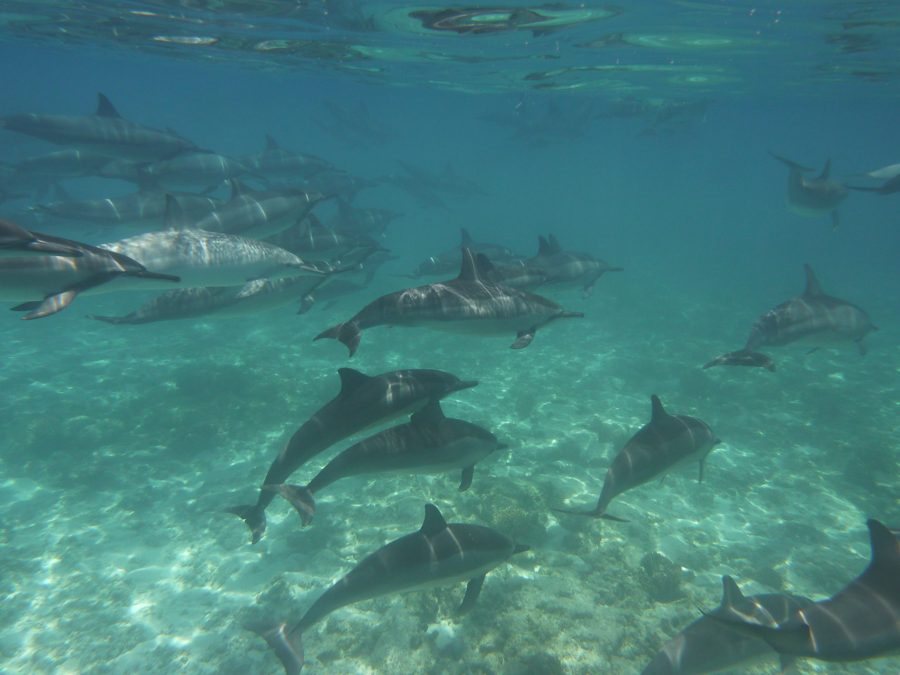
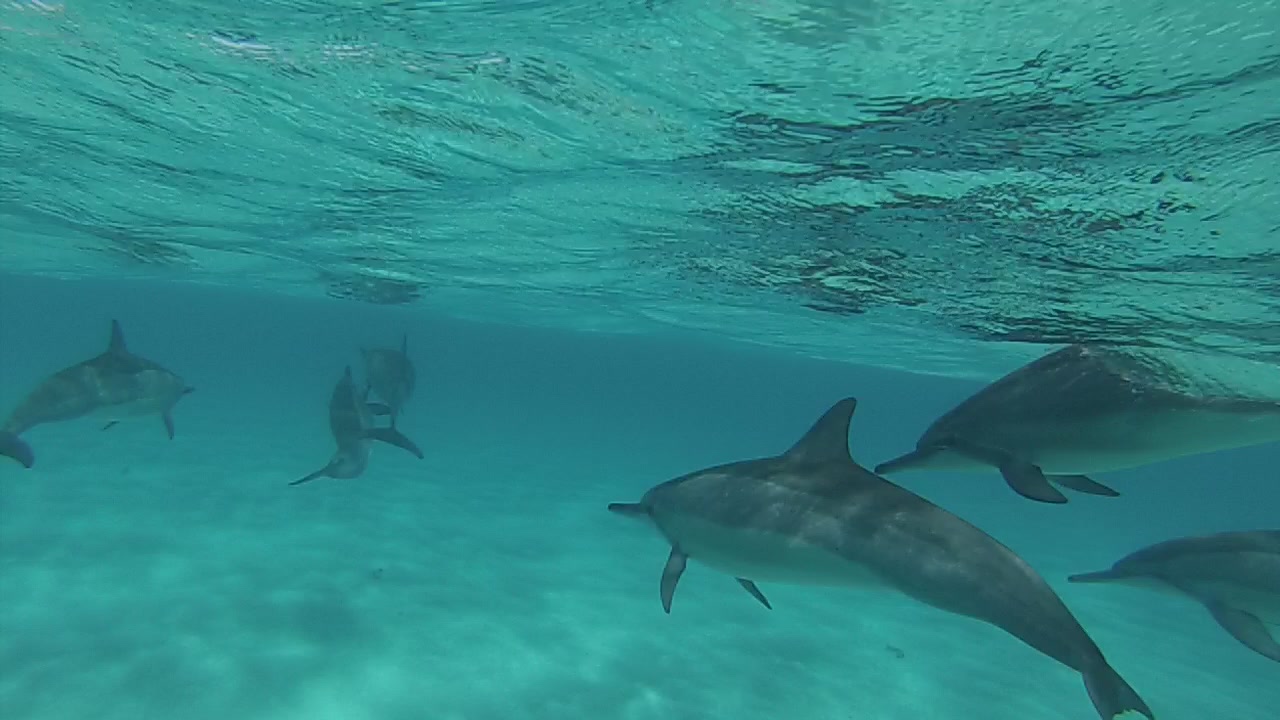
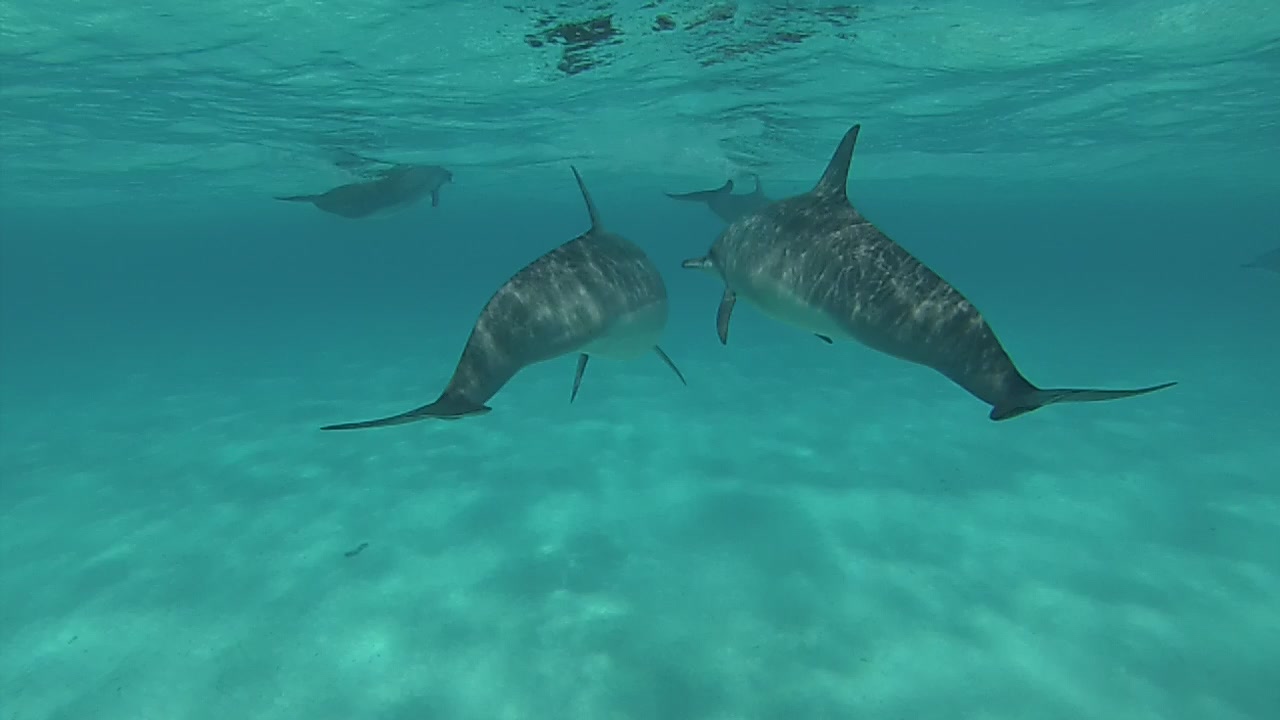
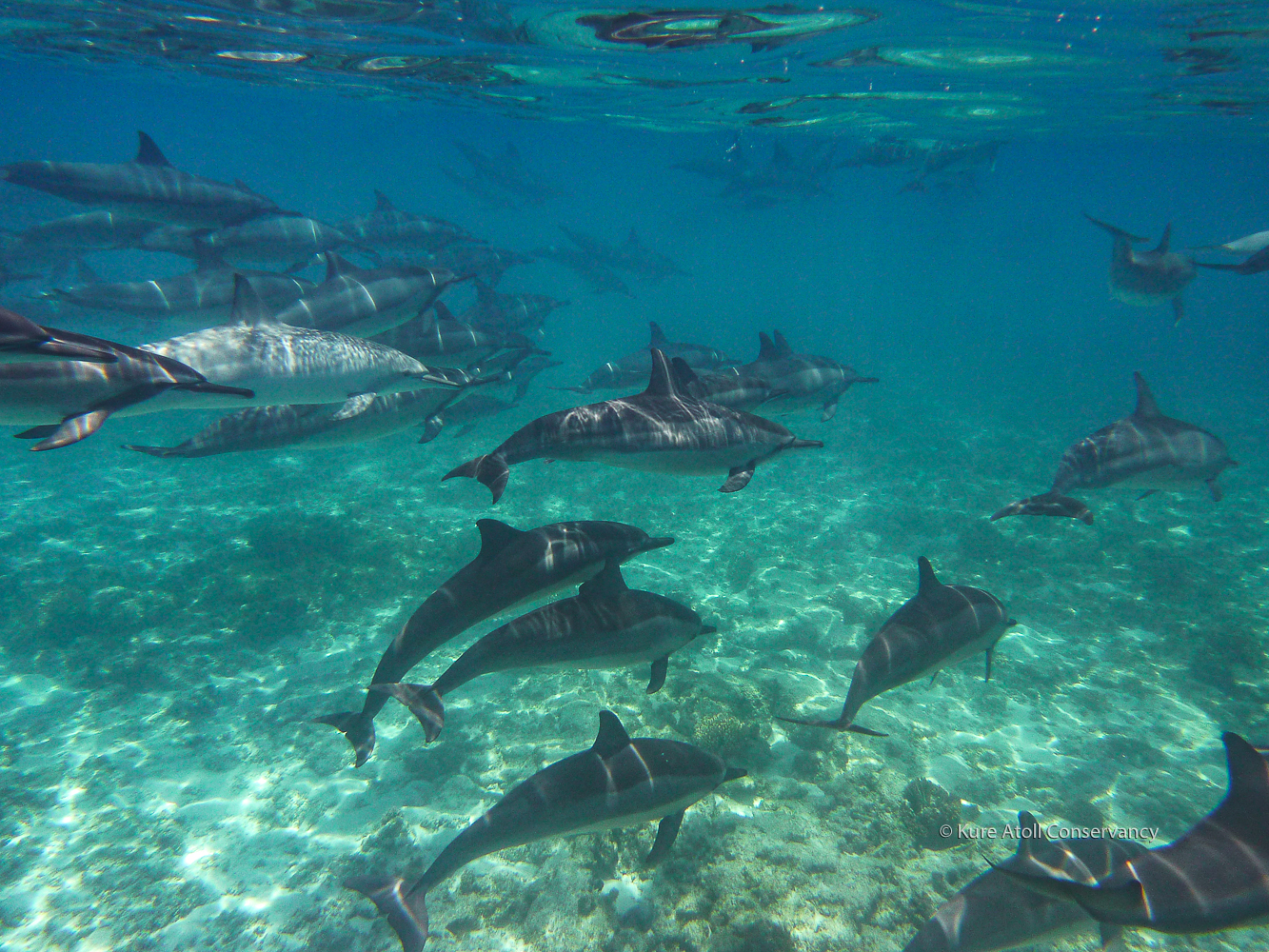
The naiʻa, or Hawaiian spinner dolphin, is a slender dolphin with a long, thin beak. Adults are about 6 to 7 feet long and have a dark gray back, lighter gray sides and a pale belly. They are named for their leaps, in which a dolphin spins several times in the air before splashing down.
Naiʻa is also the general Hawaiian word for dolphins and porpoises.
Foraging & Resting
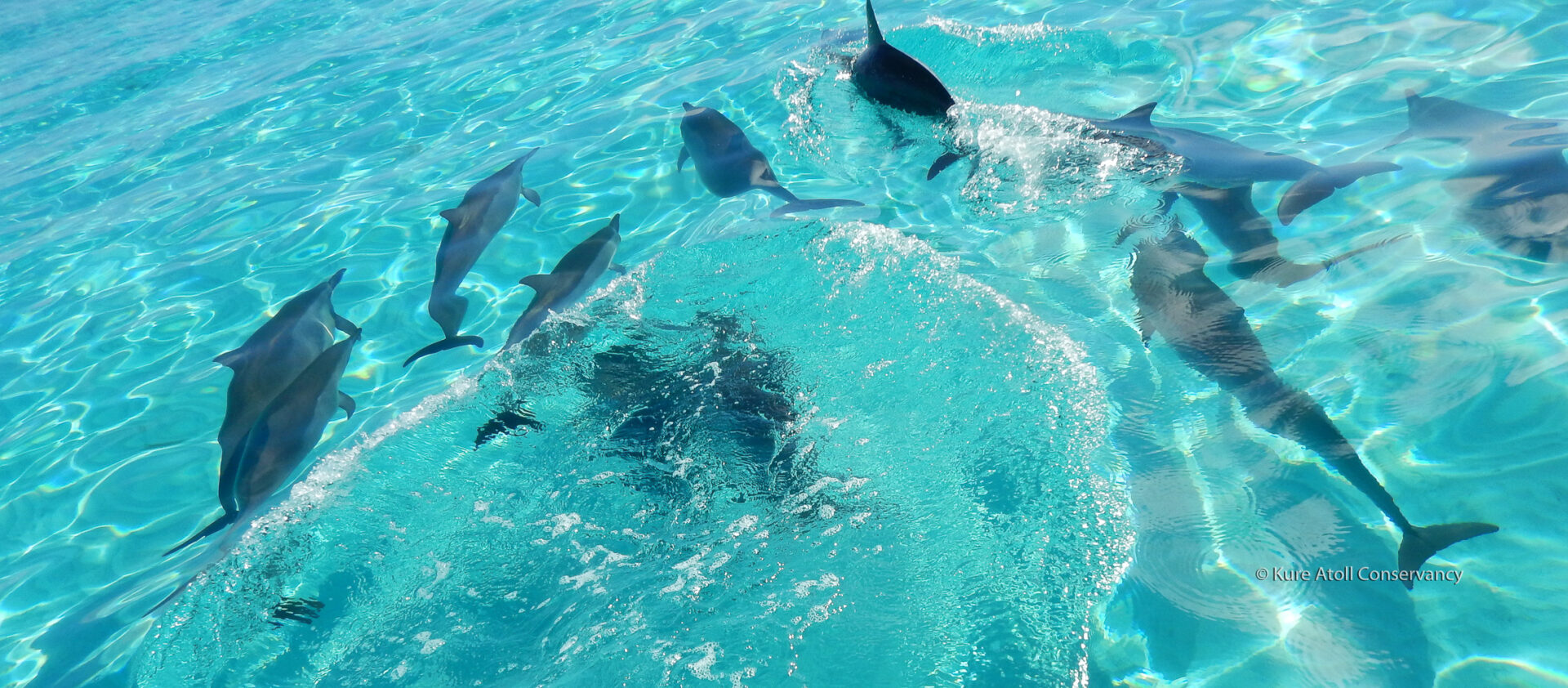
Spinner dolphins rest and socialize in shallow, sheltered water during the day and head out to deep water at night to feed on small fish, squid and shrimp that rise toward the surface in the dark.
At remote atolls such as Hōlanikū and Kuaihelani (Midway), spinner dolphins live in stable groups of long-term companions. Around the main Hawaiian Islands their groups change often. Scientists think the difference comes from the atolls being small and far apart, with deep water close by, so staying "at home" makes more sense than traveling.
Distribution & Abundance
Spinner dolphins live throughout the Hawaiian Islands. NOAA manages them as several island-associated stocks, one of which is the Kuaihelani/Hōlanikū (Midway/Kure) stock. Genetic studies show that dolphins at Hōlanikū, Kuaihelani and Manawai (Pearl and Hermes) form one interbreeding group, separate from those in the main islands. A photo-ID study at Kuaihelani estimated about 260 dolphins in that population.
Conservation Actions
Spinner dolphins are protected under the federal Marine Mammal Protection Act. Researchers led by Leszek Karczmarski and Cynthia Vanderlip studied the dolphins at Hōlanikū every year beginning in 2001, using photo-identification and DNA samples to learn about their numbers, movements and family groups. During one of these surveys in 2006, the crew found the wreck of the Dunnottar Castle. KAC/DLNR crews also record pod sightings during the field season.
Current Threats
Because they rest in shallow water during the day, spinner dolphins are sensitive to disturbance. Around the main islands, boats and swimmers can wake them from rest. They can also be caught in fishing gear and marine debris, and sharks prey on them.
On Hōlanikū
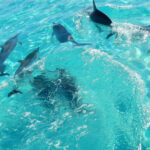
Pods of naiʻa are seen often in the lagoon, near the pier and just outside the reef. Groups range from a dozen to more than 100 dolphins. In June 2019 the crew saw more than 100, and in November 2024 a group of more than 100 swam just outside the reef, with a few spinning. Calves are seen with the adults.
Learn more
NOAA Fisheries explains how spinner dolphins live, rest and feed, and the rules that protect them in the main Hawaiian Islands.
Respecting wildlife
Protected on Hōlanikū
All wildlife on Hōlanikū is protected. The island is the Kure Atoll State Wildlife Sanctuary, inside Papahānaumokuākea Marine National Monument and National Marine Sanctuary, and entry is allowed only by permit. KAC/DLNR work on Hōlanikū is done under the Papahānaumokuākea co-managers' permits, along with other permits where needed, such as NOAA Fisheries permits for monk seal and sea turtle work and federal bird banding permits.
About our photos
Photos and video on this site were taken by permitted crews and partners during research and management work, usually from a distance with zoom or telephoto lenses so animals are not disturbed. Close-ups of animals being handled show permitted work such as banding, tagging, rescue or disentanglement.
Seeing marine animals elsewhere in Hawaiʻi
- Keep your distance: at least 10 feet from honu, 50 feet from monk seals (150 feet from a mother and pup), 50 yards from spinner dolphins and 100 yards from humpback whales. The dolphin and whale distances are federal law.
- Never touch, chase, feed or swim with them, and keep visits short.
- Use binoculars or your camera's zoom for a closer look, and don't fly drones near wildlife.
- Keep dogs on a leash on beaches.
- Report injured, entangled or stranded animals to the NOAA Marine Wildlife Hotline at 888-256-9840.
More marine life of Hōlanikū
Help protect native habitat on Hōlanikū
KAC/DLNR field crews monitor wildlife and restore habitat year-round. Your support keeps them on the island.