
Iʻa
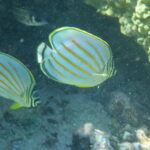
Reef and lagoon fish
A reef ruled by big predators at the northern edge of the tropics, with fish found nowhere else on Earth.
| Fishing | Not allowed in the State Marine Refuge |
|---|---|
| Protected area | Papahānaumokuākea Marine National Monument and National Marine Sanctuary |
| Fish species recorded | About 155 |
| Deep-reef endemism | 100% (2015 surveys) |
About the reef
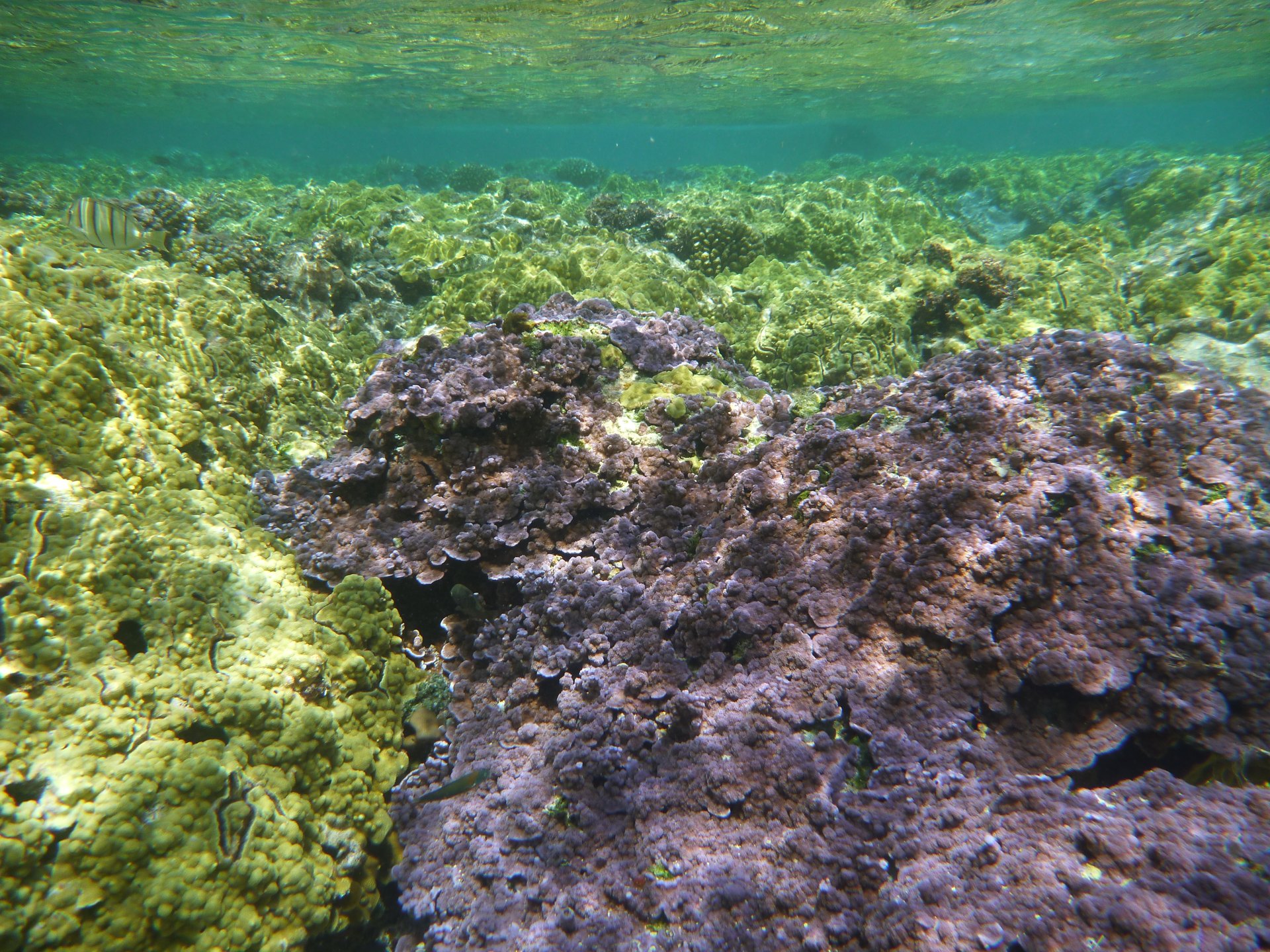
Hōlanikū is the northernmost coral atoll in the world, where cool winter water sets the limit for reef growth. A ring of reef surrounds a lagoon about six miles across, with sand flats, patch reefs and channels.
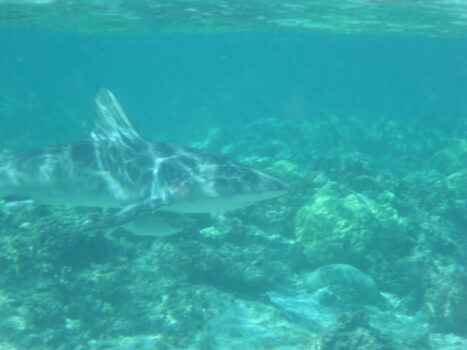
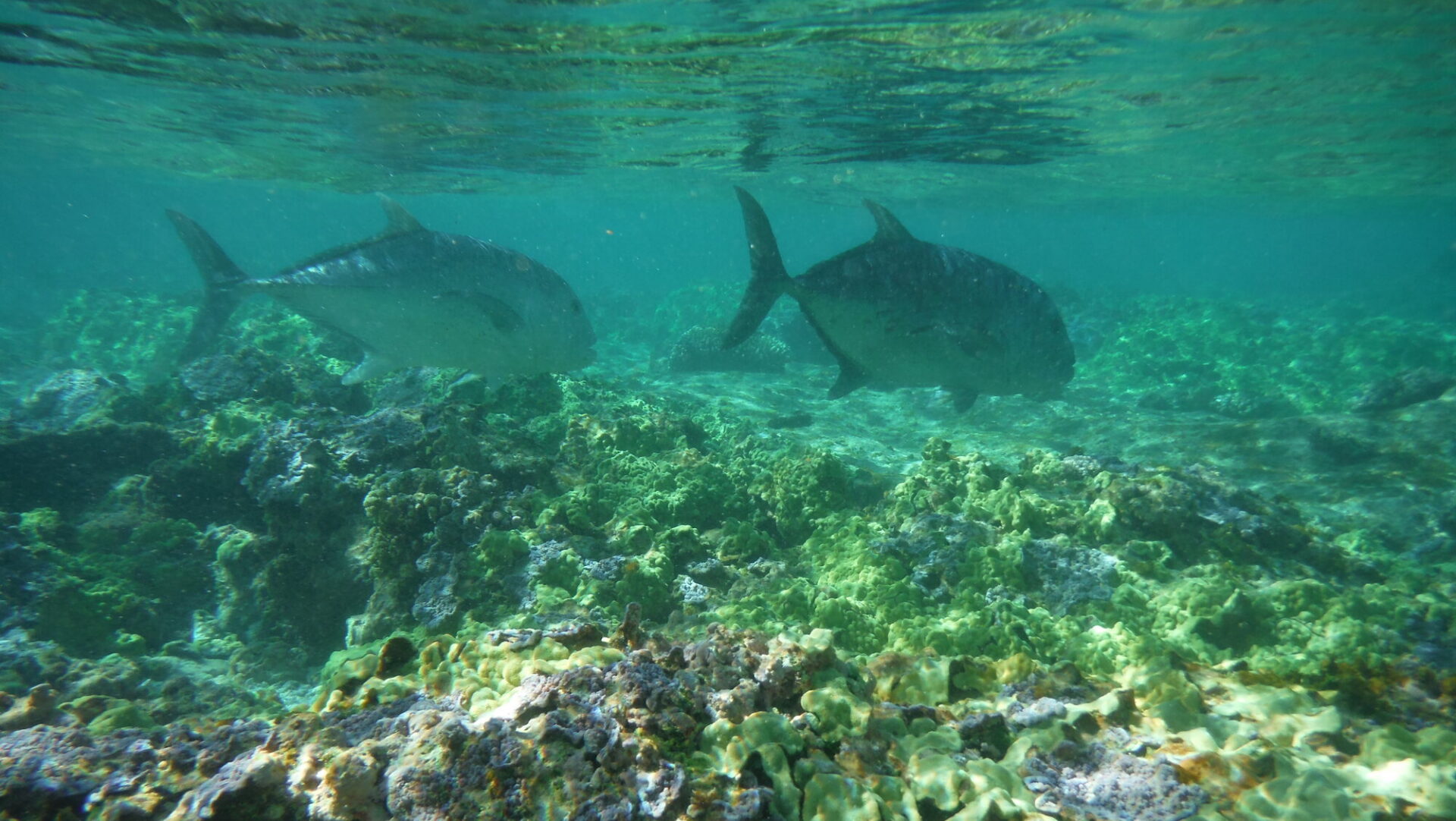
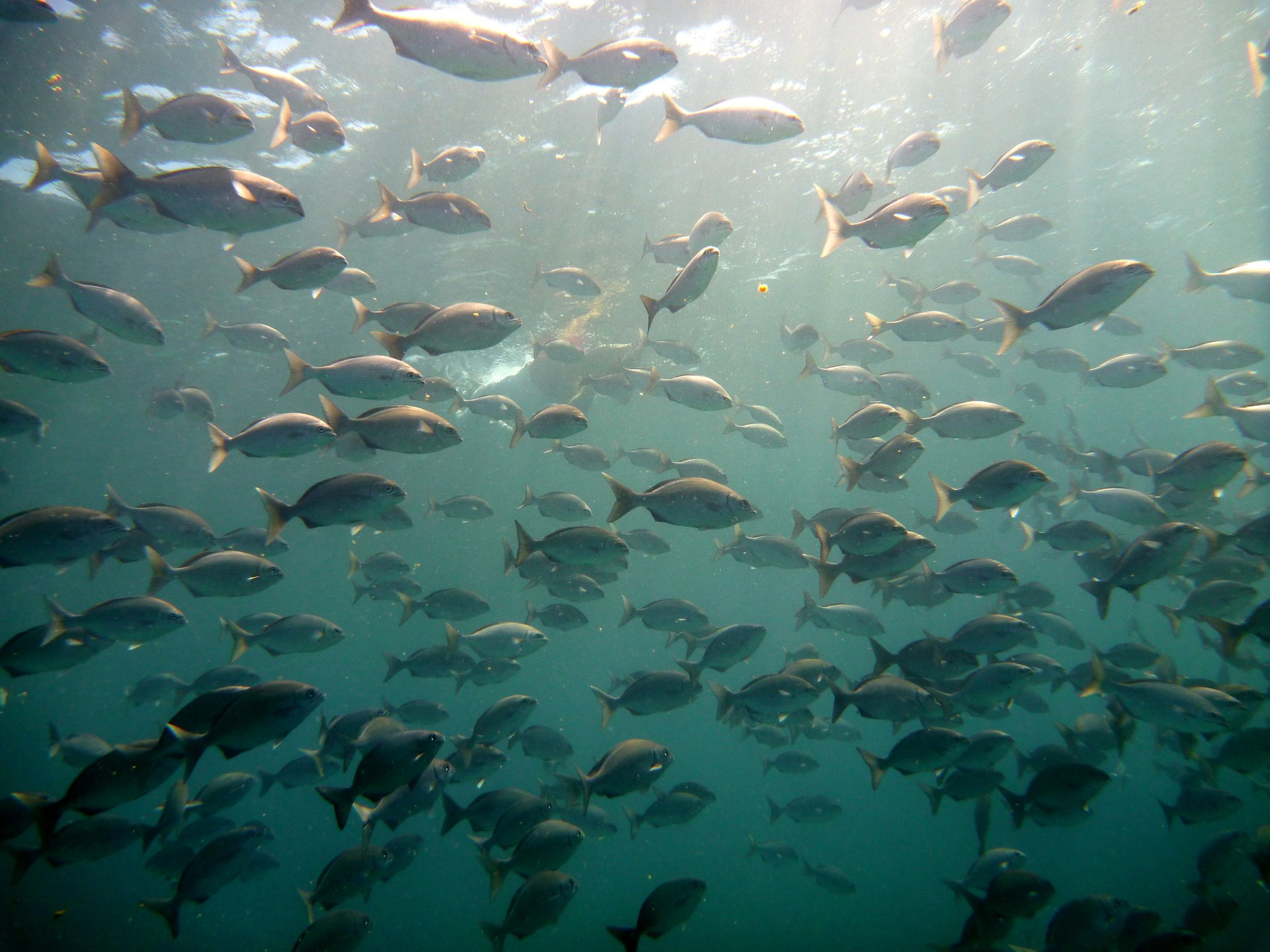
Because the reefs of Papahānaumokuākea are remote and closed to fishing, they look very different from reefs in the main Hawaiian Islands. More than half of the fish biomass here is made up of apex predators such as ulua (giant trevally), other jacks and sharks, compared with less than 3% in the main islands. The share of fish found only in Hawaiʻi also rises toward the northwest, so the northern atolls have some of the most Hawaiian reef fish communities anywhere.
Notable fish
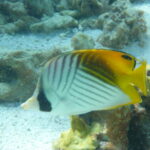
Masked angelfish (Genicanthus personatus). A rare Hawaiian endemic that usually lives deep, down to almost 500 feet. In 2024 NOAA divers saw one at Hōlanikū at only about 30 feet.
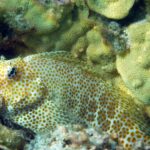
Hāpuʻupuʻu, Hawaiian grouper (Hyporthodus quernus). Found only in Hawaiʻi and most common around Kuaihelani (Midway) and Hōlanikū. It is very rarely seen in the main islands.
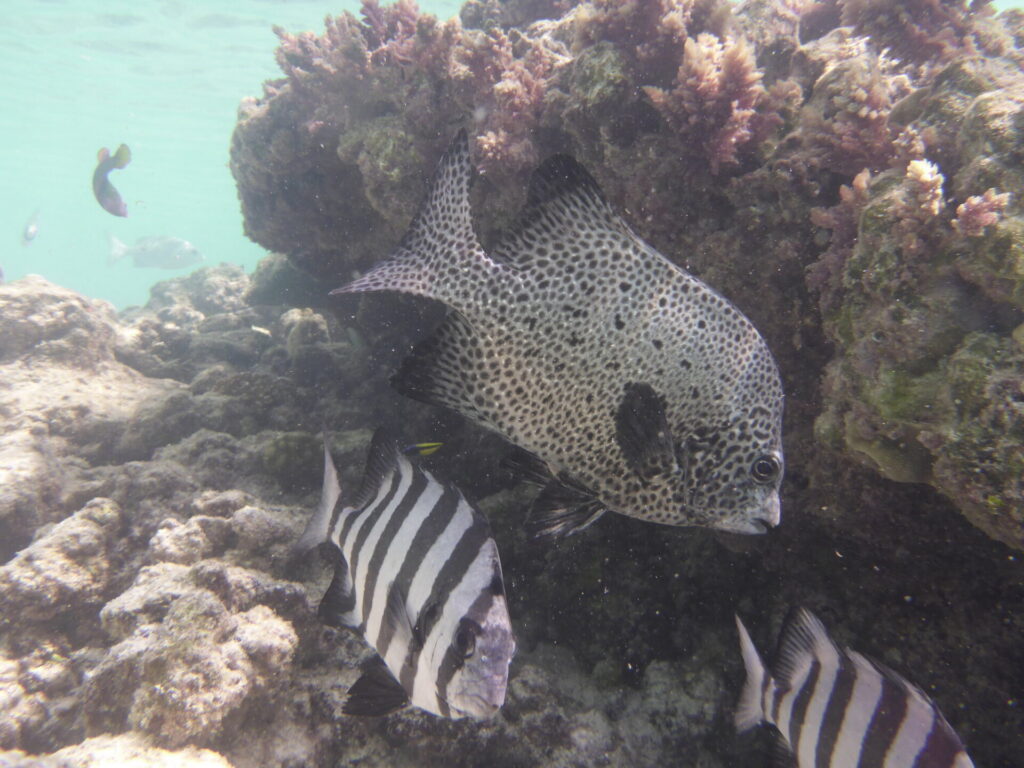
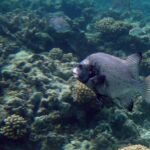
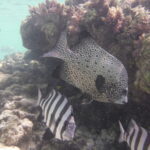
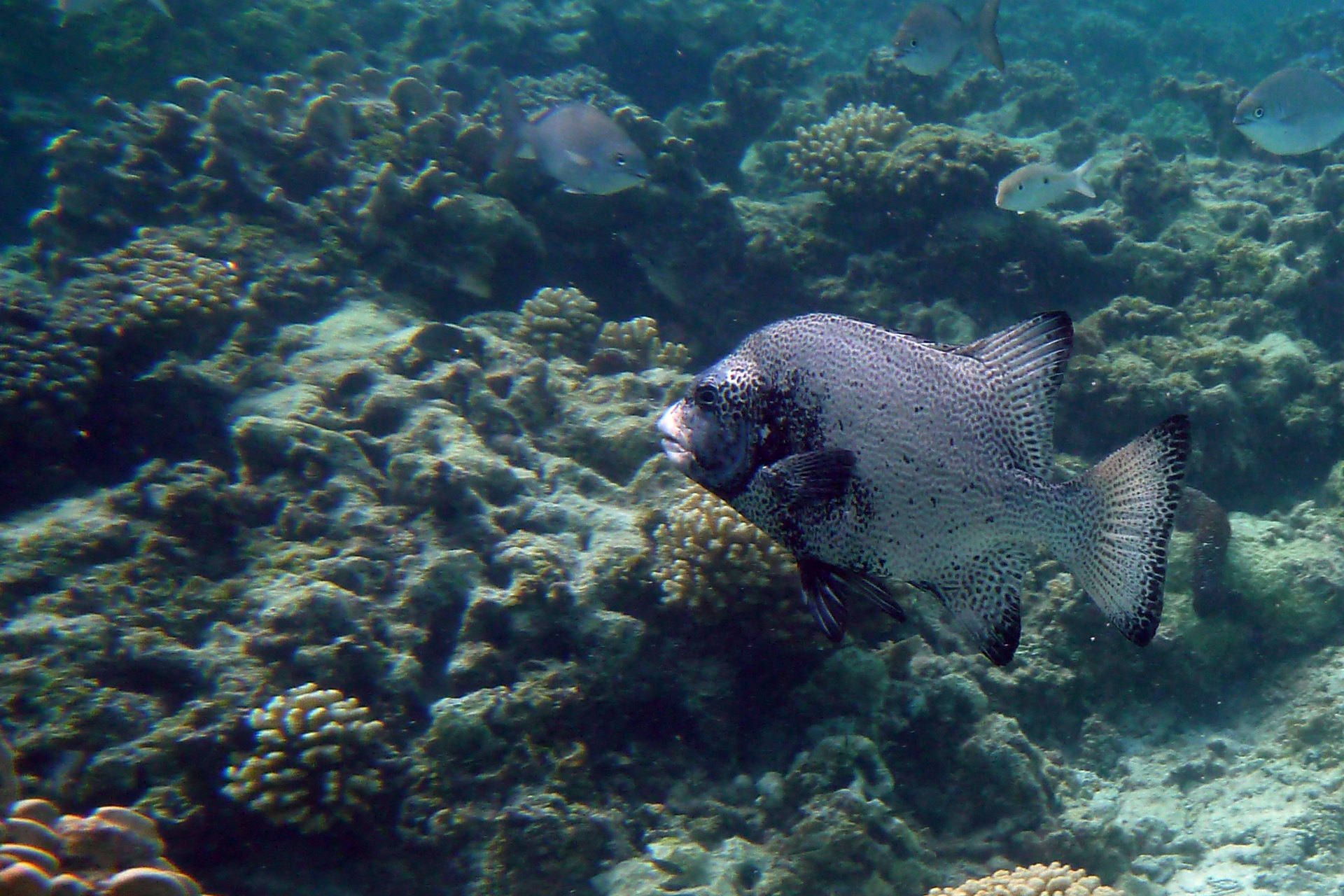
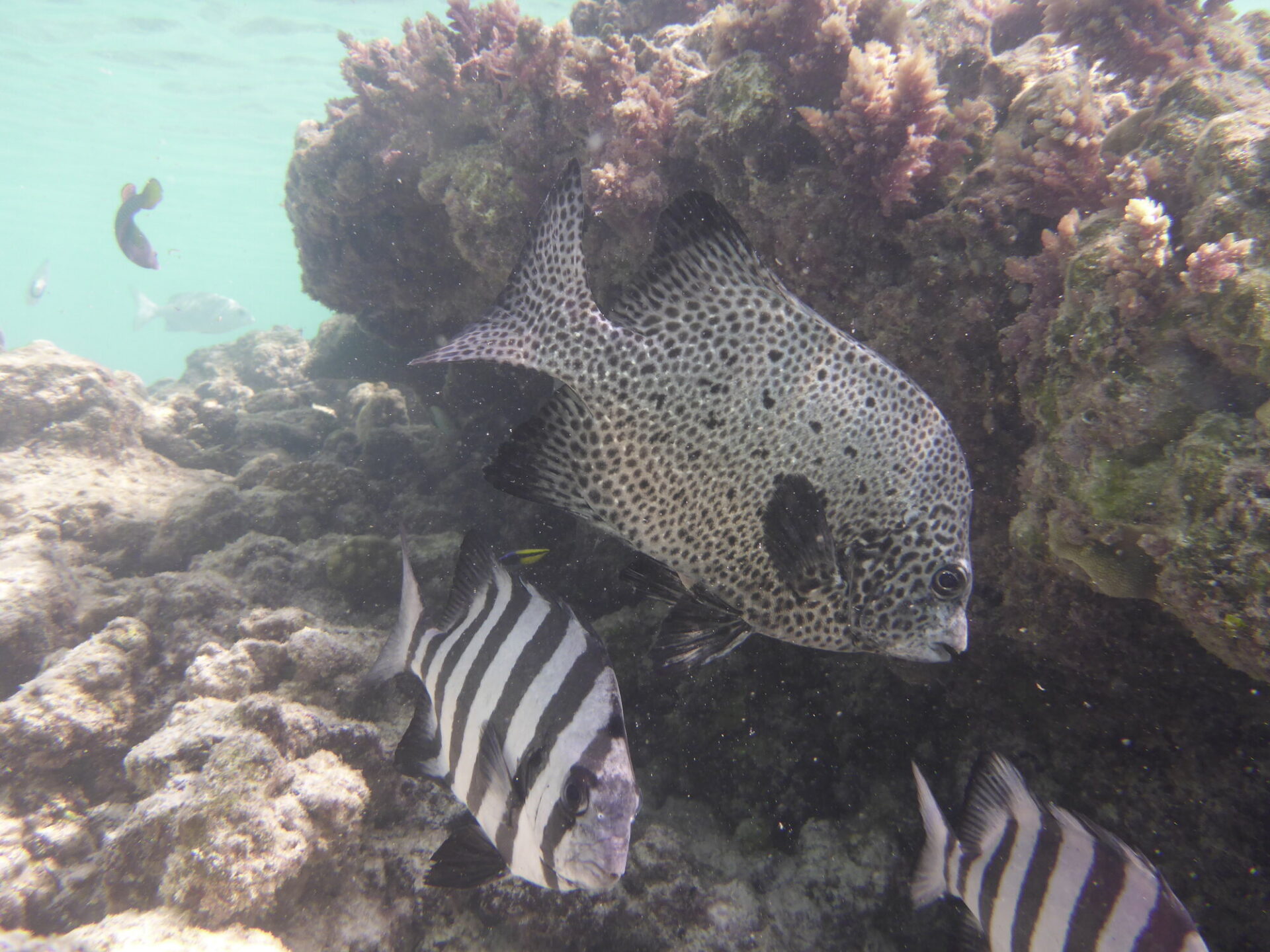
Spotted and barred knifejaws (Oplegnathus punctatus and O. fasciatus). Cool-water fish with beak-like teeth for crushing shells. The barred knifejaw is almost never seen south of Manawai (Pearl and Hermes). At Hōlanikū both species can be seen together on the reef, and crews have seen spotted knifejaws under the pier.
Japanese angelfish (Centropyge interrupta). Once thought to live only around Japan. The first one recorded in Hawaiʻi was collected at Kure Atoll.
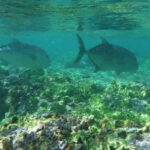
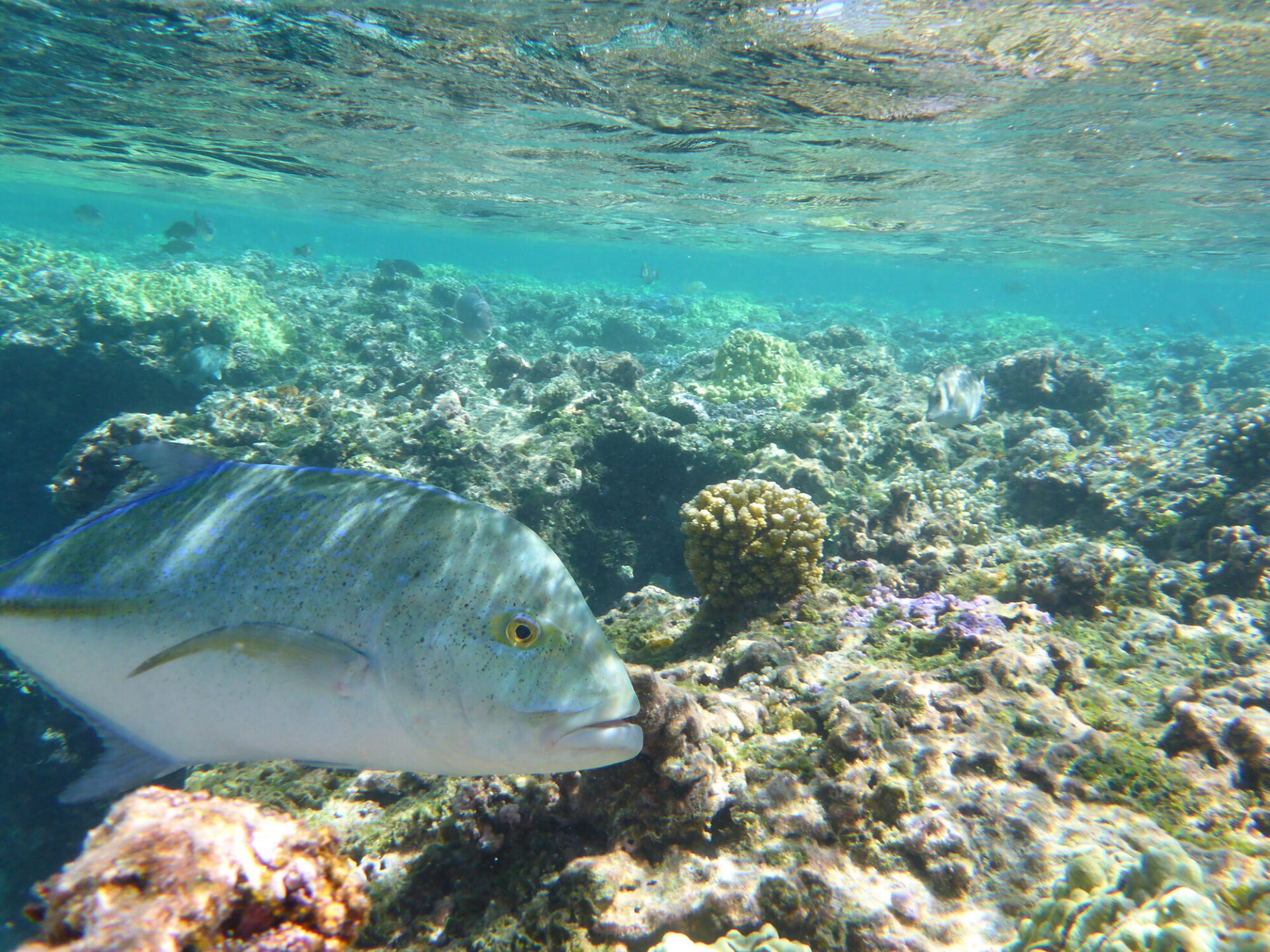
Ulua and ʻōmilu (giant and bluefin trevally). Hunting groups patrol the pier in the evening, and ulua often follow monk seals to grab prey the seals flush from the reef.
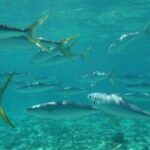
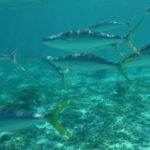
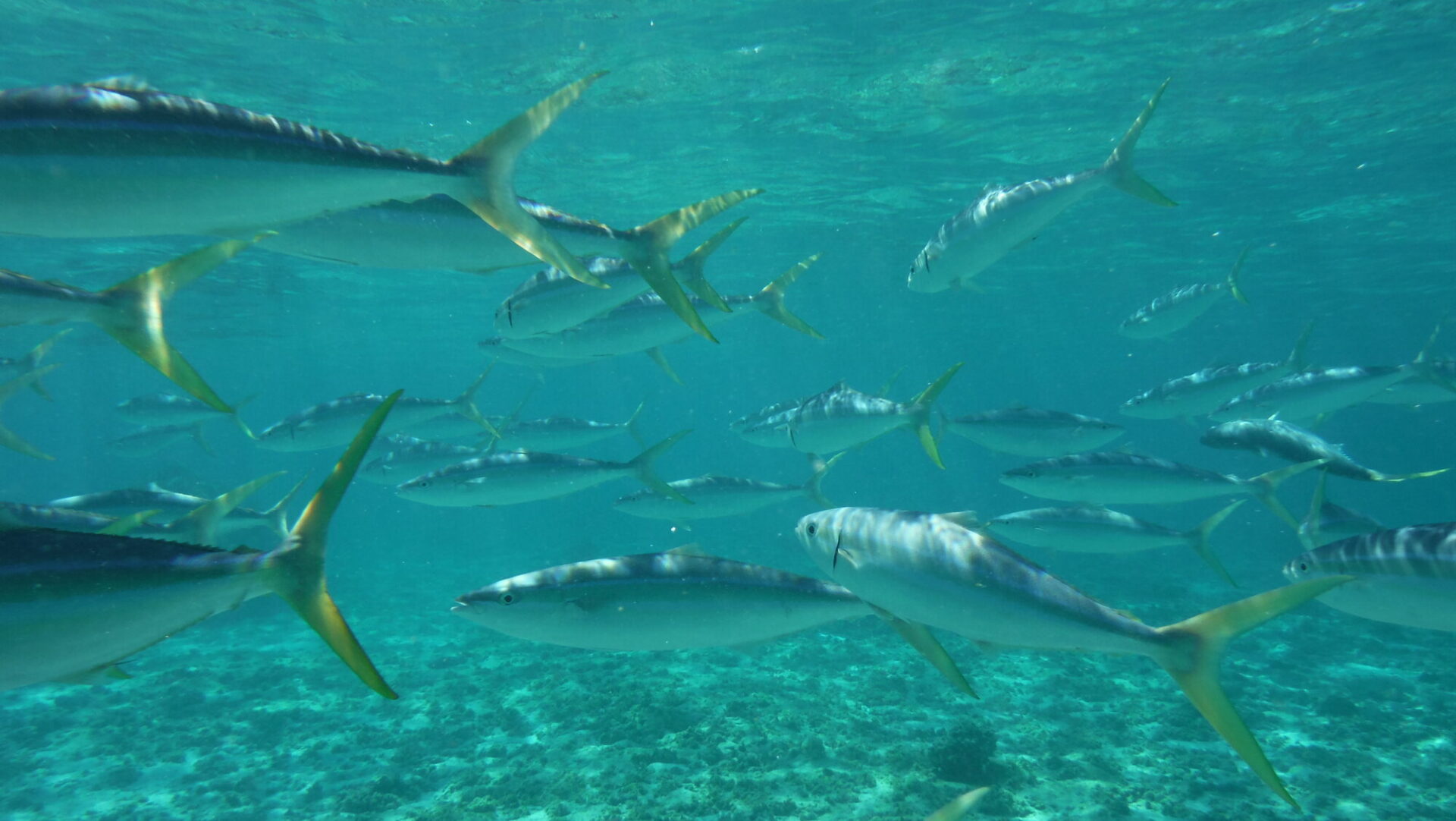
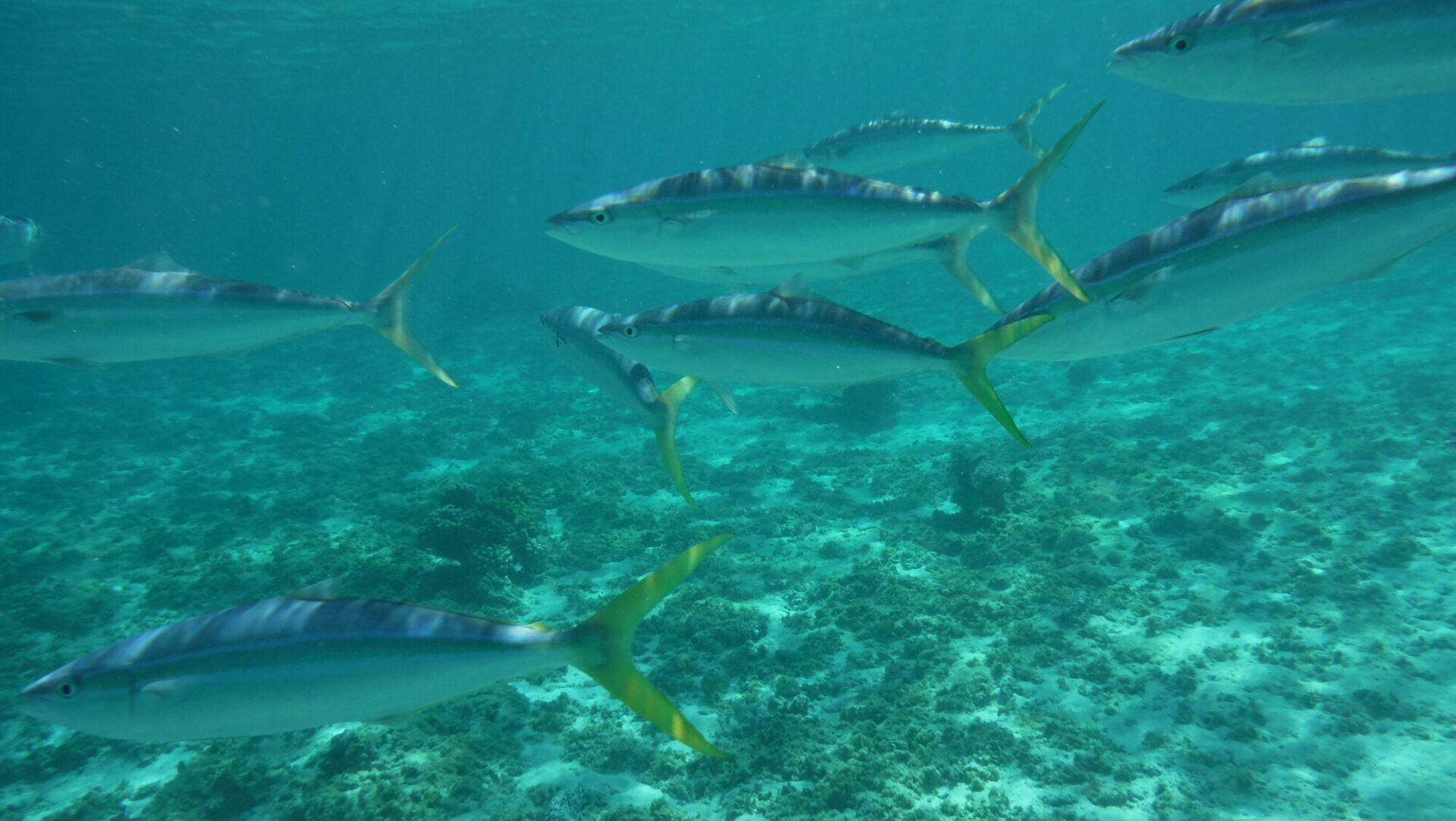
Kamanu (rainbow runners). Fast, blue-striped jacks with yellow tails that sweep through the lagoon in large schools.
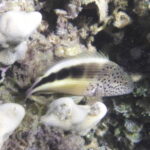
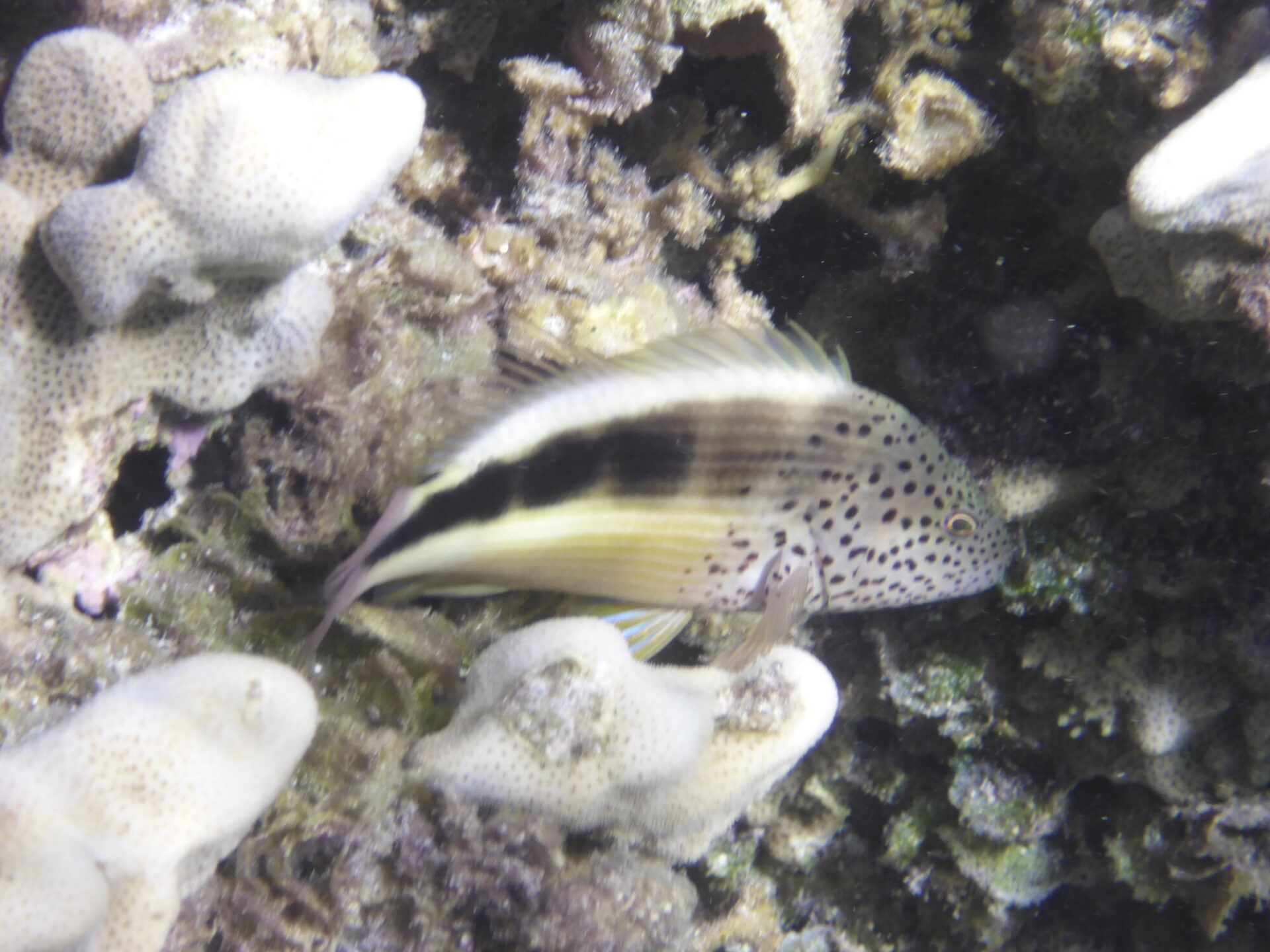
Hilu pilikoʻa (blackside hawkfish, Paracirrhites forsteri). Hawkfish perch on coral heads and dart out to grab small fish and crustaceans.
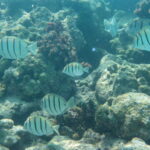
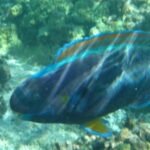
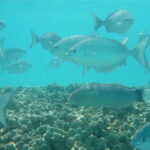
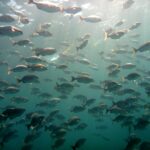
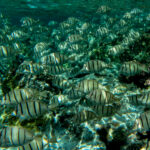
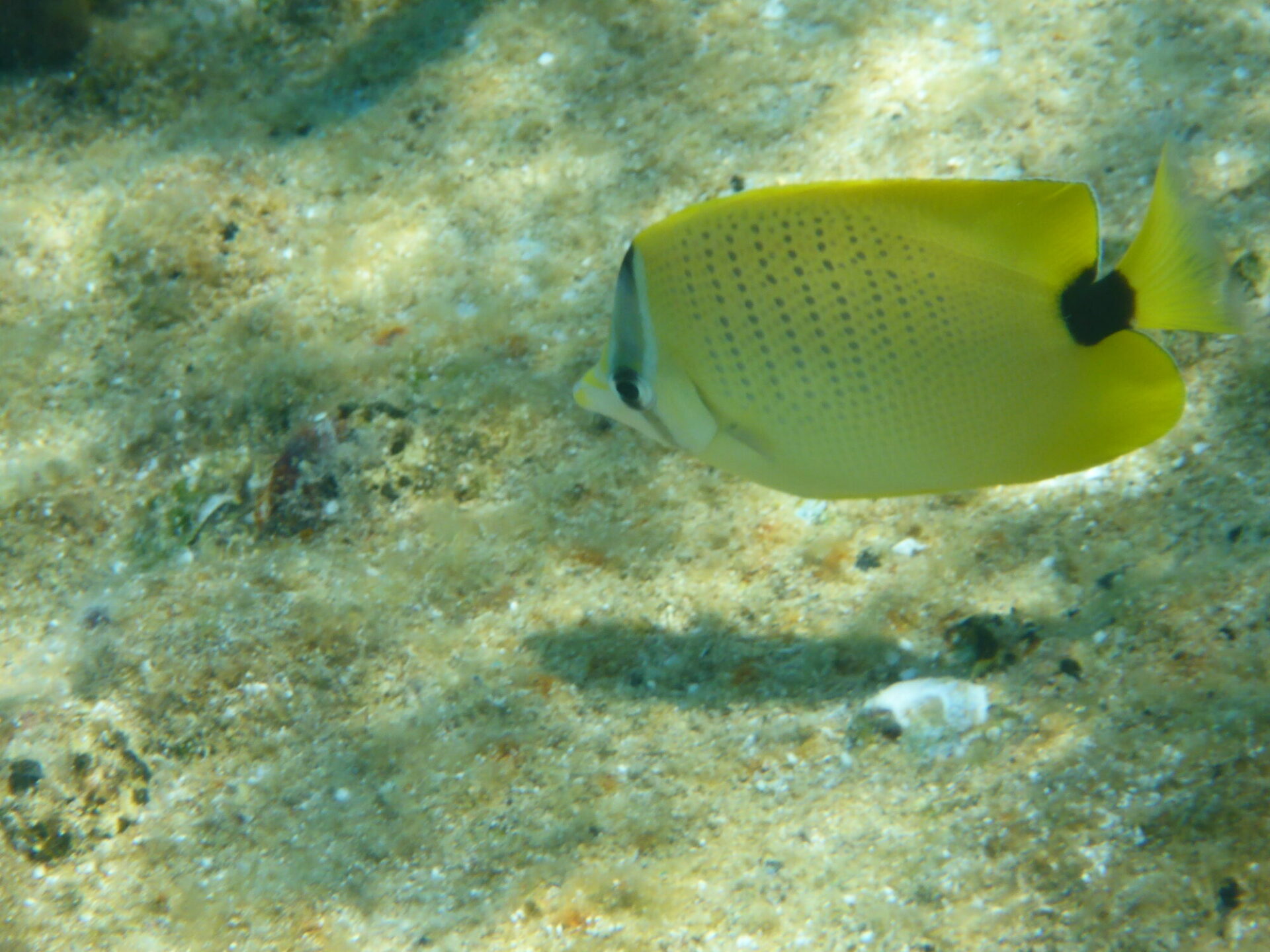
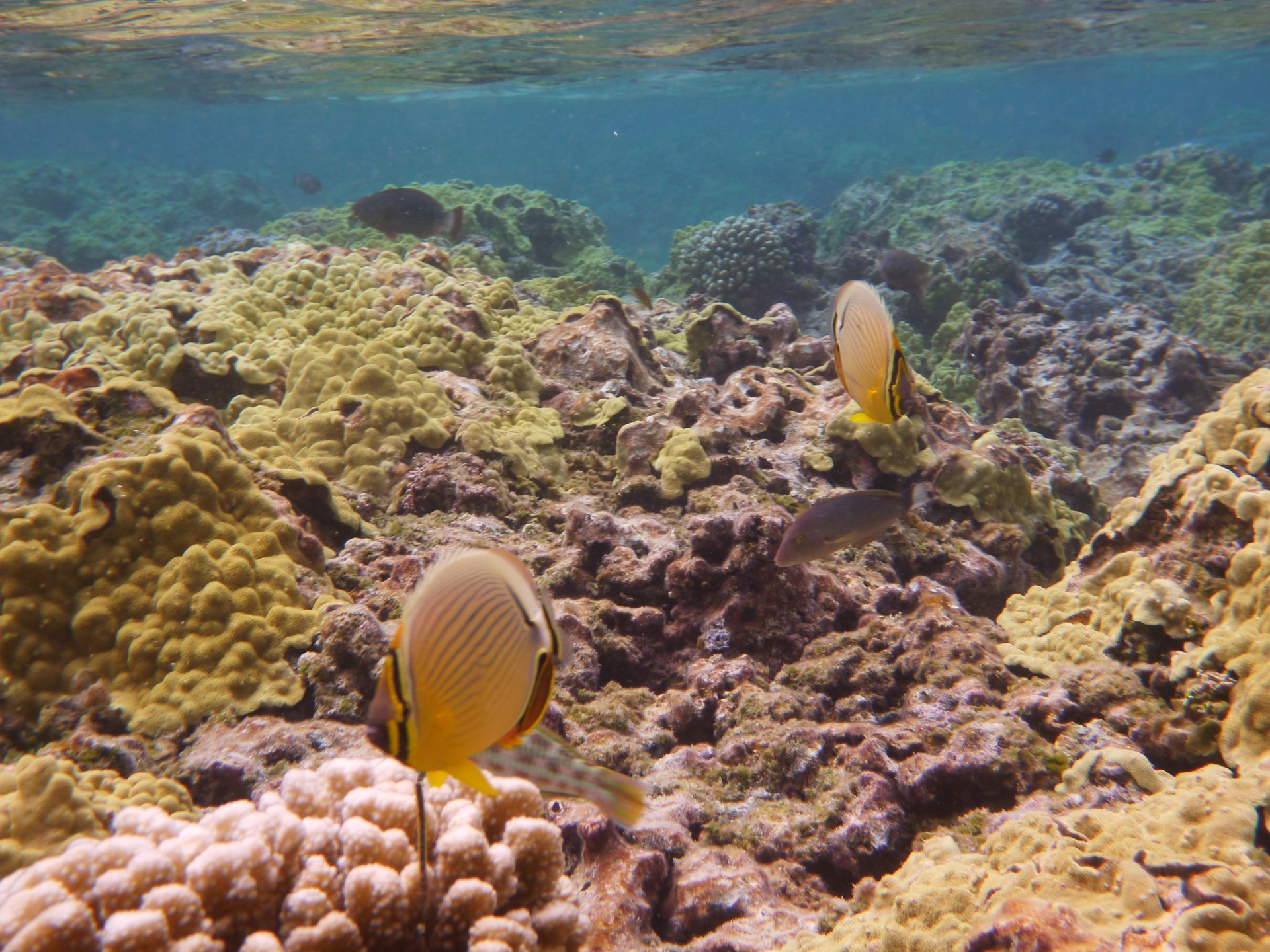
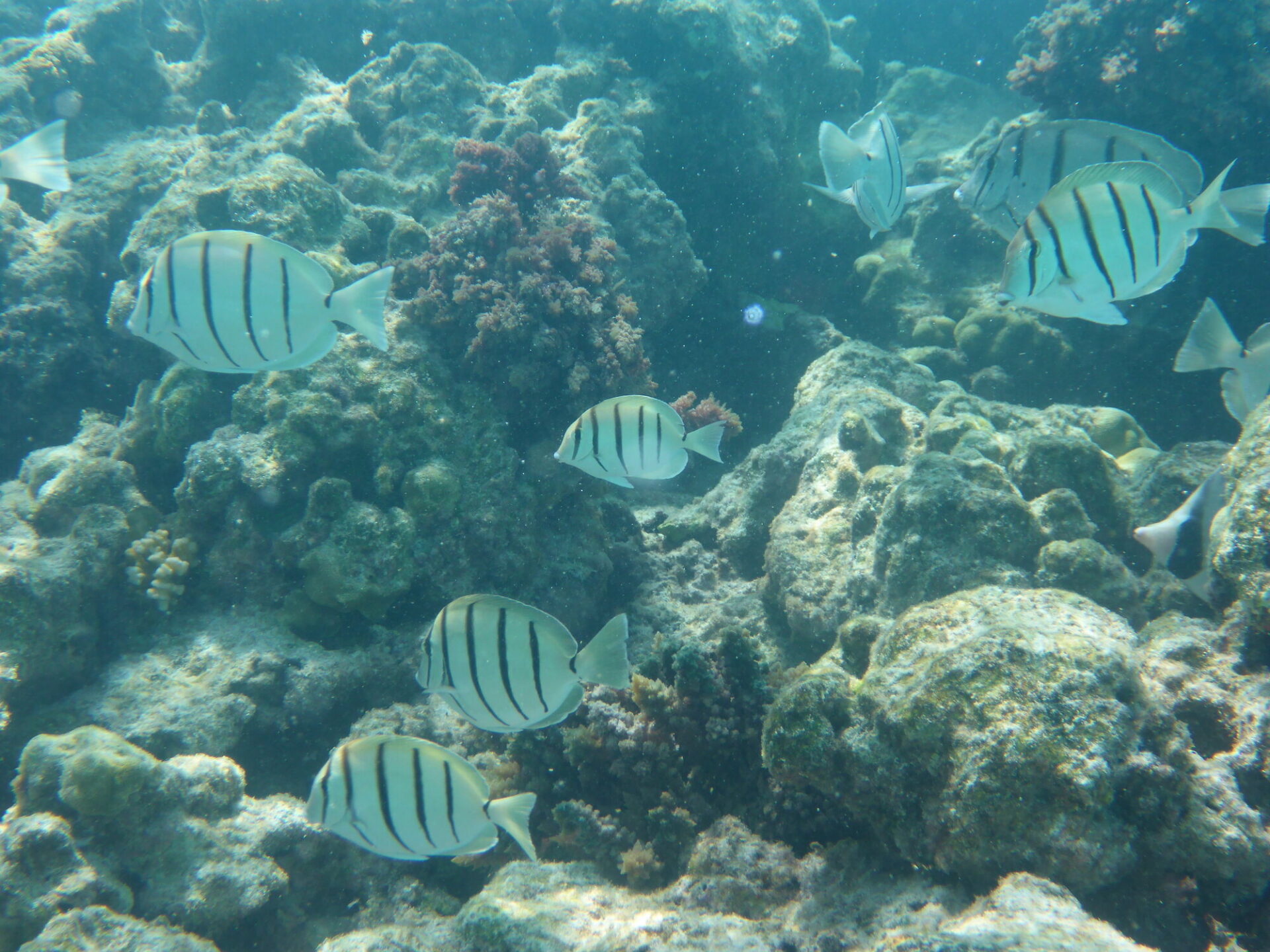
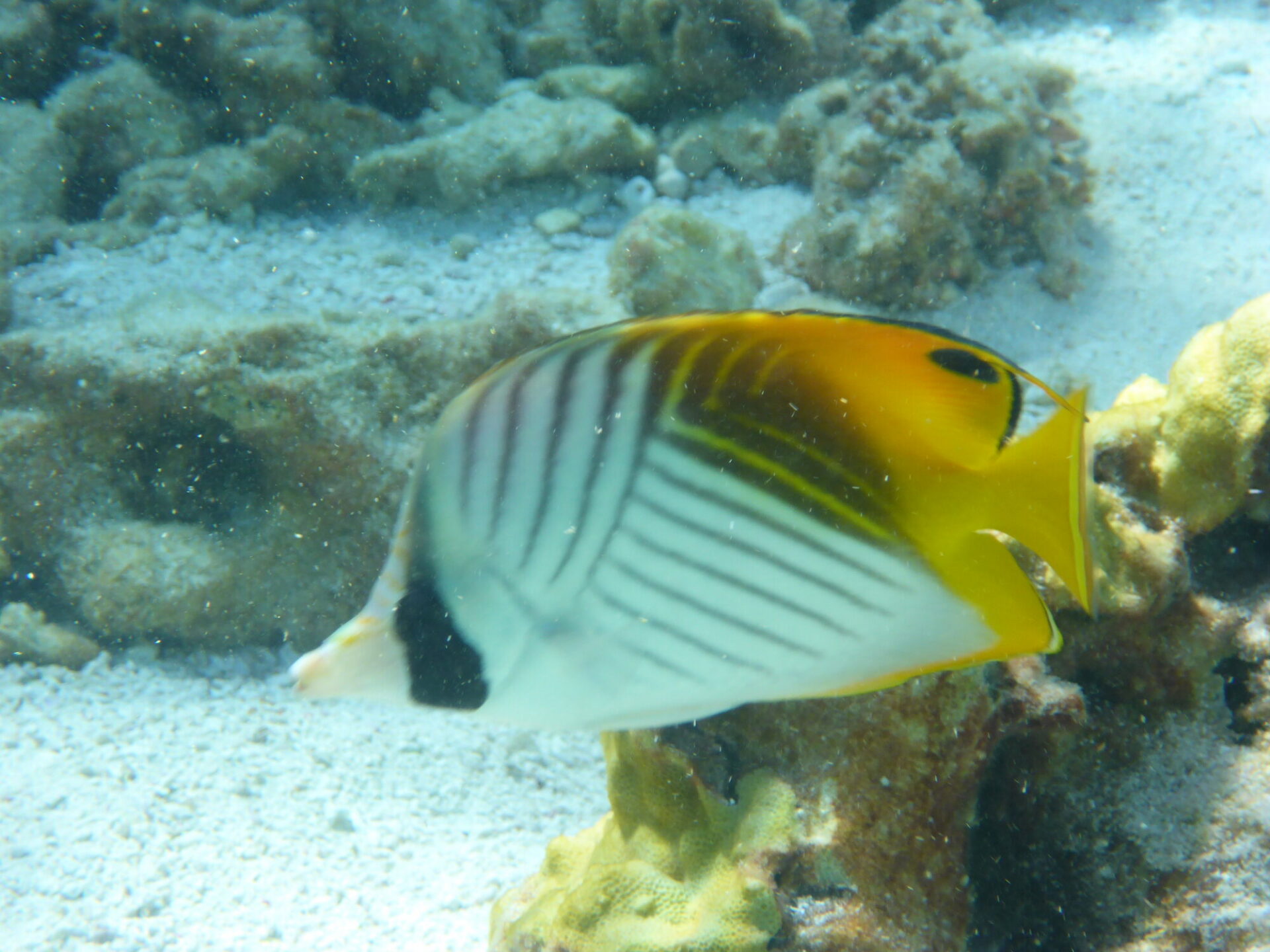
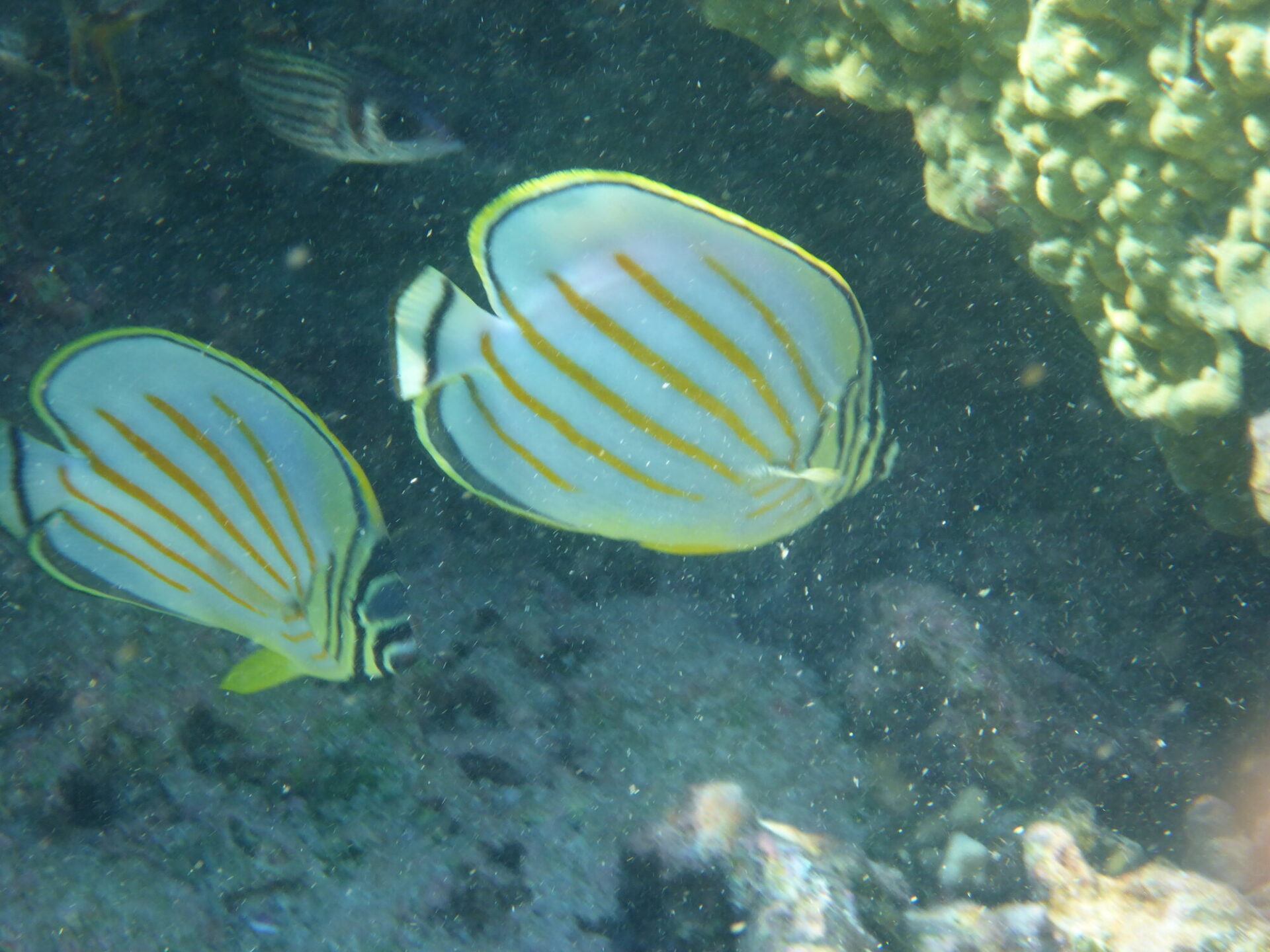
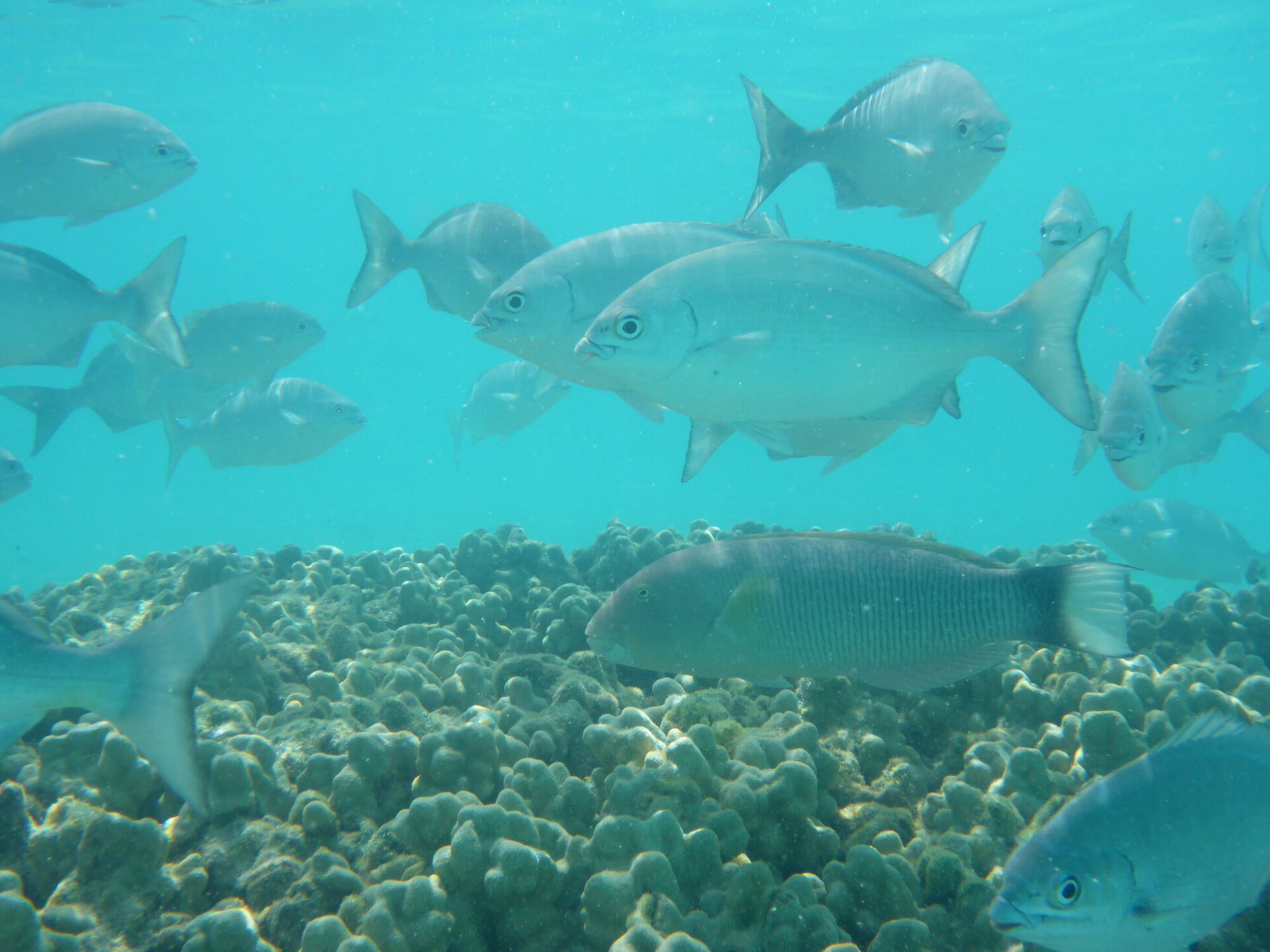
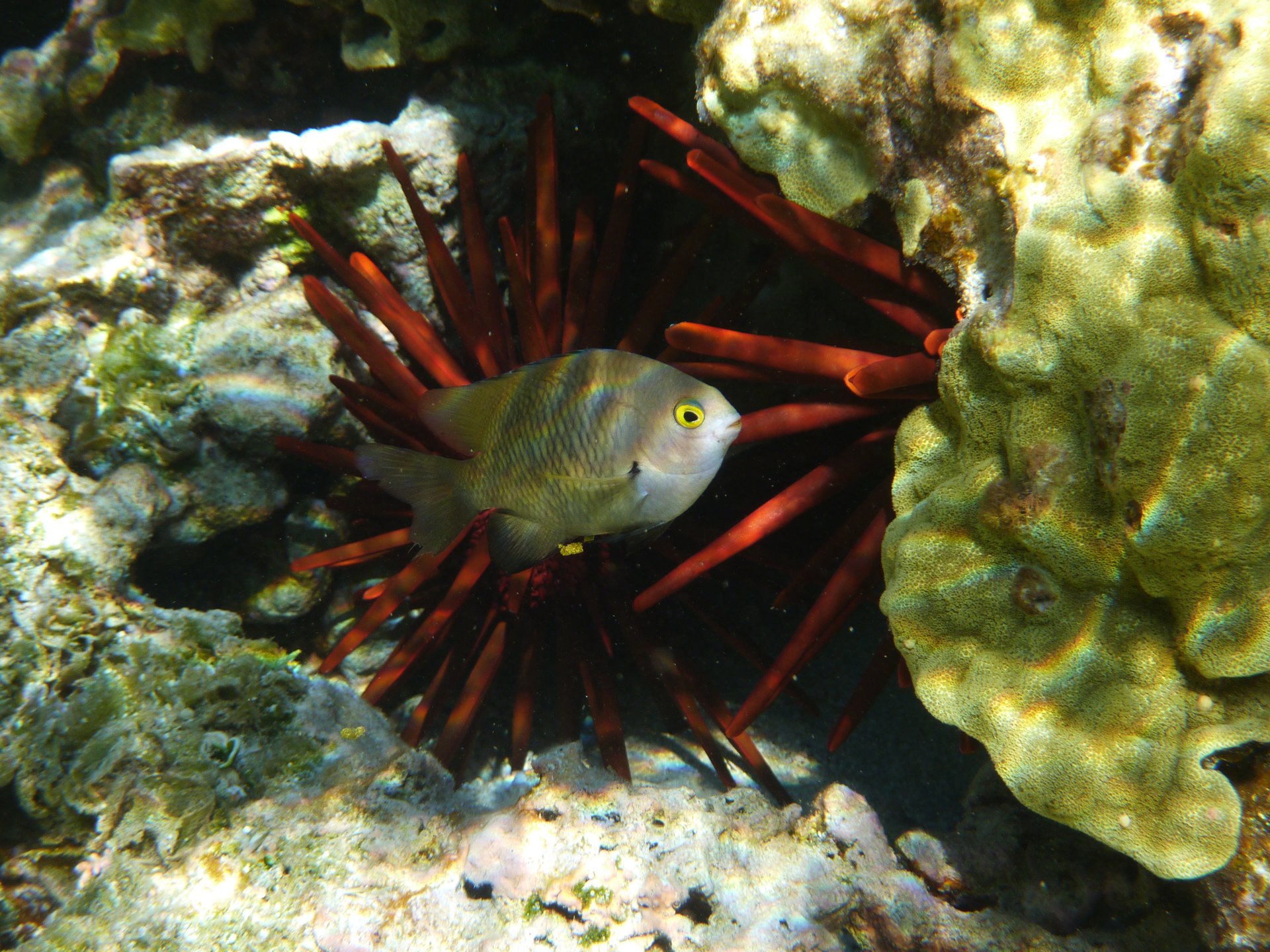
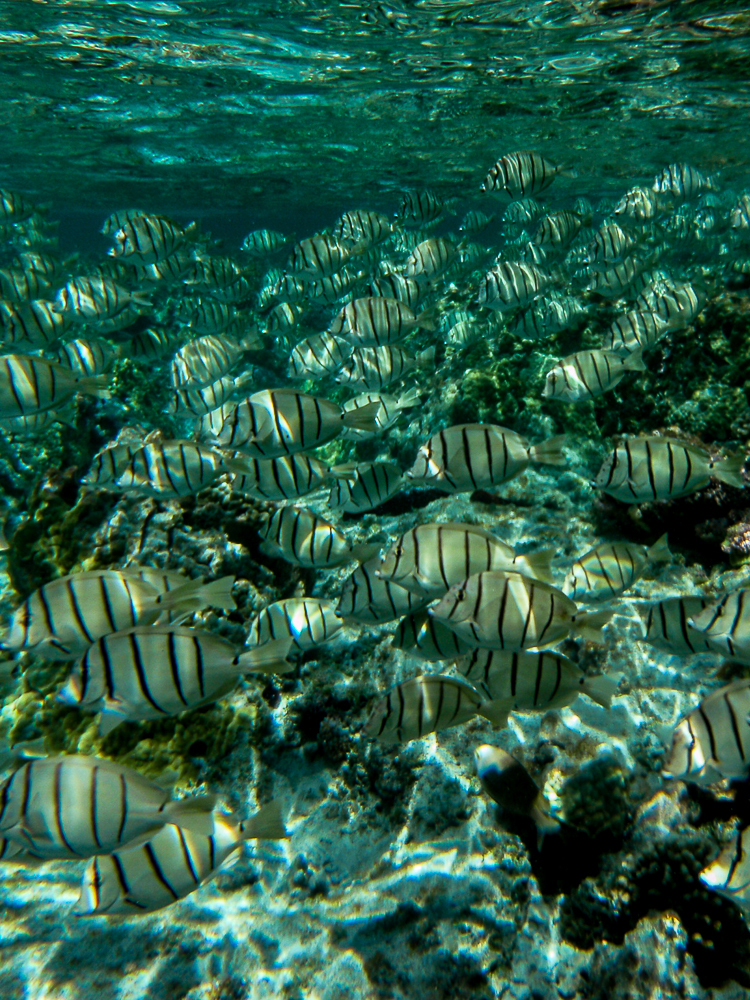
Common reef fish include manini (convict tangs), ʻāloʻiloʻi (Hawaiian dascyllus) and hīnālea lauwili (saddle wrasse), the last two found only in Hawaiʻi.
Deep reefs
In September 2015, NOAA and Bishop Museum divers using rebreathers surveyed reefs 280 to 300 feet deep off Hōlanikū. Every one of the 463 fish they counted, from 22 species, was a Hawaiian endemic. It is the highest level of endemism known from any marine ecosystem on Earth.
The divers also photographed a male Hawaiian pigfish (Bodianus bathycapros), a species no diver had seen before and whose male coloring was unknown. Elegant anthias and Struhsaker's chromis were among the most common fish at 320 feet.
Rays and other ocean life
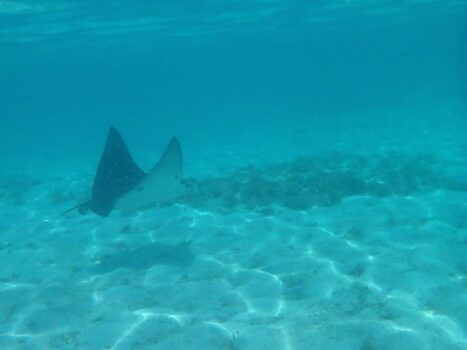
Hīhīmanu (spotted eagle rays) often glide past the pier in the evening, sometimes in small groups, and hāhālua (manta rays) are seen occasionally. Kona crabs and spiny lobsters live on the reef. In winter, koholā (humpback whales) are seen just outside the reef, sometimes in pods of five or more.
Current Threats
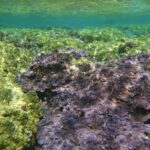
Derelict fishing nets drift onto the reef, where they break and smother coral and trap fish, sharks, turtles and seals. A nuisance red alga, Chondria tumulosa, which forms thick mats over reef habitat at Manawai, was confirmed at Hōlanikū in 2023. In 2008 an unusual bloom of the native green alga Boodlea composita covered parts of the reef and washed up on the beaches. Corals across Papahānaumokuākea bleached in 2019 and 2022, but NOAA surveys in 2024 found many young colonies, a sign of recovery.
On Hōlanikū
KAC/DLNR crews record notable fish and marine sightings from the pier and shoreline as part of their wildlife observations, and they remove nets and other marine debris from the reef and beaches whenever conditions allow. Fishing is not allowed in the waters around Hōlanikū, which are part of the Northwestern Hawaiian Islands State Marine Refuge.
Learn more
How deep reefs off Hōlanikū were found to have the highest level of endemism of any marine ecosystem on Earth.
Species and habitats
An overview of the reefs, fish and wildlife protected in Papahānaumokuākea.
Respecting wildlife
Protected on Hōlanikū
All wildlife on Hōlanikū is protected. The island is the Kure Atoll State Wildlife Sanctuary, inside Papahānaumokuākea Marine National Monument and National Marine Sanctuary, and entry is allowed only by permit. KAC/DLNR work on Hōlanikū is done under the Papahānaumokuākea co-managers' permits, along with other permits where needed, such as NOAA Fisheries permits for monk seal and sea turtle work and federal bird banding permits.
About our photos
Photos and video on this site were taken by permitted crews and partners during research and management work, usually from a distance with zoom or telephoto lenses so animals are not disturbed. Close-ups of animals being handled show permitted work such as banding, tagging, rescue or disentanglement.
Seeing marine animals elsewhere in Hawaiʻi
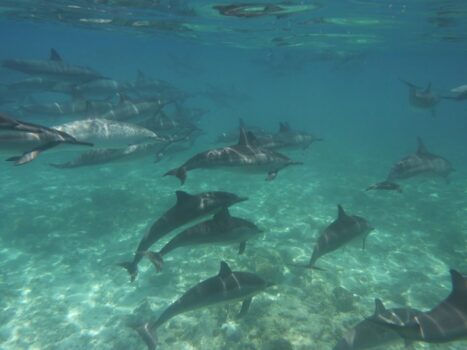
- Keep your distance: at least 10 feet from honu, 50 feet from monk seals (150 feet from a mother and pup), 50 yards from spinner dolphins and 100 yards from humpback whales. The dolphin and whale distances are federal law.
- Never touch, chase, feed or swim with them, and keep visits short.
- Use binoculars or your camera's zoom for a closer look, and don't fly drones near wildlife.
- Keep dogs on a leash on beaches.
- Report injured, entangled or stranded animals to the NOAA Marine Wildlife Hotline at 888-256-9840.
More marine life of Hōlanikū
Help protect native habitat on Hōlanikū
KAC/DLNR field crews monitor wildlife and restore habitat year-round. Your support keeps them on the island.