
Honu
Green sea turtle
Chelonia mydas
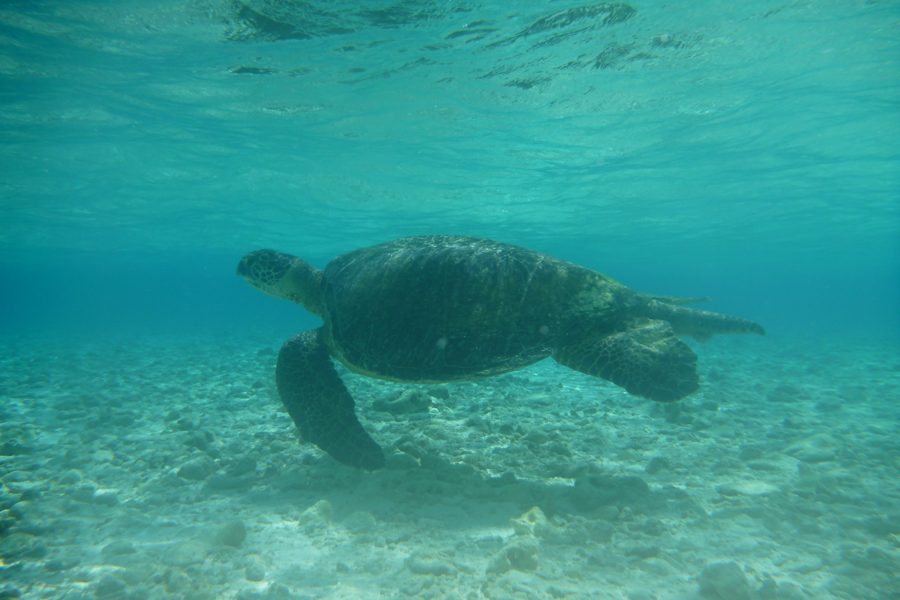
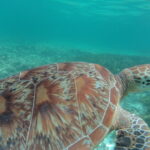
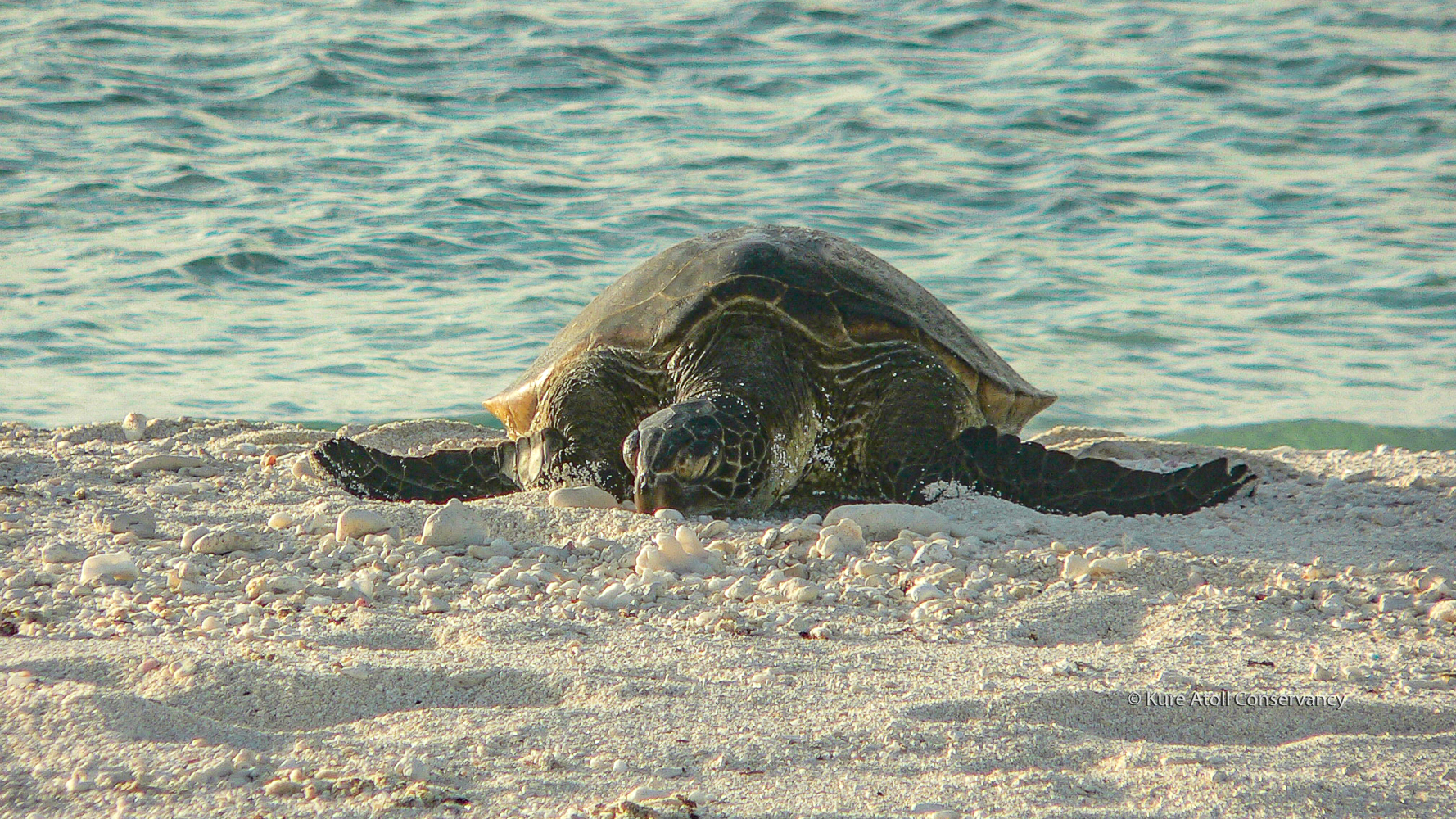
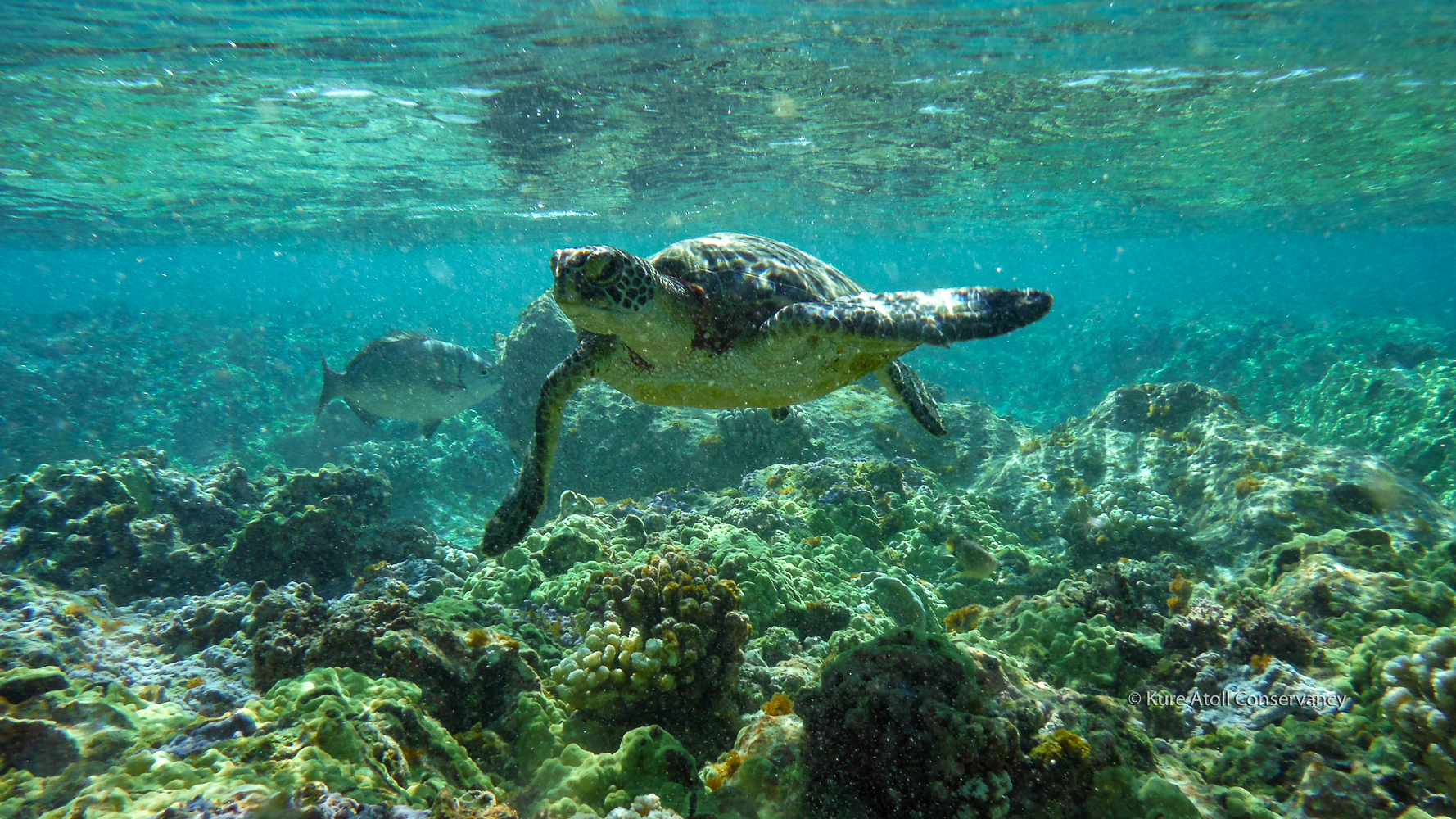
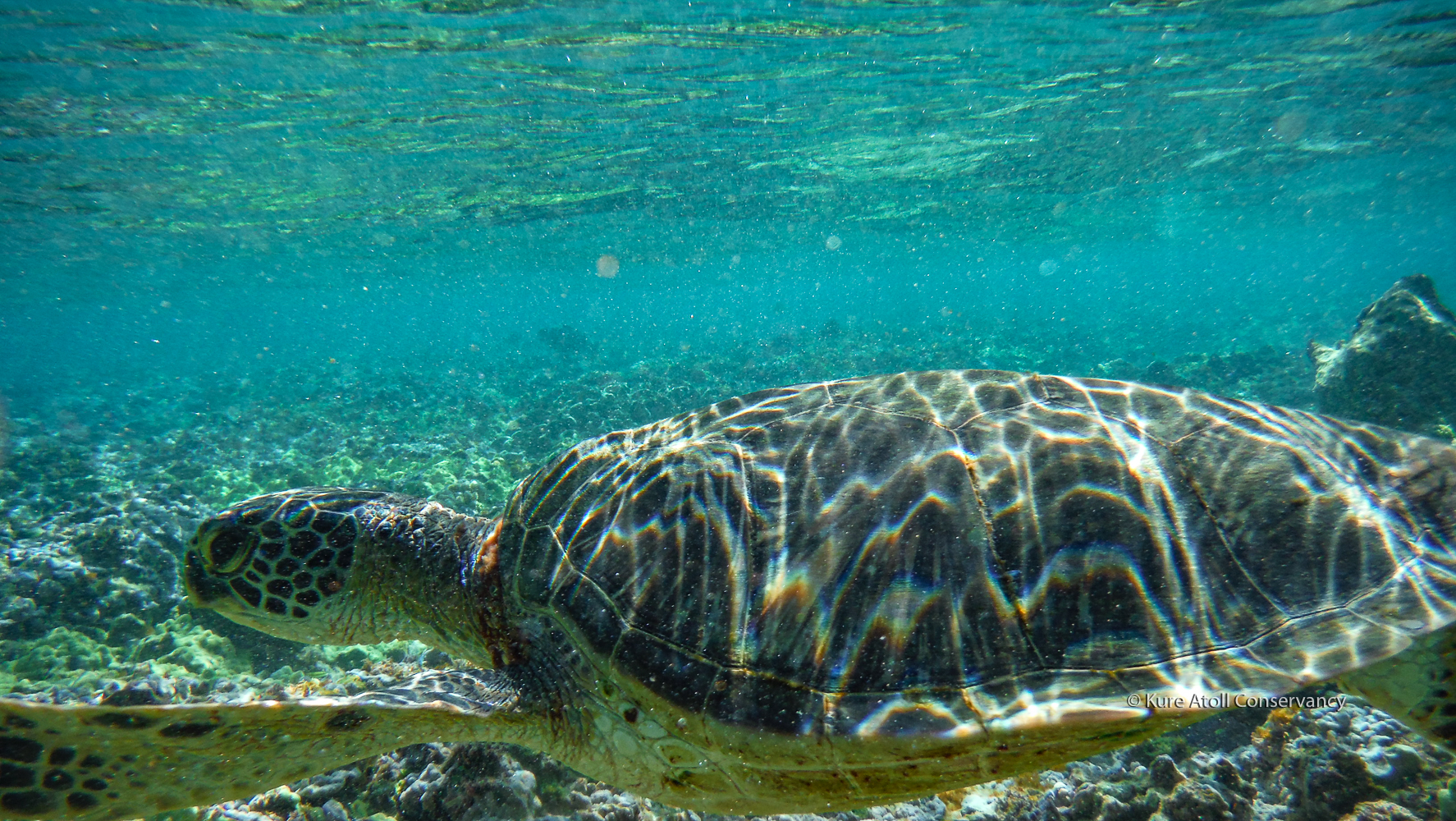
The sea turtle most often seen in Hawaiʻi, resting on the beaches and feeding in the lagoon of Hōlanikū.
| Status in Hawaiʻi | Indigenous |
|---|---|
| Federally listed | Threatened (Central North Pacific, 2016) |
| State listed | Threatened |
| IUCN Red List | Least concern (2025) |
Species Information
The honu, or green sea turtle, is the most common sea turtle on the reefs and beaches of Hawaiʻi. Honu in Hawaiʻi belong to their own population, the Central North Pacific population, which stays within the Hawaiian archipelago. Adults can be 3 to 4 feet long and weigh more than 350 pounds, and they may live 70 years or more.
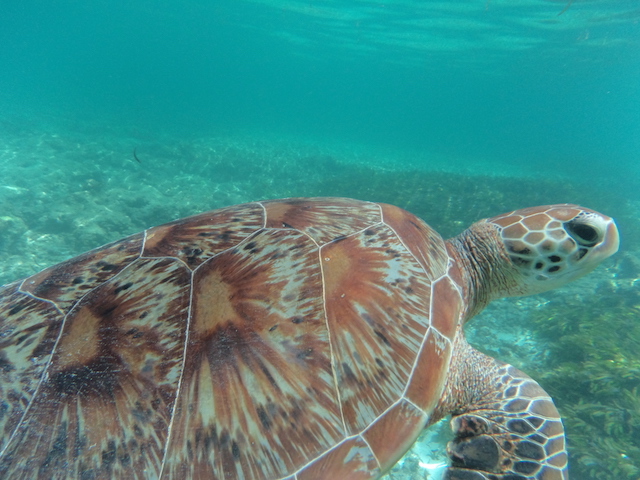
The name "green" comes from the color of the turtle's fat, not its shell, which is olive to brown with darker streaks. Green sea turtles are the only sea turtles that regularly bask on beaches, a common sight in Hawaiʻi.
Foraging & Nesting
Young honu eat a mix of foods, but adults graze mainly on limu (seaweed) and seagrass in shallow water. They often rest in the lagoon or haul out on the beach to warm up.
Females return to nest every few years, usually between May and September. A female may come ashore several times in one season, digging a pit above the high-tide line and laying about 100 eggs each time. About 96% of Hawaiian honu nest at Lalo (French Frigate Shoals).
Distribution & Abundance
Honu live throughout the Hawaiian Islands. Most adults feed along the main Hawaiian Islands and travel to Lalo to nest. After protection began in the 1970s, the number of nesting females at Lalo increased by 3 to 5% a year. In 2018 Hurricane Walaka washed away most of East Island, the main nesting beach at Lalo, which makes other nesting beaches more important for the future.
Conservation Actions
Honu have been protected by the State of Hawaiʻi since 1974 and under the federal Endangered Species Act since 1978. In 2016 the Central North Pacific population was listed as threatened. In 2025 the IUCN moved the green sea turtle from Endangered to Least Concern worldwide, but Hawaiian honu are still protected by federal and State law. NOAA has monitored honu in Hawaiʻi since 1973.
On Hōlanikū, KAC/DLNR crews record honu sightings and size and watch for tags, nesting and injured turtles. Removing marine debris helps keep honu from becoming entangled.
Current Threats
Rising seas and storms are the greatest long-term threat to the low sandy islands where honu nest. Honu can also be entangled in fishing line and nets, swallow plastic, be struck by boats near the main islands and get fibropapillomatosis, a tumor disease.
On Hōlanikū
Honu are seen on Hōlanikū all year, swimming in the lagoon off the pier and resting on the beaches, especially at South Point and North Point. Sailors in the 1800s described many turtles on Kure, but nesting is rare today.
In 2009 a female nested four times on Hōlanikū between 24 June and 1 August, the first documented nests here in many decades. Crews found possible nest pits in 2017, and in 2018 they recorded several crawls and a likely nest on the south beach.
Learn more
NOAA Fisheries and DLNR share how honu are monitored and protected in Hawaiʻi, and how to report tagged or injured turtles.
Honu in Hawaiʻi
The State of Hawaiʻi guide to sea turtles, including the rare honuʻea (hawksbill).
Respecting wildlife
Protected on Hōlanikū
All wildlife on Hōlanikū is protected. The island is the Kure Atoll State Wildlife Sanctuary, inside Papahānaumokuākea Marine National Monument and National Marine Sanctuary, and entry is allowed only by permit. KAC/DLNR work on Hōlanikū is done under the Papahānaumokuākea co-managers' permits, along with other permits where needed, such as NOAA Fisheries permits for monk seal and sea turtle work and federal bird banding permits.
About our photos
Photos and video on this site were taken by permitted crews and partners during research and management work, usually from a distance with zoom or telephoto lenses so animals are not disturbed. Close-ups of animals being handled show permitted work such as banding, tagging, rescue or disentanglement.
Seeing marine animals elsewhere in Hawaiʻi
- Keep your distance: at least 10 feet from honu, 50 feet from monk seals (150 feet from a mother and pup), 50 yards from spinner dolphins and 100 yards from humpback whales. The dolphin and whale distances are federal law.
- Never touch, chase, feed or swim with them, and keep visits short.
- Use binoculars or your camera's zoom for a closer look, and don't fly drones near wildlife.
- Keep dogs on a leash on beaches.
- Report injured, entangled or stranded animals to the NOAA Marine Wildlife Hotline at 888-256-9840.
More marine life of Hōlanikū
Help protect native habitat on Hōlanikū
KAC/DLNR field crews monitor wildlife and restore habitat year-round. Your support keeps them on the island.