
Glossy nightshade
Solanum americanum
A fast-growing nightshade that may be native to Hawaiʻi but acts like an invasive weed on Hōlanikū, where crews keep it in check.
| Origin | Widespread in warm regions; possibly indigenous to Hawaiʻi |
|---|---|
| On Hōlanikū | Introduced; primary target weed |
| Kure weed class | A.2, suppress remaining populations |
| Removed | 48 plants in summer 2025 |
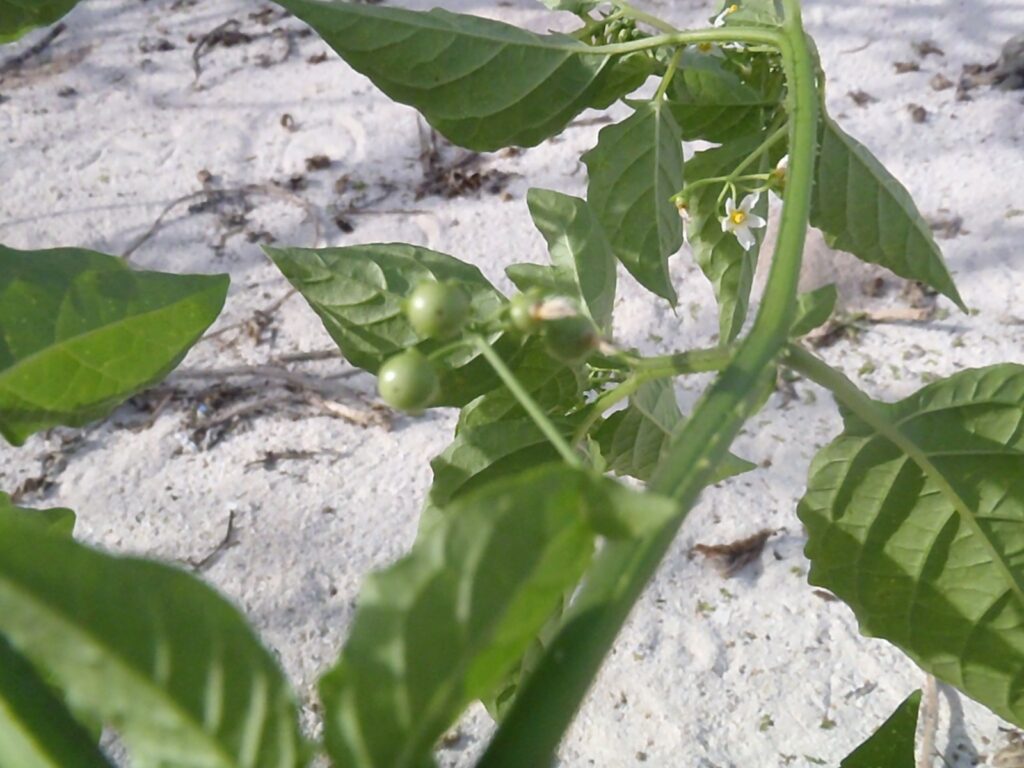
About this plant
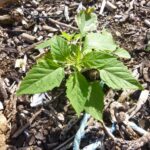
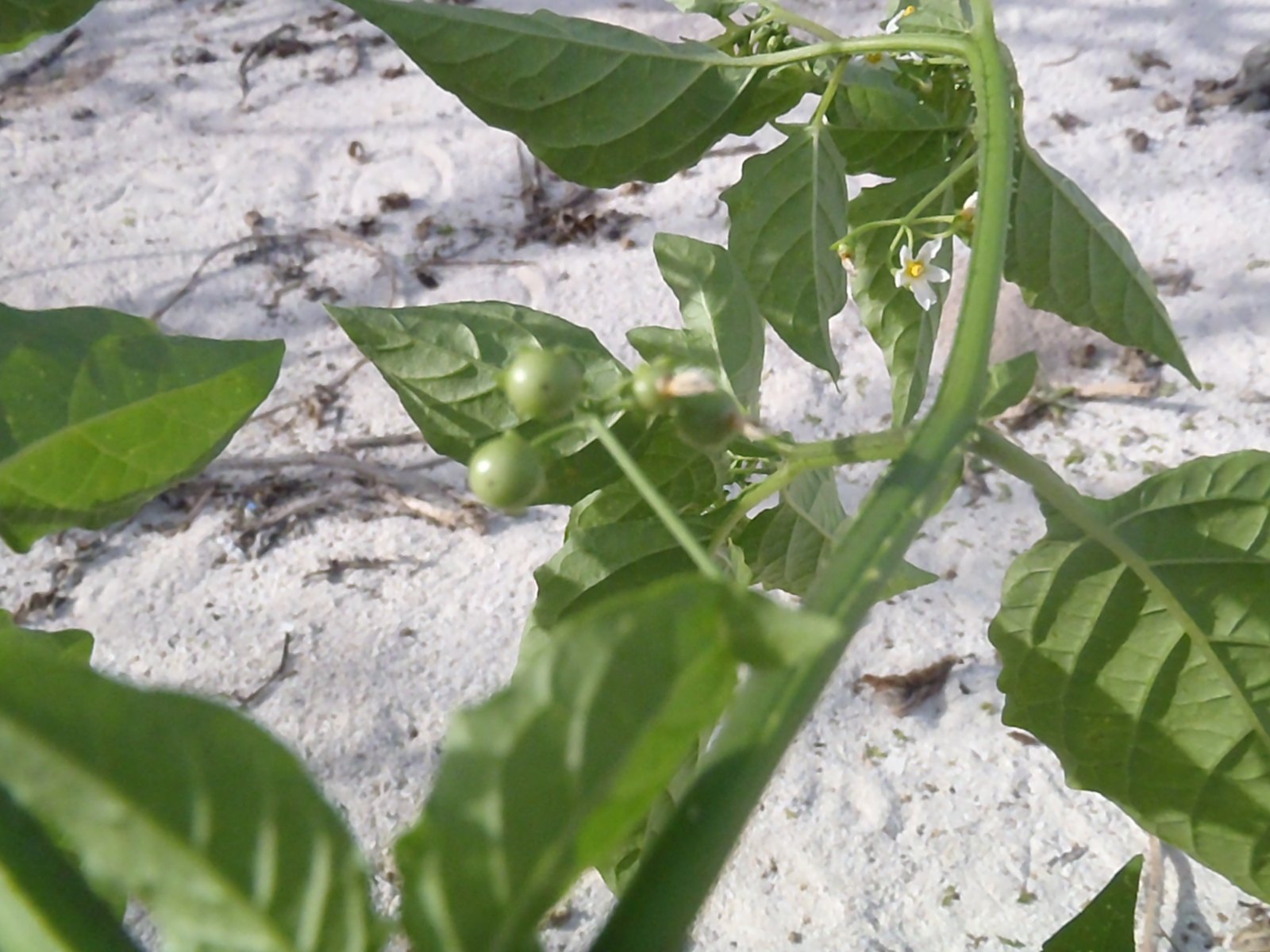
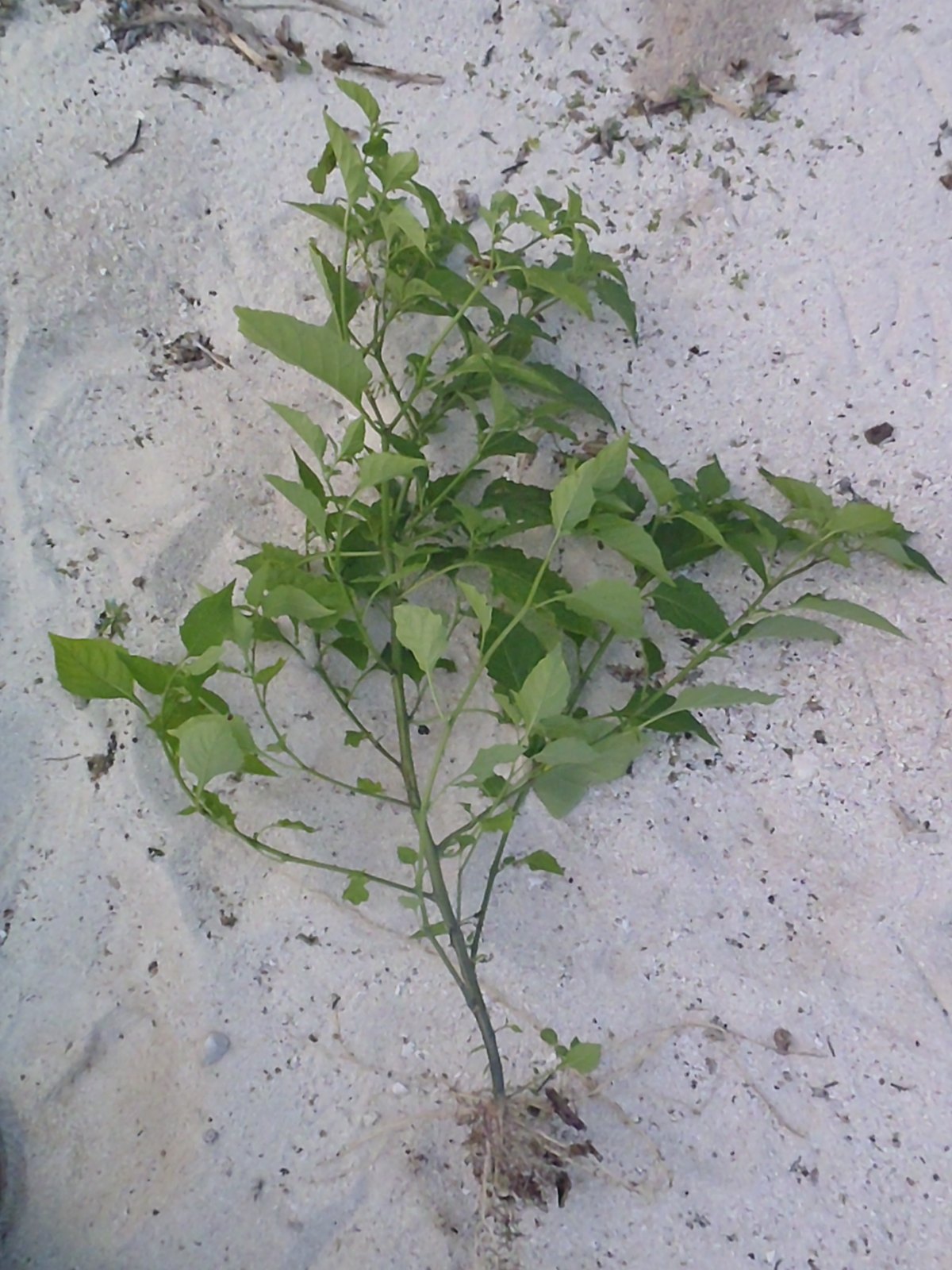
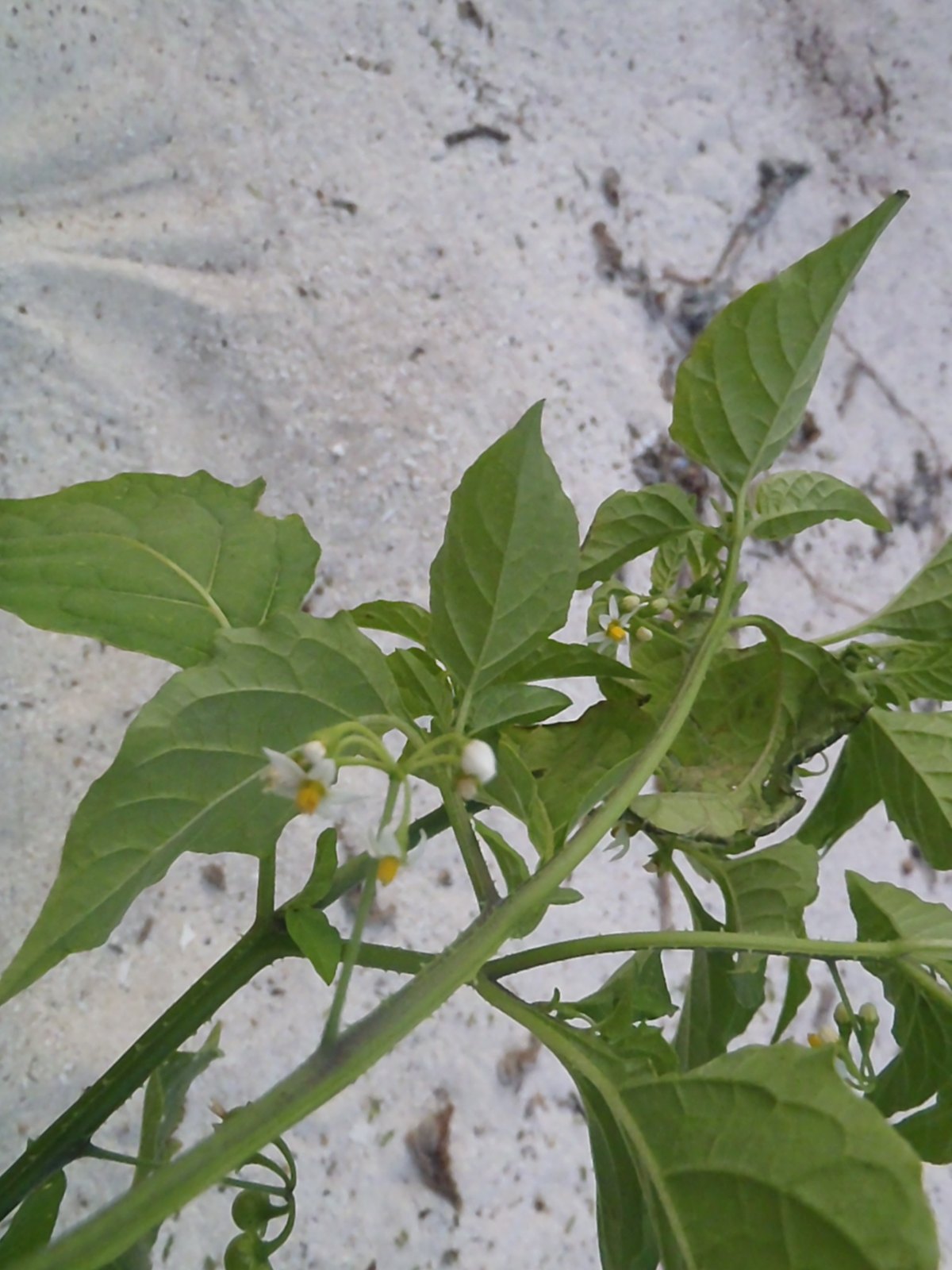
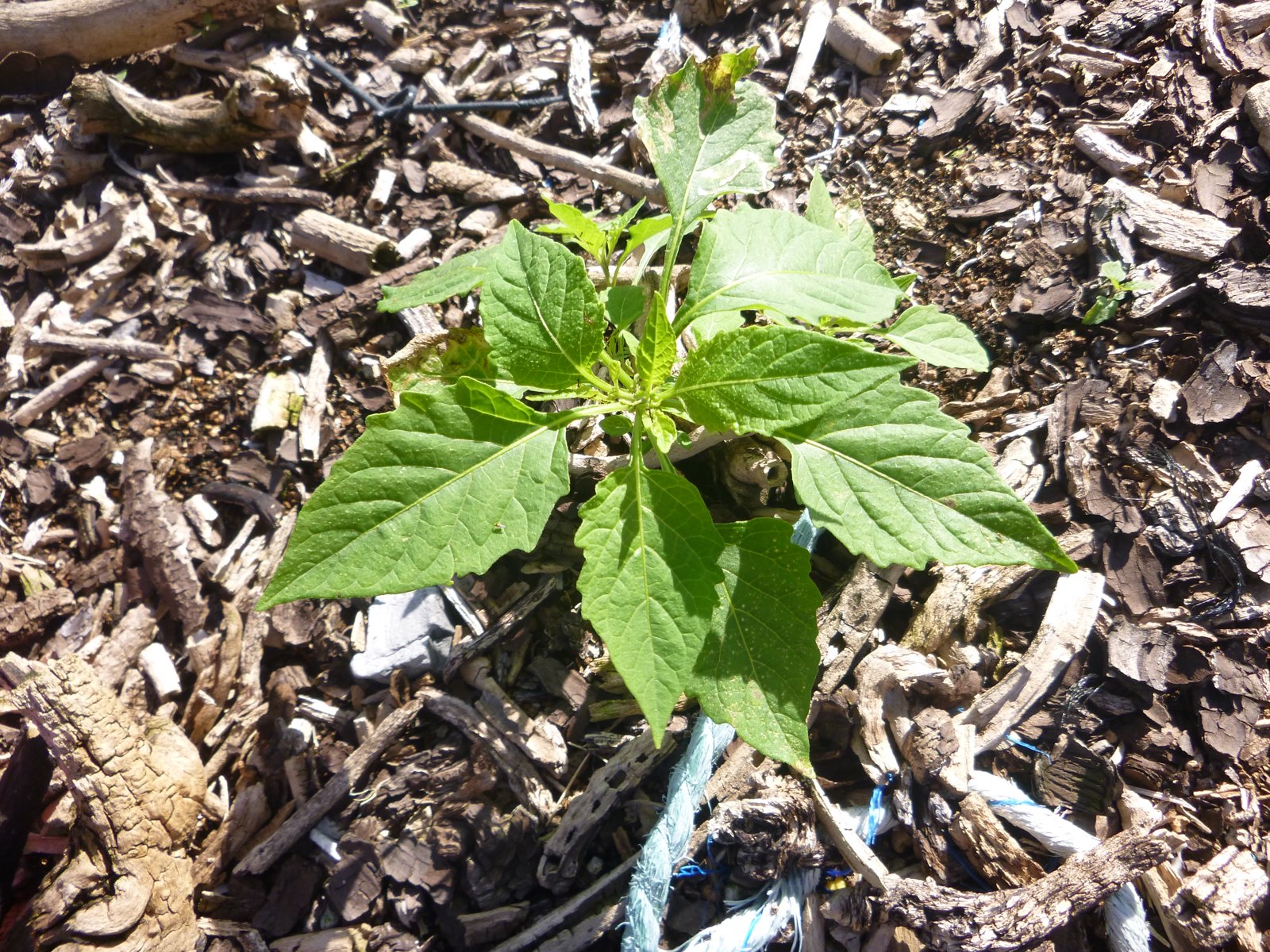
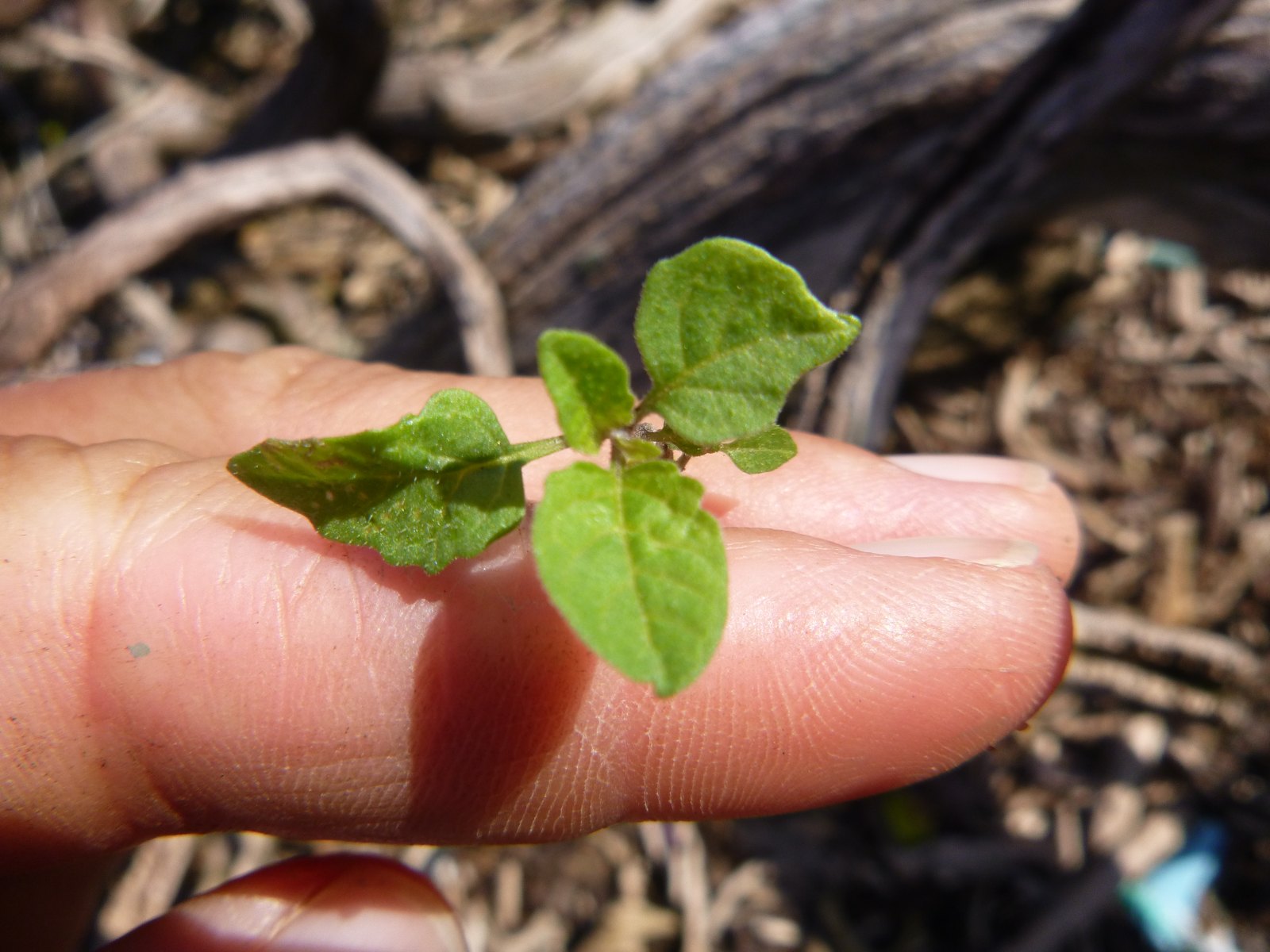
Glossy nightshade (Solanum americanum), also called American black nightshade, is a leafy, branching herb with small white flowers and clusters of berries that start green and ripen to shiny black. It grows quickly and can flower and fruit within weeks.
In the main Hawaiian Islands it is known as pōpolo and has a long history of use. Botanists disagree about whether it reached Hawaiʻi on its own or arrived with people, and it is often treated as indigenous there. It should not be confused with the endemic pōpolo (Solanum nelsonii), a rare native shrub that crews grow and outplant on Hōlanikū.
Why remove it on Hōlanikū?
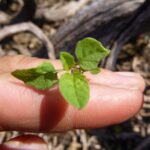
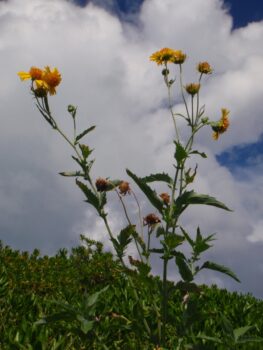
On Hōlanikū glossy nightshade is recorded as introduced, and it behaves like an invasive weed. It sprouts quickly at disturbed sites, especially at old golden crownbeard (Verbesina encelioides) sites, where its young plants look very similar to golden crownbeard seedlings. Left alone, it can spread and compete with native plants.
It is also managed on Kuaihelani (Midway Atoll), where it is classed as a widespread weed to be suppressed.
How crews manage it
Glossy nightshade is one of the primary target weeds that crews count and record on every sweep of the island. Plants are pulled or treated with herbicide wherever they are found, and most now turn up in a few known hot spots where seeds remain in the soil. In summer 2025 crews removed 48 plants.
Help clear invasive species from Hōlanikū
KAC/DLNR field crews monitor wildlife and restore habitat year-round. Your support keeps them on the island.