
Other target weeds
Golden crownbeard gets the most attention, but crews remove several other invasive plants at the same time to keep them from filling the gaps.
| Priority broadleaf weeds | American black nightshade, clustered yellowtops, common sow thistle, nettle-leaf goosefoot |
|---|---|
| Priority grasses | Sandbur, beach wiregrass, bristly foxtail |
| Also removed | Scarlet pimpernel, evening primrose, purple nutsedge |
| Source | KAC/DLNR season reports, 2024–2025 |
Why remove them together
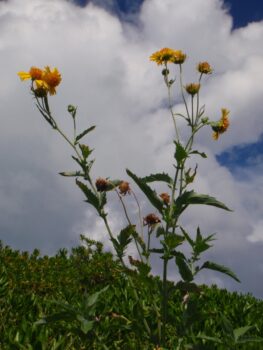
Many of the weeds on Hōlanikū sprout, flower and go to seed in less than a month after rain. When one weed is removed and the ground is left open, another can move in. During each sweep of the island, crews remove every target weed they find, not just golden crownbeard (Verbesina encelioides). This means fewer return visits and less disturbance to nesting birds.
The target list changes as crews learn which plants harm the habitat and which ones help. The plants below are from the 2024 and 2025 season reports.
Broadleaf weeds
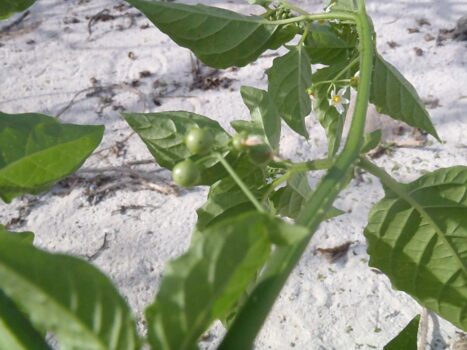
Glossy nightshade (Solanum americanum). Possibly indigenous to Hawaiʻi but introduced on Hōlanikū, where it acts like an invasive weed. Its young plants look a lot like golden crownbeard, and it comes up at old golden crownbeard sites. See its own page.
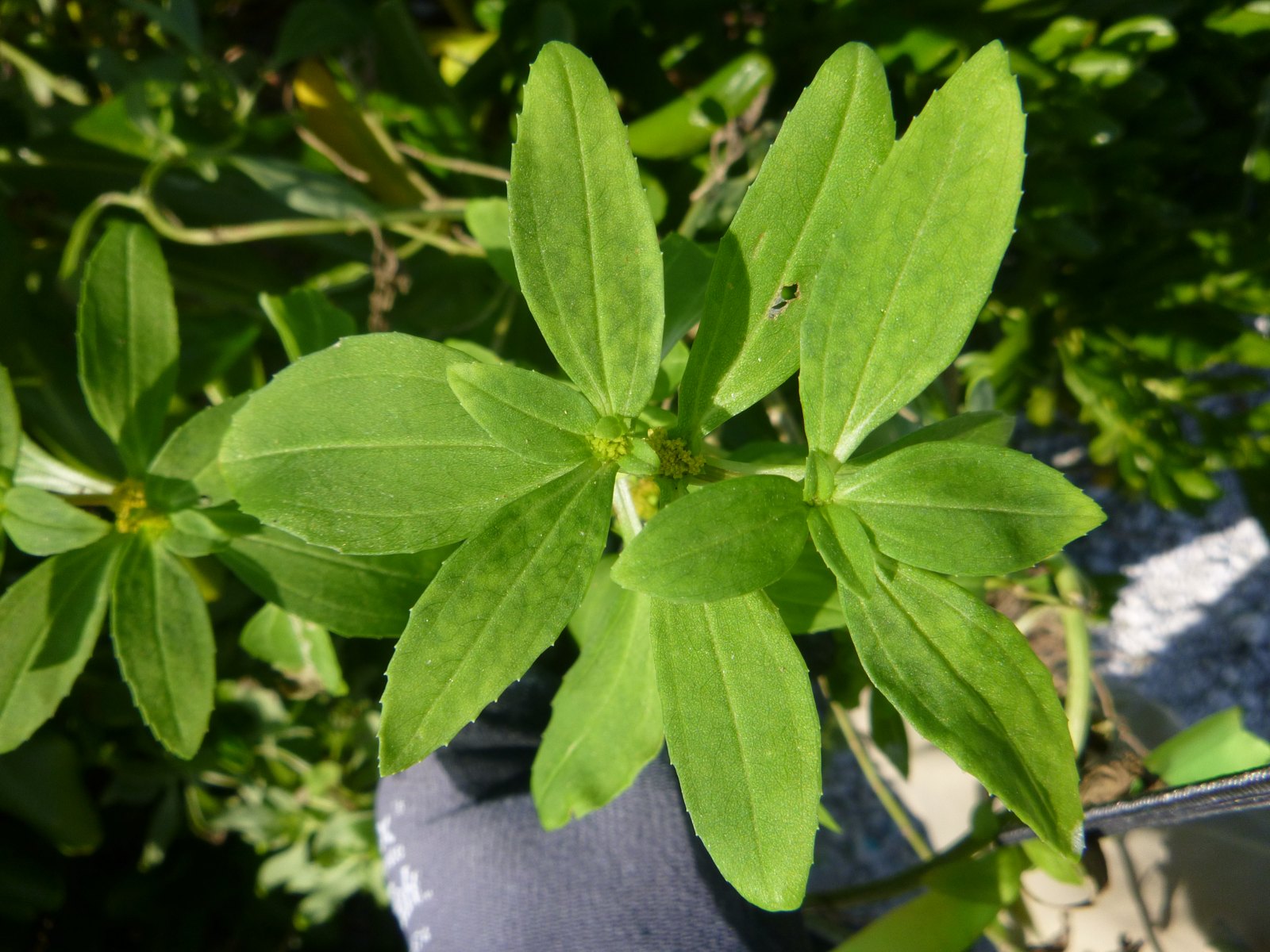
Clustered yellowtops (Flaveria trinervia). Grows mainly on the old runway and near the landfill, where mats of sprouts can appear after heavy rain. Crews removed 1,237 in summer 2025.
Common sow thistle (Sonchus oleraceus). Found in low numbers, mostly around the West Turnaround and the landfill.
Nettle-leaf goosefoot (Chenopodium murale). Grows in shaded hot spots, sometimes in thick mats of sprouts.
Scarlet pimpernel (Anagallis arvensis). Removed because it is toxic to koloa pōhaka (Laysan Ducks). Crews wear gloves, since it can irritate skin.
Grasses and sedges
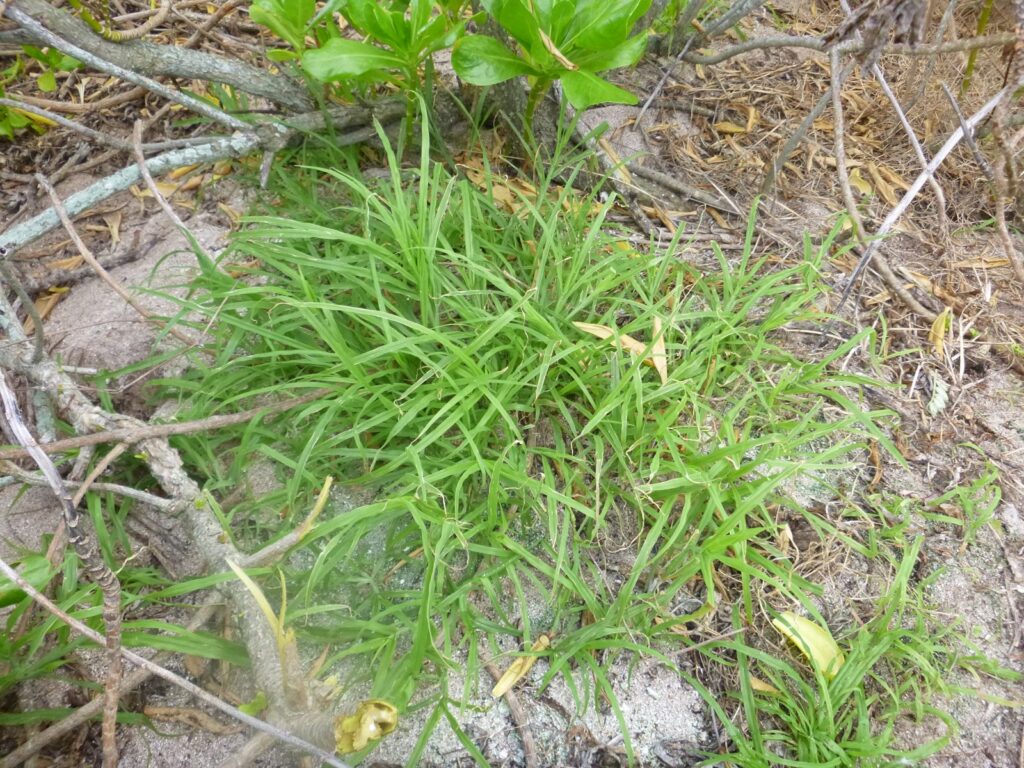
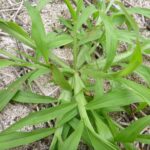
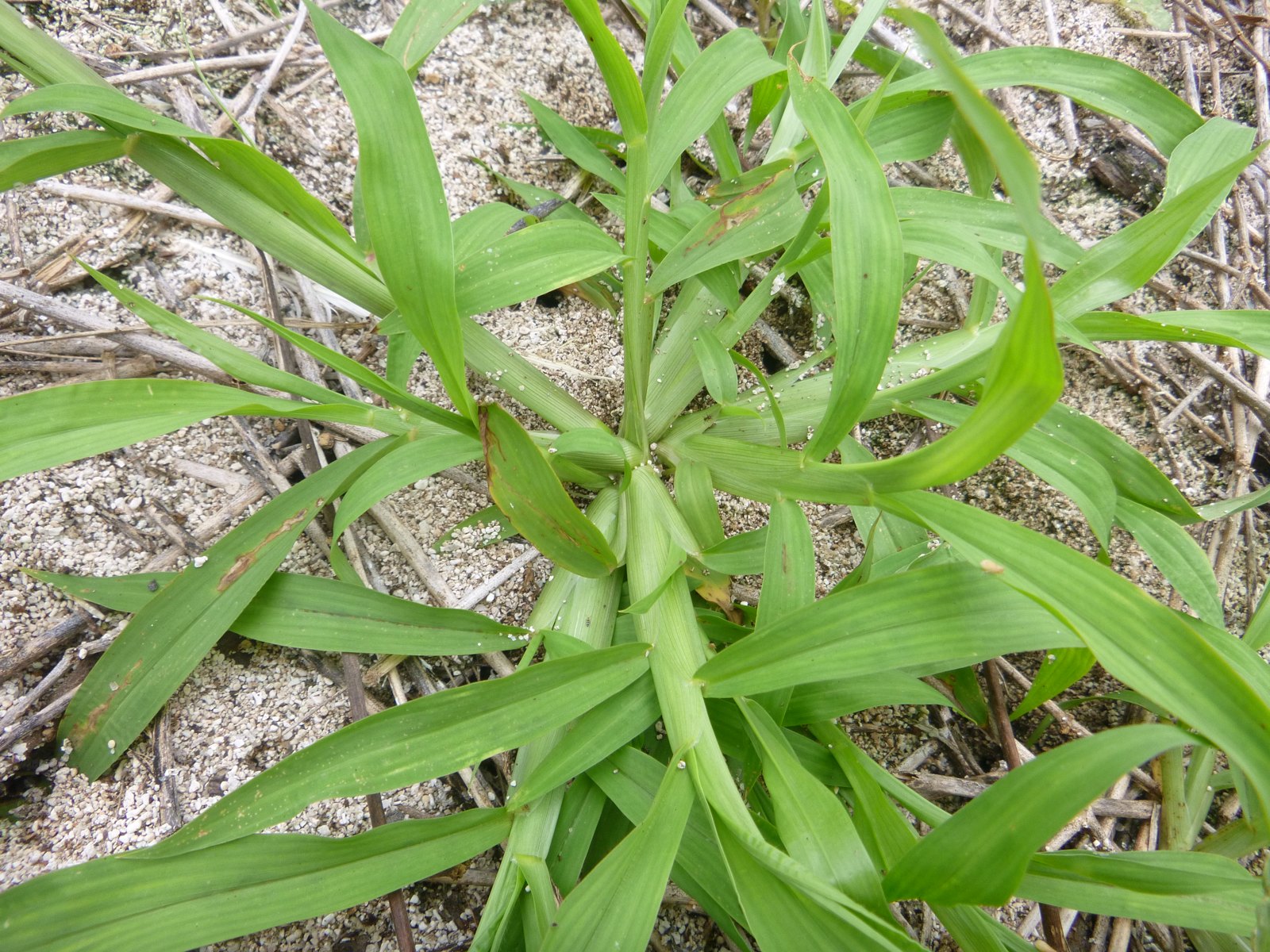
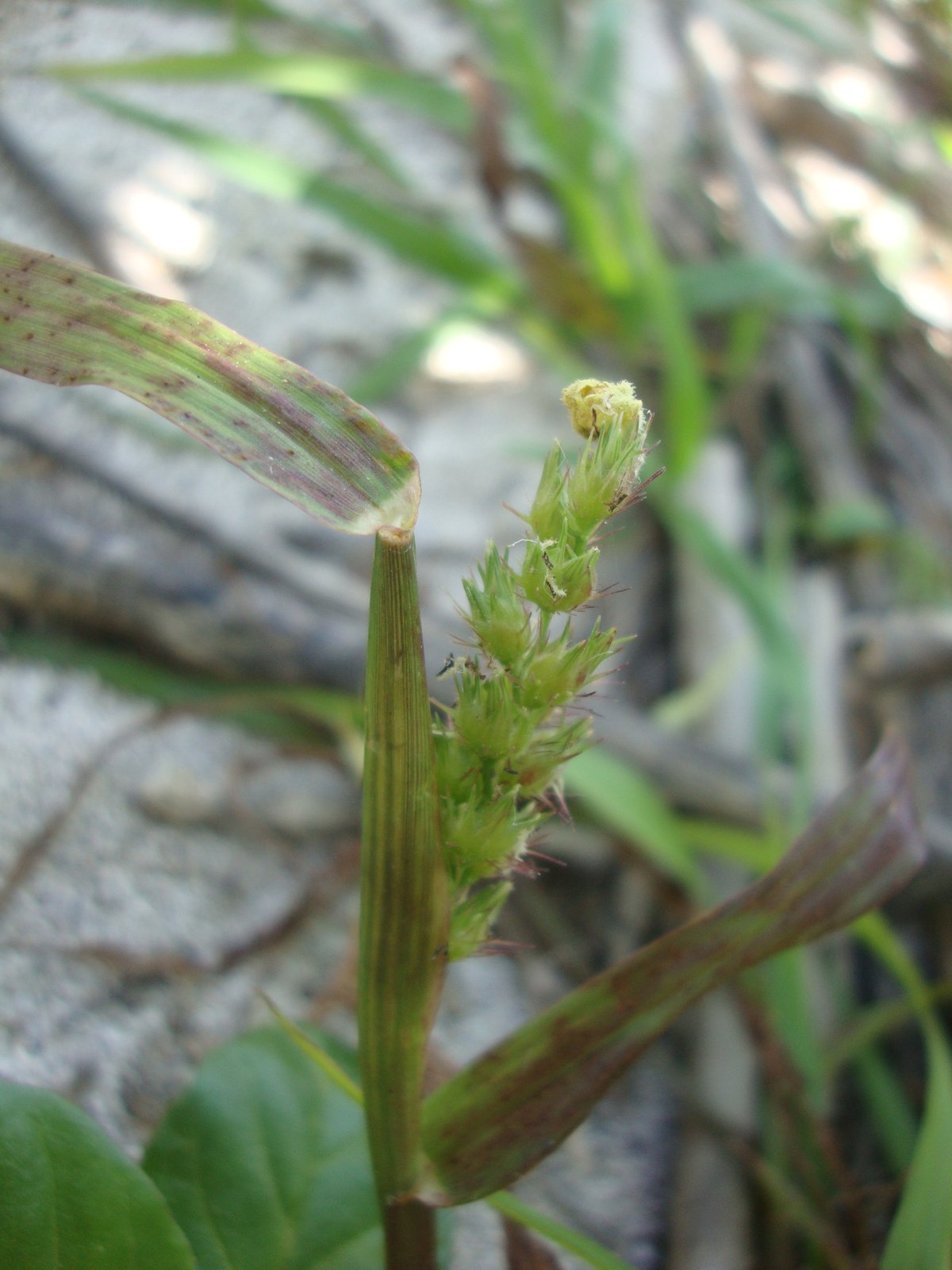
Sandbur (Cenchrus echinatus). A priority grass with spiny burs. See its own page.
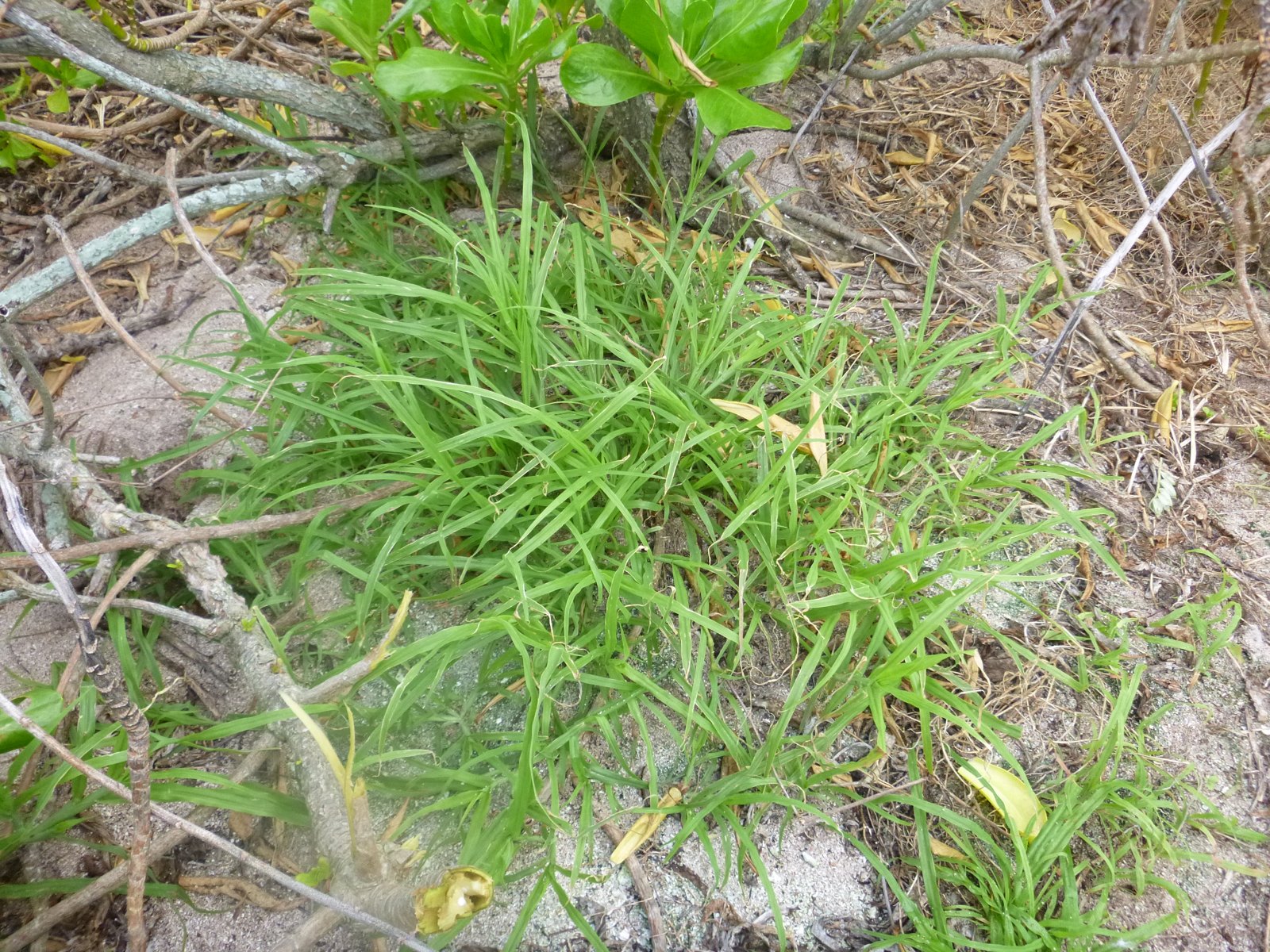
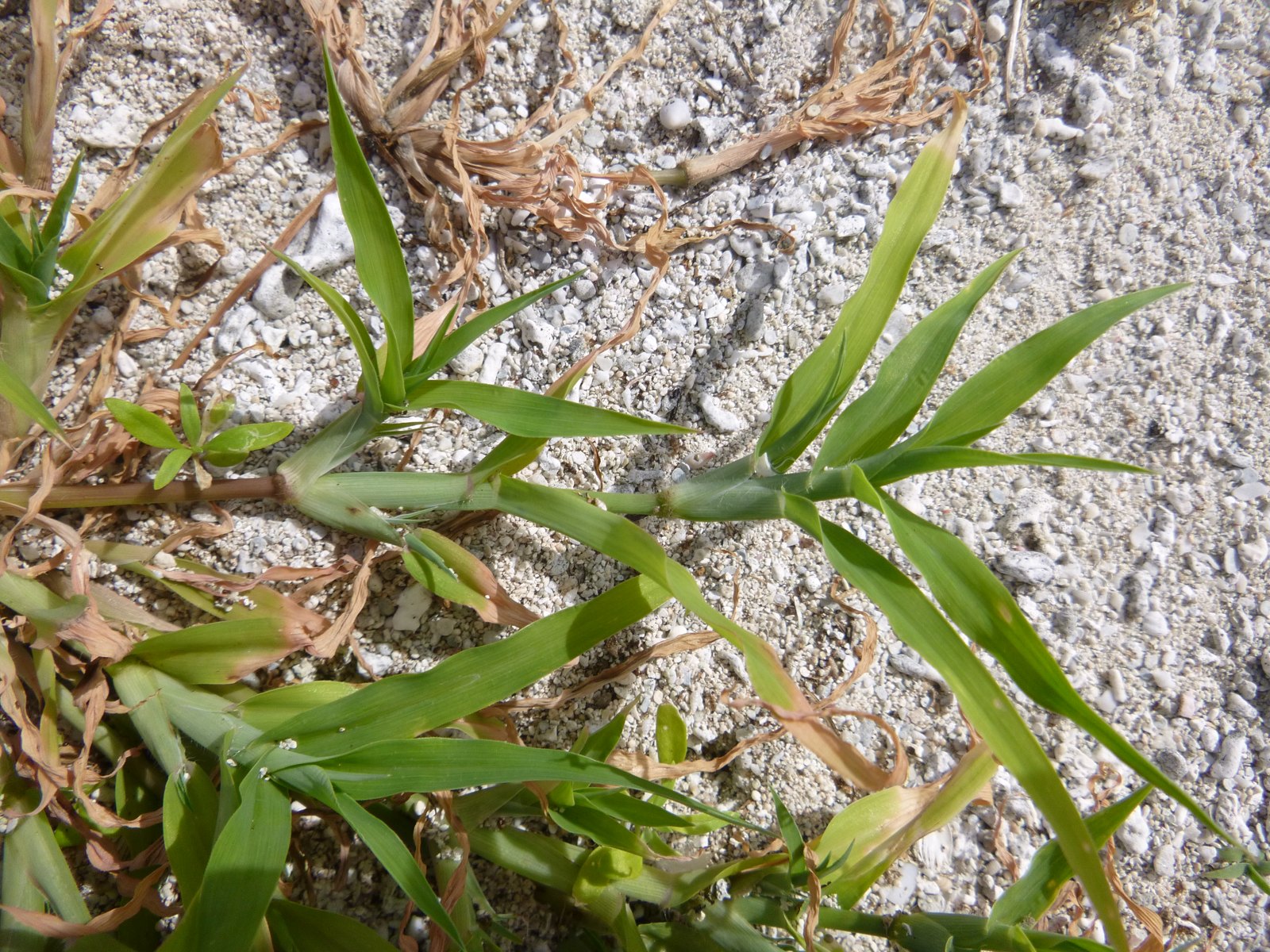
Beach wiregrass (Dactyloctenium aegyptium). A highly invasive grass, closely watched and treated wherever a new patch is found.
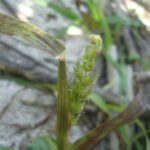
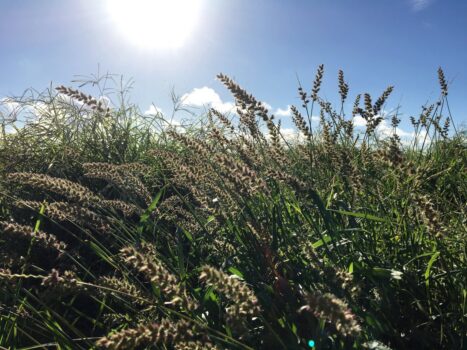
Bristly foxtail (Setaria verticillata). Its sticky seed heads cling to clothing and feathers. It has moved on and off the target list over the years and is still common across the island.
Purple nutsedge (Cyperus rotundus). Spreads underground through rhizomes and tubers. So far it is found only around camp, where crews remove it by hand.
Gone, or no longer targeted
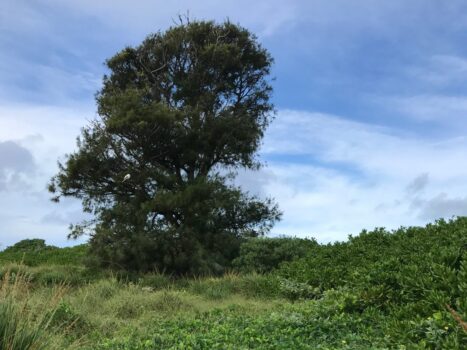
Essentially eradicated. Ironwood (Casuarina equisetifolia), ʻalena haole (Boerhavia coccinea) and spiny amaranth (Amaranthus spinosus) were once targets but are now essentially gone from Hōlanikū. The only ironwood left is the Navigation Tree. ʻAlena haole is hard to spot among native ʻalena, but it has not been found in many years. Crews keep watching for all three.
No longer targeted. Some introduced plants turned out to help wildlife, so crews stopped removing them. Koloa pōhaka eat the seeds of goosegrass (Eleusine indica) and common purslane (Portulaca oleracea), and Bermuda grass (Cynodon dactylon) helps hold soil and burrows together.
Even a native plant is controlled in a few places. Nohu (Tribulus cistoides) is removed only from hard-packed ground on the runway and in camp, where its sharp seed pods can puncture the feet of seabirds, ducks and people.
Habitat Restoration Program
How crews remove invasive plants and restore native habitat across Green Island.
Help clear invasive species from Hōlanikū
KAC/DLNR field crews monitor wildlife and restore habitat year-round. Your support keeps them on the island.