ʻAkihikēʻehiʻale
Tristram's Storm-Petrel
Hydrobates tristrami
A small, dusky storm-petrel that returned to nest on Hōlanikū after rats were removed.
| State recognized | Indigenous |
|---|---|
| NatureServe Global Rank | G3 Vulnerable |
| North American Waterbird Conservation Plan | High concern |
| IUCN Red List | Least concern |

Species Information
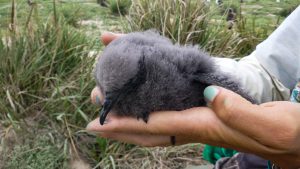
The ʻakihikēʻehiʻale, or Tristram's Storm-Petrel, is a large storm-petrel (family Hydrobatidae) with long, pointed wings and a notched tail. Adults are brownish-gray all over. Like other storm-petrels, it flies low over the water, gliding as it searches for food.
Foraging & Nesting
ʻAkihikēʻehiʻale usually feed at night, alone or with others of their kind. The Hawaiian name means "the bird that steps on water," describing how it picks food from the surface in flight, often pattering on the water with its feet. In Hawaiʻi its diet includes fish, squid, jellies and other soft-bodied sea creatures, crustaceans and insects.
ʻAkihikēʻehiʻale nest in winter and visit their colonies only at night. They nest in rock crevices or in burrows they dig under vegetation. Eggs are laid from December through February and chicks fledge by June. Little is known about their parental care. Like most storm-petrels, they probably first breed at three to five years old and live 15 to 20 years.
Distribution & Abundance
ʻAkihikēʻehiʻale nest throughout the Northwestern Hawaiian Islands and once nested on the main islands as well. Outside Hawaiʻi, they nest only on three small islands off Japan. Outside the nesting season they range across the subtropical central and western Pacific.
Because their burrows are hard to find and count, there is no good estimate of how many nest in Hawaiʻi.
Conservation Actions
ʻAkihikēʻehiʻale are protected under the federal Migratory Bird Treaty Act and State of Hawaiʻi law. Hawaiʻi's State Wildlife Action Plan calls for removing golden crownbeard (Verbesina encelioides) from Manawai (Pearl and Hermes Atoll), Kuaihelani (Midway Atoll) and Hōlanikū, removing mice from Kuaihelani and attracting birds back, estimating the population, protecting refuges and moving birds to higher main-island sites that will stay above rising seas.
On Hōlanikū, KAC/DLNR crews map nesting areas and plan trails and restoration work to avoid disturbing burrows.
Current Threats
Burrow-nesting storm-petrels are very vulnerable to rats, which wiped them out on Hōlanikū in the past. Today the main threats are invasive plants such as golden crownbeard that take over nesting areas, burrows collapsing underfoot, sea level rise on low islands and, at times, predators such as visiting Short-eared Owls. Bright lights can also confuse storm-petrels flying at night.
On Hōlanikū
A few ʻakihikēʻehiʻale probably nested on Hōlanikū in the 1960s before Polynesian rats wiped them out. After the rats were removed in the 1990s, birds were heard flying over camp, and in 2013 crews found three nests, the first recorded in almost 50 years. By the next season they had documented 22 nests in the central plains.
Today they nest mainly in the central plains. In 2025, crews saw the first downy chicks in early March and fully feathered chicks waiting outside their burrows in April.

ʻAkihikēʻehiʻale
The name for the Tristram's Storm-Petrel is ʻakihikēʻehiʻale, which means "the bird that steps on water." It is an old name found in the writings of Hawaiian historian Kepelino and in Hawaiian-language newspapers from the 1800s.
What's in a Name?
A webinar related to the research of the Papahānaumokuākea Native Hawaiian Cultural Working Group tasked with giving Hawaiian names to numerous other bird, plant, limu, and coral species unique to PMNM
More seabirds of Hōlanikū
-
 ʻĀ
Masked Booby
-
 ʻĀ
Red-footed Booby
-
 ʻĀ
Brown Booby
-
 ʻAoʻū
Christmas Shearwater
-
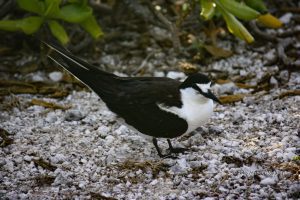 ʻEwaʻewa
Sooty Tern
-
 ʻIwa
Great Frigatebird
-
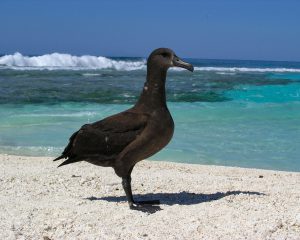 Kaʻupu
Black-footed Albatross
-
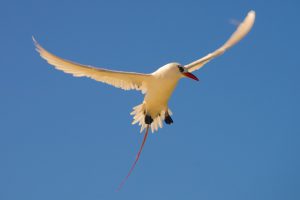 Koaʻe ʻula
Red-tailed Tropicbird
-
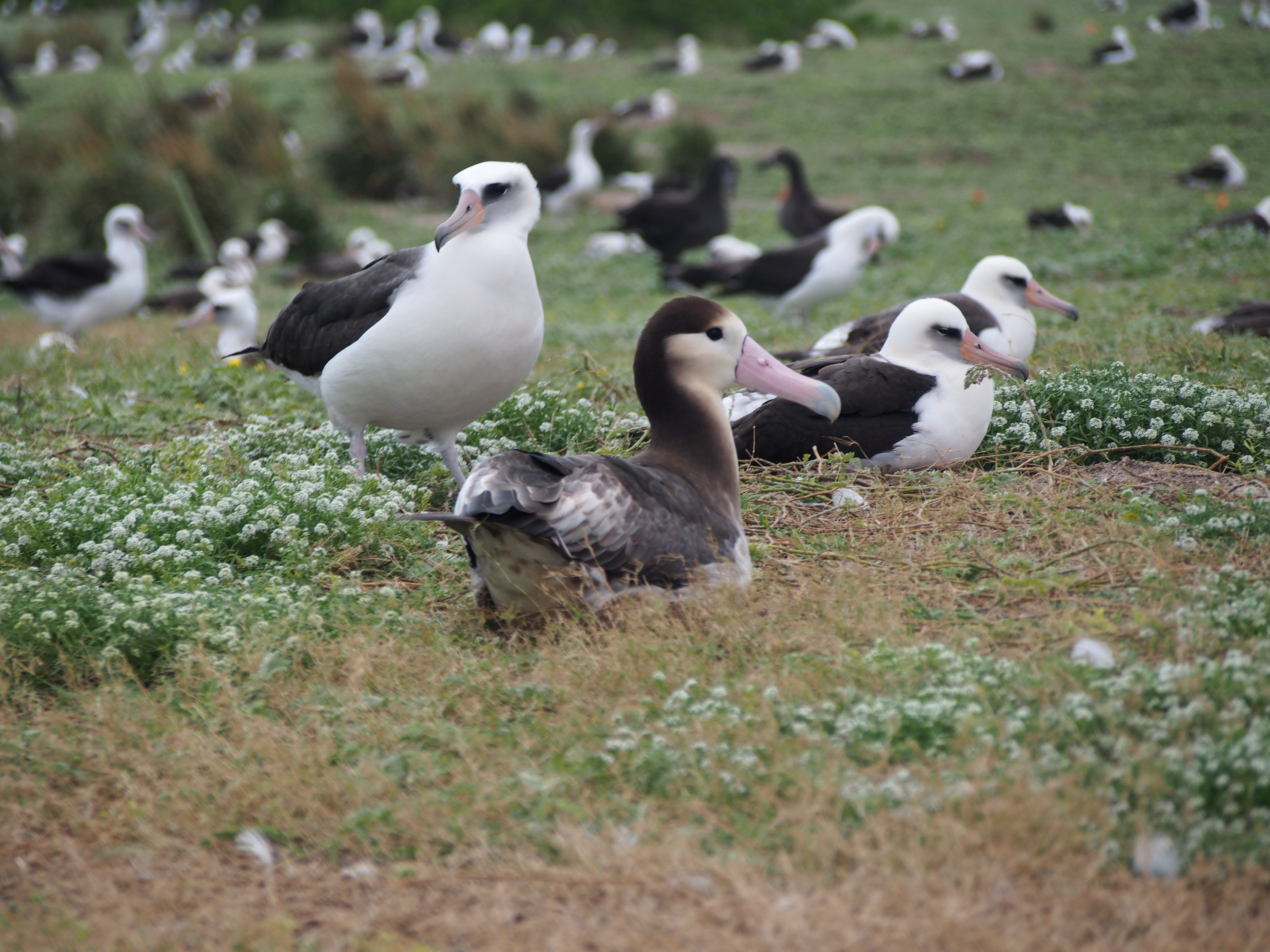 Makalena
Short-tailed Albatross
-
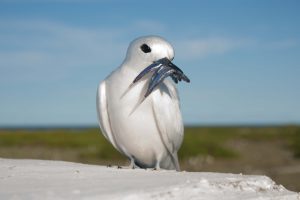 Manu-o-Kū
Blue-billed White-Tern
-
 Mōlī
Laysan Albatross
-
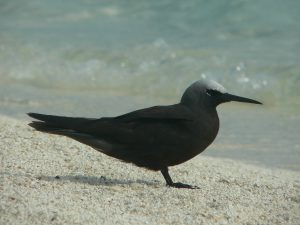 Noio
Black Noddy
-
 Noio kōhā
Brown Noddy
-
 Nunulu
Bonin Petrel
-
 ʻOu
Bulwer's Petrel
-
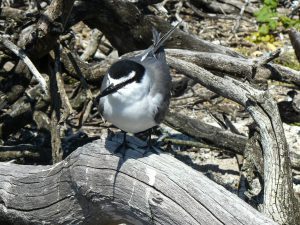 Pākalakala
Gray-backed Tern
-
 ʻUaʻu kani
Wedge-tailed Shearwater
Help protect seabirds and shorebirds on Hōlanikū
KAC/DLNR field crews monitor wildlife and restore habitat year-round. Your support keeps them on the island.