ʻĀ
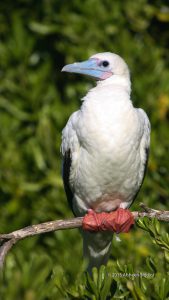
Red-footed Booby
Sula sula
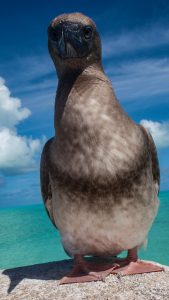
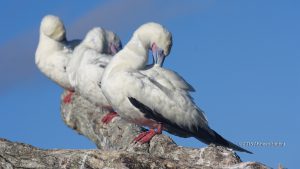
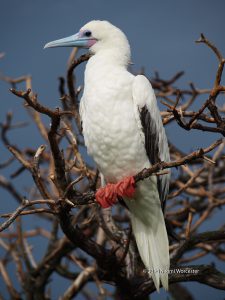
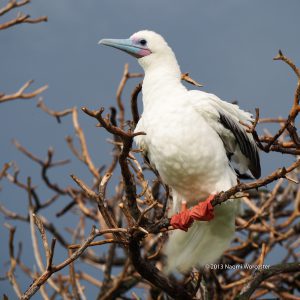
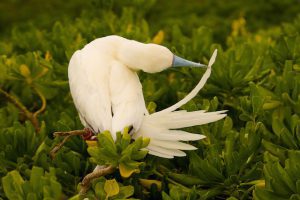
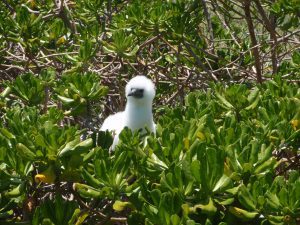
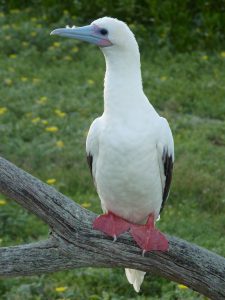
The smallest booby, with bright red feet, nesting by the hundreds in the naupaka of Hōlanikū.
| State recognized | Indigenous |
|---|---|
| NatureServe Global Rank | G5 Secure |
| North American Waterbird Conservation Plan | Not at risk |
| IUCN Red List | Least concern |

Species Information
The ʻā, or Red-footed Booby (Sula sula), is the smallest of the boobies. Like the Brown and Masked Boobies, it nests on tropical islands across the Atlantic, Pacific and Indian Oceans. Three subspecies are recognized, and one, Sula sula rubripes, is resident in Hawaiʻi.
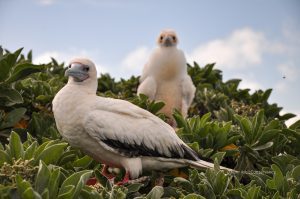
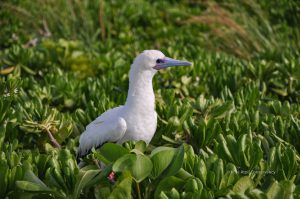
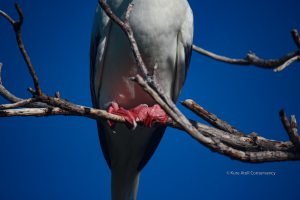
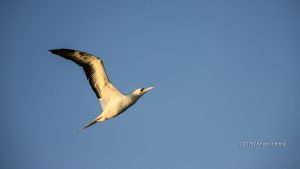
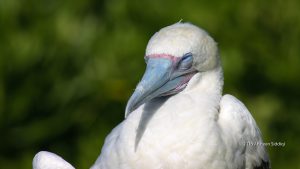
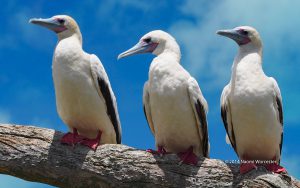
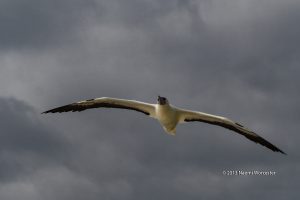
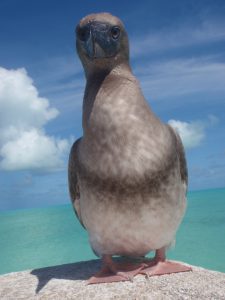
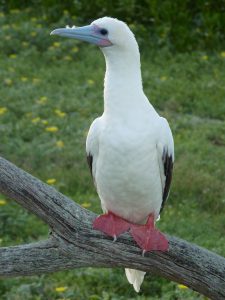
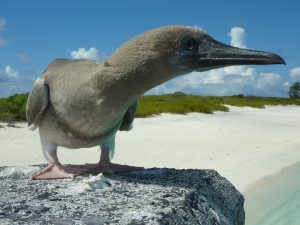
Red-footed Boobies have long, pointed wings and a fairly long, wedge-shaped tail. Adults are white with brownish-black flight feathers, and females are larger than males. The legs and feet are orange to red, the bill is bluish with a pink base, and the facial skin is pink, red and blue.
Foraging & Nesting
Red-footed Boobies feed alone or in mixed-species flocks, usually farther from land than other boobies. They plunge-dive from about 6 meters (20 feet) for flying fish and squid, and sometimes mackerel scad, saury and anchovies.
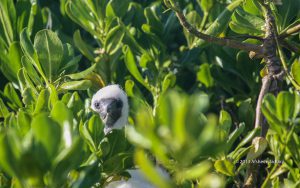
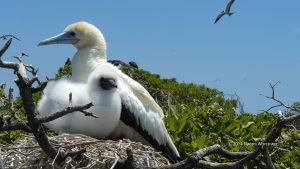
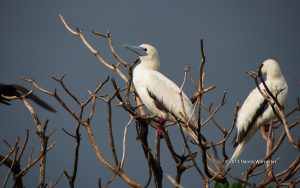
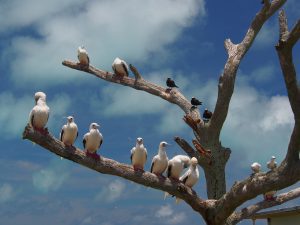
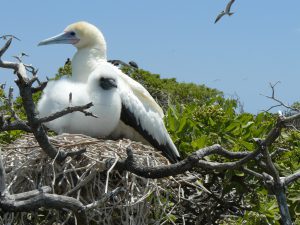
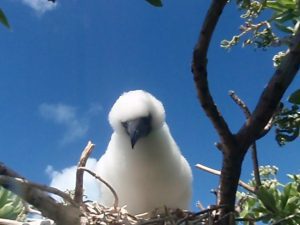
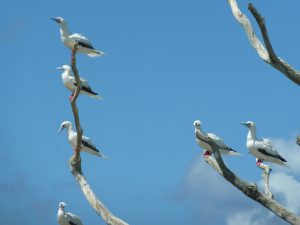
Unlike the other Hawaiian boobies, Red-footed Boobies roost and nest in shrubs and trees. Colonies range from ten to ten thousand pairs, and pairs often stay together for several seasons. Nesting is fairly synchronized, with most eggs laid from February to April and most young fledged by September, though they can nest year-round.
Red-footed Boobies lay a single egg. Both parents incubate it and brood and feed the chick, and they continue feeding the young bird for up to four months after it fledges. They first breed at three to four years old, and the oldest known bird lived to 22.
Distribution & Abundance
Red-footed Boobies nest throughout the Northwestern Hawaiian Islands and at a few sites on the main islands, including Kīlauea Point National Wildlife Refuge on Kauaʻi, Ulupaʻu Head on Oʻahu and the islets of Moku Manu and Lehua. Little is known about where they go outside the nesting season, though in Hawaiʻi they move between islands and spread eastward.
Hawaiʻi has an estimated 7,000 to 10,500 breeding pairs, and the world population is fewer than 300,000 pairs, mostly in the eastern Pacific. They nest in shrubs and trees such as naupaka (Scaevola taccada) and beach heliotrope (Heliotropium foertherianum), building nests of twigs, grass and other plants, and occasionally nest on old structures or low piles of vegetation.
Conservation Actions
Red-footed Boobies are protected under the federal Migratory Bird Treaty Act and State of Hawaiʻi law. Hawaiʻi's State Wildlife Action Plan calls for controlling predators, removing invasive scale insects that damage nesting shrubs, limiting disturbance and protecting sanctuaries and refuges. On Hōlanikū, KAC/DLNR crews protect and plant native naupaka, the boobies' main nesting shrub.
Current Threats
Red-footed Boobies depend on healthy shrubs and trees for nesting, so anything that damages naupaka, such as scale insects supported by invasive ants, reduces their nesting habitat. At sea they can be caught in fishing gear and tangled in debris; in December 2024 the Hōlanikū crew freed an adult that had an old bicycle inner tube wrapped around its neck and wing.
On Hōlanikū
Red-footed Boobies are the most numerous booby on Hōlanikū, nesting and roosting in the naupaka around the island. The first nests are usually found in February and the first chicks in April. On 11 October 2025, a crew member counted 885 Red-footed Boobies from the roof of the main house.
The Kiamanu Project
ʻĀ are honored in traditional Hawaiian practices and ceremonies. Much of that knowledge is being reawakened through the community, the Office of Hawaiian Affairs and the Kiamanu Project.
ʻā
1. nvi. Fiery, burning; fire; to burn, blaze. Fig., to glitter or sparkle, as a gem; to burn, as with jealousy or anger. ʻĀ akaaka, to shine brightly, as stars. ʻĀ ke kaimana, the diamond sparkles. hoʻā To set on fire, burn, ignite; to light, as a lamp. Fig., to incite, arouse. Ua hoʻā ʻia kona inaina, his anger was aroused. Hoʻā imu, to light an oven; one who lights an oven. (PPN kakaha, PNP kaa.)
2. nvi. Aa lava, or lava rock, as distinguished from smooth unbroken pāhoehoe lava (formerly preceded by ke); to flow, as aa lava.
3. Same as ʻaʻa 1, to dare. ʻAʻole ʻoia i ʻā e noho, he did not dare to stay.
4. n. Red-footed booby bird (Sula sula rubripes), brown booby (Sula leucogaster plotus), masked or blue-faced booby (Sula dactylatra personata); all indigenous and also breeding elsewhere. Also ʻaʻa. Legendary birds believed to have taken the shape of this bird are ʻā ʻaia, ʻā-ʻai-ʻanuhe-a-Kāne and ʻā-ʻaia-nui-nū-keu; ʻā by some were considered ʻaumākua. See also Kep. 33.
More seabirds of Hōlanikū
-
 ʻĀ
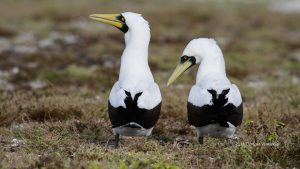
Masked Booby
-
 ʻĀ
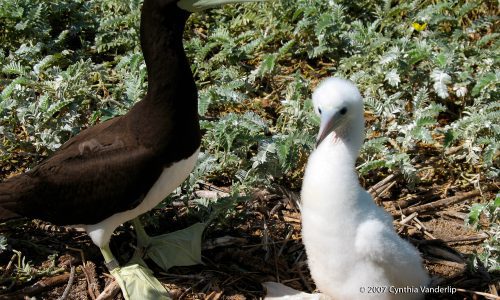
Brown Booby
-
 ʻAkihikēʻehiʻale
Tristram's Storm-Petrel
-
 ʻAoʻū
Christmas Shearwater
-
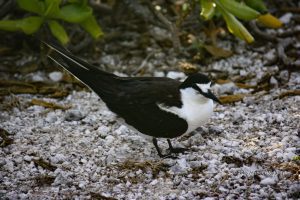 ʻEwaʻewa
Sooty Tern
-
 ʻIwa
Great Frigatebird
-
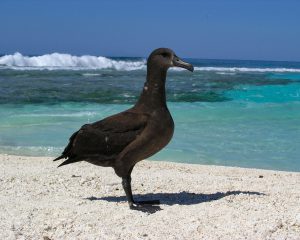 Kaʻupu
Black-footed Albatross
-
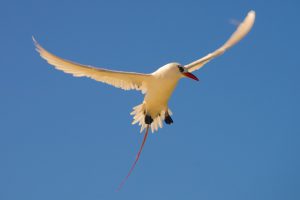 Koaʻe ʻula
Red-tailed Tropicbird
-
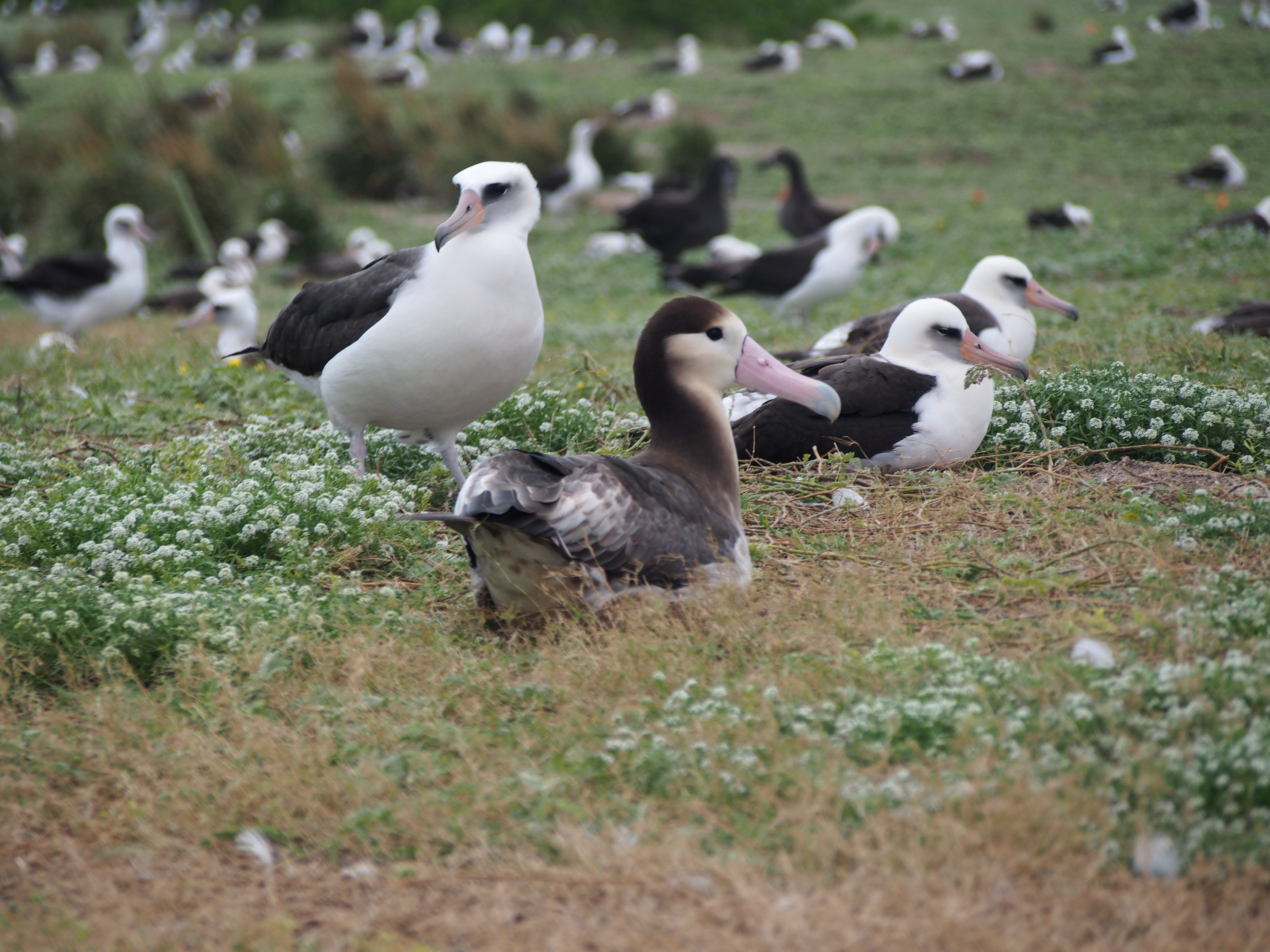 Makalena
Short-tailed Albatross
-
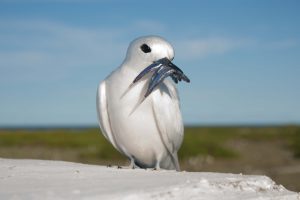 Manu-o-Kū
Blue-billed White-Tern
-
 Mōlī
Laysan Albatross
-
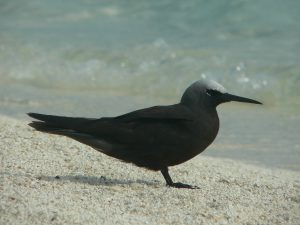 Noio
Black Noddy
-
 Noio kōhā
Brown Noddy
-
 Nunulu
Bonin Petrel
-
 ʻOu
Bulwer's Petrel
-
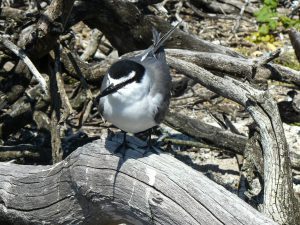 Pākalakala
Gray-backed Tern
-
 ʻUaʻu kani
Wedge-tailed Shearwater
Help protect seabirds and shorebirds on Hōlanikū
KAC/DLNR field crews monitor wildlife and restore habitat year-round. Your support keeps them on the island.