ʻIwa
Great Frigatebird
Fregata minor
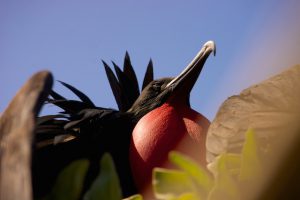
A huge, soaring seabird with a forked tail; males puff up a bright red throat pouch in courtship.
| State recognized | Indigenous |
|---|---|
| NatureServe Global Rank | G4 Apparently secure |
| North American Waterbird Conservation Plan | Moderate concern |
| IUCN Red List | Least concern |
| USFWS Bird of Conservation Concern | Yes (2021) |

Species Information
The ʻiwa, or Great Frigatebird, is a large, graceful seabird (family Fregatidae) found across the tropical oceans. Five subspecies are recognized, and one, Fregata minor palmerstoni, nests in Hawaiʻi.
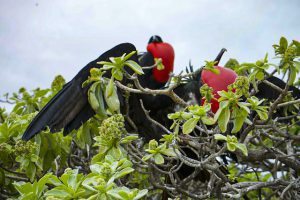
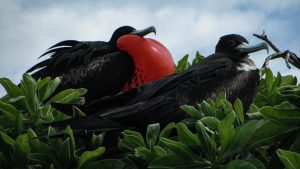
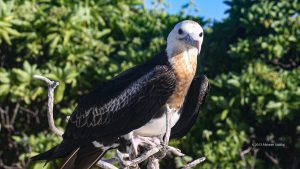
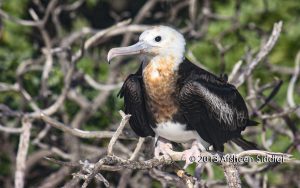
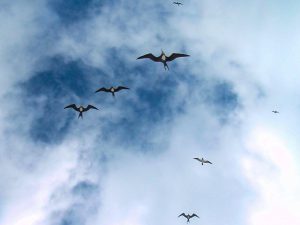
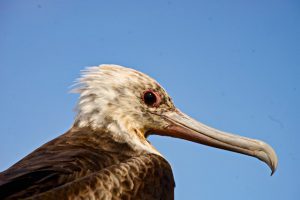
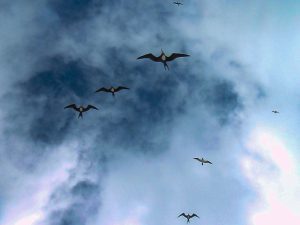
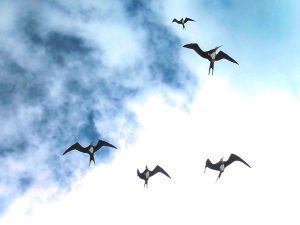
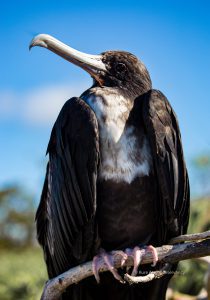
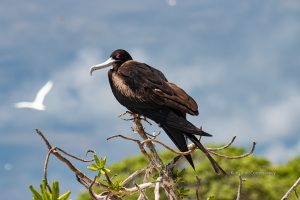
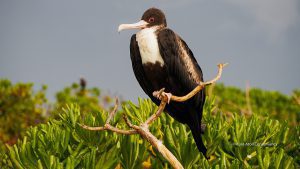
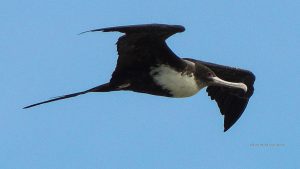
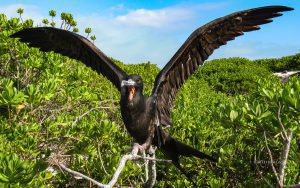
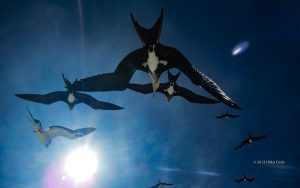
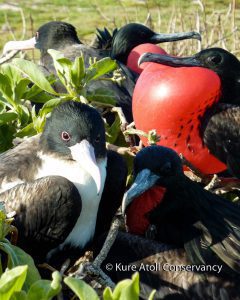
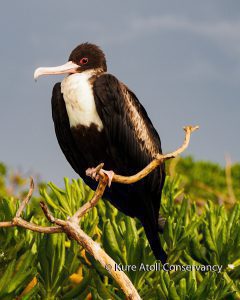
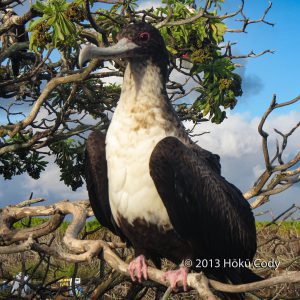
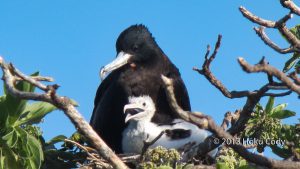
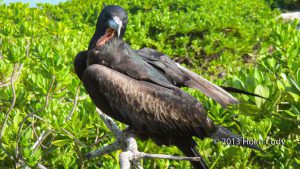
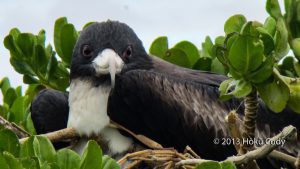
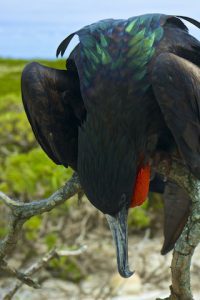
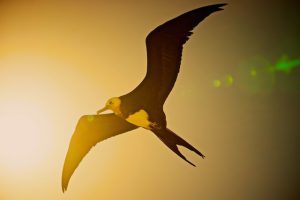
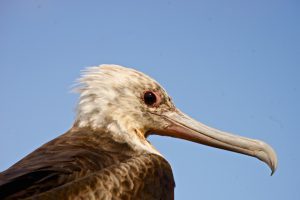
ʻIwa have slim bodies, a long, deeply forked tail, a long hooked bill and tiny legs and feet that are almost useless for walking. Adult males are almost all black with a green sheen on the head and neck, and in courtship they inflate a large red throat pouch. Females are larger, black with a white breast and a gray throat. Both may have a pale bar on the upper wing. ʻIwa spend long periods soaring with hardly a wingbeat.
Foraging & Nesting
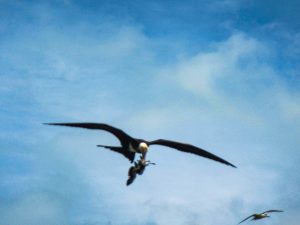
ʻIwa are expert fliers. They catch most of their own food, but they also chase other seabirds until they drop or cough up their catch. That habit gave the bird both of its names: ʻiwa means "thief," and "frigate" refers to the fast ships used by pirates. ʻIwa often feed far from land, alone or in pairs, and join mixed flocks of ʻewaʻewa (Sooty Terns) and ʻuaʻu kani (Wedge-tailed Shearwaters) over schools of predatory fish. They take prey on the wing, dipping their bills into the water or catching flying fish in the air. In Hawaiʻi they eat mostly flying fish and squid.
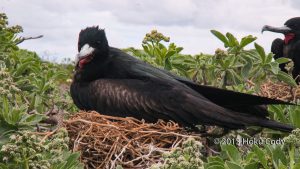
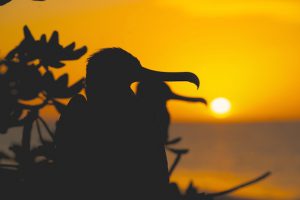
ʻIwa nest in colonies of ten to thousands of pairs, often with other seabirds, and build platform nests on top of shrubs. Unlike most seabirds, pairs usually change partners each season, likely because females nest only every two to four years. Both parents incubate the single egg and brood and feed the chick, and the female keeps feeding the young bird for up to 18 months after it fledges. ʻIwa first breed at eight to ten years old, and the oldest known bird lived to 37.
Distribution & Abundance
ʻIwa nest throughout the Northwestern Hawaiian Islands. Large numbers roost on offshore islets of the main islands, but they have not been found nesting there. Elsewhere they nest on islands in the tropical Pacific, Indian and Atlantic Oceans. Adults stay fairly close to their colonies year-round, while young birds and non-breeders roam widely.
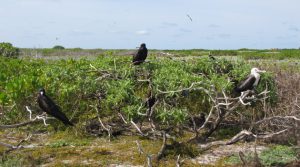
Hawaiʻi has about 10,000 breeding pairs, including 2,000 to 2,500 pairs on Kamole (Laysan Island) and 200 to 250 pairs on Hōlanikū. ʻIwa nest and roost on small, remote islands in the trade wind belt, building nests on top of shrubs and trees such as naupaka (Scaevola taccada) and beach heliotrope (Heliotropium foertherianum).
Conservation Actions
ʻIwa are protected under the federal Migratory Bird Treaty Act and State of Hawaiʻi law, and the U.S. Fish and Wildlife Service lists them as a Bird of Conservation Concern. Hawaiʻi's State Wildlife Action Plan calls for removing and controlling predators at nesting colonies, protecting sanctuaries and refuges, surveying colonies and studying how overfishing affects the fish schools ʻiwa depend on.
Current Threats
Because ʻiwa rely on schools of predatory fish such as tuna to drive prey to the surface, overfishing may reduce the food available to them. They nest on low islands that are at risk from rising seas and storms, and they can be harmed by marine debris and oil spills. Some breeders take several years between nesting attempts, so the population recovers slowly from losses.
On Hōlanikū
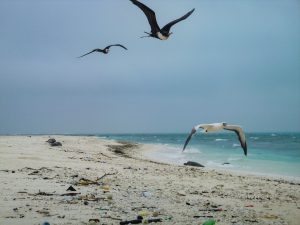
ʻIwa can be seen soaring over every part of Hōlanikū. They nest mostly in the beach heliotrope trees along the north end of the island and perch in naupaka everywhere, but they are shy and rarely come into camp. In February, males gather with their red throat pouches inflated, and the first chicks are usually seen in May. On 7 June 2025, crews counted 470 adults around the runway and Booby Acres.
ʻIwa also sometimes prey on young koloa pōhaka (Laysan Ducks), so crews leave strips of vegetation at duck watering areas to give ducklings cover.
ʻŌlelo Noʻeau
Fig., thief, so called because it steals food by forcing other birds to disgorge; also used figuratively for a handsome person, as follows: Kīkaha ka ʻiwa, he lā makani, poises the frigate bird, a windy day [of a handsome person who draws attention, as does the ʻiwa bird poised aloft]. Ka ʻiwa ālai maka, the frigate bird that fascinates the eye [an attractive person]. He iwa ka hoa e like ai (Kel. 134), just like one's friend the ʻiwa bird (of one dressed up in finery).
ʻiwa
1. Frigate or man-of-war bird (Fregata minor palmerstoni); it has a wing span of 12 m. See ex., maʻoha; see sayings, ʻānai, haehae 2. (PCP kiwa.)
2. A native fern (Asplenium horridum) with narrow, feather-shaped fronds 45 to 95 cm long, their dark stems bearing dark-brown hairs and scales. The stems were formerly used for making hats. Also ʻalae. (PCP kiwa.)
More seabirds of Hōlanikū
-
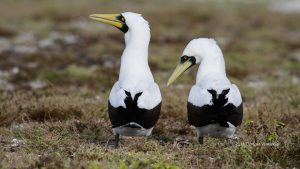 ʻĀ
Masked Booby
-
 ʻĀ
Red-footed Booby
-
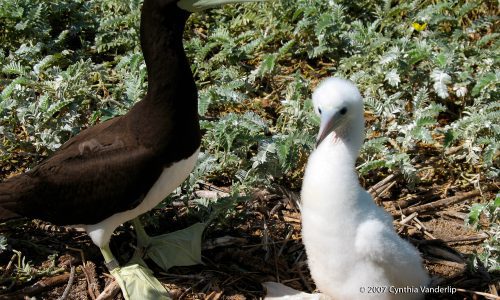 ʻĀ
Brown Booby
-
 ʻAkihikēʻehiʻale
Tristram's Storm-Petrel
-
 ʻAoʻū
Christmas Shearwater
-
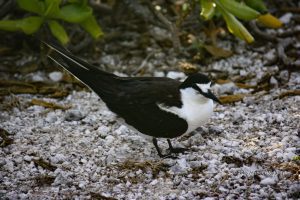 ʻEwaʻewa
Sooty Tern
-
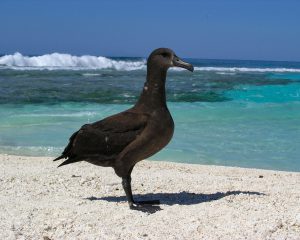 Kaʻupu
Black-footed Albatross
-
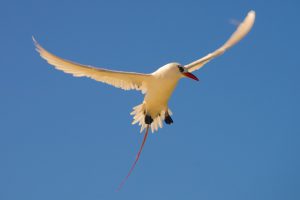 Koaʻe ʻula
Red-tailed Tropicbird
-
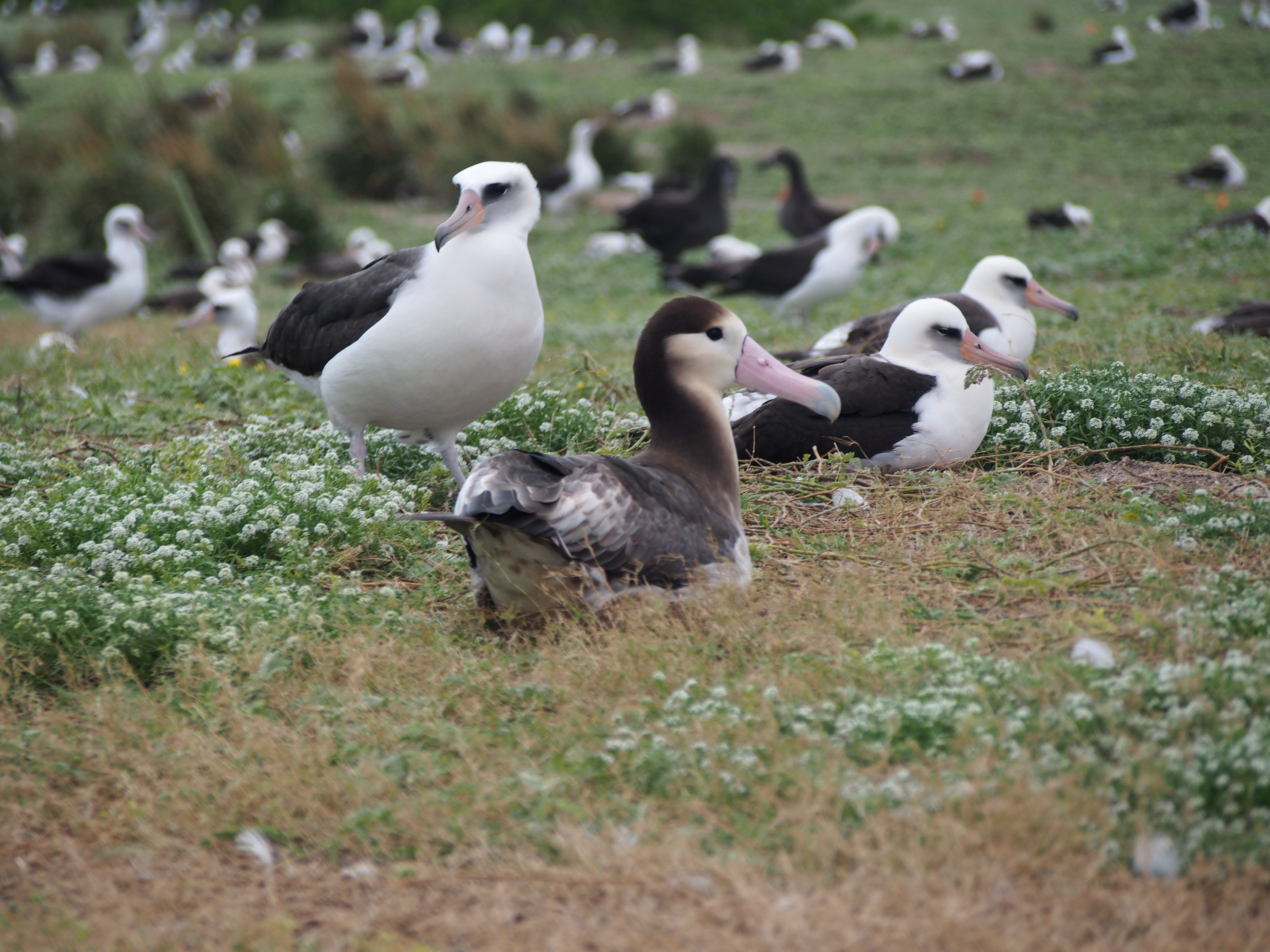 Makalena
Short-tailed Albatross
-
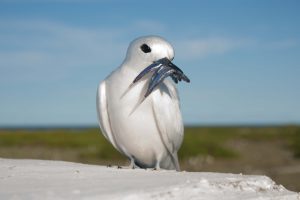 Manu-o-Kū
Blue-billed White-Tern
-
 Mōlī
Laysan Albatross
-
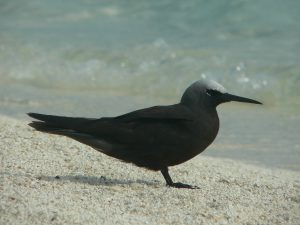 Noio
Black Noddy
-
 Noio kōhā
Brown Noddy
-
 Nunulu
Bonin Petrel
-
 ʻOu
Bulwer's Petrel
-
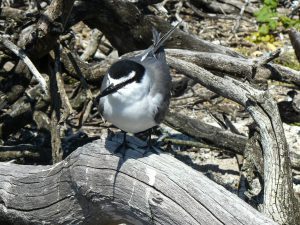 Pākalakala
Gray-backed Tern
-
 ʻUaʻu kani
Wedge-tailed Shearwater
Help protect seabirds and shorebirds on Hōlanikū
KAC/DLNR field crews monitor wildlife and restore habitat year-round. Your support keeps them on the island.