Makalena
Short-tailed Albatross
Phoebastria albatrus
The largest and rarest albatross in Hawaiʻi, a few of which visit Hōlanikū each winter.
| Federally listed | Endangered |
|---|---|
| State listed | Endangered |
| IUCN Red List | Vulnerable |
Species Information
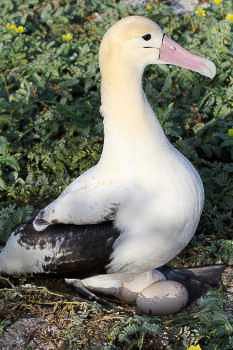
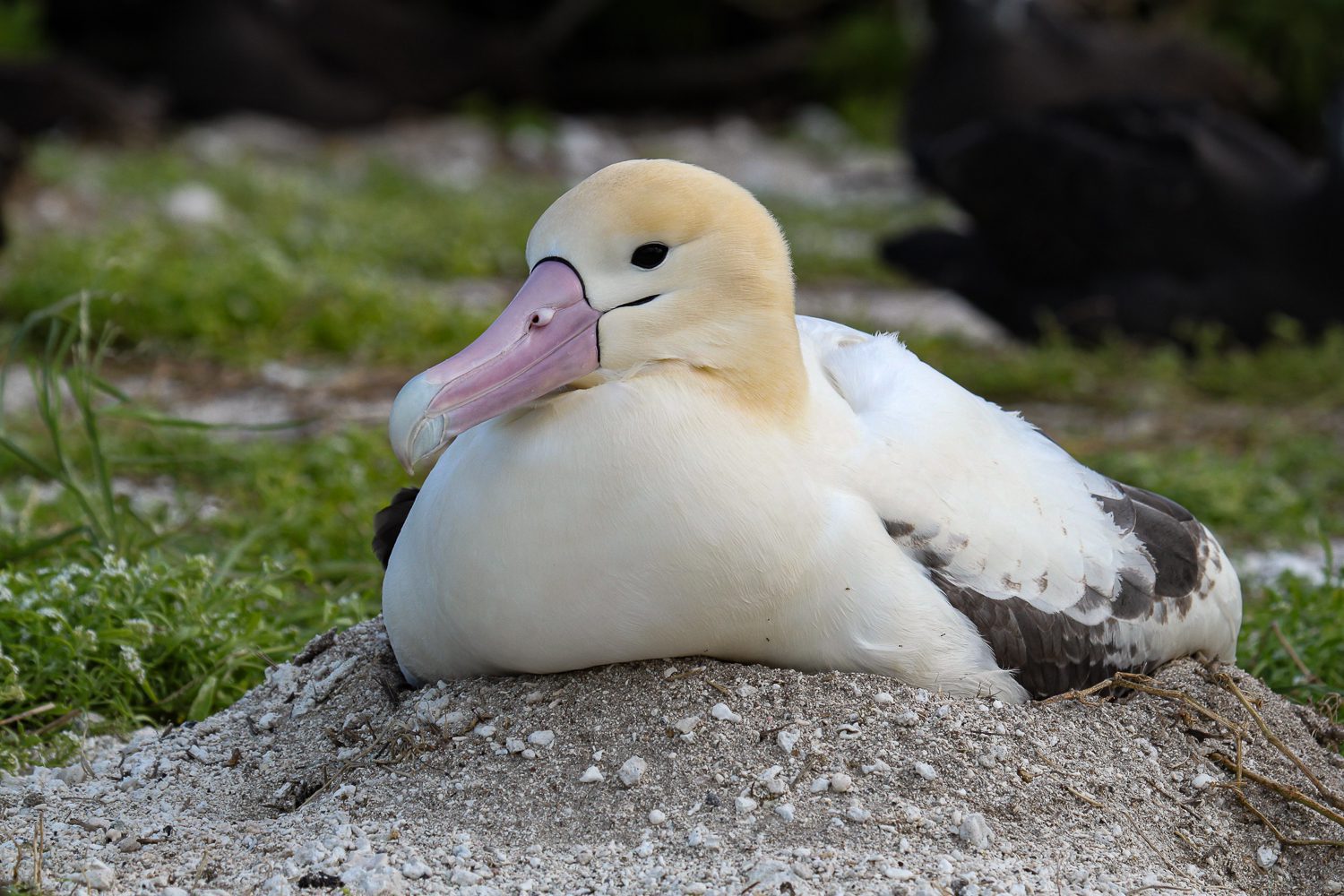
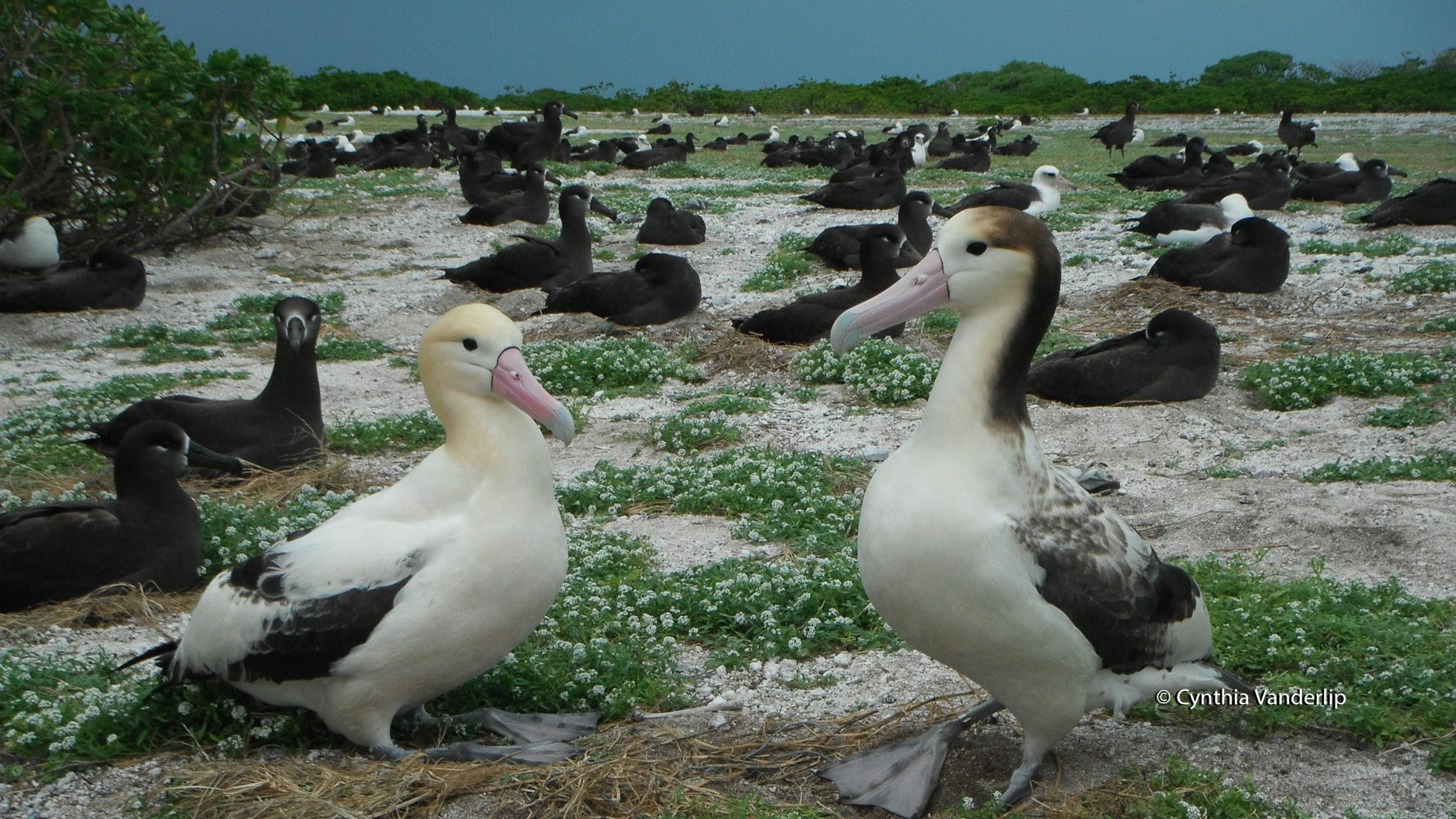
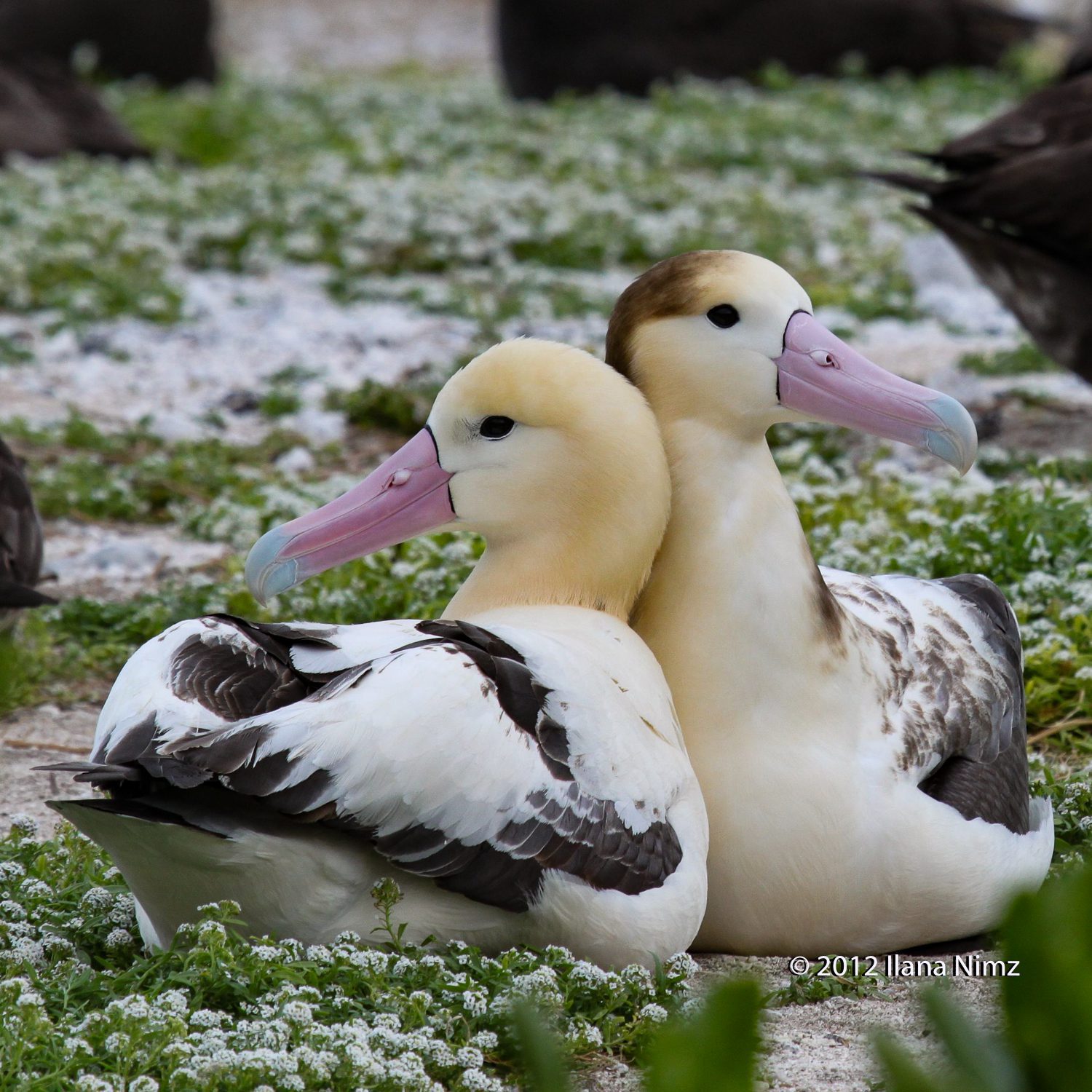
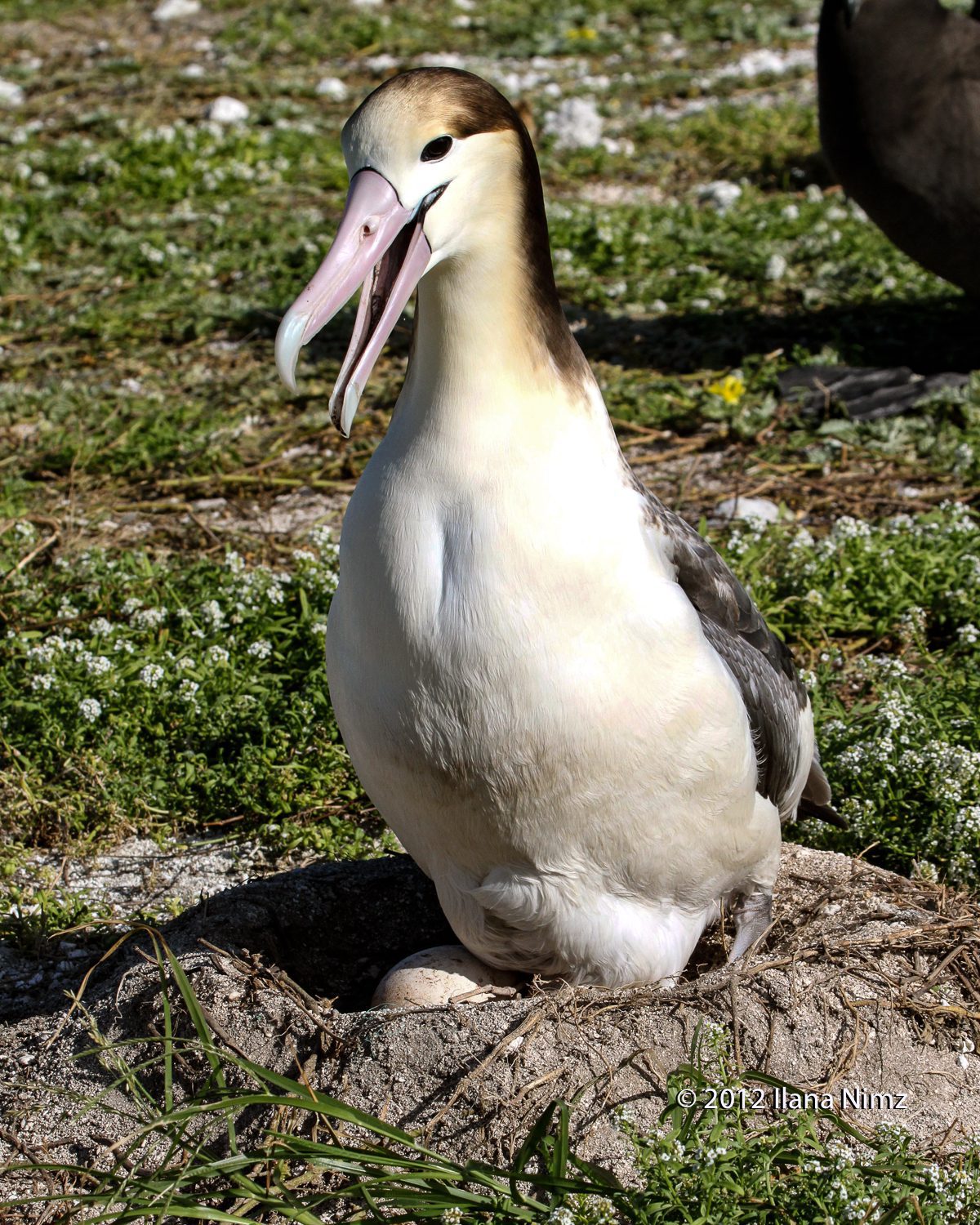
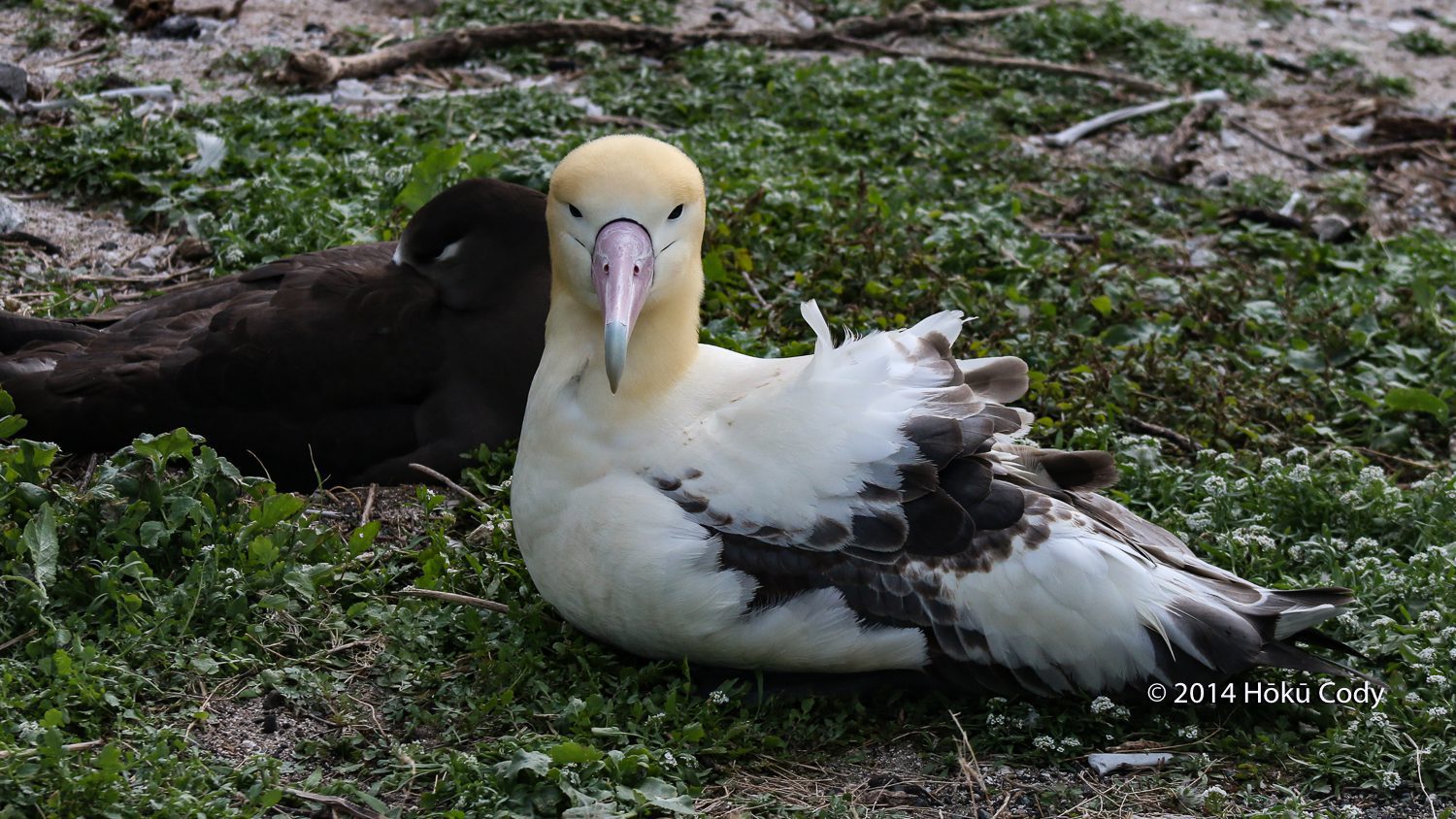
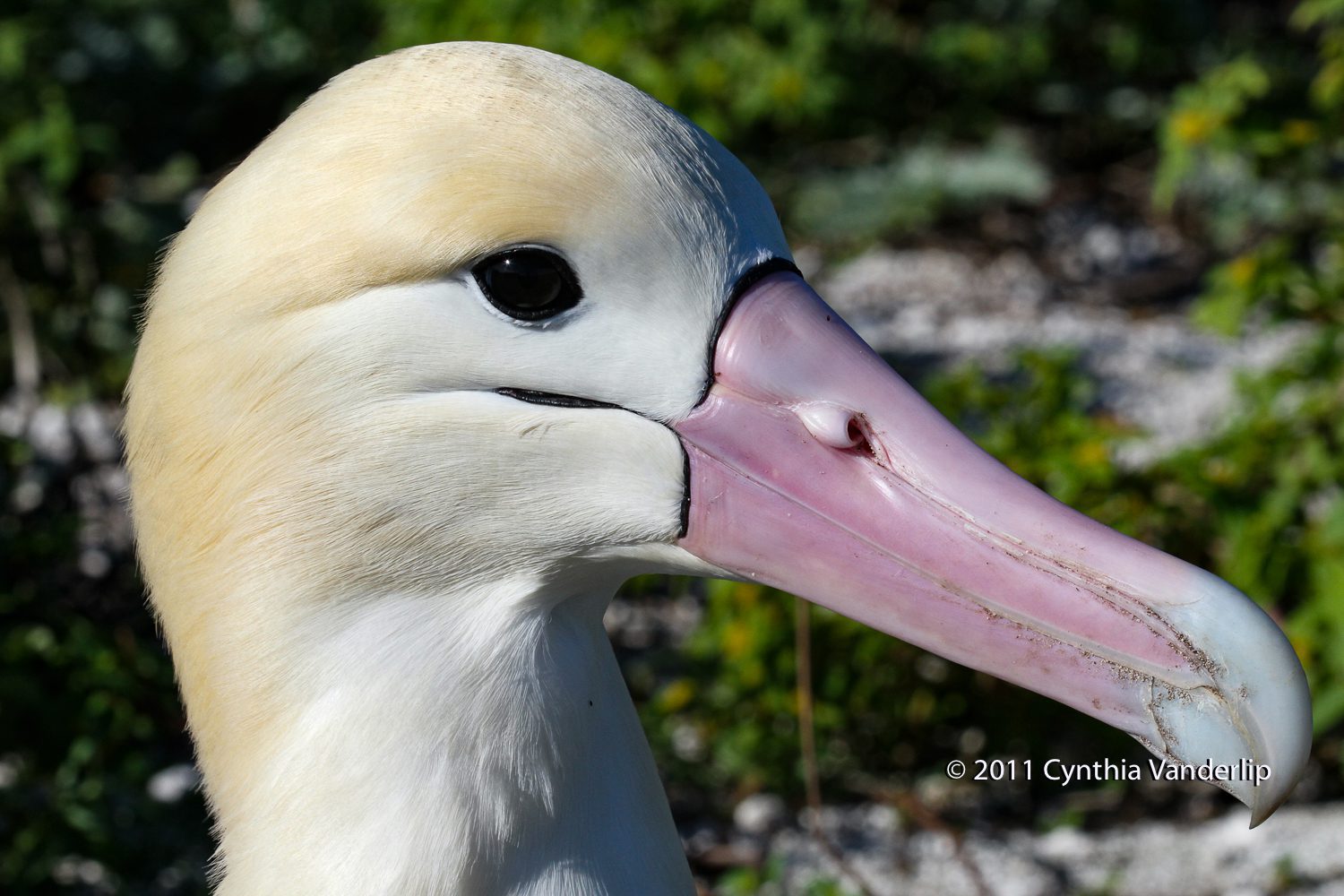
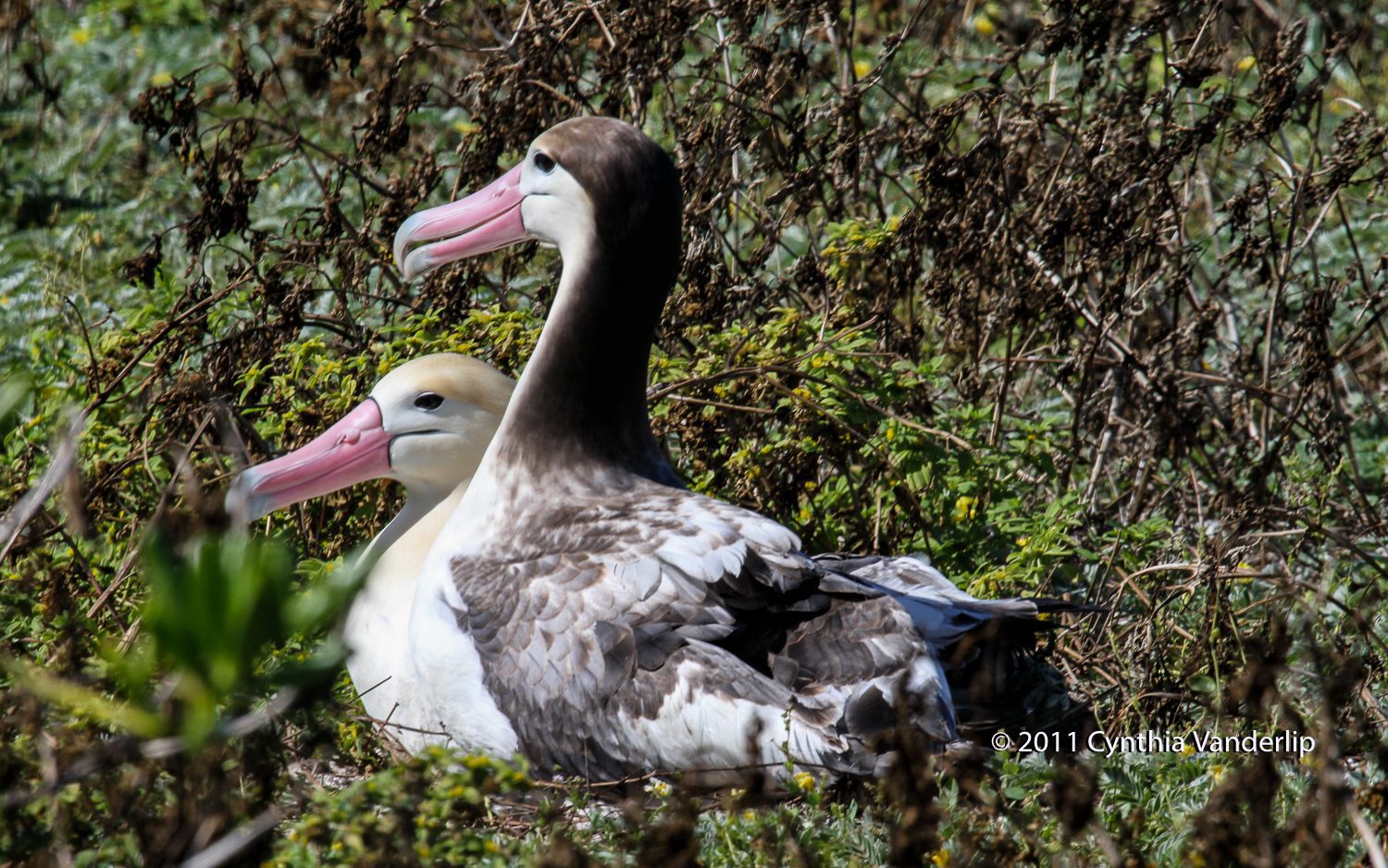
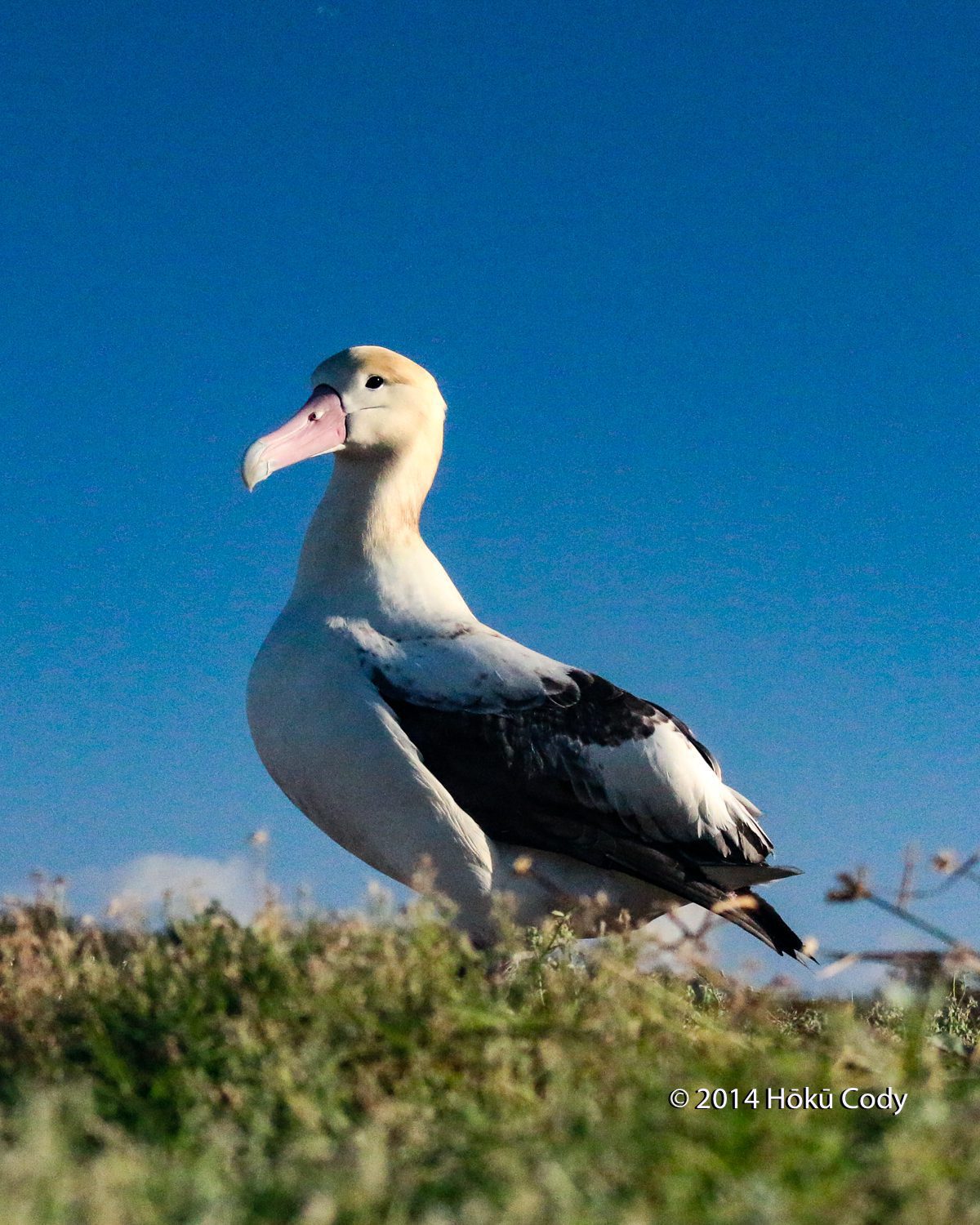
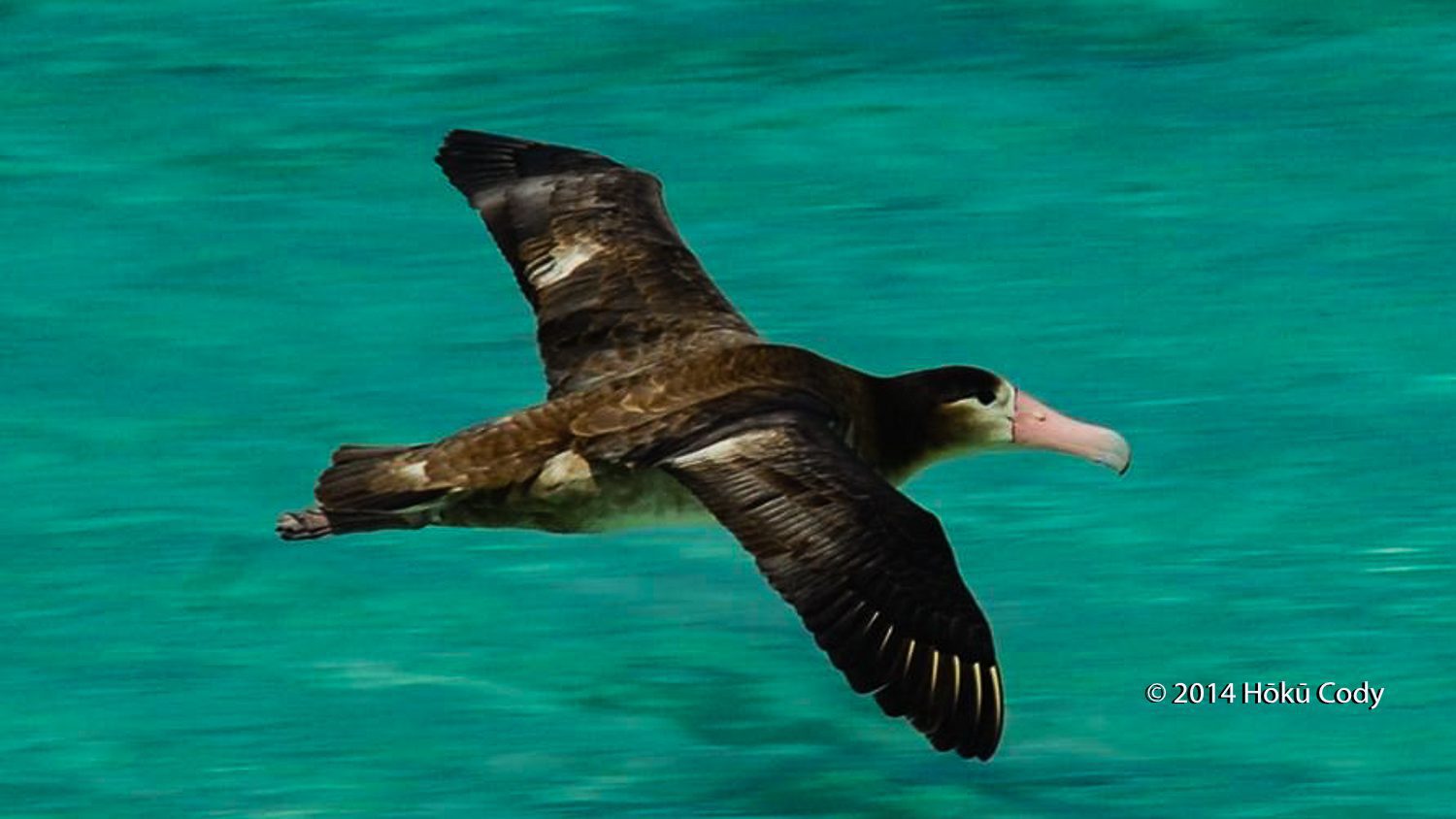
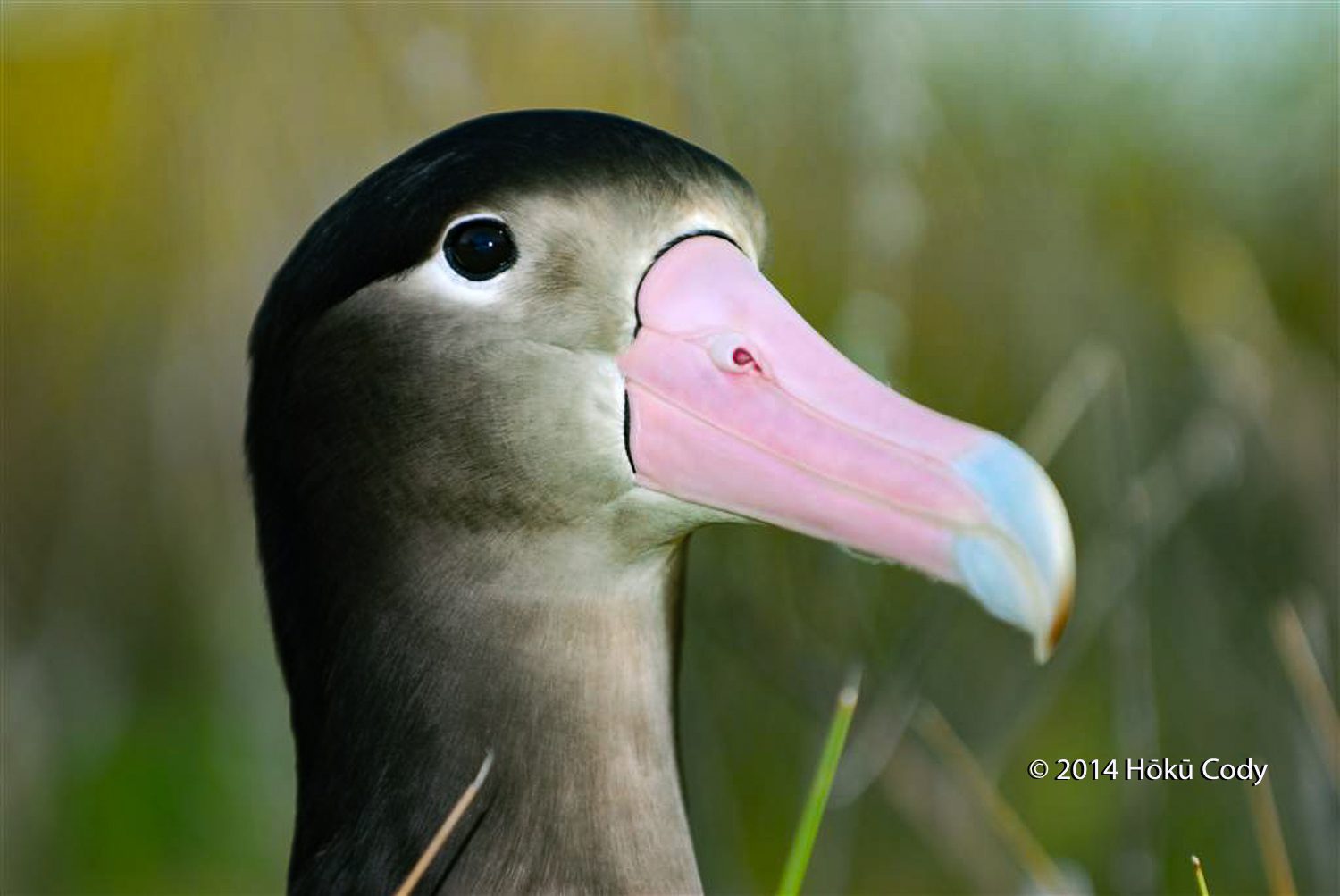
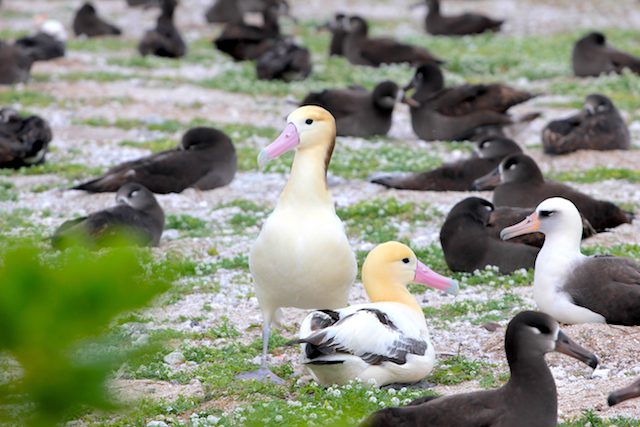
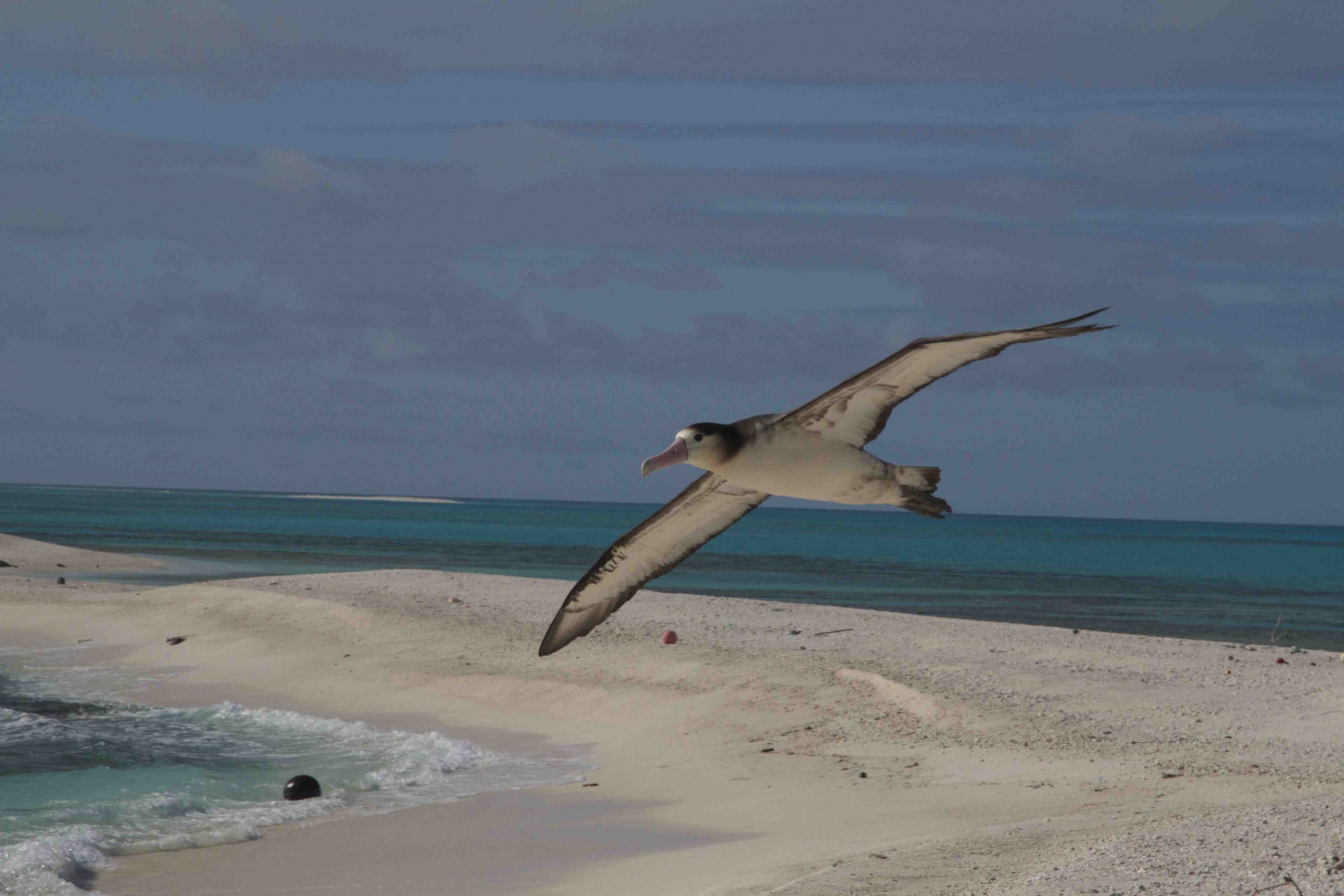
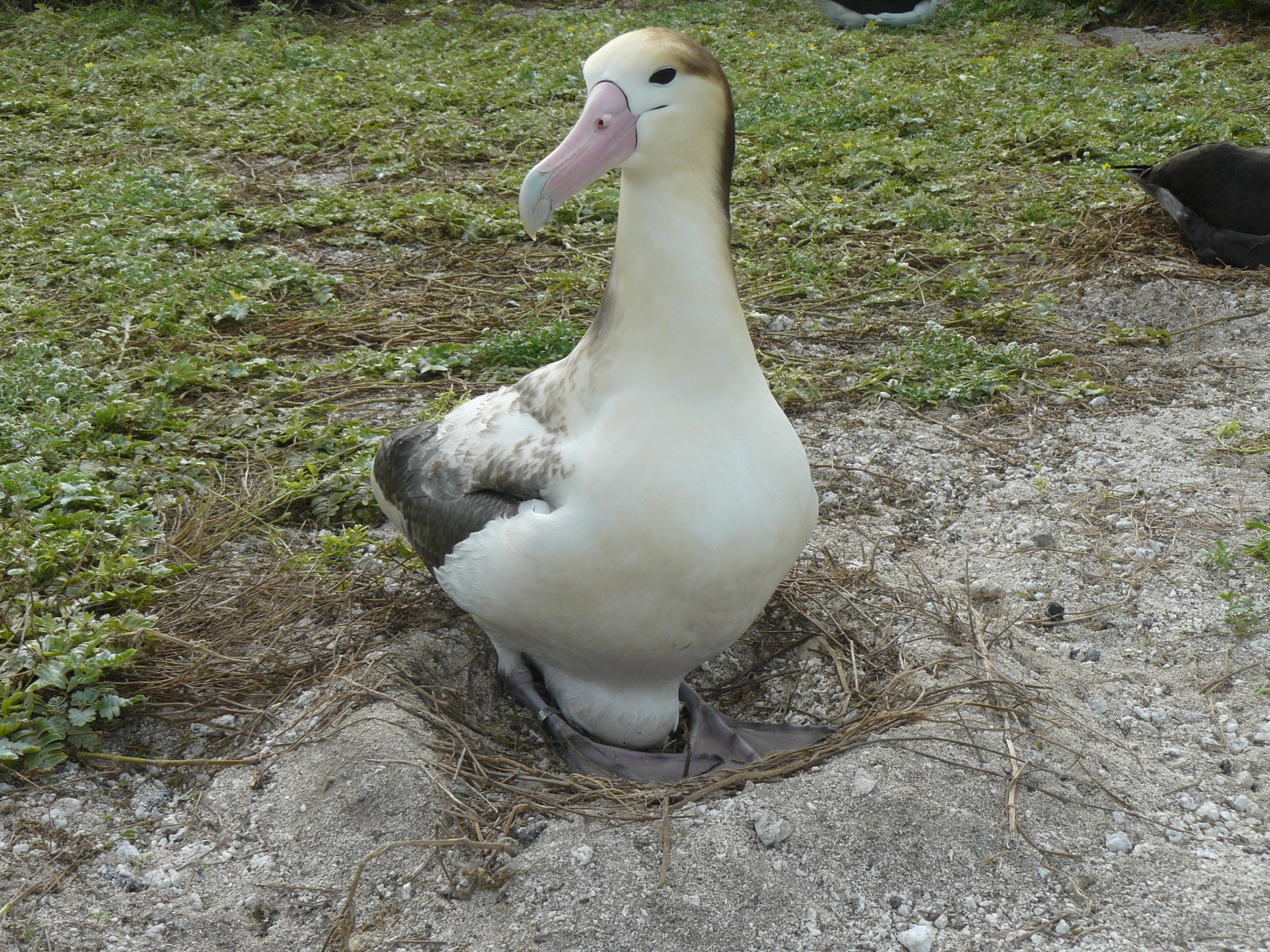
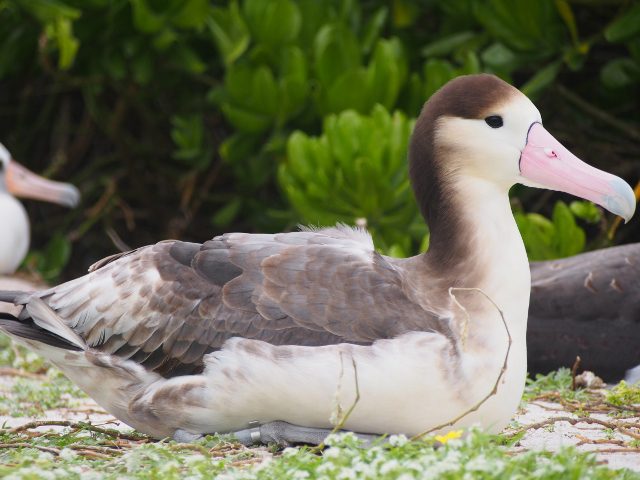
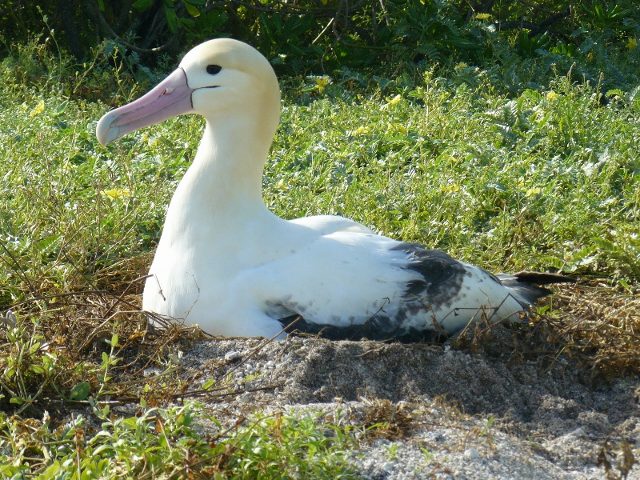
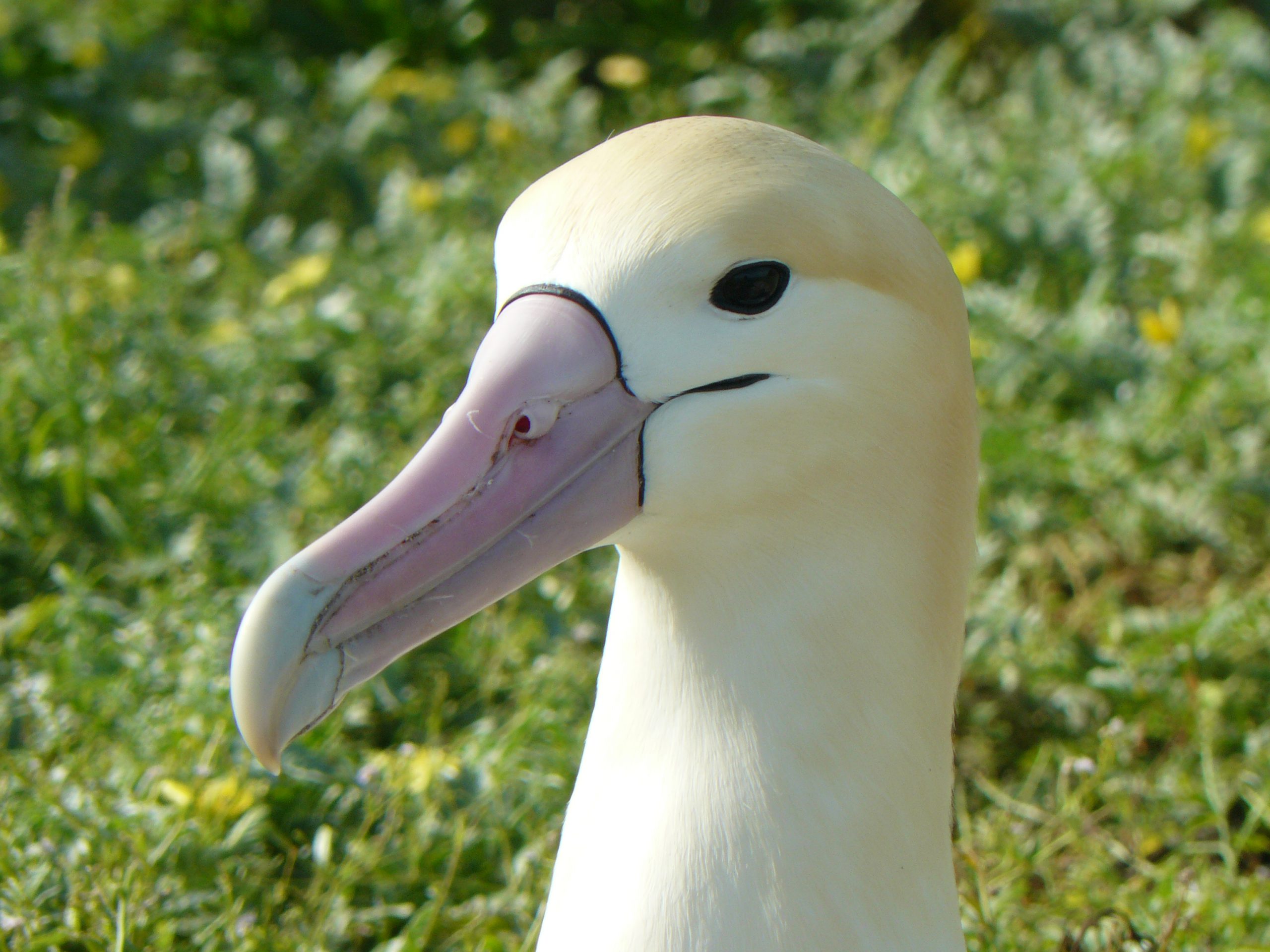
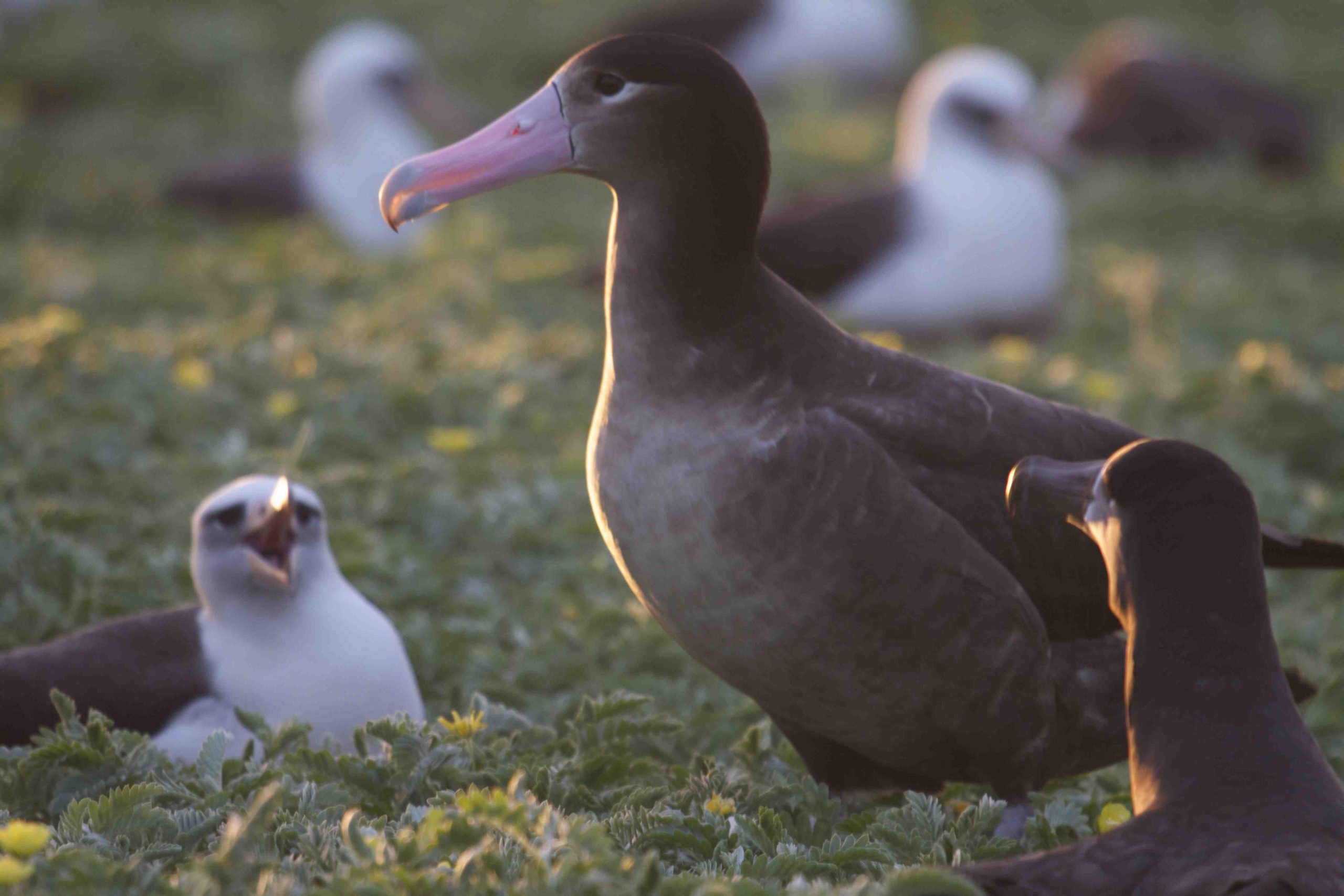
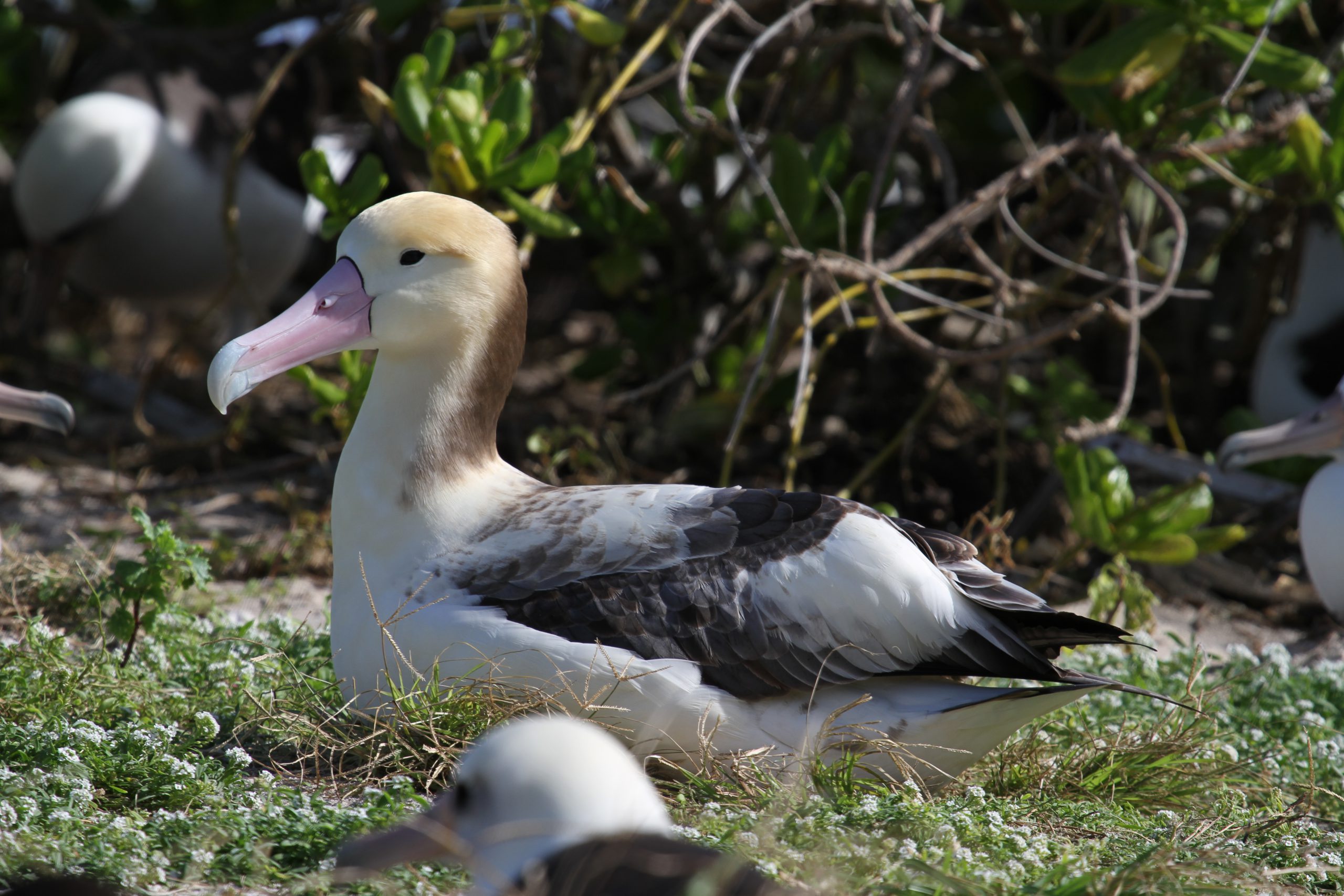
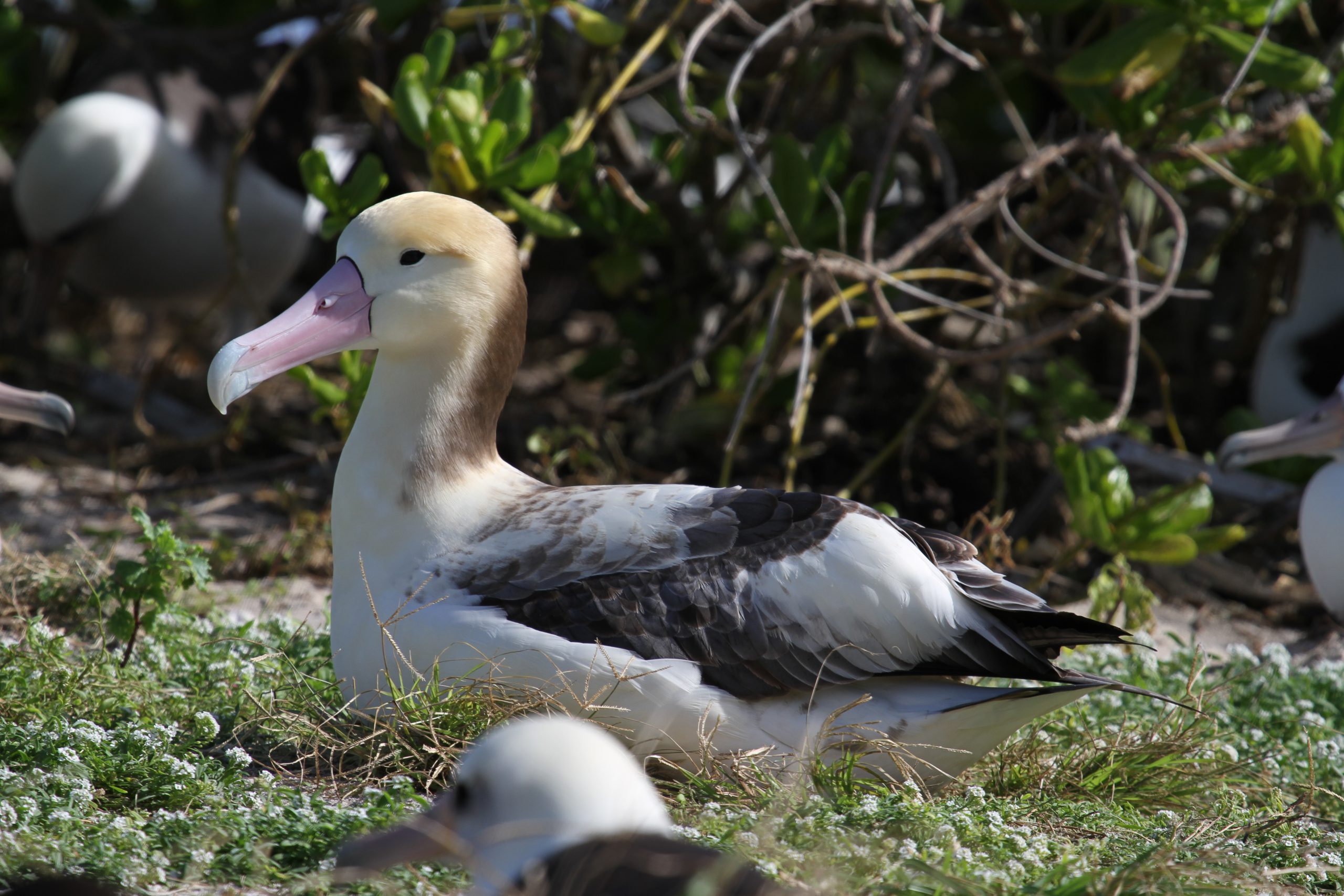
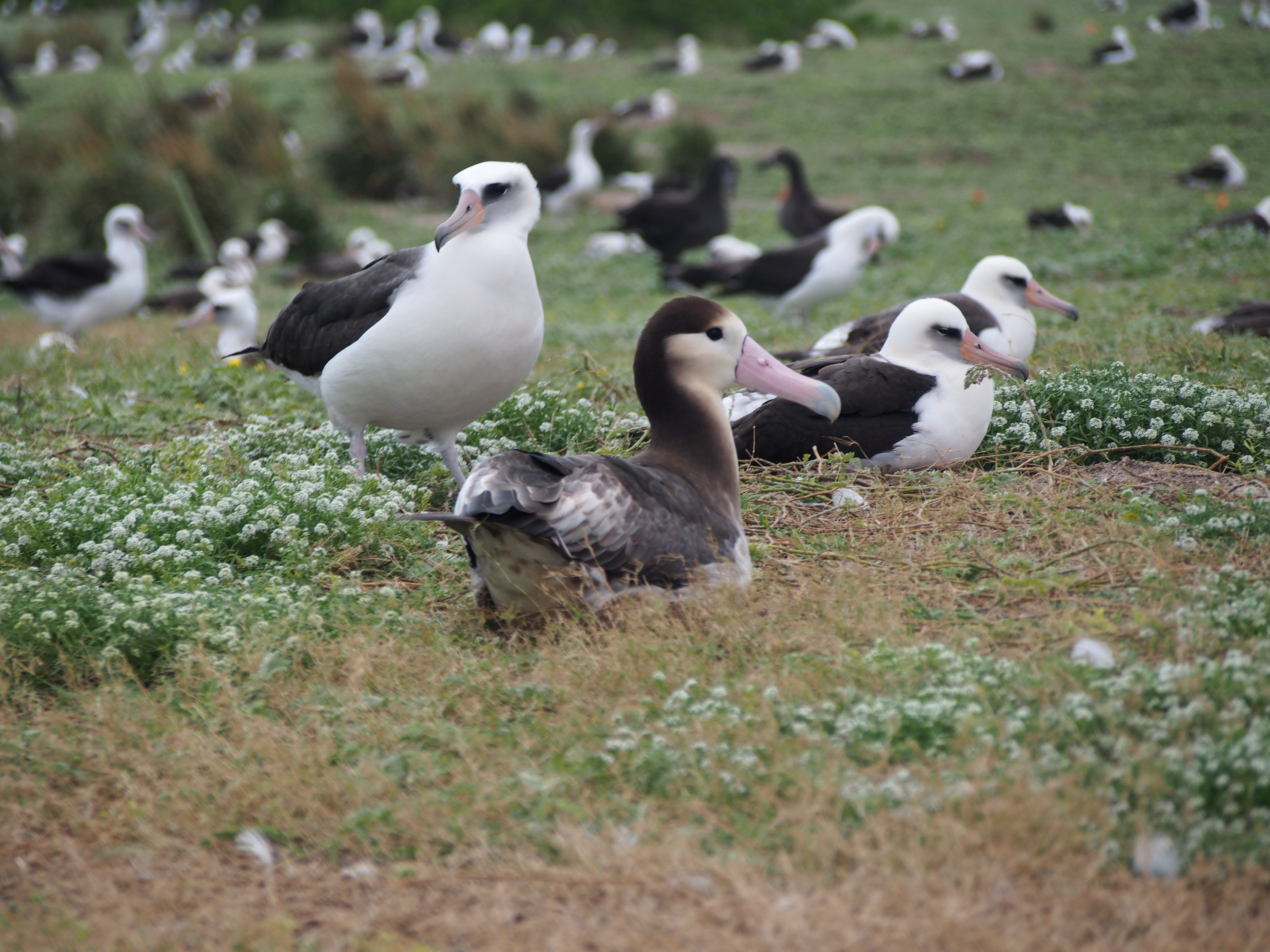
The makalena, or Short-tailed Albatross, is the largest seabird found in Hawaiʻi (family Diomedeidae). Adults are mostly white with black on the upper wings and tail and a golden wash on the head and neck. They have a large pink bill with a bluish tip and pale pink legs and feet. Young birds are dark brown and gradually turn white over many years.
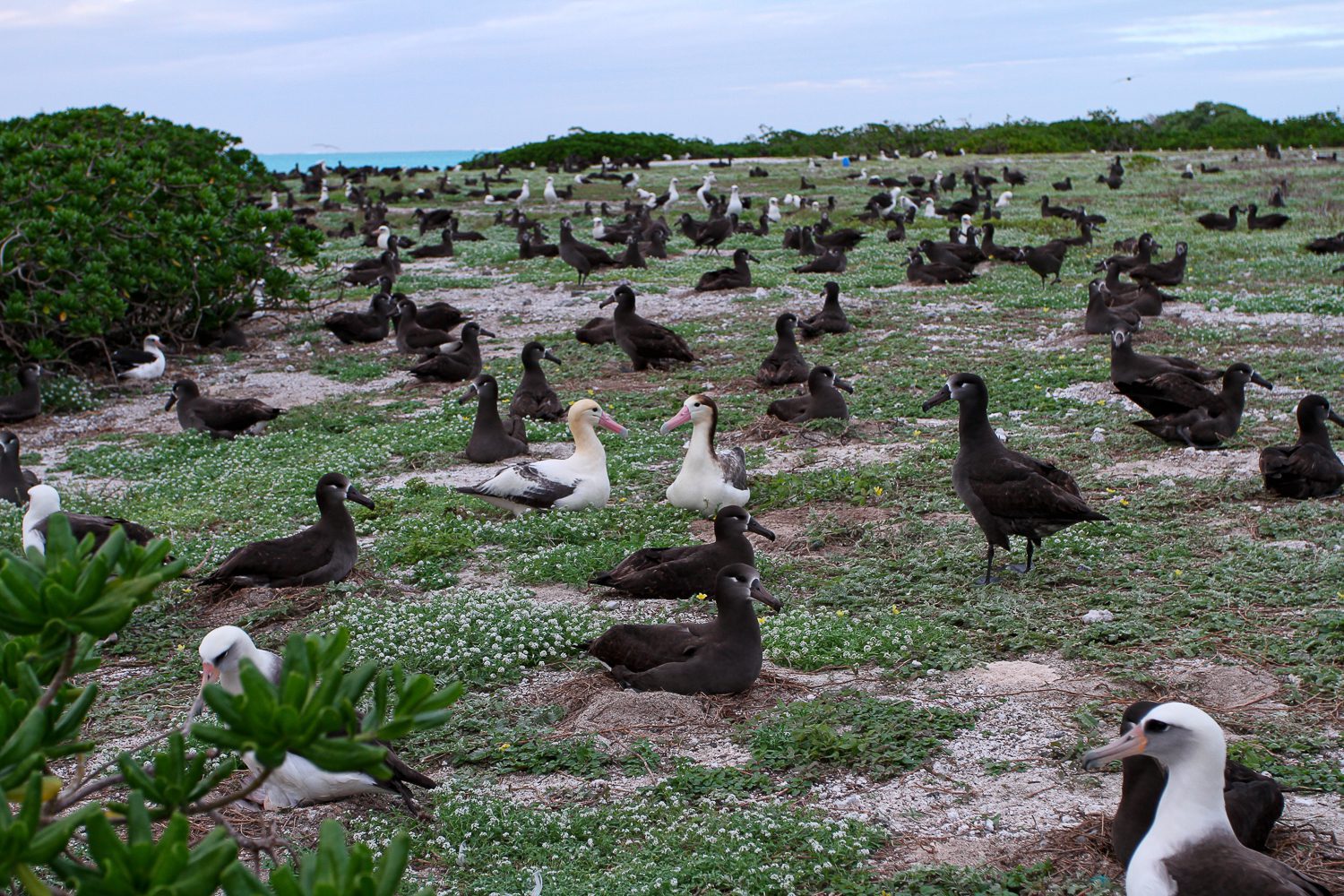
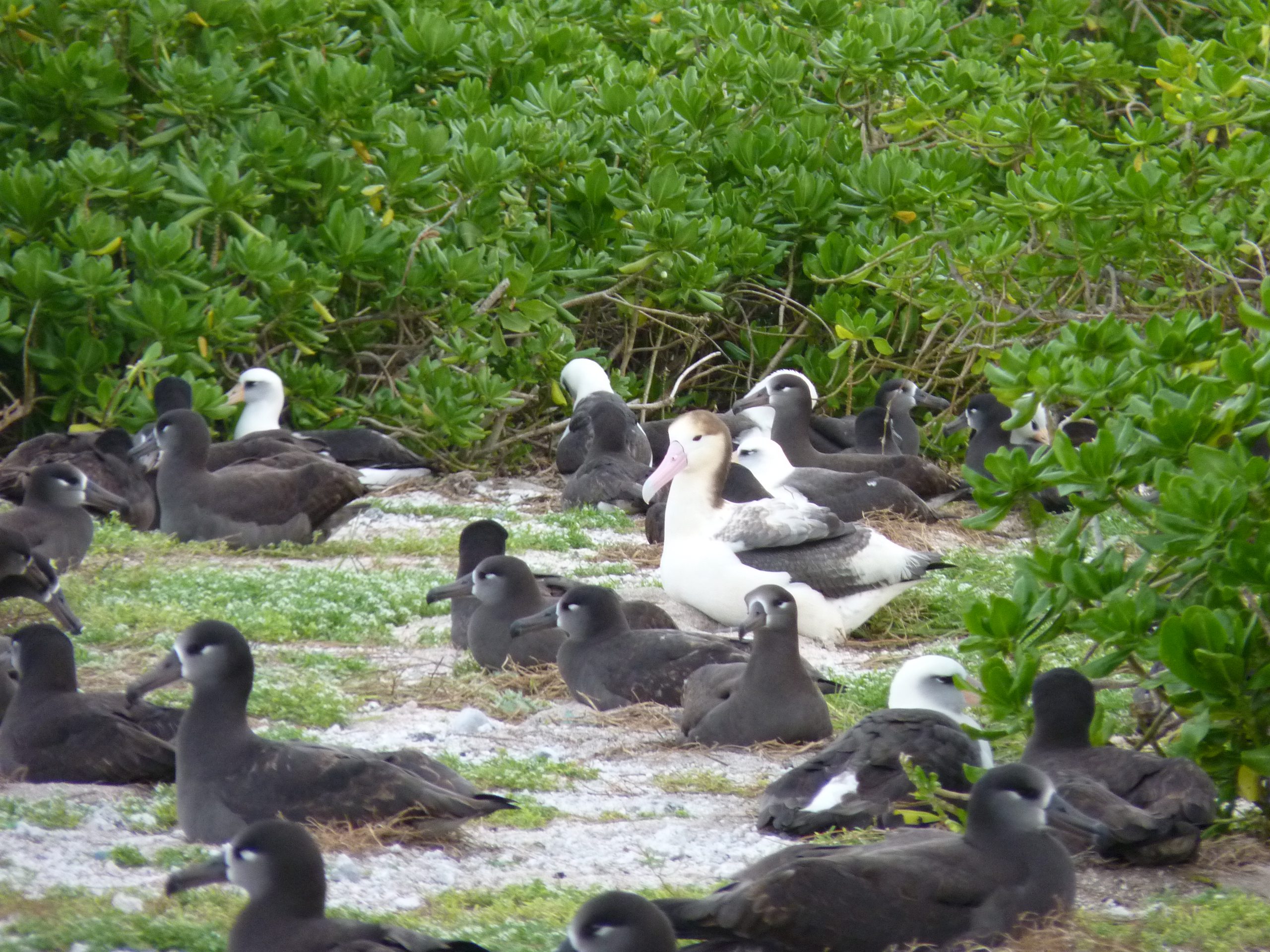
Like other albatrosses, makalena glide and soar on the wind for long periods and feed by seizing prey from the surface while resting on the water. They feed closer to land than other albatrosses and often scavenge or follow fishing boats. Since the 1930s, a few have been seen nesting among mōlī (Laysan Albatross) and kaʻupu (Black-footed Albatross) on Kuaihelani (Midway Atoll). Like other albatrosses, makalena likely live 50 years or more.
Foraging & Nesting
Makalena feed mostly on squid, especially Japanese flying squid (Todarodes pacificus), as well as shrimp, fish, flying fish eggs and other crustaceans. They feed by day and possibly at night, alone or in groups, taking prey that floats to the surface rather than diving for it. Chicks are fed a rich stomach oil and partly digested food. Makalena sometimes swallow floating plastic and feed it to their chicks, which can be fatal.
Historically makalena followed whaling ships, and today they follow commercial fishing boats for scraps and bait. Discards from fishing boats now make up a large part of their diet, and birds are sometimes hooked or tangled in longline gear and drown.
Makalena keep the same mate and return to the same colony year after year, though some young birds settle at new colonies. Parents take turns incubating the single egg and making foraging trips that can last two to three weeks.
Distribution & Abundance
Makalena once numbered in the millions, but feather hunters killed so many around 1900 that the species was thought to be extinct by 1949. About ten birds were rediscovered on Torishima, Japan, in 1951. Thanks to protection, the population has grown steadily; the U.S. Fish and Wildlife Service's 2020 review estimated 7,365 birds, growing by about 9 percent a year.
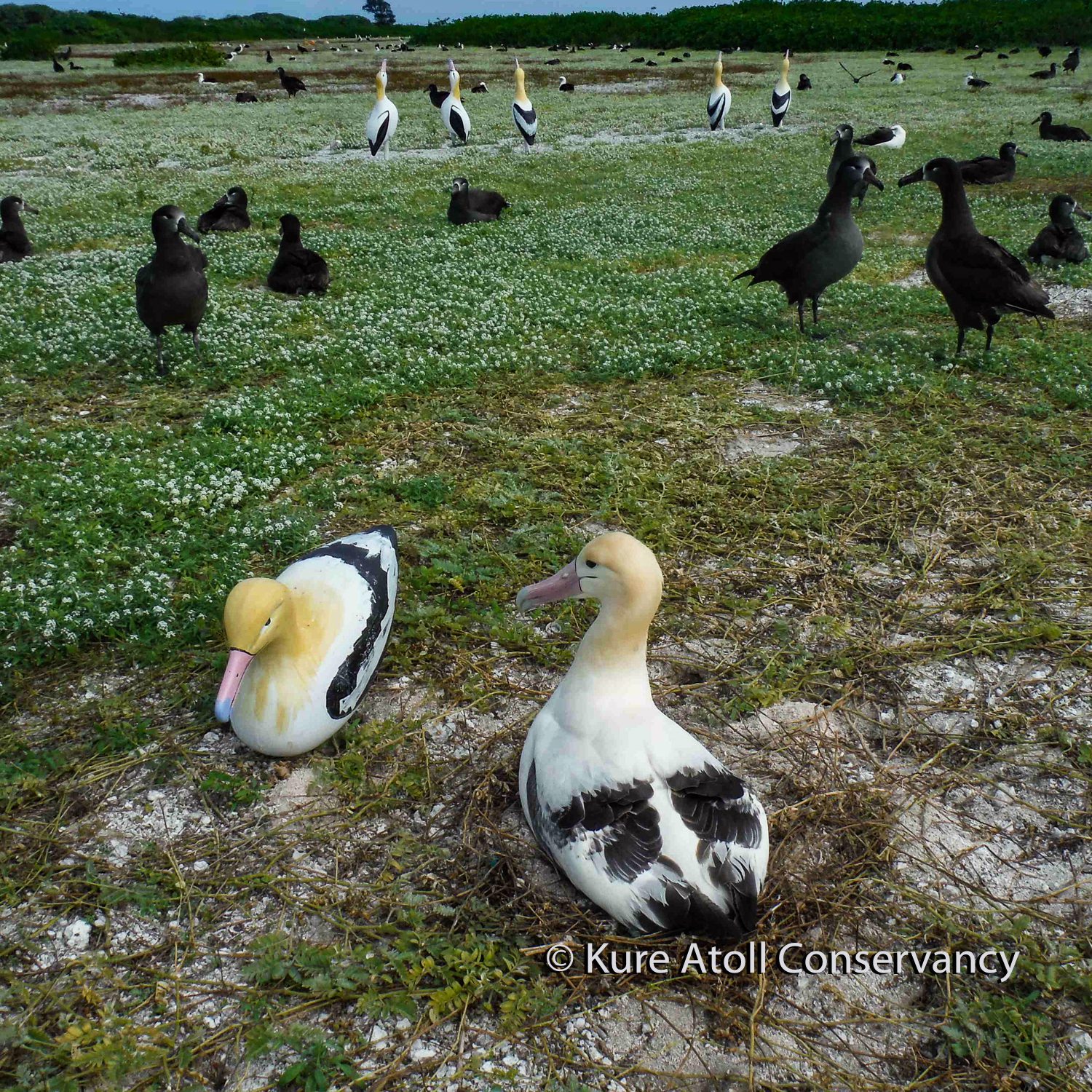
Most makalena nest on Torishima, an active volcano, and in the Senkaku Islands northwest of Taiwan. From 2008 to 2012, the U.S. Fish and Wildlife Service and Japan's Yamashina Institute for Ornithology moved chicks from Torishima to Mukojima, a former colony site, to start a safer third colony. In the Northwestern Hawaiian Islands, a single pair nests on Kuaihelani, and a record eight makalena were seen there in the 2025–26 season.
At sea, the highest numbers are found along the Aleutian Islands and in the Bering Sea. Young birds roam even more widely, and some spend time in the open ocean between Hawaiʻi and Alaska.
Conservation Actions
The makalena was listed as endangered by the U.S. Fish and Wildlife Service in 2000 and is also listed as endangered by the State of Hawaiʻi. Recovery work includes protecting and restoring nesting colonies in Japan, starting a new colony on Mukojima and requiring seabird-avoidance gear, such as streamer lines, on longline fishing boats. On Hōlanikū and Kuaihelani, removing introduced predators and invasive plants keeps nesting habitat ready for makalena.
Current Threats
The greatest threat is the chance of a volcanic eruption on Torishima, where most of the world's makalena nest. Makalena are also caught as bycatch in longline and trawl fisheries, swallow plastic and are exposed to oil spills. The low-lying nesting areas on Kuaihelani and Hōlanikū may be lost to rising seas and stronger storms.
On Hōlanikū
No makalena chick has been documented on Hōlanikū, but a pair of two females has nested here, and a few birds visit most winters. In the Winter 2025 season, KAC/DLNR crews identified five different makalena by their bands and plumage, and two of them have returned over several seasons.


Nomenclature
Because young and adult birds look so different, each stage has its own name. Makalena describes the adult: the lena (yellow tint) around the maka (eyes). Maka also refers to blossoming and change, like the transformation from juvenile to adult. Kaʻupuʻākala is the name for the dark juvenile, which looks like the kaʻupu (Black-footed Albatross).
What’s in a Name?
A webinar related to the research of the Papahānaumokuākea Native Hawaiian Cultural Working Group tasked with giving Hawaiian names to numerous other bird, plant, limu, and coral species unique to PMNM.
More seabirds of Hōlanikū
-
 ʻĀ
Masked Booby
-
 ʻĀ
Red-footed Booby
-
 ʻĀ
Brown Booby
-
 ʻAkihikēʻehiʻale
Tristram's Storm-Petrel
-
 ʻAoʻū
Christmas Shearwater
-
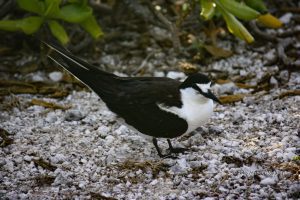 ʻEwaʻewa
Sooty Tern
-
 ʻIwa
Great Frigatebird
-
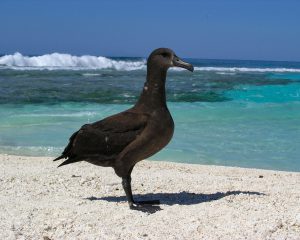 Kaʻupu
Black-footed Albatross
-
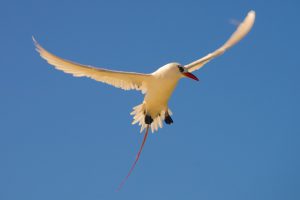 Koaʻe ʻula
Red-tailed Tropicbird
-
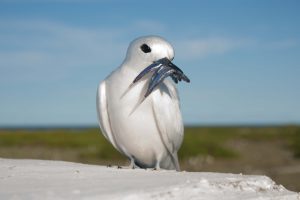 Manu-o-Kū
Blue-billed White-Tern
-
 Mōlī
Laysan Albatross
-
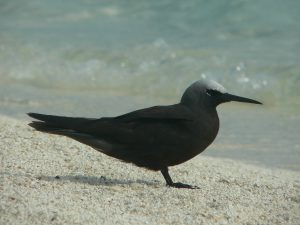 Noio
Black Noddy
-
 Noio kōhā
Brown Noddy
-
 Nunulu
Bonin Petrel
-
 ʻOu
Bulwer's Petrel
-
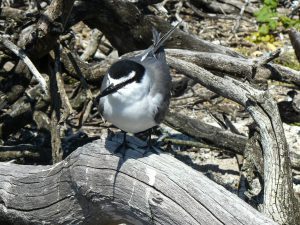 Pākalakala
Gray-backed Tern
-
 ʻUaʻu kani
Wedge-tailed Shearwater
Help protect seabirds and shorebirds on Hōlanikū
KAC/DLNR field crews monitor wildlife and restore habitat year-round. Your support keeps them on the island.