
Our work
Caring for Hōlanikū
Year-round habitat restoration, wildlife monitoring and protection at Kure Atoll State Wildlife Sanctuary, the northernmost coral atoll in the world.
Kure Atoll State Wildlife Sanctuary
Restoring an island for wildlife
Green Island, the only permanent island at Hōlanikū (Kure Atoll), is one of the most important seabird nesting sites in the State of Hawaiʻi, with 18 seabird species and more than 100,000 nesting birds. It is also home to ʻīlioholoikauaua (Hawaiian monk seals), honu (green sea turtles) and a growing population of koloa pōhaka (Laysan Ducks).
The sanctuary is managed by the State of Hawaiʻi Department of Land and Natural Resources, Division of Forestry and Wildlife (DLNR/DOFAW) within Papahānaumokuākea Marine National Monument. Kure Atoll Conservancy manages field station operations and supports the crews and volunteers who carry out this work year-round.
Our largest focus
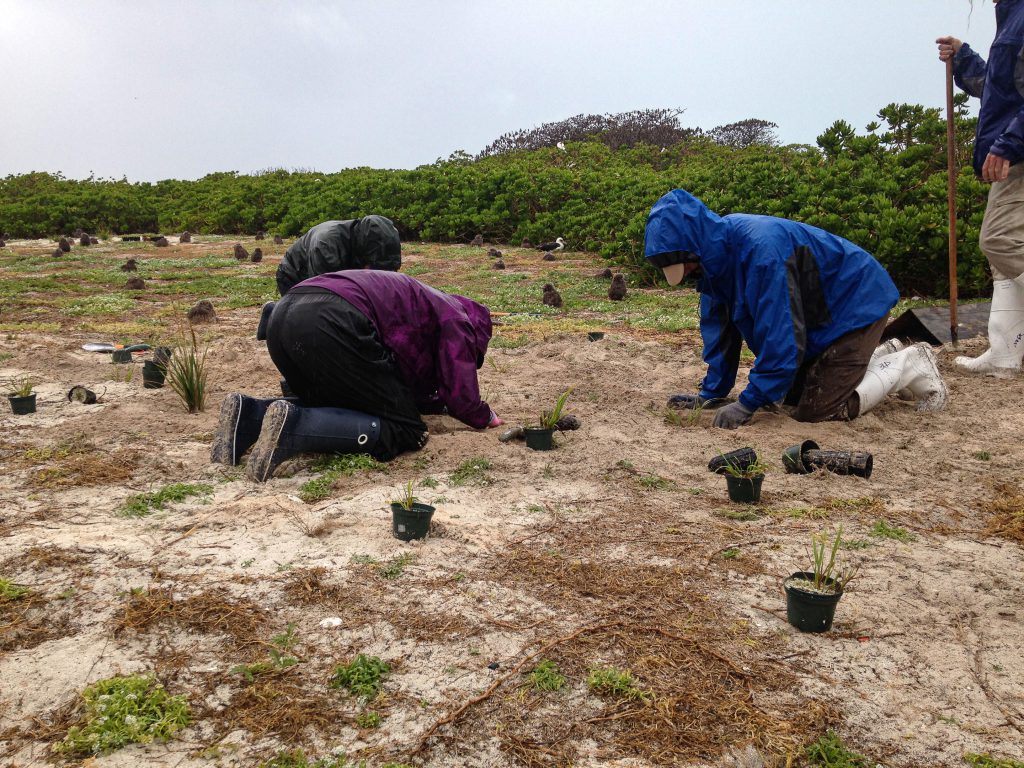
Habitat Restoration
Most of the work on Hōlanikū goes into restoring native habitat: removing invasive plants, growing and outplanting native species, and managing pests. Crews adjust their methods each season, balancing steady progress with the needs of nesting seabirds and other wildlife.
- Native plant propagation and outplanting
- Invasive plant removal, including golden crownbeard (Verbesina encelioides)
- Reclaiming the former U.S. Coast Guard runway as wildlife habitat and restoring coastal dunes
- Restoring and maintaining habitat and freshwater resources for koloa pōhaka (Laysan Ducks)
Natural resource protection
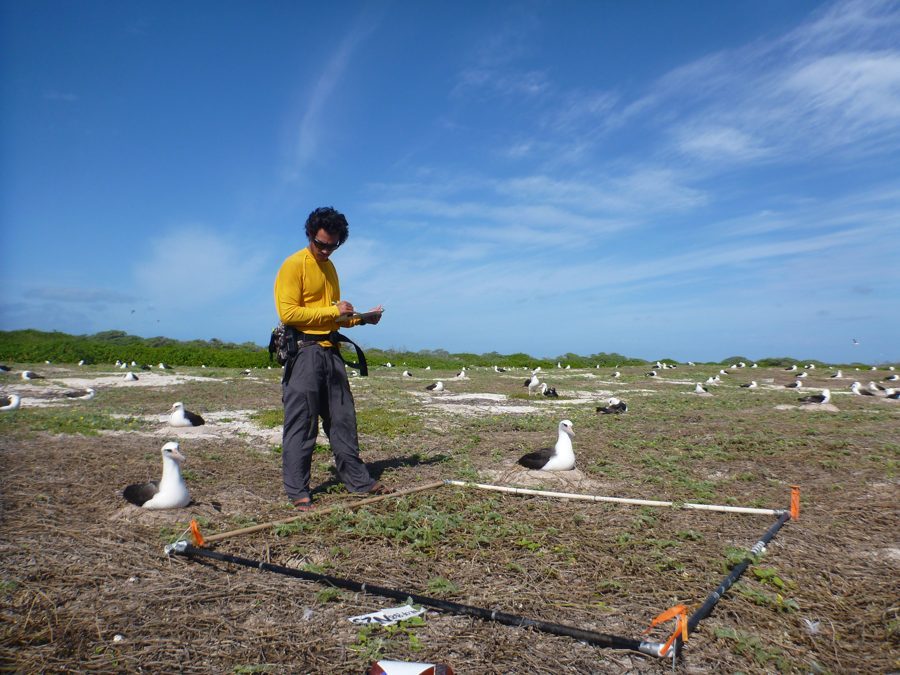
Ecosystem Monitoring
Regular surveys track wildlife populations, habitat conditions and changes over time. Field crews monitor seabirds, ʻīlioholoikauaua (Hawaiian monk seals), koloa pōhaka (Laysan Ducks), shorebirds and native vegetation. These long-term observations help guide restoration priorities and conservation management on the atoll.
Learn about monitoring →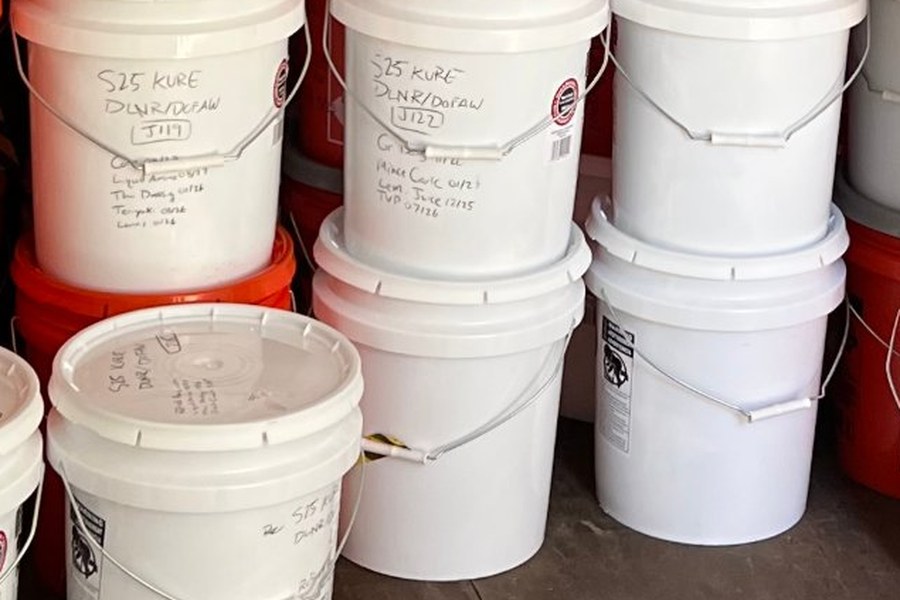
Keeping new threats out
Biosecurity
A single stowaway seed, insect or rodent could threaten years of restoration. Before arriving on Hōlanikū, personnel, equipment and supplies undergo biosecurity inspections and appropriate treatments under Papahānaumokuākea Marine National Monument Best Management Practices (BMPs). Cleaning, freezing and quarantine procedures help keep new invasive species off the atoll.
Learn about biosecurity →
Pollution reduction
Marine Debris & Pollution Reduction
Even at one of the most remote places on Earth, ocean currents carry fishing nets, plastics and other debris to the shores and reefs of Hōlanikū. Field crews regularly remove marine debris that can entangle ʻīlioholoikauaua (Hawaiian monk seals), honu (green sea turtles) and seabirds. Past restoration efforts have also addressed contaminants left from the former U.S. Coast Guard station.
Learn about pollution reduction →
Adaptive management
Conservation Management
After rats were eradicated from Green Island in the 1990s, some seabird species returned, including small petrels, and others increased, including ground-nesting boobies and albatrosses. The spread of invasive golden crownbeard (Verbesina encelioides) then threatened that recovery by crowding out nesting habitat.
Today, management on Hōlanikū is adaptive. Monitoring data on seabirds, monk seals, koloa pōhaka, vegetation and invasive species guide each season’s priorities: where crews focus weed control and outplanting, how they respond to invasive insects or storm damage, and how they track progress over time. That steady approach has cut annual golden crownbeard removals by about 99% since 2015.
Learn about conservation management →
Sharing Hōlanikū
Education & Outreach
Few people will ever visit Hōlanikū, so we bring the atoll to them. Through programs such as the Winged Ambassadors education partnership, Huliʻia seasonal calendars, the Kiamanu Project and our Hanohano Hōlanikū media series, KAC shares the lessons of the atoll with classrooms and communities in Hawaiʻi and beyond.
Learn about our education programs →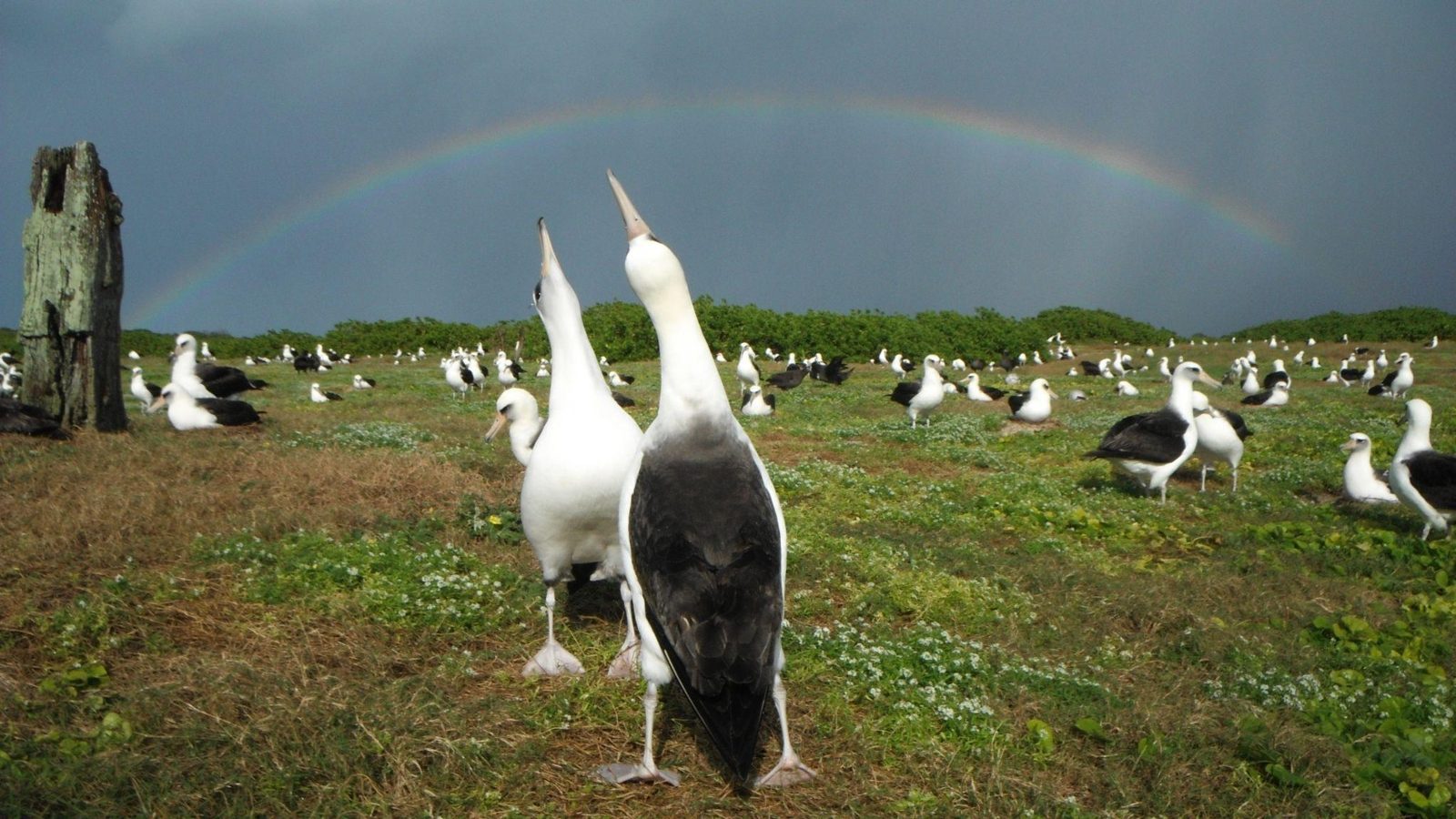
Culture and ecology
Biocultural Research & Practices
On Hōlanikū, scientific, cultural and traditional knowledge work side by side to guide restoration and build responsible environmental kinship with the island. Field crews keep Huliʻia, recording seasonal kilo (observations) of sky, land and ocean since 2011, a practice developed by Nā Maka o Papahānaumokuākea and carried on with Nā Maka Onaona. They care for the island's five ahu, use oli when arriving and greeting visitors, and gather salvaged feathers and seabird materials for the Kiamanu Project, guided by the Papahānaumokuākea Native Hawaiian Cultural Working Group.
These partnerships, along with community-based organizations across the main Hawaiian Islands, help bring Hawaiian knowledge and practice into how Hōlanikū is managed.
Learn about Huliʻia, the Kiamanu Project and more →