
Life on Hōlanikū is never quiet—but this time of year brings a noticeable shift in the rhythm of the island. Read the latest field update from Nick to hear what spring is starting to look—and sound—like in the Northwestern Hawaiian Islands. 🌊🐦
Aloha readers,
This is unarguably my favorite time of year in the Northwestern Hawaiian Islands. Most of my highlight moments the past two weeks have been pretty bird-centric, so you’ll have to bear with me as I share.
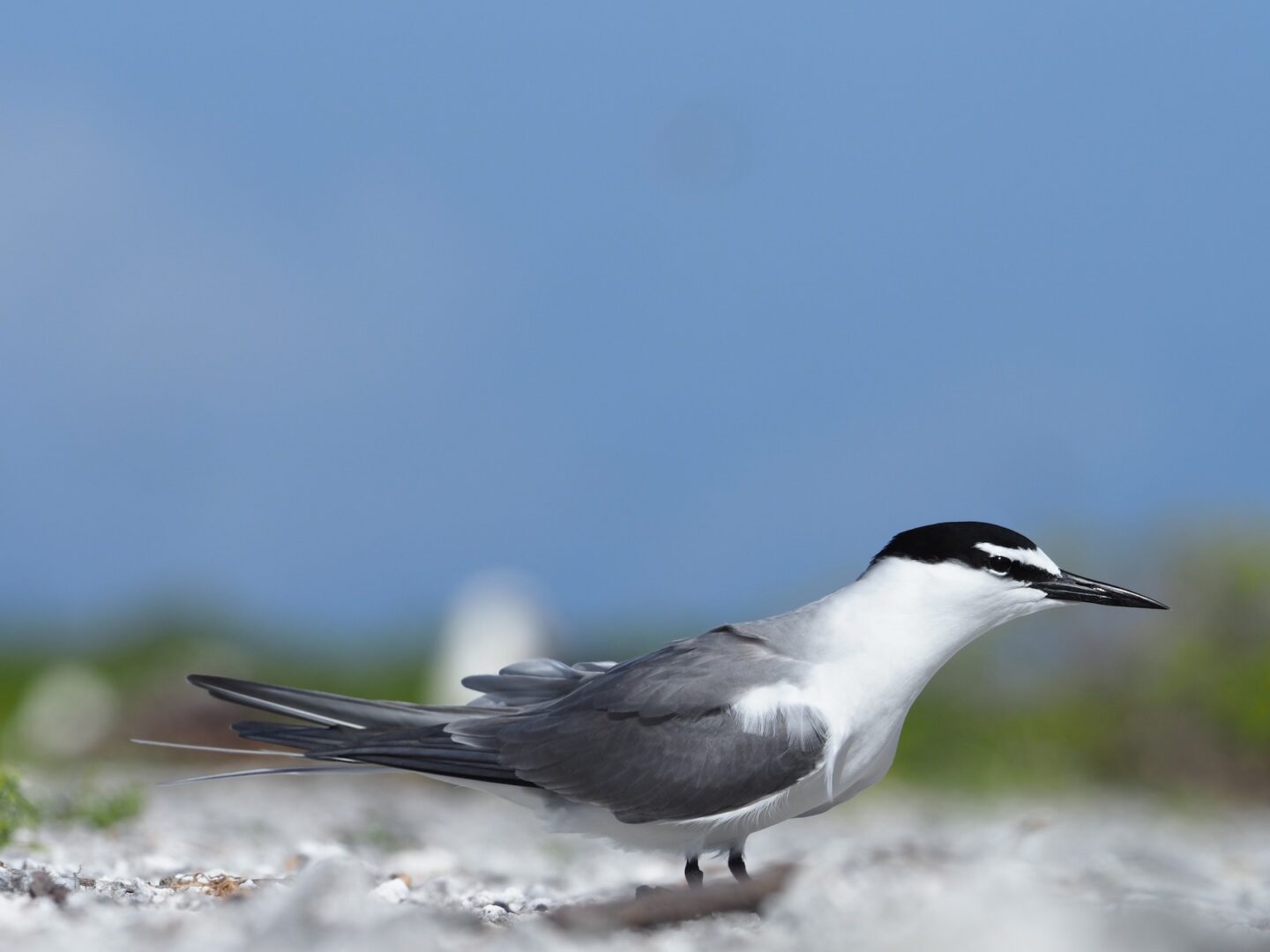
First and foremost, the Pākalakala / Gray-backed Terns are returning in full force! As I’ve mentioned, this species is probably my favorite resident bird on the island. In the many moments that I’ve spent observing them, I often witness behavior that can only be described as charismatic. I’ve long been a lover of terns wherever I’ve found myself in the world, but these birds really seem to stand out. As new individuals land, they are greeted with welcoming chatter and tiny shrills of excitement. If a bird is particularly interested, they will scamper over with wings postured in delight and say hello. I highly recommend closing your eyes, listening to Gray-backed Tern calls, and imagining them saying hello to you!
In addition to the Gray-backed Terns, ʻAoʻū / Christmas Shearwaters have also returned in the last two weeks. It won’t be long until we are hearing their familiar calls once more. I’m also pleased to share that I resighted a banded Christmas Shearwater, my first! ʻEwaʻewa / Sooty Terns are also returning in high numbers, increasing from several hundred to thousands in the past weeks. They’ve yet to come to ground, so we are still guessing where they will set up their various colonies. I’m very excited to count them once they set up shop and begin laying their eggs.
Nunulu / Bonin Petrels continue to incubate their eggs while ʻAkihikeʻehiʻale / Tristram’s Storm-Petrels continue to hatch and tend to their young. Just today, I observed a Tristram’s Storm-Petrel that was in an atypical nest location – a nohu-latticed depression in the central plains. Unsure as to how this came to be, but it is certainly unusual. I’ve been mapping out the known storm-petrel nesting area, and it seems that around 4.5 acres of the island are utilized for breeding. More to come on this in the future! ‘Ā / Red-footed Boobys have laid eggs and ‘Iwa / Great Frigatebirds are also progressing. More Masked Booby nests have been found in addition to Brown Booby. One of our two likely Cocos Booby pairs are nest-building and will be on egg(s) soon enough I hope. A lone Nazca Booby will most likely attempt to court a Masked Booby, so we will have to see if the courtship is successful.
No vagrant birds have been recorded lately, but spring migration is right around the corner. I often find myself looking up at the circling frigatebirds and searching for the diagnostic spurs of a Lesser Frigatebird. Perhaps while we conduct our shorebird survey this week, we will find a Grey Heron or a funky peep. One of the best parts of being here is not knowing exactly what each day will bring. Will it be a Little Tern — or will a Brown Booby poop on my shirt and I spill tuna juice on my pants while trying to make lunch (this past Friday)?
As for the humans on island, Jordan and I have been playing guitar and ukulele. The four of us made PowerPoint presentations on our lives up until Kure, which we shared with each other. Thank you to our families for providing us with childhood photos. Delia made vegan chocolate cookies with hemp seeds which I devoured. Kayla made bagels again which were used for breakfast sandwiches today which I also devoured.
Sometimes I feel like all I do out here is look at birds and eat delicious food. I am okay with that.
Nick

