
Our work
Biosecurity
Keeping invasive species off Hōlanikū (Kure Atoll), so years of restoration are not undone by a single stowaway.
← Back to Our WorkOverview
Prevention is the best protection
The plants and animals of Hōlanikū evolved in isolation, without rats, ants or mosquitoes. A single seed in a boot tread, an ant colony in a cardboard box or a rat in a crate of equipment can threaten nesting seabirds, native plants and the koloa pōhaka (Laysan Ducks) for decades. Once an invasive species is established, removing it can take years of work, if it is possible at all.
Because Hōlanikū is staffed year-round, people, food and supplies arrive regularly. DLNR/DOFAW and Kure Atoll Conservancy follow the Papahānaumokuākea Marine National Monument's best management practices (BMPs) to make sure nothing unwanted comes with them.
Three lines of defense
- Prevent: strict quarantine for everyone and everything that lands on the island
- Detect: regular surveys and monitoring to catch new arrivals early
- Respond: rapid action when a threat is found, before it can spread
Before anyone lands
Quarantine
The Northwestern Hawaiian Islands have used a tiered quarantine system since 1991. In 2007, Hōlanikū was raised to the highest level, the same standard used for the Monument's most sensitive islands.
Preparation starts weeks before a field season in Honolulu, where DLNR/DOFAW staff, KAC crew leads and volunteers shop, pack and freeze everything that will go to the island. Every volunteer watches the Monument's biosecurity training video before helping.
New or Kure-only gear
Clothing, footwear and soft gear such as packs and tents must be brand new or used only on Hōlanikū, so no seeds, insects or soil travel from other islands.
Frozen for 48 hours
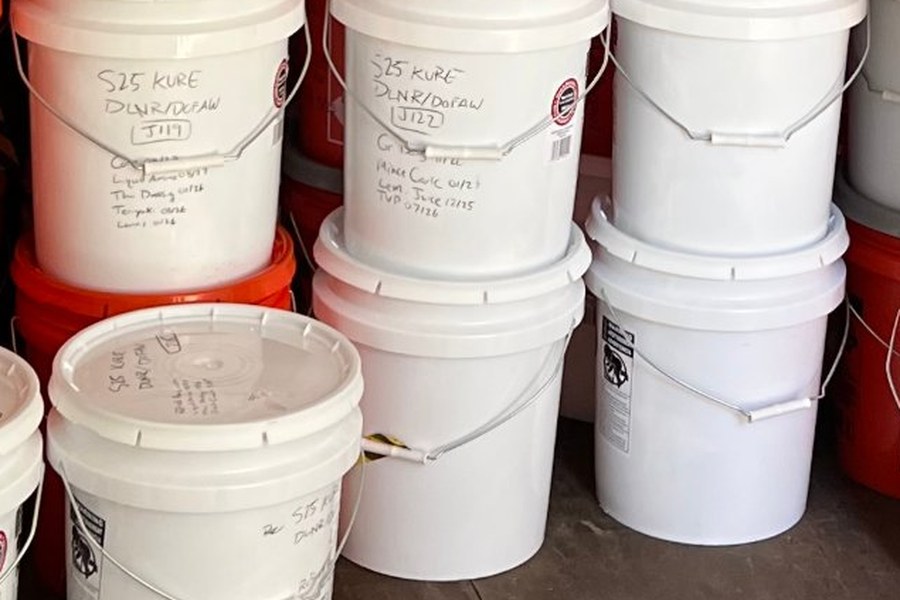
Clothing, gear and most supplies are frozen for at least 48 hours before landing to kill insects and their eggs. Items that cannot be frozen, such as electronics and canned goods, are packed and checked carefully.
Sealed containers, no cardboard
Supplies are packed in sealed plastic or metal containers. Cardboard is not allowed because ants and other insects can hide in it, and no fresh fruit or vegetables are permitted.
Arrivals and departures
Vessels & Gear
Ships, small boats and dive gear can carry marine organisms between islands on their hulls, in their equipment or in ballast water. Monument BMPs set inspection standards for vessels entering the Monument and cleaning and disinfection steps for boats, dive gear and scientific equipment moving between islands.
Arriving
- Vessels entering the Monument must meet hull inspection standards for marine invasive species.
- Everyone going ashore follows the clothing, gear and freezing rules, whether they are staying a season or a single day.
- Cargo is checked as it is unloaded, and any sign of pests is reported right away.
Leaving
- Gear, trash and marine debris going off island are staged and treated under Monument BMPs, which may include fumigation.
- Algae and other marine samples are sealed and handled so nuisance algae such as Chondria tumulosa cannot spread.
- Gear used on Hōlanikū stays dedicated to Hōlanikū.
Marine debris brings its own risks. Read how crews keep invasive species from hitching a ride on nets and plastic on the Pollution Reduction page →
↑ Back to topicsDetect and respond
Early Detection
No quarantine is perfect, so crews stay alert. Regular wildlife and plant surveys double as pest checks. Crews searching for golden crownbeard (Verbesina encelioides) and other target plants also watch for new weeds, which are easiest to remove when only a few plants are found. New arrivals are reported to DLNR/DOFAW and Monument partners right away. Some introduced species are already established and show why keeping new ones out matters.
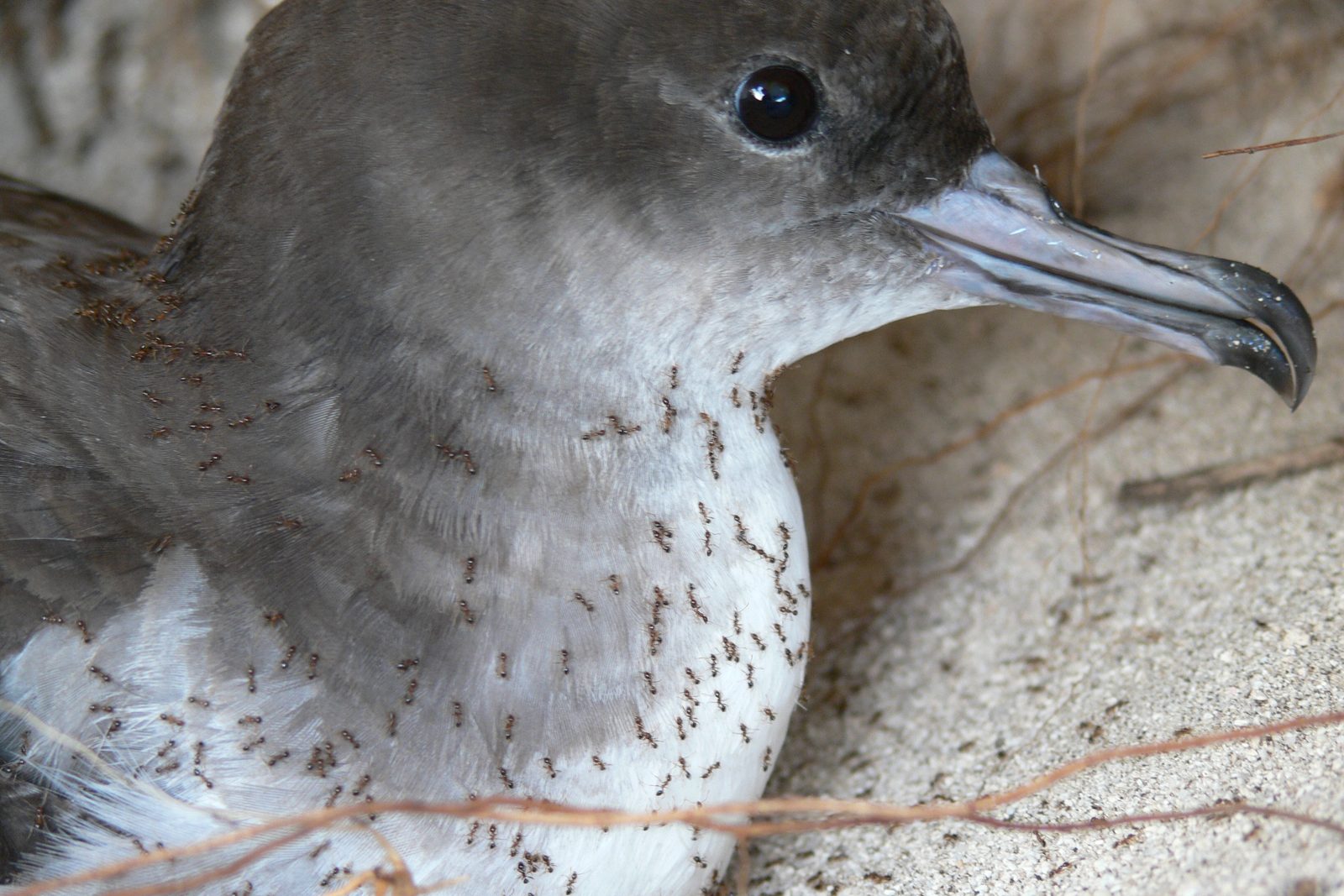
Big-headed antsPheidole megacephala
Once widespread on Green Island, these ants swarmed seabird chicks. After island-wide treatment beginning in 2014, crews keep monitoring in case a colony remains.
MosquitoesCulex quinquefasciatus
Mosquitoes can carry avian pox and avian malaria. They are not currently on Hōlanikū but remain on Kuaihelani (Midway Atoll), so crews check water sources and are ready to treat them.
RatsRattus exulans, Rattus rattus
Polynesian rats were eradicated from Green Island by 1995. When a single black rat came ashore with equipment in 2016, it was trapped within 11 days.
Cattle EgretsBubulcus ibis
These birds prey on seabird chicks and ducklings. They occasionally arrive from Kuaihelani, and crews are prepared to respond so they cannot become established.
Nuisance algaeChondria tumulosa
This red alga can smother coral reefs. Crews watch for it on the shoreline and follow Monument BMPs to keep it from spreading to other islands.
Paper waspsPolistes aurifer, Polistes jokahamae
Two introduced paper wasp species are now established on Hōlanikū. They cannot be eradicated, so crews control them around the field station and when they are encountered in the field to keep personnel safe.
Read more about how crews manage pests on the Habitat Restoration page →
↑ Back to topicsLessons learned
History
- 1991
A tiered quarantine system is put in place for the Northwestern Hawaiian Islands.
- 1995
Polynesian rats are eradicated from Green Island, opening the way for seabird recovery.
- 2007
Hōlanikū is raised to the highest quarantine level as a year-round field camp is planned.
- 2014
Crews begin island-wide treatment for big-headed ants ahead of the koloa pōhaka translocation.
- 2016
Mosquitoes are first documented, and a black rat that arrived with project equipment is caught within two weeks.
- 2020
Big-headed ants are detected for the last time.
- 2023
Chondria tumulosa is found at Hōlanikū, and the Monument adopts new BMPs for nuisance algae.
Get involved
Help Protect Hōlanikū
Every field season depends on careful preparation, from new gear to freezer space. Your support helps keep Hōlanikū free of new invaders.