
ʻĀnaunau
Hawaiian peppergrass
Lepidium owaihiense
A peppery native herb found only in Hawaiʻi, lost from Hōlanikū and successfully brought back.
| Status in Hawaiʻi | Endemic |
|---|---|
| On Hōlanikū | Reintroduced; established |
Species Information
ʻĀnaunau (Lepidium owaihiense, formerly Lepidium bidentatum var. o-waihiense) is a native herb in the mustard family (Brassicaceae) that grows as a low shrub or groundcover up to 3 feet tall. Its leaves smell peppery. Young plants form a low rosette of oval, smooth-edged leaves in opposite pairs, and the small white flowers grow in clusters at the ends of the stems. Mature plants look similar to the non-native peppergrass (Lepidium virginicum).
Distribution & Habitat
ʻĀnaunau is found only in Hawaiʻi, on coastal cliffs and rocky slopes of the main islands and on sand in the Northwestern Hawaiian Islands. In Papahānaumokuākea it now grows only on Hōlanikū and Manawai (Pearl and Hermes Atoll); it has disappeared from Kuaihelani (Midway Atoll) and Kamole (Laysan Island).
On Hōlanikū
ʻĀnaunau grew on Hōlanikū in the past (a museum specimen was collected here in 1973) but later disappeared. Starting in the Winter 2018 season, crews outplanted it and sowed seed in the field. Those plants have taken hold in several restoration areas in the Southwest Quads, where ʻānaunau does best tucked in the shade of naupaka. It was still growing there in the Winter 2025 season, a sign that it has been successfully reintroduced.
Restoration & Management
ʻĀnaunau is grown in the island nursery when it is running. Crews take care to tell it apart from the non-native peppergrass, which looks similar when mature.
More plants of Hōlanikū
-
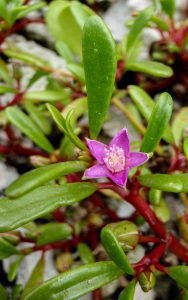 ʻĀkulikuli
Sesuvium portulacastrum
-
 ʻAlena
Boerhavia repens
-
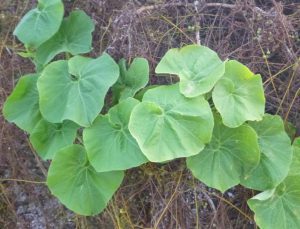 ʻĀnunu
Sicyos maximowiczii
-
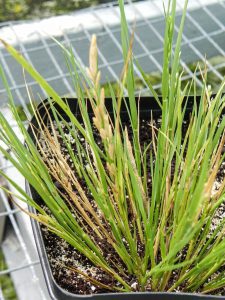 Dwarf eragrostis
Eragrostis paupera
-
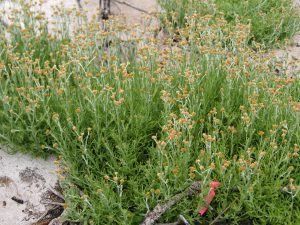 ʻEnaʻena
Pseudognaphalium sandwicensium var. sandwicensium
- ʻIliahi aloʻe Santalum ellipticum
-
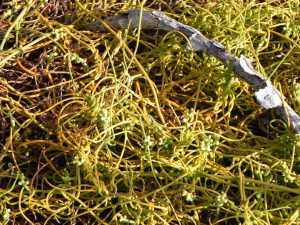 Kaunaʻoa pehu
Cassytha filiformis
-
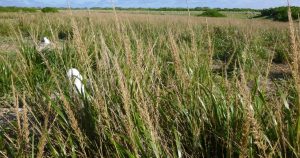 Kāwelu
Eragrostis variabilis
- Koali ʻawa Ipomoea indica
- Makaloa Cyperus laevigatus
- Maʻo Gossypium tomentosum
-
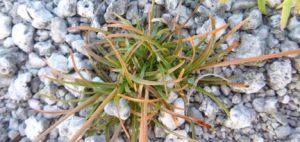 Mauʻu ʻakiʻaki
Fimbristylis cymosa
- Naio Myoporum sandwicense
- Nanea Vigna marina
-
 Naupaka kahakai
Scaevola taccada
-
 Nohu
Tribulus cistoides
-
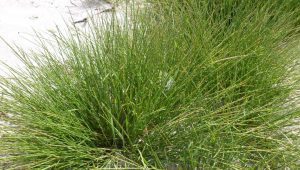 Pacific Island thintail
Lepturus repens
-
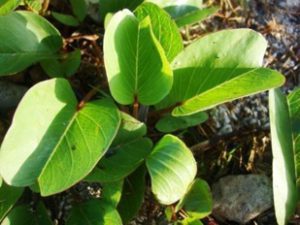 Pōhuehue
Ipomoea pes-caprae
- Pōpolo Solanum nelsonii
Help protect native habitat on Hōlanikū
KAC/DLNR field crews monitor wildlife and restore habitat year-round. Your support keeps them on the island.
