Naupaka
Scaevola taccada
| State-recognized | Indigenous |
| State-recognized | Indigenous |

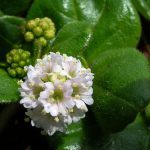
Naupaka is a ubiquitous native shrub along Hawai’i coastlines and, on the Northwestern Hawaiian Islands, forms dense stands in places. Elsewhere, it occurs in less dense stands or in pockets of naupaka with small clearings. It has large, rubbery, bright green leaves and white berries. Naupaka seed leaves are ovate and fleshy, with a prominent tooth usually light green or yellow at the apex. The seed leaves lack veins, which do not become obvious until the plant reaches a moderate size.
Naupaka is an important dune-creating shrub that stabilizes the sand and has been outplanted on Kure since 2002.
Along with maintaining the integrity of dune structures on the atoll, it also provides habitat for burrow-nesting and tree-nesting birds. Furthermore, having the naupaka along the coastline provides, restores, and, also, protects habitat as the integrity of the dunes allows protection to the interior from storm surges and tsunamis.
Increased efforts to recover the Landfill post-USCG remediation in 2016 include planting naupaka and native grasses to build up the dune. In line with the runway restoration project, which involves breaking up the coral runway adjacent to the Landfill, we are adding fresh sand and planting it with native plants, such as naupaka, to attract potential nesters to future high-quality nesting habitat.
One of the greatest attributes of naupaka is its ability to build dune structures by sending out hair-like roots into sand that is blown or washed into the plant. It is responsible for the formation and retention of one of the highest and most extensive dune structures in the Northwestern Hawaiian Islands, with some dunes reaching 20’ high. The buried branches generate extensive fine root systems that capture sand. The exposed top leaves of the naupaka continue to grow, and the process continues until a dune is formed. Direct outplanting of naupaka in some of the blown-out areas along the dunes began stabilizing sand within one year and completely filled in a 40-foot diameter area in less than 5 years.


Pua ka naupaka, paoa ka nohu
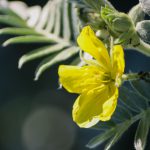
The tiny naupaka flower, the nohu fragrance permeates the air. (Kaʻala Faye Camara)
He pūnua lana i ke kai
A nest floating in the sea (Mehana Vaughn)
Refers to the naupaka fruit,
which floats in the ocean without water damage
to colonize new islands.