
Makaloa
Smooth flatsedge
Cyperus laevigatus
A native sedge that lines the freshwater seeps and shelters koloa pōhaka.
| Status in Hawaiʻi | Indigenous |
|---|---|
| On Hōlanikū | Established at the seeps |
Species Information
Makaloa (Cyperus laevigatus) is a small, rounded native sedge (family Cyperaceae) with narrow stems up to 2 feet tall that end in a sharp point. The small, light brown-gray flower spikelets grow 1 to 2 inches below the tip and angle out from the side of the stem. On Niʻihau, makaloa has long been woven into famously fine sleeping mats.
Distribution & Habitat
Makaloa grows in brackish and freshwater wetlands, coastal marshes and around springs in Hawaiʻi and in warm regions worldwide. On Hōlanikū it grows at the island's two freshwater seeps, Brad's Pit and Kīpukawai.
On Hōlanikū
Makaloa is a habitat maker with a catch. It lines the seeps, shelters koloa pōhaka (Laysan Ducks) and may help keep avian botulism away, but left alone it fills in the open water, so crews keep it trimmed back.
When the seeps were filled in during the Winter 2024 season to reduce the risk of botulism outbreaks, makaloa at Kīpukawai declined, also affected by an ʻewaʻewa (Sooty Tern) colony that settled there. Brad's Pit still has plenty of makaloa.
Restoration & Management
When Brad's Pit was dug out again in May 2026, crews saved the makaloa and replanted it once the work was done.
More plants of Hōlanikū
-
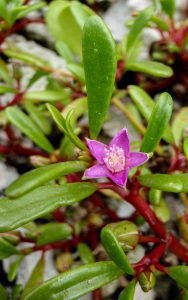 ʻĀkulikuli
Sesuvium portulacastrum
-
 ʻAlena
Boerhavia repens
- ʻĀnaunau Lepidium owaihiense
-
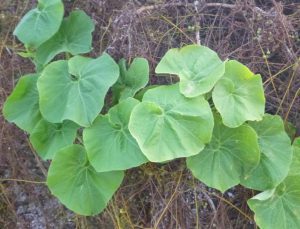 ʻĀnunu
Sicyos maximowiczii
-
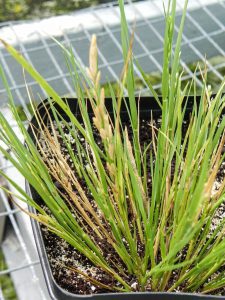 Dwarf eragrostis
Eragrostis paupera
-
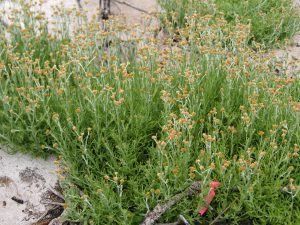 ʻEnaʻena
Pseudognaphalium sandwicensium var. sandwicensium
- ʻIliahi aloʻe Santalum ellipticum
-
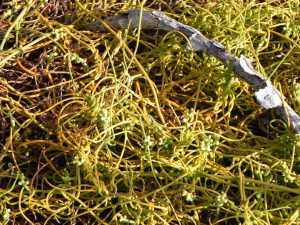 Kaunaʻoa pehu
Cassytha filiformis
-
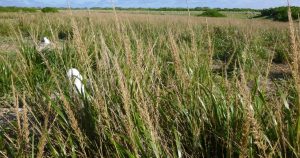 Kāwelu
Eragrostis variabilis
- Koali ʻawa Ipomoea indica
- Maʻo Gossypium tomentosum
-
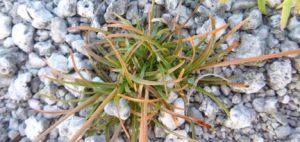 Mauʻu ʻakiʻaki
Fimbristylis cymosa
- Naio Myoporum sandwicense
- Nanea Vigna marina
-
 Naupaka kahakai
Scaevola taccada
-
 Nohu
Tribulus cistoides
-
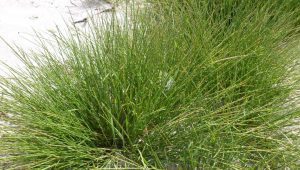 Pacific Island thintail
Lepturus repens
-
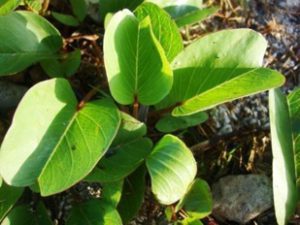 Pōhuehue
Ipomoea pes-caprae
- Pōpolo Solanum nelsonii
Help protect native habitat on Hōlanikū
KAC/DLNR field crews monitor wildlife and restore habitat year-round. Your support keeps them on the island.
