
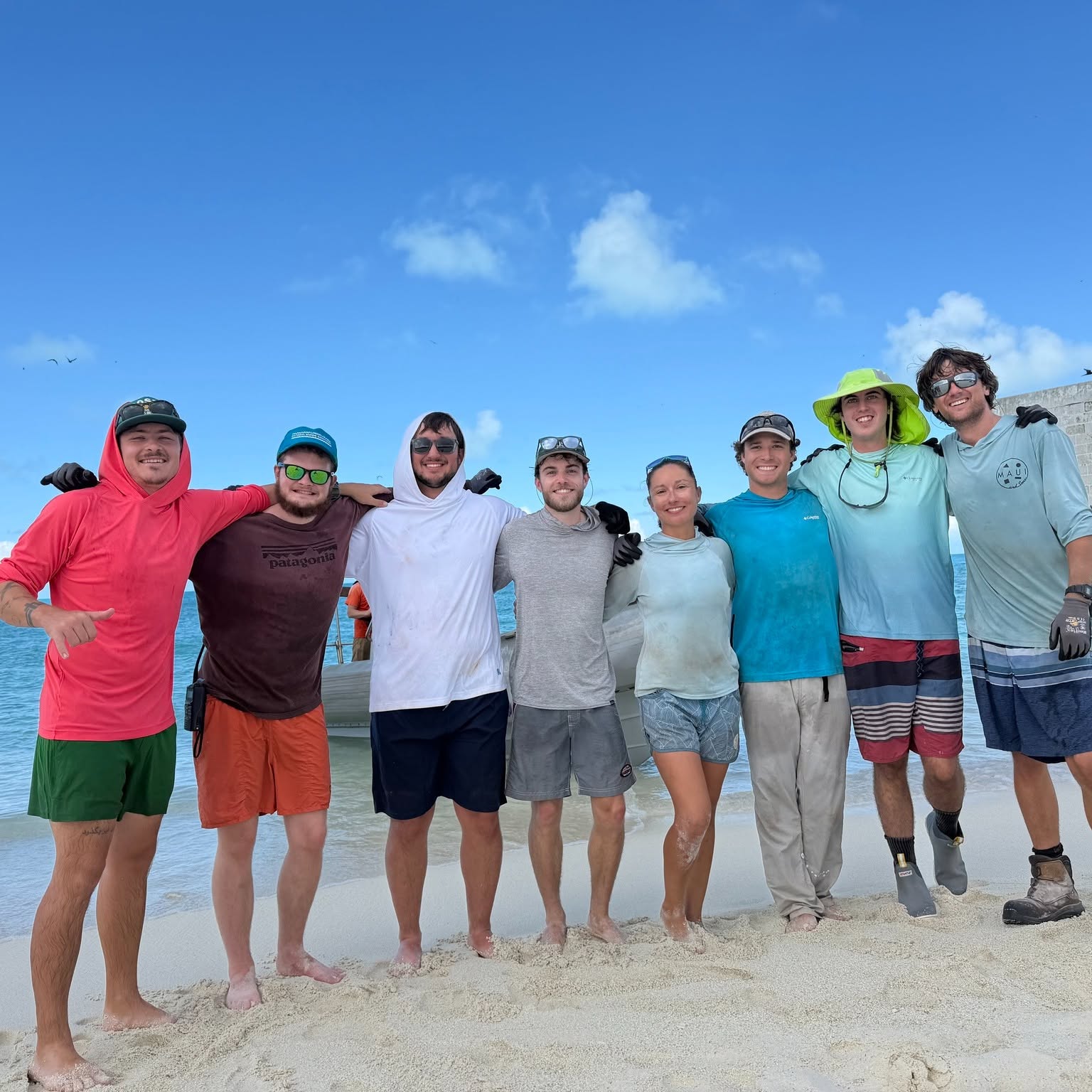
Winter 2026: A New Season Begins on Hōlanikū!
The Winter 2026 crew (Nick, Gannon, Lucas, and Cooper) has arrived on Hōlanikū! After a weeklong boat ride from Honolulu through Papahānaumokuākea Marine National Monument, we said goodbye to the Summer 2026 crew and spent a long, hot day offloading eight months of food and gear into camp.
Just two days after we arrived, we welcomed the season’s first kaʻupu (Black-footed Albatross) to Kure Atoll! Many more will arrive over the next few weeks, and they’ll soon be joined by their smaller but far more numerous cousins, mōlī (Laysan Albatross), in vast colonies that will stretch across open areas throughout the island.
As we await the return of the albatross, tens of thousands of nocturnal nunulu (Bonin Petrels) emerge from their burrows at dusk to socialize and excavate fresh tunnels in preparation for the upcoming breeding season. After months feeding in the open ocean, they fill the moonlit nights with their distinctive warbling growls.
This week, our team began surveying the island along transects for invasive plant species, focusing on Verbesina encelioides (golden crownbeard). This aggressive, nonnative weed threatens native vegetation and seabird nesting habitat and has nearly been eradicated from Hōlanikū, making any newly sprouted plants a top priority for removal. After work, we’ve spent our evenings birdwatching, making homemade pizza, playing guitar, watching movies, and digging into camp’s extensive supply of board games!
As I look forward to the next eight months living and working on Kure Atoll, I feel incredibly grateful to experience the abundance and beauty of life on this remarkable island. I’m especially excited to witness colonies of kaʻupu and mōlī settling among native vegetation, including kawelu and nohu, and along the coral-sand beaches bordered by naupaka and tree heliotrope.
Being entrusted to steward this unique and irreplaceable gem at the far northwestern end of the Hawaiian Archipelago is an immense responsibility and an incredible privilege. As new members of our team grow to know and love Hōlanikū over the next eight months, we will continue the restoration work begun nearly two decades ago and carried on by so many dedicated individuals since. Our whole team is looking forward to sharing our experiences and stories of life—both human and wildlife—on Kure Atoll, so keep an eye out for our next blog post!
Nick’s Bird Observations: October 23: Ruff, Semipalmated Plover, and the season’s first kaʻupu (Black-footed Albatross). October 26: Lesser Frigatebird.
Other seasonal observations: A few late ʻaoʻū (Christmas Shearwater) chicks remain, ʻuʻau kani (Wedge-tailed Shearwater) chicks are nearly ready to fledge, and almost all ʻewaʻewa (Sooty Tern) chicks have fledged.
Mahalo,
Cooper

