
Life on Hōlanikū (Kure Atoll): Winter Field Season Updates! 
Catch up with Cooper and the crew in our latest field blog:
The Winter 2026 crew has finished our first complete transect of Hōlanikū! All 188 acres of Green Island have been painstakingly surveyed and treated for invasive plant species. Each member of the crew found at least one Verbesina encelioides, a promising sign that our detection rate is high as we work to rid Hōlanikū of this highly aggressive nonnative weed. Now that we’ve completed our first island-wide transect, our team will start all over again from scratch, re-surveying each acre of land as we look for populations of our target species. Many of the invasive plants on Hōlanikū can sprout, flower, and go to seed in less than a month under ideal conditions, making frequent transects necessary to eradicate these species from the atoll.
The beaches and open areas of Hōlanikū are quickly filling up with thousands of mōlī / Laysan Albatross and kaʻupu / Black-footed Albatross. In the cooler hours of the day, the colonies come alive with excited suitors, as bonded and unbonded pairs perform elaborate dances to demonstrate their commitment and capability as mates. Our crew also observed the first kaʻupu egg of the season, safely incubated by responsible parents in a humble nest of dry vegetation on the decommissioned runway.
The former Coast Guard runway, a relic from Kure Atoll’s history as a LORAN navigation station, is also home to one of our most exciting habitat restoration projects this season. Our team is working to improve rainwater runoff and drainage in areas where water tends to pool during the wet season. These efforts will help reduce prolonged flooding and its harmful impacts on nesting seabirds, improving habitat conditions on Hōlanikū.
Our team conducted a shorebird and marine debris survey at the beginning of the month across the entire shoreline. We recorded the presence of dozens of kōlea / Pacific Golden-Plovers, ʻakekeke / Ruddy Turnstones, ʻūlili / Wandering Tattlers, and hunakai / Sanderlings, as well as a Ruff and Semipalmated Plover. We also spent several hours removing a 1,000 lb fishing net conglomerate that washed up on the south shore of the island, a project you can watch in our “Marine Debris Monday” video posted on Nov. 9th!
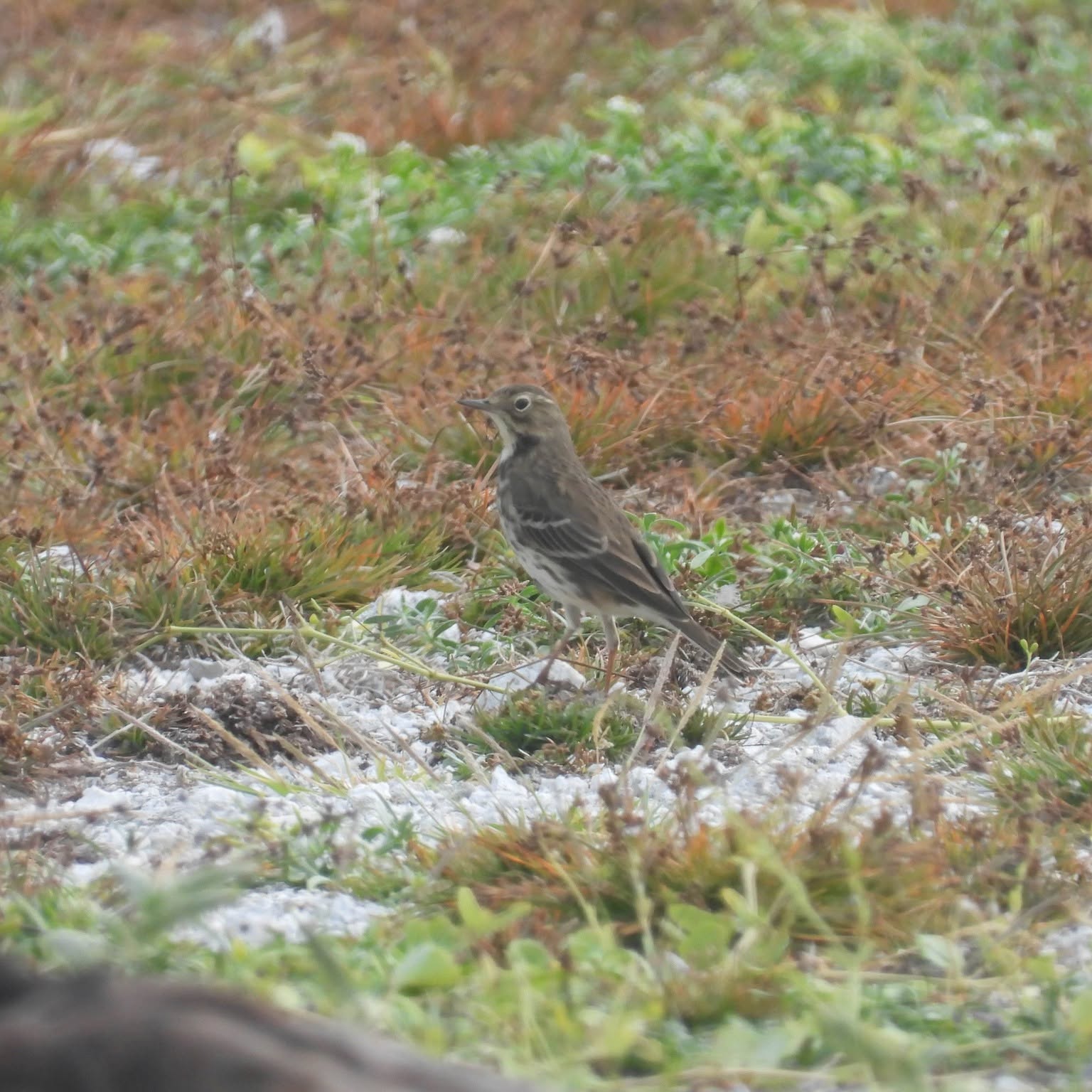
Other notable bird observations include a Wilson’s Snipe, Northern Pintail, a partially leucistic Brown Noddy, and a continuing Siberian Pipit. A Peregrine Falcon was also spotted on November 13, adding to the excitement of fall migration on Hōlanikū!
The crew has cooked up some great meals in the last couple weeks, including homemade Cajun girl shrimp po’ boys, lasagna, and BBQ chicken quesadillas. We also celebrated Gannon’s birthday last weekend with a pineapple upside-down cake! After work, we’ve been watching Game of Thrones and Avatar the Last Airbender, and playing board games—some favorites from the last couple weeks have been Coup, Poetry for Neanderthals, Qwirkle, and Clue. I’d also love to give a book recommendation from our camp library: “The Last Atoll” by Pamela Frierson, an immersive first-hand account of the author’s journeys as a wildlife conservation volunteer throughout the Northwestern Hawaiian Islands. In addition to reading these blog posts, this book might be the best way to understand what life is like living and volunteering on Hōlanikū!
Mahalo,
Cooper
 All wildlife photographs were taken from a respectful distance using zoom and telephoto lenses to minimize disturbance to nesting and resting wildlife.
Field activities conducted under applicable permits and authorizations within Papahānaumokuākea Marine National Monument. Photography shared under PMNM Permit PMNM-2026-01.

