
Kōlea – Pacific Golden-Plover
Pluvialis fulva
| State Recognized | Indigenous |
| US Shorebird Conservation Plan | High concern |
| IUCN Red List | Least concern |
| NatureServe Heritage Rank | G5 Secure |
| State Recognized | Indigenous |
| US Shorebird Conservation Plan | High concern |
| IUCN Red List | Least concern |
| NatureServe Heritage Rank | G5 Secure |
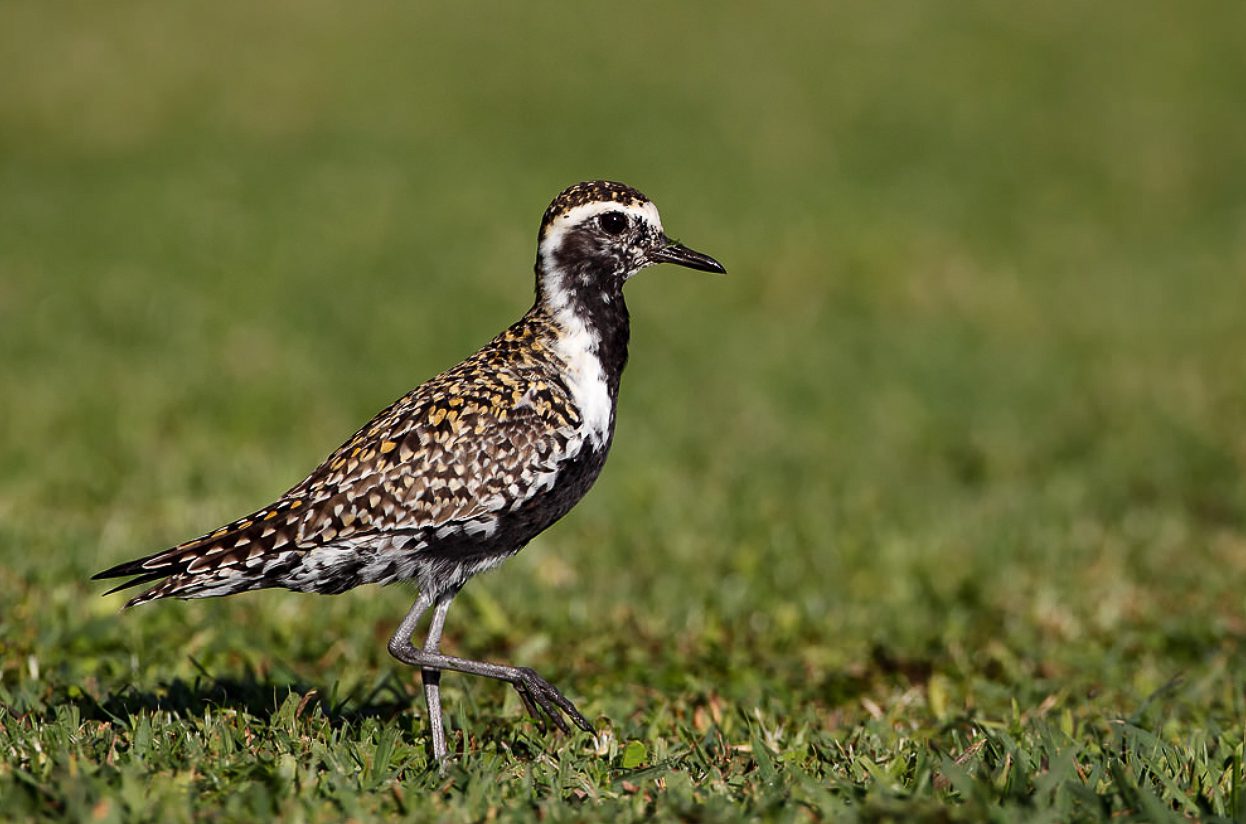
The Kōlea, also known as the Pacific Golden-Plover, is a small, yellow-and-buff mottled shorebird (Family: Charadriidae) that winters in the Main Hawaiian Islands (MHI) and breeds in Siberia and westernmost Alaska. Most adults arrive in Hawai‘i in August, while juveniles arrive in October; spring departures begin in late April. Kōlea show high site fidelity to wintering grounds and will chase intruders from their territories while foraging. Hawai‘i is thought to support a large proportion of the world’s wintering Kōlea population.
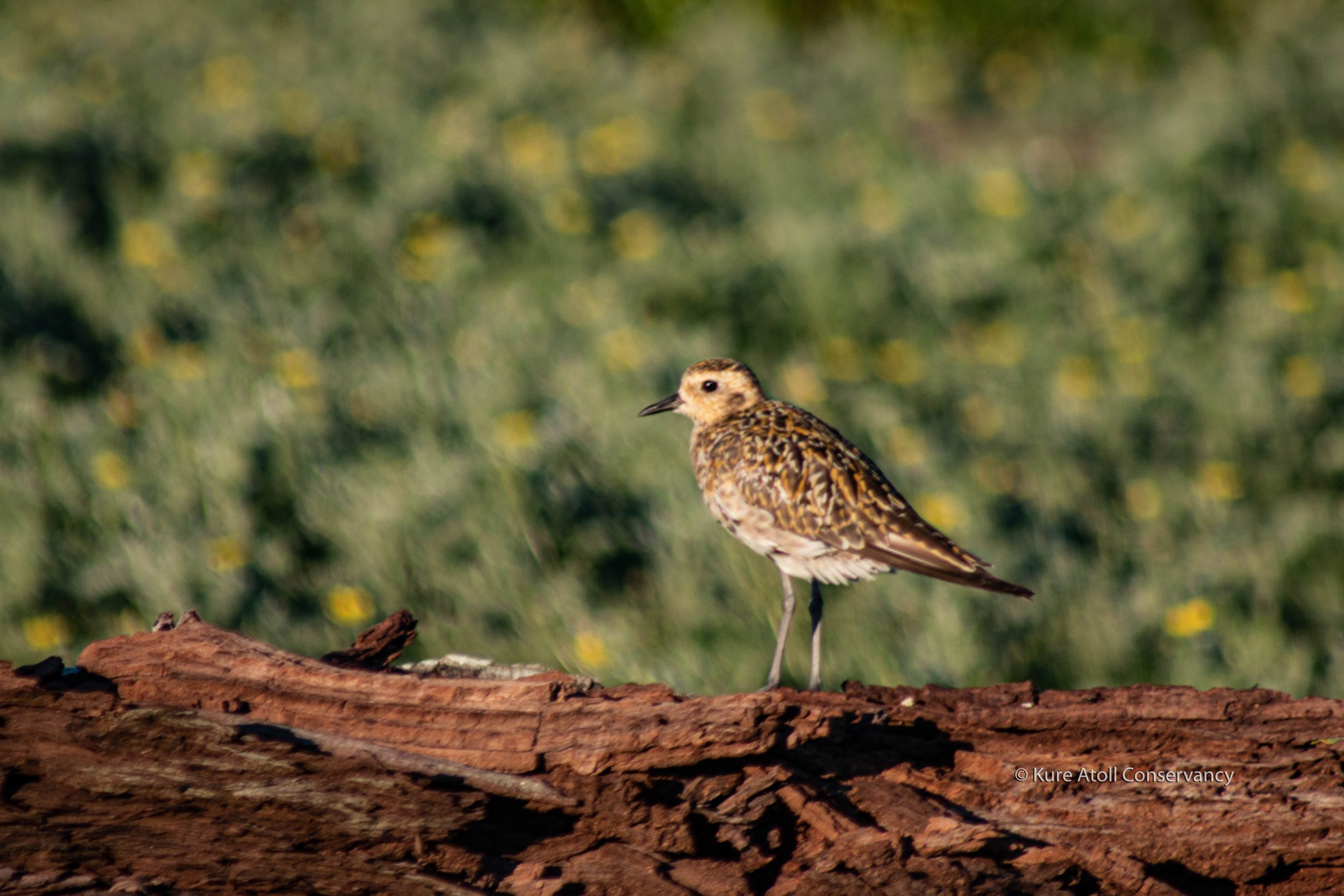
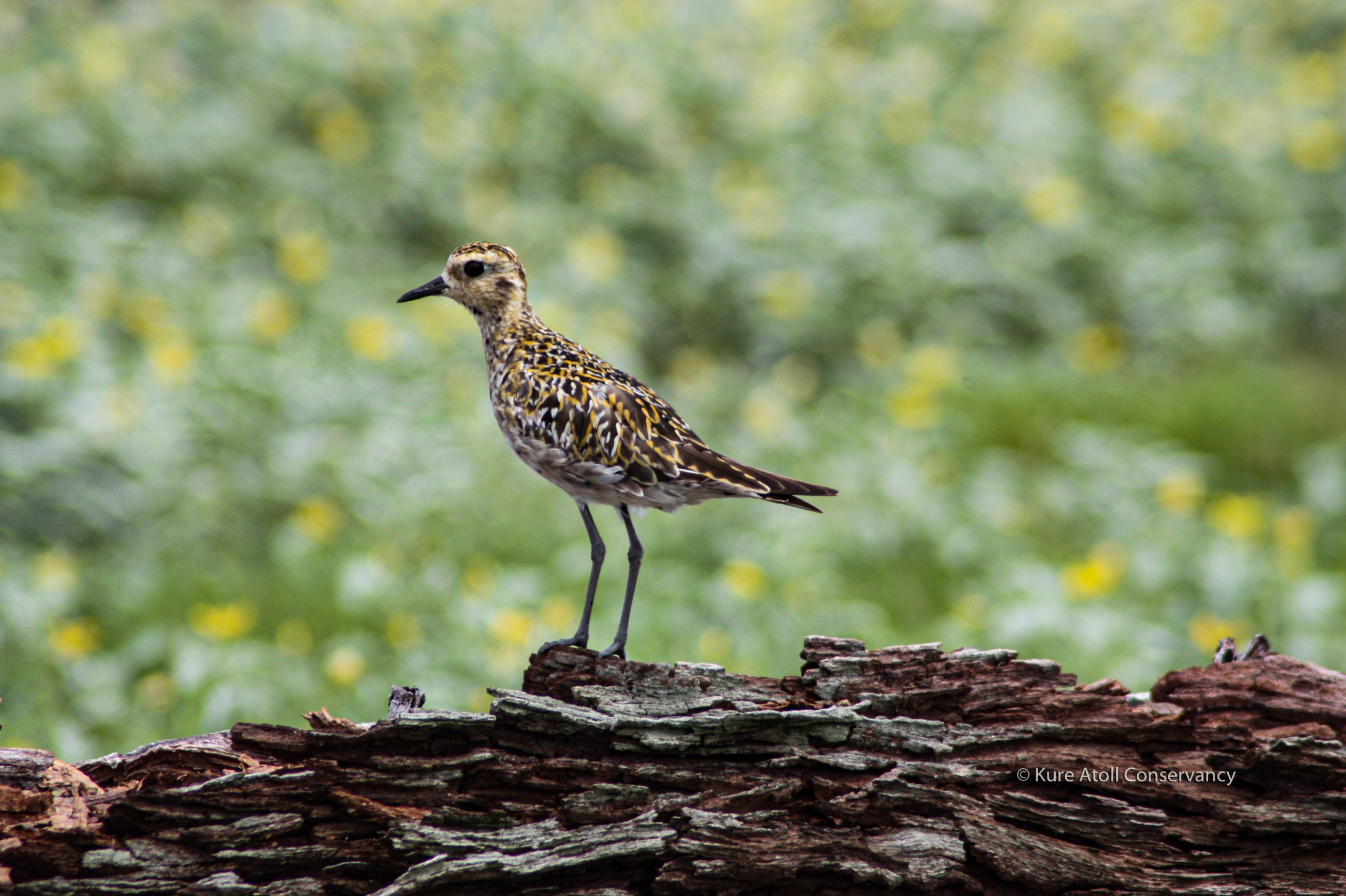
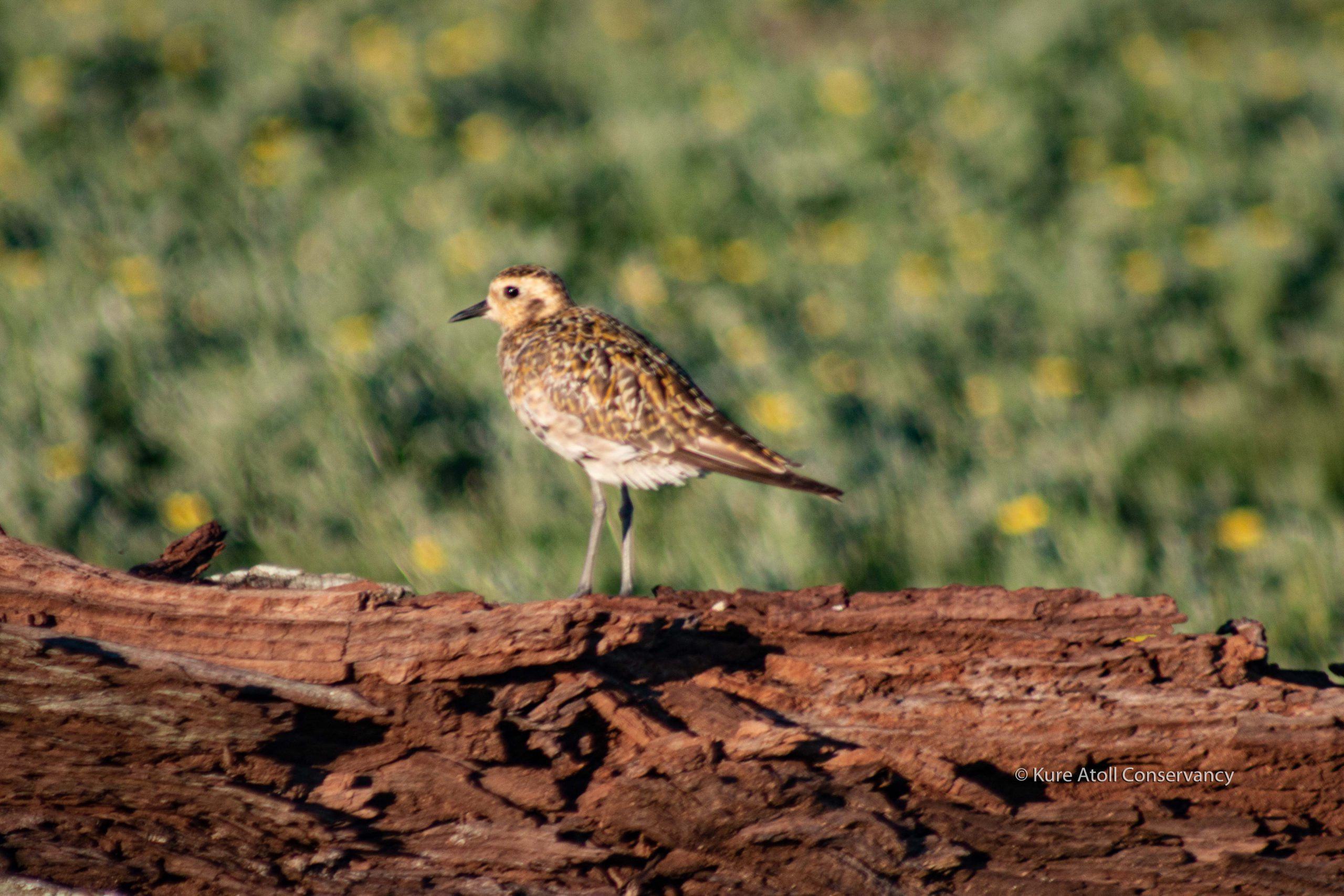
Like many shorebirds, Kōlea have long, slender legs with thin bills. Adult plumage changes dramatically between breeding and non-breeding seasons. When not breeding, adults have grey-brown mottled plumage, accented by yellow spots on the back and wings, and a black tail. During the breeding season, adult males adopt what is sometimes referred to as a “tuxedo”; their belly and neck feathers become black, flanked by white feathers. They still retain their yellow spots, which become accented by their darker markings.
Although a shorebird, these plovers tend to prefer inland sites with small grasses for foraging. These can be varied, and Kōlea in urban areas will forage in lawns and golf courses. Kōlea primarily feed on terrestrial insects, such as cockroaches, moths, caterpillars, and earwigs, which they locate by sight. During the breeding season, they also consume berries, leaves, and seeds to supplement them until the ground thaws and insects begin to hatch.
Kōlea nest in arctic regions from Siberia to western Alaska. They prefer inland sites such as lowland tundra or stony uplands with mosses and lichens. Their nests consist of shallow scrapes in the ground camouflaged with nearby vegetation. The black-and-white spotted color of their eggs also helps them blend into the landscape. Once the chicks hatch, they are watched and guarded by their parents but are not fed; they must forage on their own. These birds show a high degree of nest site fidelity and tend to return to the same nest cup (or within 100m) each year.
Kōlea also show high site fidelity to wintering grounds and will chase intruders from their territories while foraging. Hawai‘i is thought to support a large proportion of the world’s wintering Kōlea population.
Kōlea are highly migratory, traveling to Alaska and Siberia to breed from March through September. Studies have shown they can fly thousands of miles nonstop over large expanses of ocean during migration. These migrations north begin around April, and birds return to their wintering grounds in the fall.
Kōlea winter across the tropical Pacific, in upland and coastal areas from Hawai‘i to Japan. In Hawai‘i, kōlea are more common in the NWHI year-round, but are also commonly seen on all of the MHI between August and May.
The winter range of Kōlea is extremely varied, including crop fields, pastures, coastal salt marshes, mudflats, beaches, mangroves, grassy areas at airports, cemeteries, athletic fields, parks, residential lawns, golf courses, roadsides, and clearings in heavily wooded areas. In Hawai‘i, birds also utilize open stands of ironwood (Casuarina spp.) and small urban lawns and gardens, particularly in areas such as downtown Honolulu. Military bases and airports often provide important wintering grounds. Where suitable habitats (pastures, etc.) occur on mountain slopes, Kōlea range to at least 2,500 meters (8,125 feet) elevation. Extensive land-clearing in Hawai‘i, dating back to the Polynesian colonization, has probably improved wintering conditions by creating open habitat with plentiful insects.
Birds that winter in Hawaii tend to nest in Southwest Alaska, while birds from the southern Indo-Pacific nest in NW Alaska and Siberia. Winter foraging grounds are fiercely defended by kōlea, and birds tend to return to their same foraging territories just as they do with nests. Kōlea wintering grounds are extremely widespread, giving them a global presence that includes East Africa, India, Southeast Asia, Australia, and many Indo-Pacific islands. They have an estimated global population between 190,000 and 250,000 individuals.
Kōlea are currently listed as Least Concern on the IUCN redlist. Their expansive range and large global population, comprising approximately 190,000 to 250,000 individuals, are significant contributors to this listing. The overall population is currently decreasing, but the decline is not substantial enough to warrant moving this species to Near Threatened status.
There is no current action plan for this species, but it has been recognized in both American and international legislation. The US Migratory Bird Act prohibits hunting or exploitation of any birds breeding throughout Alaska. In Hawaii, the hunting of Kōlea, which was a historical threat, was outlawed in 1941.
Hunting was a significant threat until 1941, when it was prohibited, and populations are thought to have rebounded since then. The effects of pesticide exposure on wintering grounds and along migratory routes are unknown; however, on golf courses in Hawai‘i, Kōlea come into contact with herbicides and pesticides that may be harmful. Aircraft strikes at Līhu‘e (Kaua‘i) and Kahului (Maui) airports occur occasionally in the fall, apparently as naive juvenile birds attempt to establish foraging territories on airport grounds.
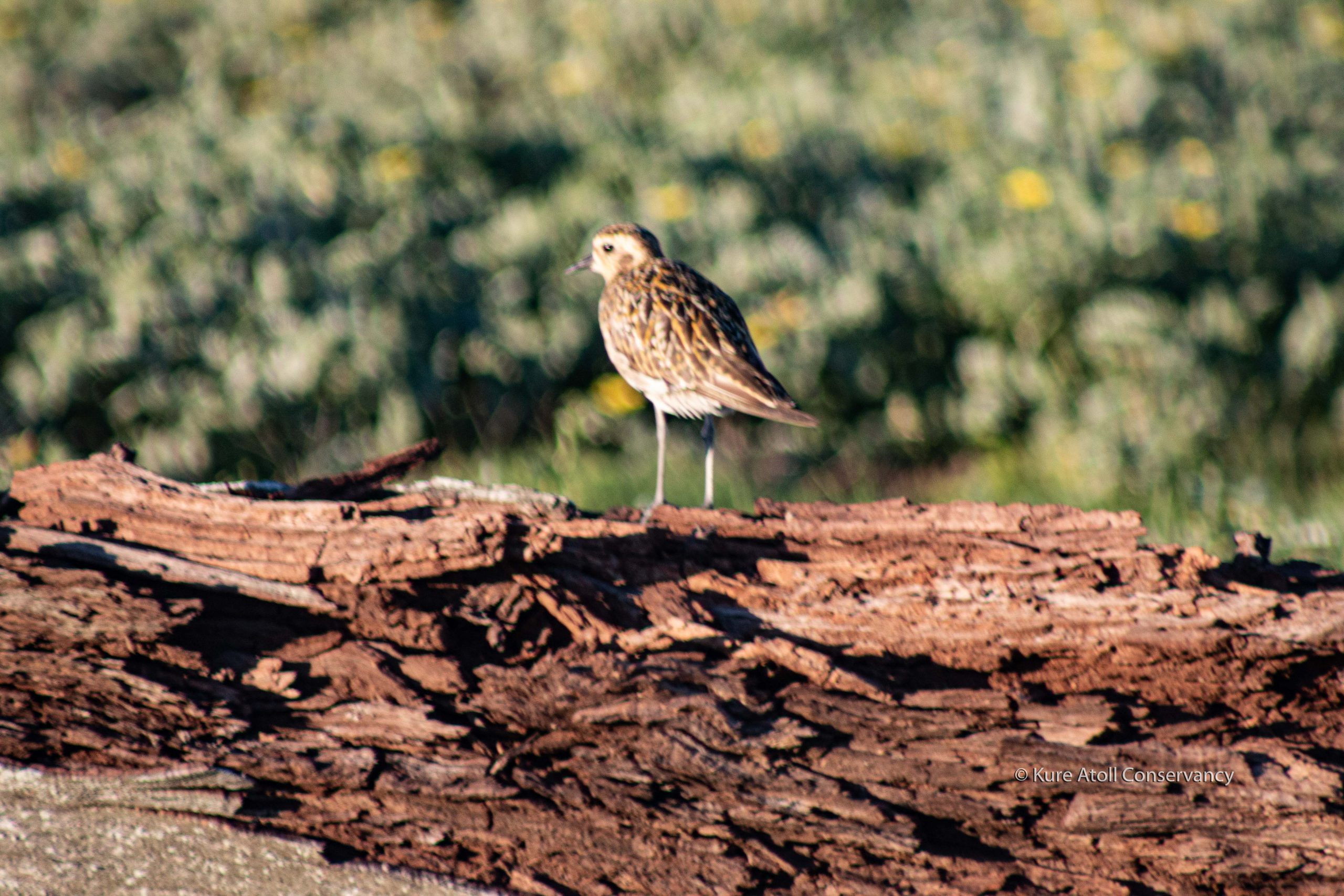
The Kōlea is a yearly visitor to the atoll, arriving around late August and remaining throughout the winter months. They are seen gathering in large groups on both the beaches and runway, where they often join groups of ‘Akekeke (Ruddy Turnstone). They are also regularly seen solo throughout the island in grassy areas. Their flight call and flight body shape make them easily distinguishable from other shorebirds that visit the island.

Kolea (kō’-lē’-a), n.
1. A stepfather or stepmother.
2. A parent-in-law; a father-in-law, makuakane kolea, or a mother-in-law, makuawahine kolea: he kane hou na ka makuahine, he wahine hou na ka makuakane.
2. The Pacific Golden Plover (Pluvialis fulva); a migratory bird which makes its appearance about the end of August and leaves again early in May. A popular game bird.
A webinar related to the research of the Papahānaumokuākea Native Hawaiian Cultural Working Group tasked with giving Hawaiian names to numerous other bird, plant, limu, and coral species unique to PMNM
