
‘Akekeke – Ruddy Turnstone
Arenaria interpres
| State Recognized | Indigenous |
| US Shorebird Conservation Plan | High concern |
| IUCN Red List | Near threatened |
| NatureServe Heritage Rank | Secure |
| State Recognized | Indigenous |
| US Shorebird Conservation Plan | High concern |
| IUCN Red List | Near threatened |
| NatureServe Heritage Rank | Secure |

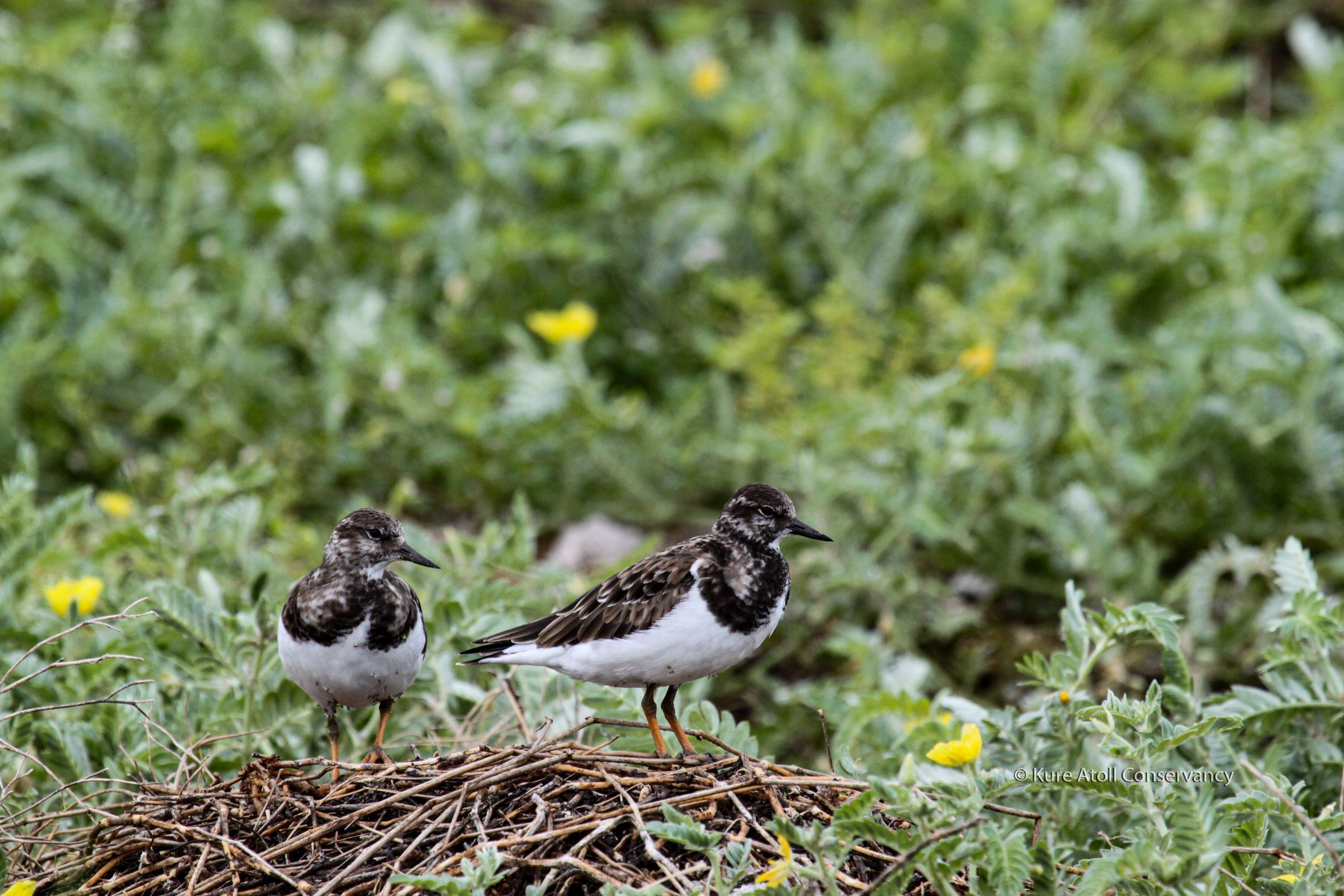
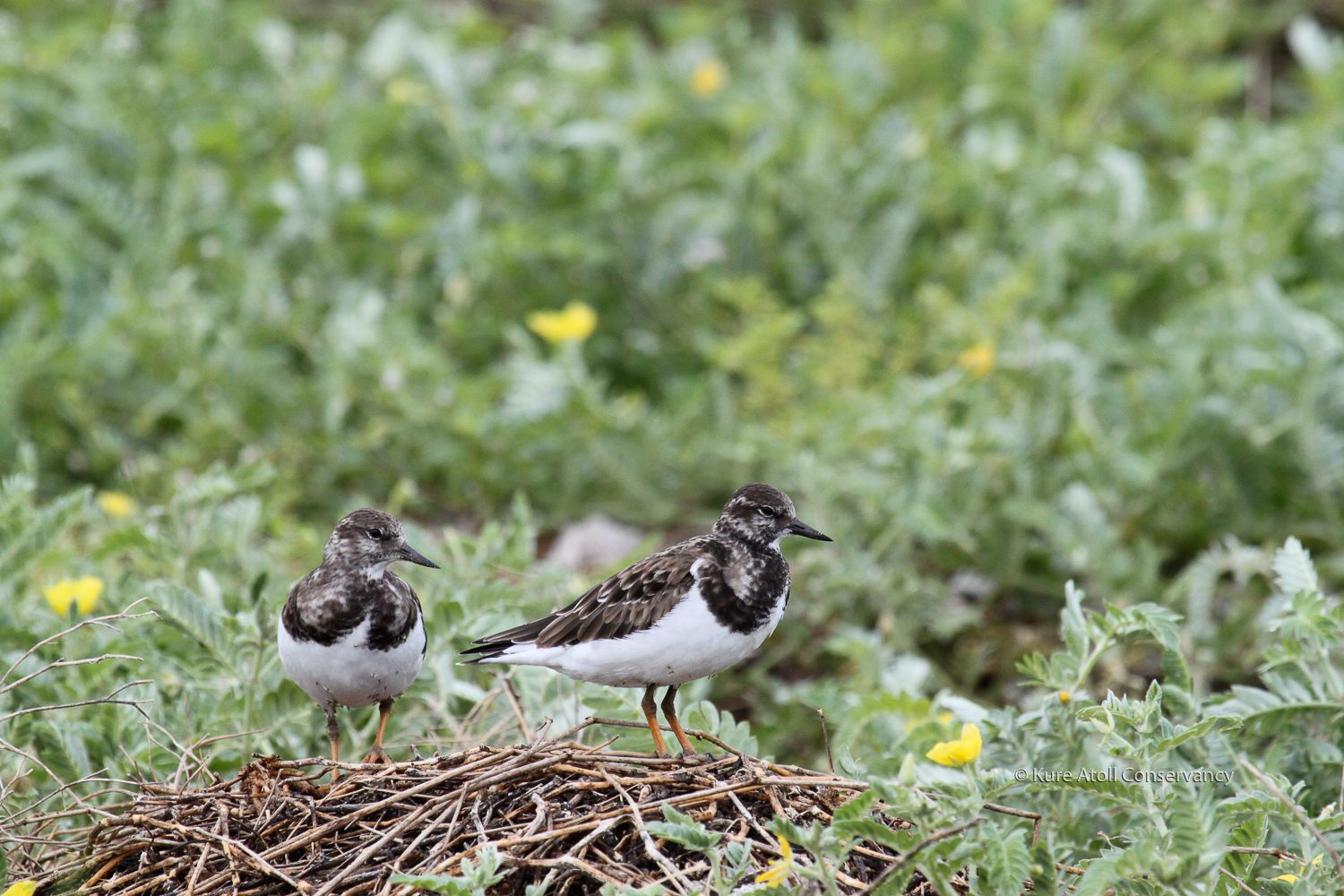
The ‘Akekeke, or Ruddy Turnstone, is a small calico-colored shorebird (Family: Scolopacidae) with a short bill and bright reddish-orange legs. The ‘akekeke is one of the most northerly breeding shorebirds, migrating yearly from the Arctic Circle to tropical coastlines. Excluding its breeding season in the Arctic, the Ruddy Turnstone can be found on coasts throughout the world. They tend to congregate in large groups and fly together, with speeds of 27 to 47 miles per hour. The Hawaiian name ‘Akekeke is taken from the bird’s rattling call, described as sounding like “a-ke-ke-ke”.
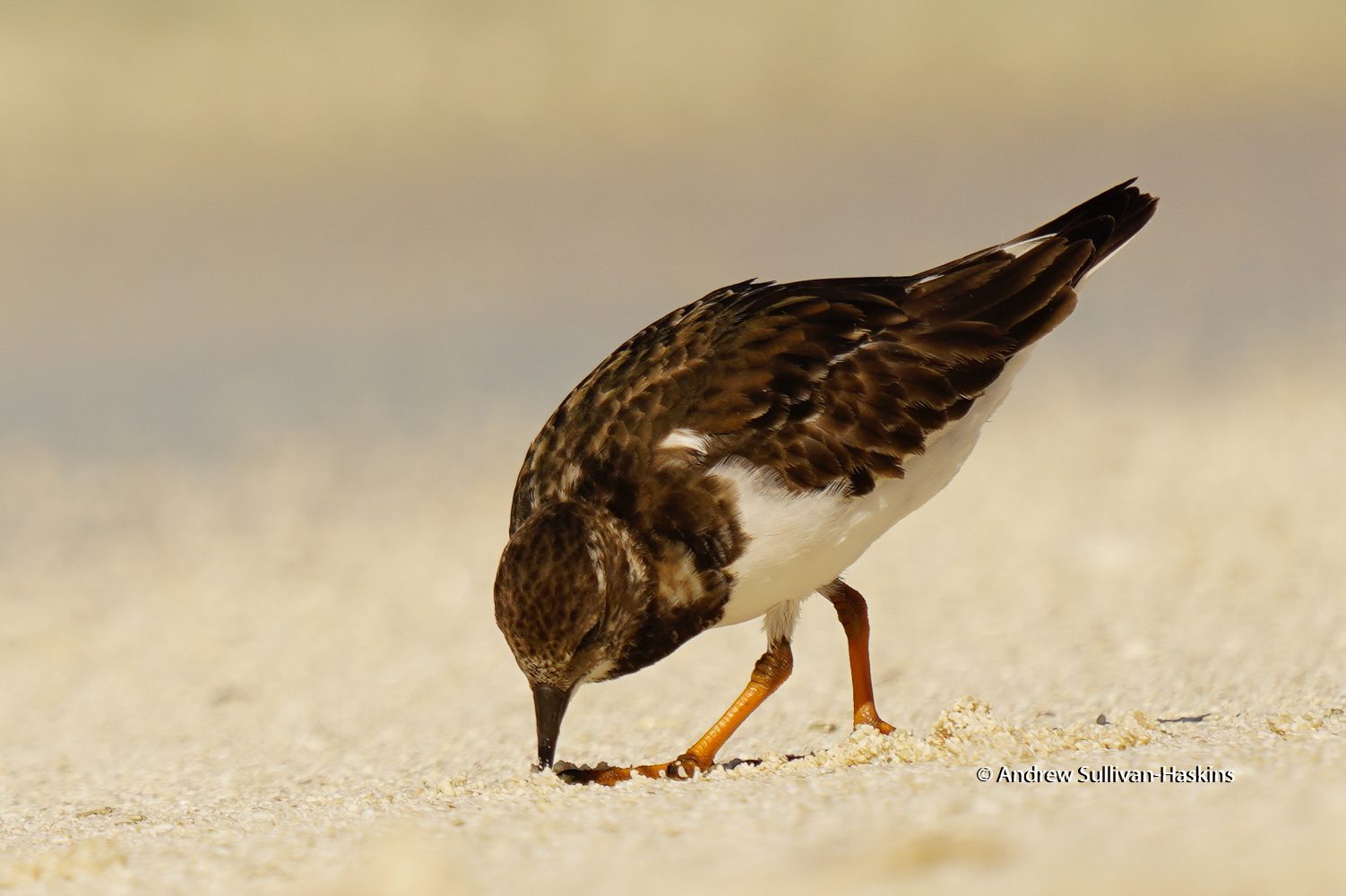
‘Akekeke use their strong neck and bill to flip aside stones, shells, or seaweed in search of small invertebrates and insects (hence where they get their name “turnstone”). Outside of their breeding season, the ‘akekeke diet becomes more diverse, extending to crustaceans, small fish, worms, or bird eggs. The ‘akekeke are mostly found on biologically productive rocky coasts or sandy beaches with washed-up seaweed or visible reefs. From late May to early August, these birds breed on coastal plains and lowlands around the Arctic Ocean.
During breeding season, Ruddy Turnstones have more vibrant “calico” colors compared to the more dull grays and browns when non-breeding. ‘Akekeke pairs are monogamous and usually return to the same area to breed each year. Once they arrive, the males and females call to each other with ruffled feathers; the males will slowly fly around their territory with back feathers ruffled, head pushed forward, and tail spread. Finally, the male will follow the female around, rarely moving further than 30 feet from her.
Both males and females look for a potential nest site in the male’s territory. The female will make the final decision on the nest location and make a scrape in the ground with her body. Nests are typically made at the edge of tundra vegetation out of the wind, with a clutch consisting of 2 to 5 olive-green eggs speckled with brown. Female Ruddy Turnstones do most of the incubating while the male stands guard. Once the eggs hatch, the family will move together, looking for food, until the chicks are old enough to fledge.
During breeding season, ‘Akekeke range from the eastern coast of Greenland to the north-eastern coast of Siberia, with most of the North American population concentrated on the northern coast of Alaska and the Arctic islands north of Canada. In winter, ‘Akekeke range across a wide swath of tropical coastal regions from southeastern Asia to southwestern Africa and southern Europe. In Hawai‘i, ‘Akekeke are more prevalent on shorelines of the NWHI than in the MHI.
The Ruddy Turnstone has a near global distribution that can be found in coastlines around the world. During their summer breeding season, these birds can be found along rocky coasts and tundra of the High Arctic of North America and Eurasia. In the winter, the ‘akekeke are prevalent in the coastal areas of South America, Africa, the Pacific Islands, and the Northern Hemisphere. Some Ruddy Turnstones can travel upwards of 6500 miles between their breeding and nonbreeding grounds.
A study by the Victorian Wader Study Group found that Ruddy Turnstones traveled a total of 27000 kilometers round-trip from the study location in Australia to their breeding ground in Siberia and back, with minimal stopovers in Hainan, Taiwan, and the East Coast of China. https://vwsg.org.au/waders/geolocator-studies/ruddy-turnstone/
The estimated global population of ‘akekeke is 750,000 to 1,750,000 mature individuals — the North American population is around 267,000 breeding birds, which makes up about 59% of the global total. The species has recently been classified as Near Threatened due to a moderate decline of about 20-39% over the past three generations (18 years).
For more information and references, visit the DLNR State Wildlife Action Plan factsheets.
Across most of their winter range, primary threats to ‘Akekeke are human industrial and recreational activity leading to habitat loss and degradation by means of chemical contamination and disturbance. Avian diseases are also a threat.
Climate change: Changing climate patterns, most notably warming Arctic temperatures, can have a severe impact on the Ruddy Turnstone’s migration. An advanced migration would make the birds out of sync with their usual food sources leading to increased competition. Sea level rise is also a threat to the ‘akekeke as shorelines and coastal habitat continue to be damaged.
Pollution: Plastic pollution that washes up on shorelines can easily be mistaken as food by Ruddy Turnstones. Plastic pieces can get stuck in the bird’s digestive system, leading to death. Other human activity, like oil spills or chemical pollutants, can contaminate coastal areas impacting both food sources and the ‘akekeke overall health.
Habitat degradation: Since the main habitat of the Ruddy Turnstone is coastal regions worldwide, coastal development poses an immense threat to the species. Beach and coastal development directly causes habitat loss predominately for migrating birds searching for food. The Ruddy Turnstone relies on stopover sites to refuel during their long migration and loss of this habitat can lead to a decrease in the migrational success of birds that return to the Arctic for the breeding season.
More research is needed on the severity of the threats facing the Ruddy Turnstone, as well as on future projects to address these issues.
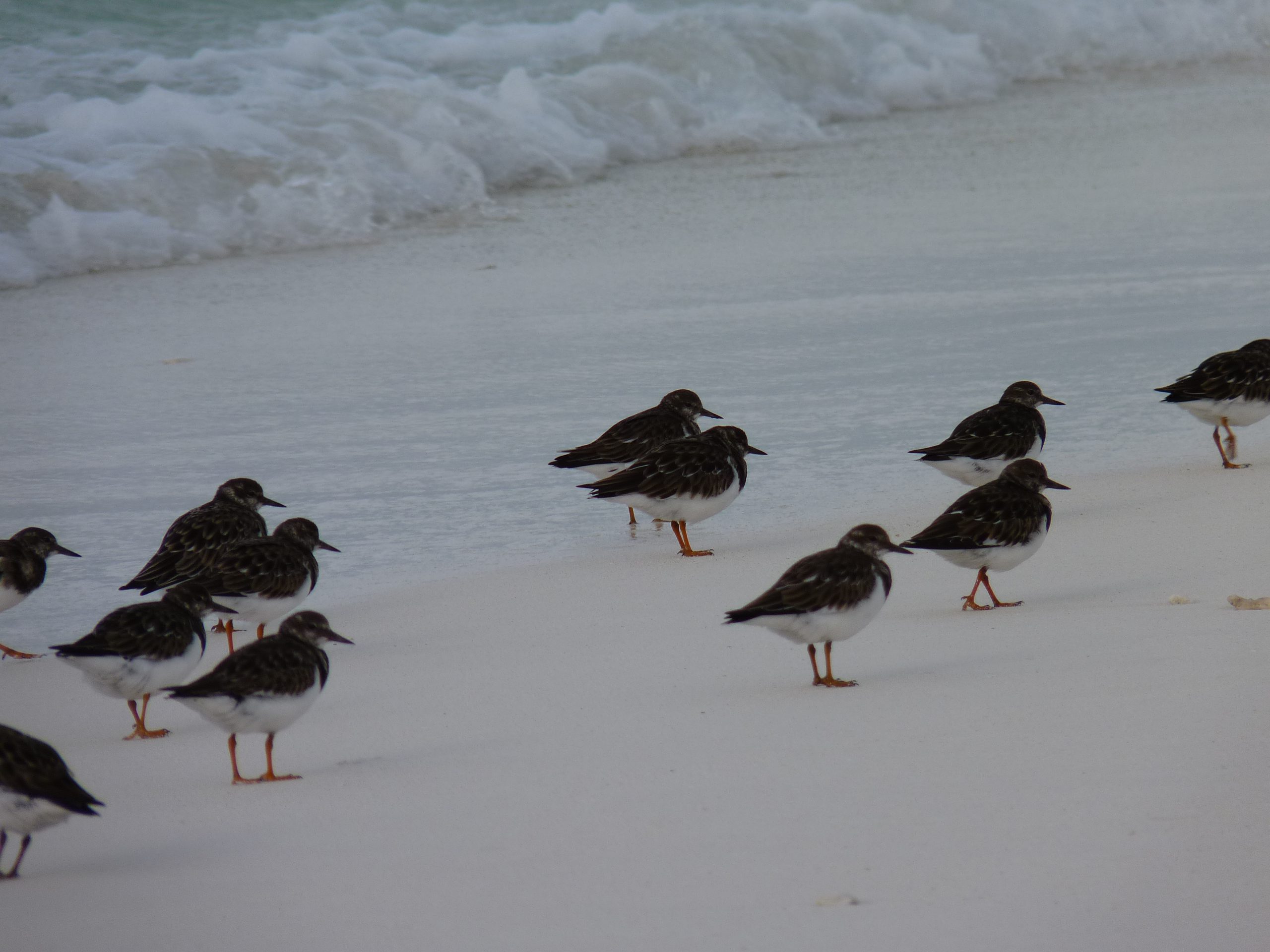
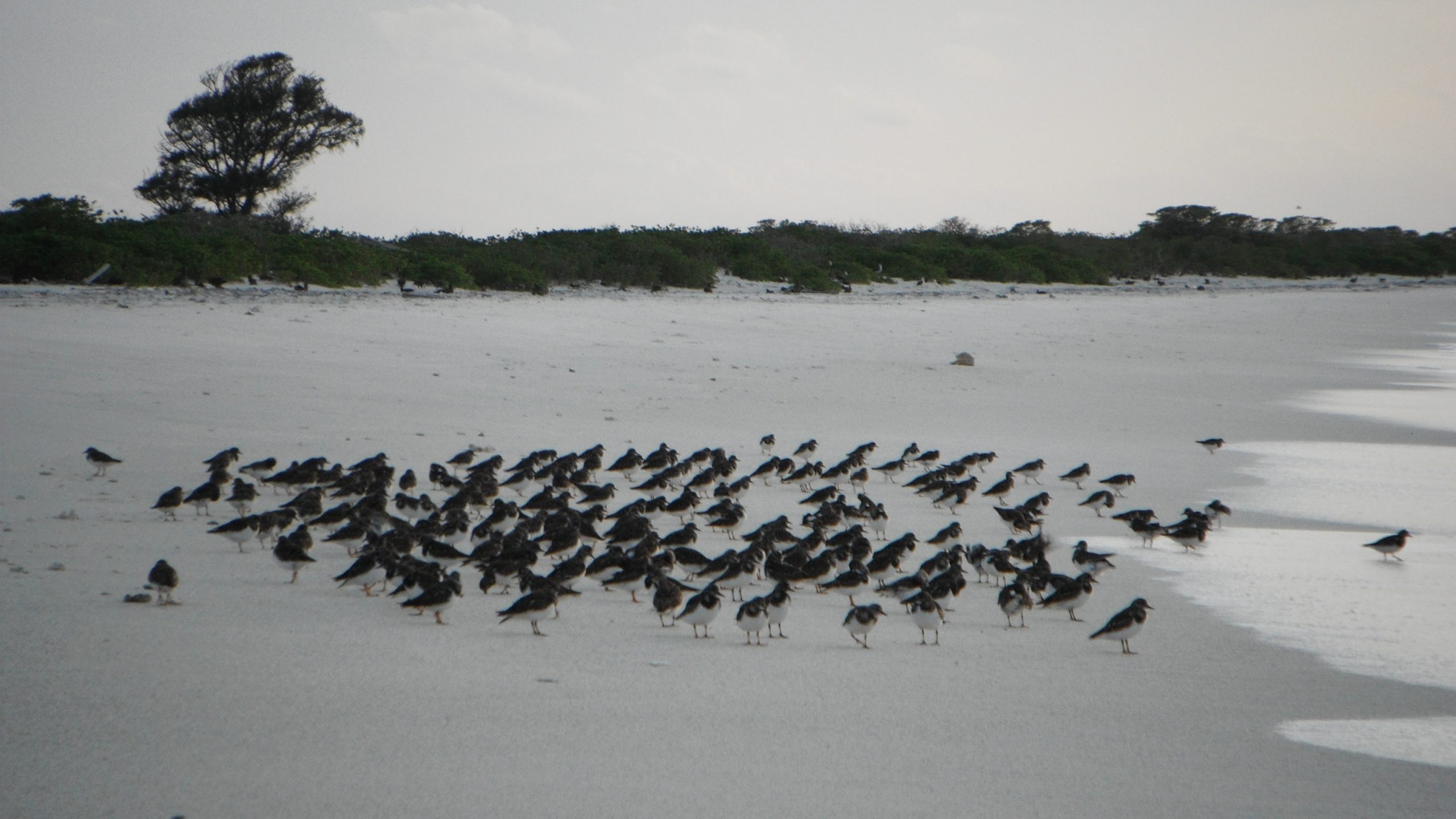
The ‘akekeke is the most abundant shorebird on Hōlanikū and can be seen making winter visits between August and May. Often seen in groups ranging from 20 to 200 individuals, these birds are most likely to be seen along the sandy shoreline or on the hard-packed runway, searching for food.
Akeke (ā-ke’-ke), n.
A bird, a species of turnstone (Arenaria interpres). Also called akekeke. See keke.
A webinar related to the research of the Papahānaumokuākea Native Hawaiian Cultural Working Group tasked with giving Hawaiian names to numerous other bird, plant, limu, and coral species unique to PMNM

