
Kioea
Bristle-thighed Curlew
Numenius tahitiensis
A rare, long-billed curlew that flies nonstop between Alaska and the Pacific islands, and the only shorebird known to use tools.
| State recognized | Indigenous |
|---|---|
| IUCN Red List | Near Threatened |
| USFWS Bird of Conservation Concern | Yes (2021) |

Species Information
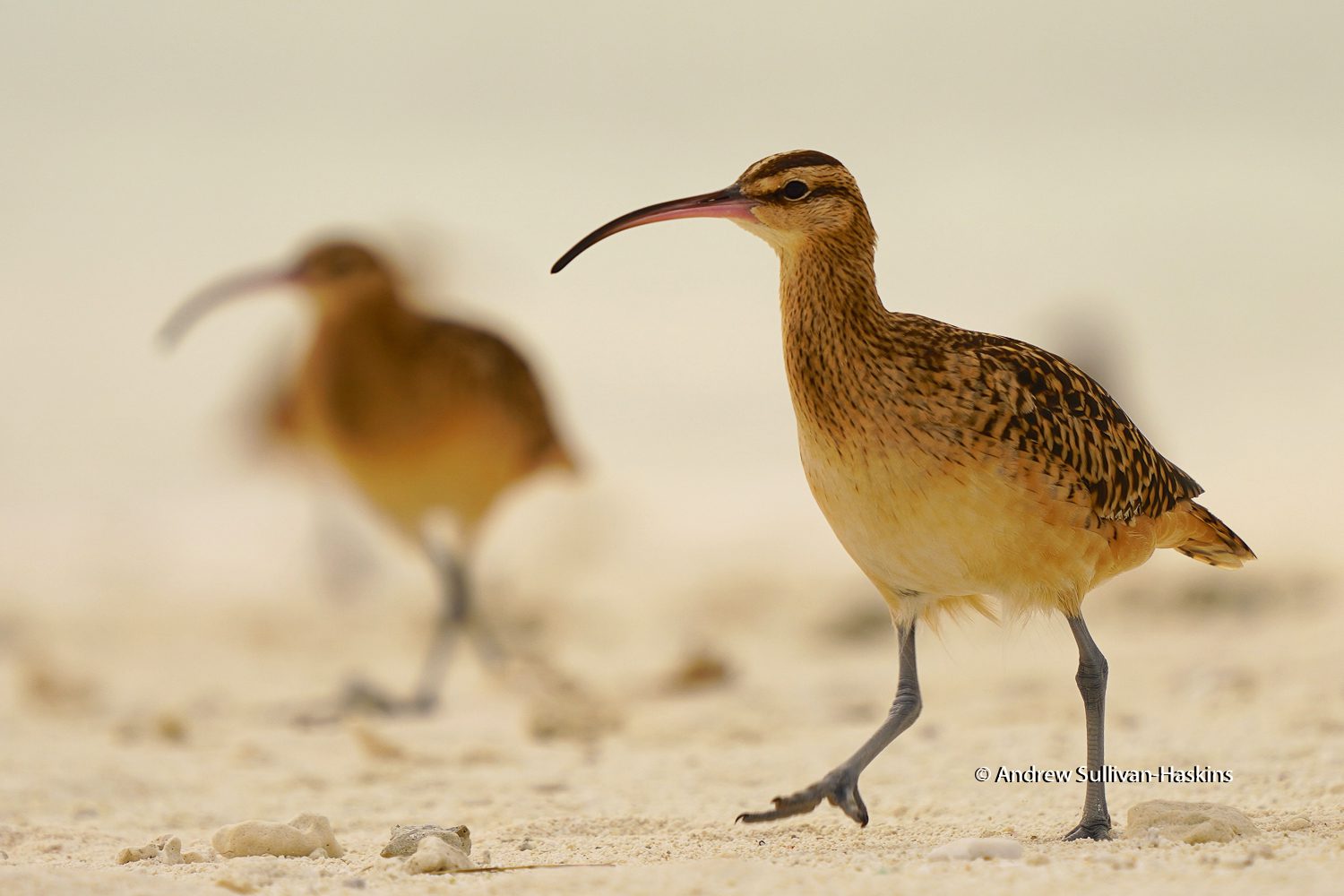
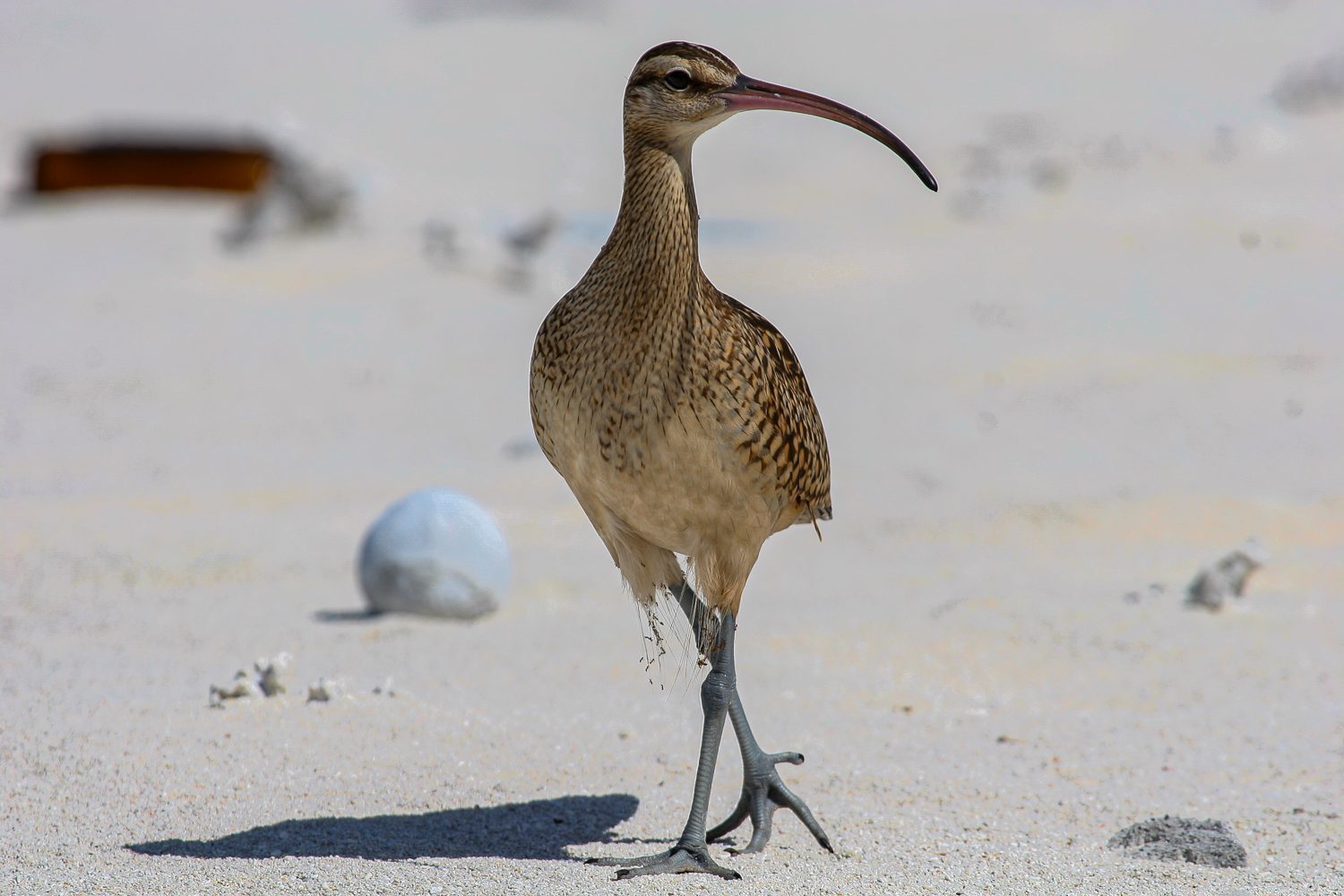
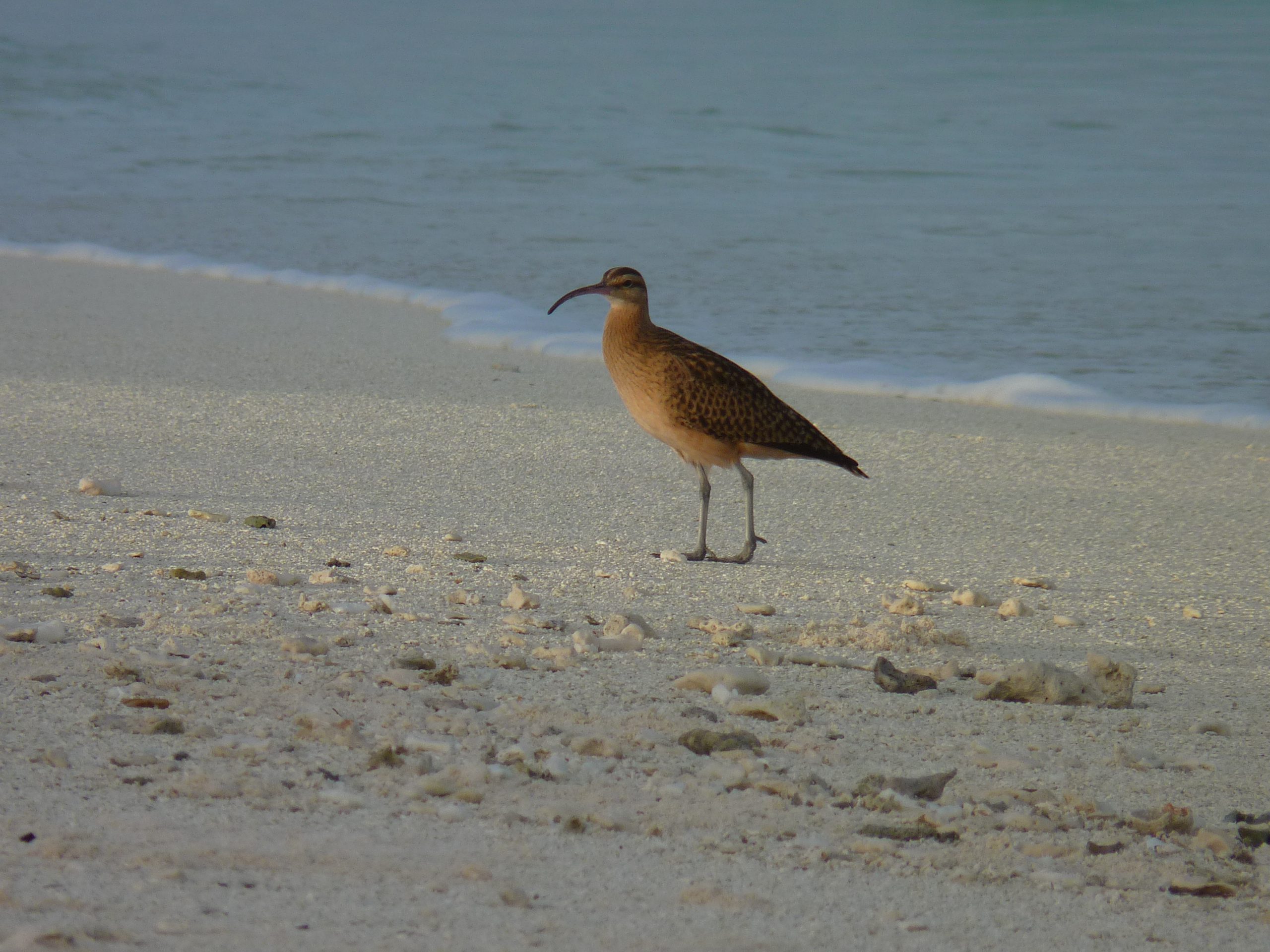
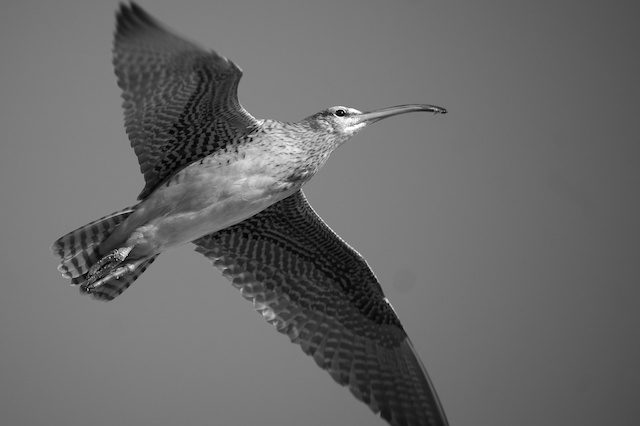
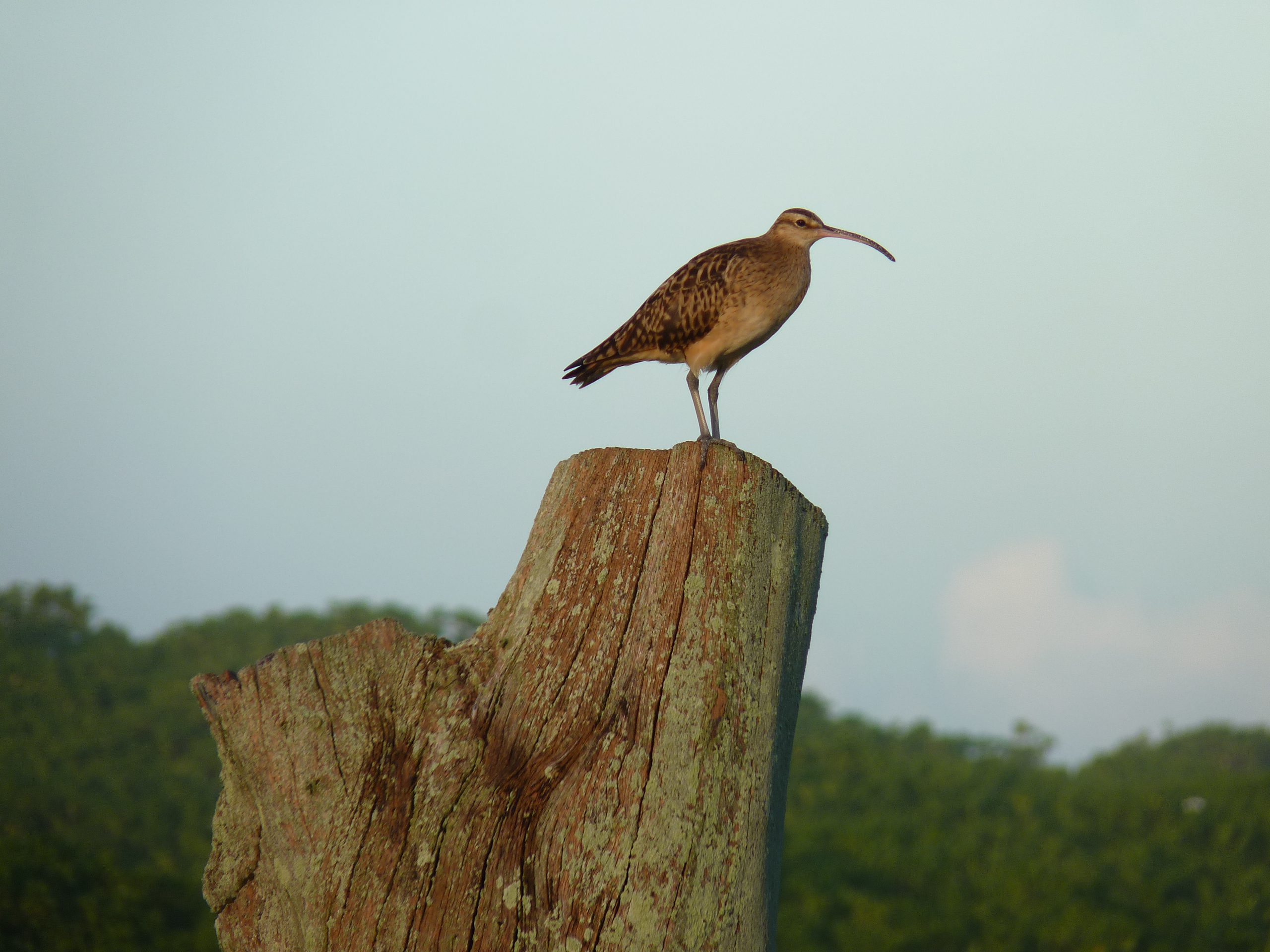
The kioea, or Bristle-thighed Curlew, is a large shorebird (family Scolopacidae) that twice a year makes a nonstop flight of at least 4,000 kilometers (2,480 miles) between Hawaiʻi and Alaska. Kioea usually arrive in Hawaiʻi in late July and August and leave in early May for their nesting grounds in western Alaska.
Kioea are the only migratory shorebirds that winter only on oceanic islands, that become flightless while molting, and that use tools: they have been seen picking up rocks in their bills and throwing them at albatross eggs to crack them open. Males and females look alike, but females are slightly larger, with straighter, less tapered bills.
Foraging & Nesting
In winter, kioea eat almost anything they can find, including invertebrates from the shore and inland, seabird eggs and chicks, carrion, lizards, rodents and fruit. On the Alaska nesting grounds, males defend large territories of up to 275 hectares (680 acres) with dramatic display flights, chases and complex calls.
Distribution & Abundance
Kioea nest in two small areas of western Alaska. In winter they spread across oceanic islands of the Pacific, from the Marshall Islands west to Pitcairn Island in the southeast. In Hawaiʻi the largest numbers winter in the Northwestern Hawaiian Islands, with small numbers on the main islands, mostly Oʻahu and Hawaiʻi Island. The total population is probably well under 10,000 birds.
Wintering kioea use many habitats, from tidal mudflats, lagoon edges, reefs and beaches to airport runways and open areas well away from the shore. In the Northwestern Hawaiian Islands they spend most of their time in grassy, vegetated interiors rather than on beaches. Counts on Kamole (Laysan Island) in fall 1988 found 68 percent of birds inland in pōhuehue (beach morning glory, Ipomoea pes-caprae), kāwelu (Eragrostis variabilis) or a mix of both, and only 1 percent on beaches.
Conservation Actions
Kioea are protected under the federal Migratory Bird Treaty Act and State of Hawaiʻi law, and the U.S. Fish and Wildlife Service lists them as a Bird of Conservation Concern. Their status on the IUCN Red List improved from Vulnerable to Near Threatened in 2020, partly because of conservation work on Oʻahu. Hawaiʻi's State Wildlife Action Plan calls for protecting current habitat, restoring additional wetland habitat and continuing population and distribution surveys. Removing rats and other introduced predators from islands, as on Hōlanikū, protects kioea while they are flightless during molt.
Current Threats
What limits kioea populations is not well understood. Development of shoreline areas in their winter range is considered a serious threat, along with pollution and invasive species. Kioea are especially vulnerable to introduced predators while they are flightless during molt, and avian disease may also affect them. They likely swallow plastic debris in the northern part of their winter range, though this has not been confirmed. Curlews on Kuaihelani (Midway Atoll) forage in lead-contaminated soils, but lead levels in the birds have not been studied.
On Hōlanikū
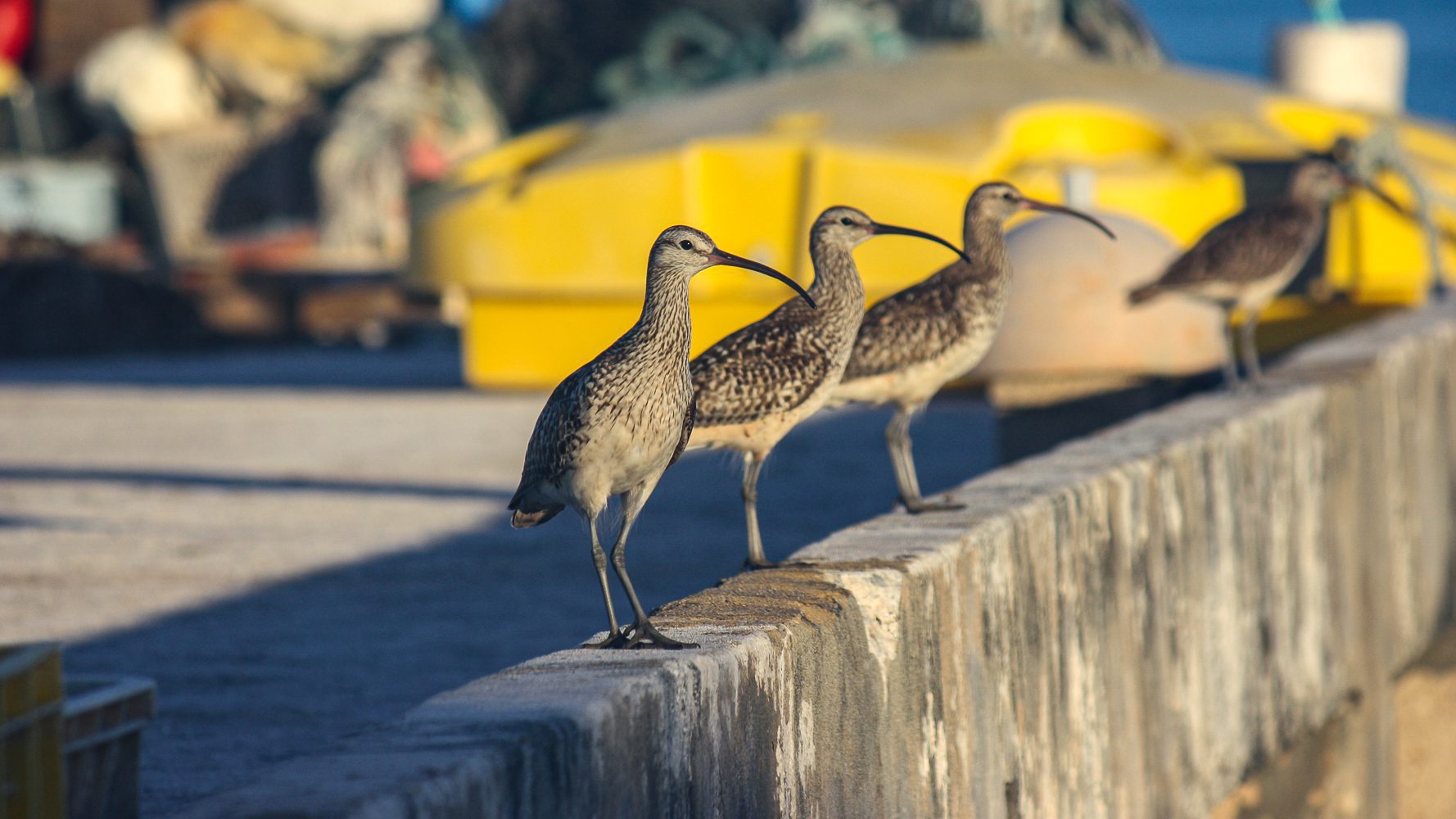
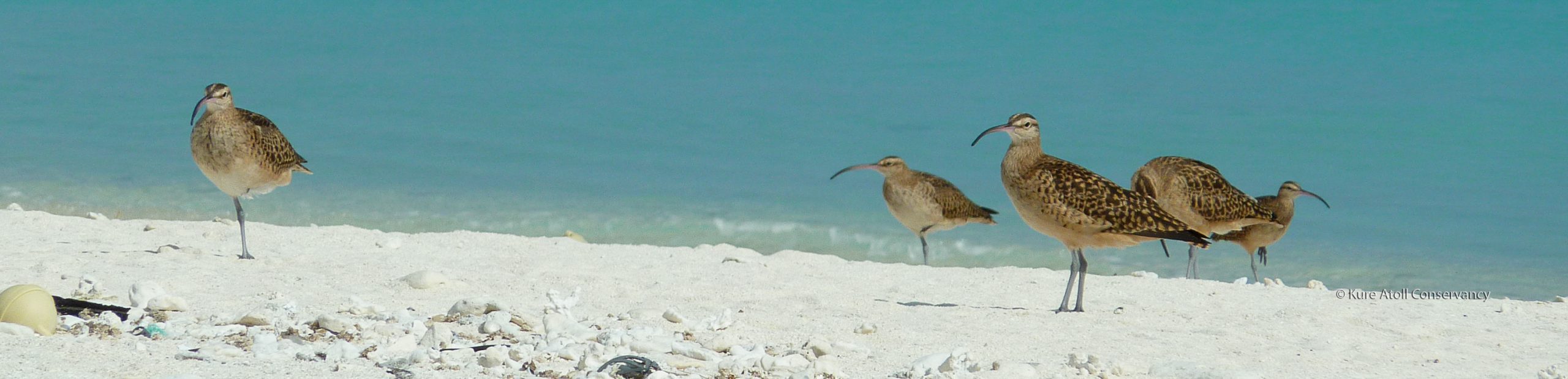
Kioea spend the winter on Hōlanikū, arriving in July and August and staying into May or June. Their whistled "chi-uuuuu-it" call carries across the island and lagoon. Numbers vary from year to year: recent surveys often count one to six, while past seasons have had high counts of 21 to 38 birds between 2013 and 2021.
In August 2023, crews spotted a female kioea carrying a transmitter that U.S. Geological Survey biologists had fitted on Kuaihelani (Midway Atoll) the previous November.
Because kioea eat fruit, they can carry seeds between islands. KAC/DLNR crews check for kaunaʻoa pehu (Cassytha filiformis) where curlews gather. This vine is native to the main Hawaiian Islands but not to the other Northwestern Hawaiian Islands, and it is managed as an invasive species on Hōlanikū.


Kioea
kio.ea, kiowea
1. n. Bristle-thighed Curlew (Numenius tahitiensis), large, dusky brown, migratory bird with a long, curved bill; the cry of this bird. See ex., lawekeō.
2. nvi. Tall, long-legged, slender person; long, tall; standing high on long legs; to extend, stretch out.
3. n. An extinct honeyeater (Chaetoptila angustipluma).
What's in a Name?
A webinar related to the research of the Papahānaumokuākea Native Hawaiian Cultural Working Group tasked with giving Hawaiian names to numerous other bird, plant, limu, and coral species unique to PMNM
More shorebirds of Hōlanikū



Help protect seabirds and shorebirds on Hōlanikū
KAC/DLNR field crews monitor wildlife and restore habitat year-round. Your support keeps them on the island.