Koloa Pōhaka – Laysan Duck
Anas laysanensis
| State Recognized | Endemic |
| Federally Listed | Endangered |
| State Listed | Endangered |
| IUCN Red List Ranking | Critically Endangered |
| State Recognized | Endemic |
| Federally Listed | Endangered |
| State Listed | Endangered |
| IUCN Red List Ranking | Critically Endangered |
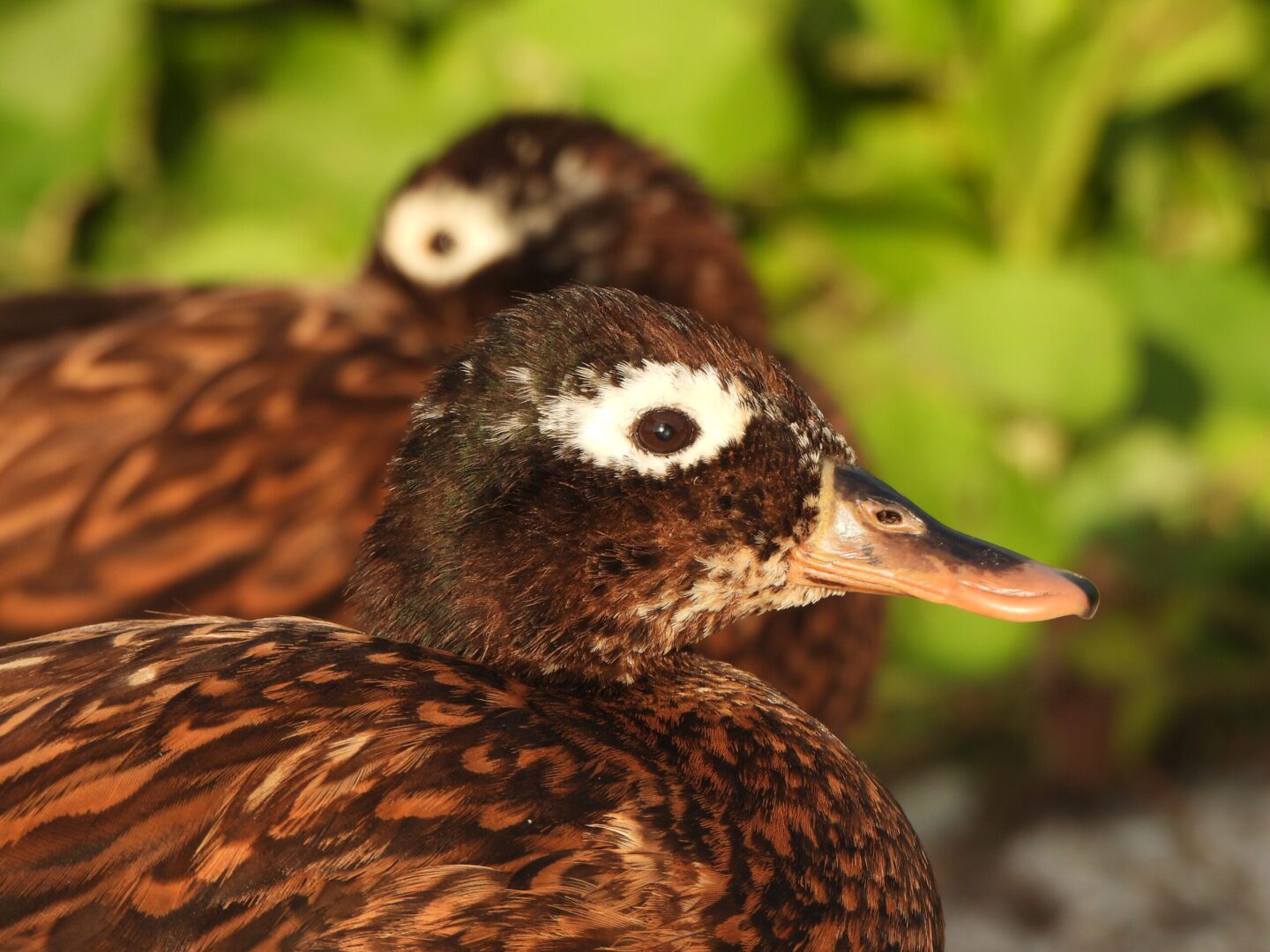
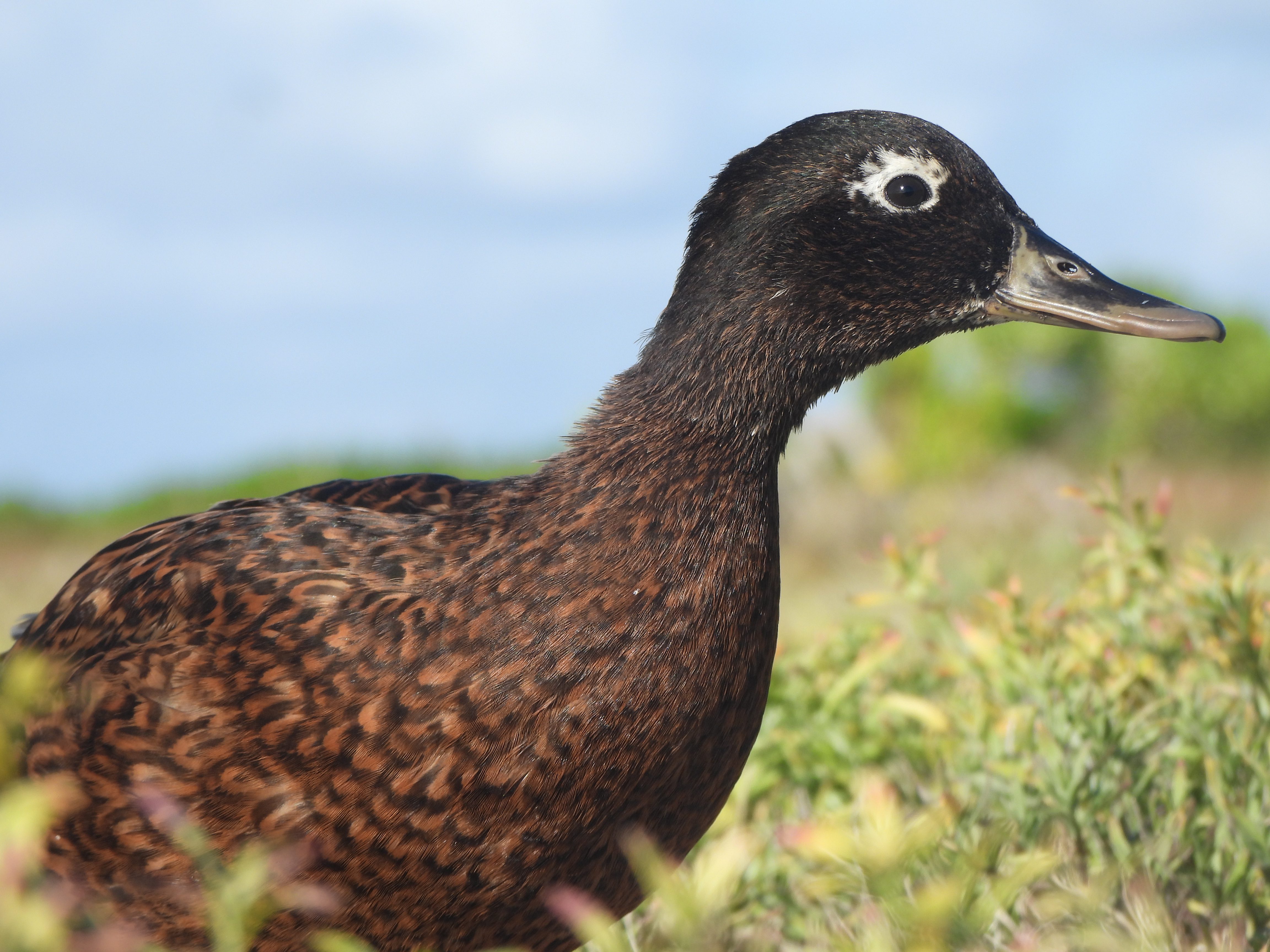
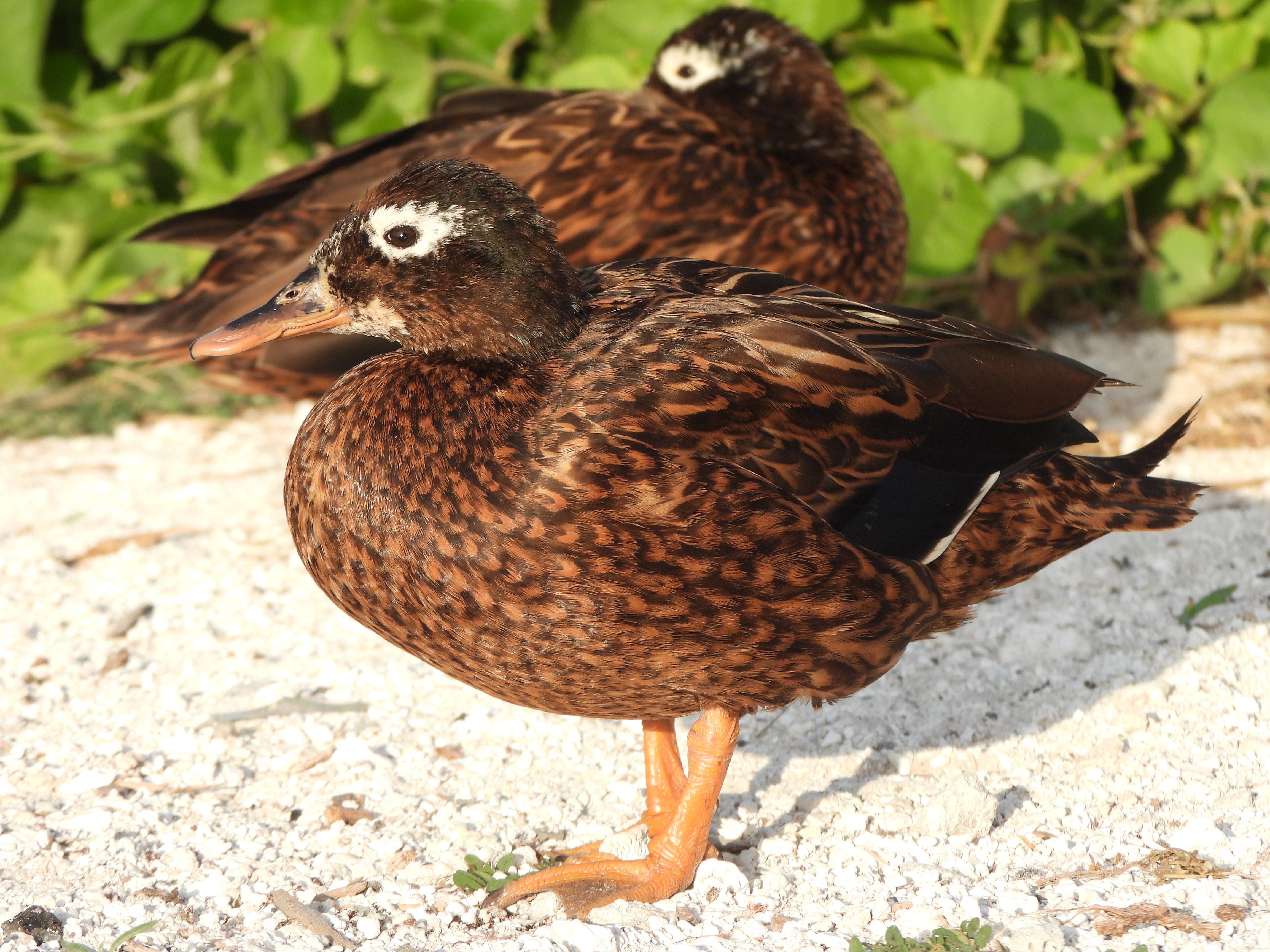
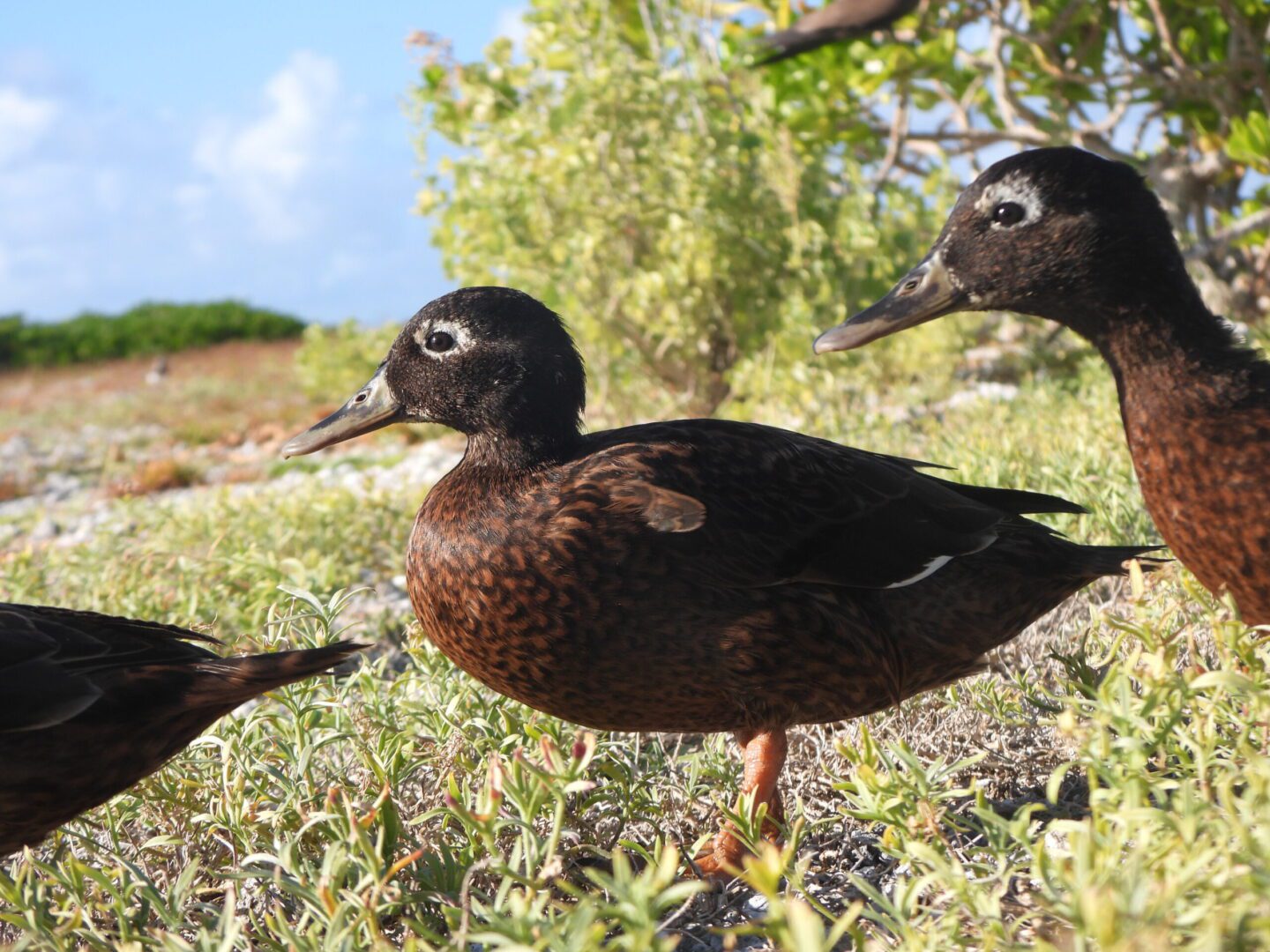
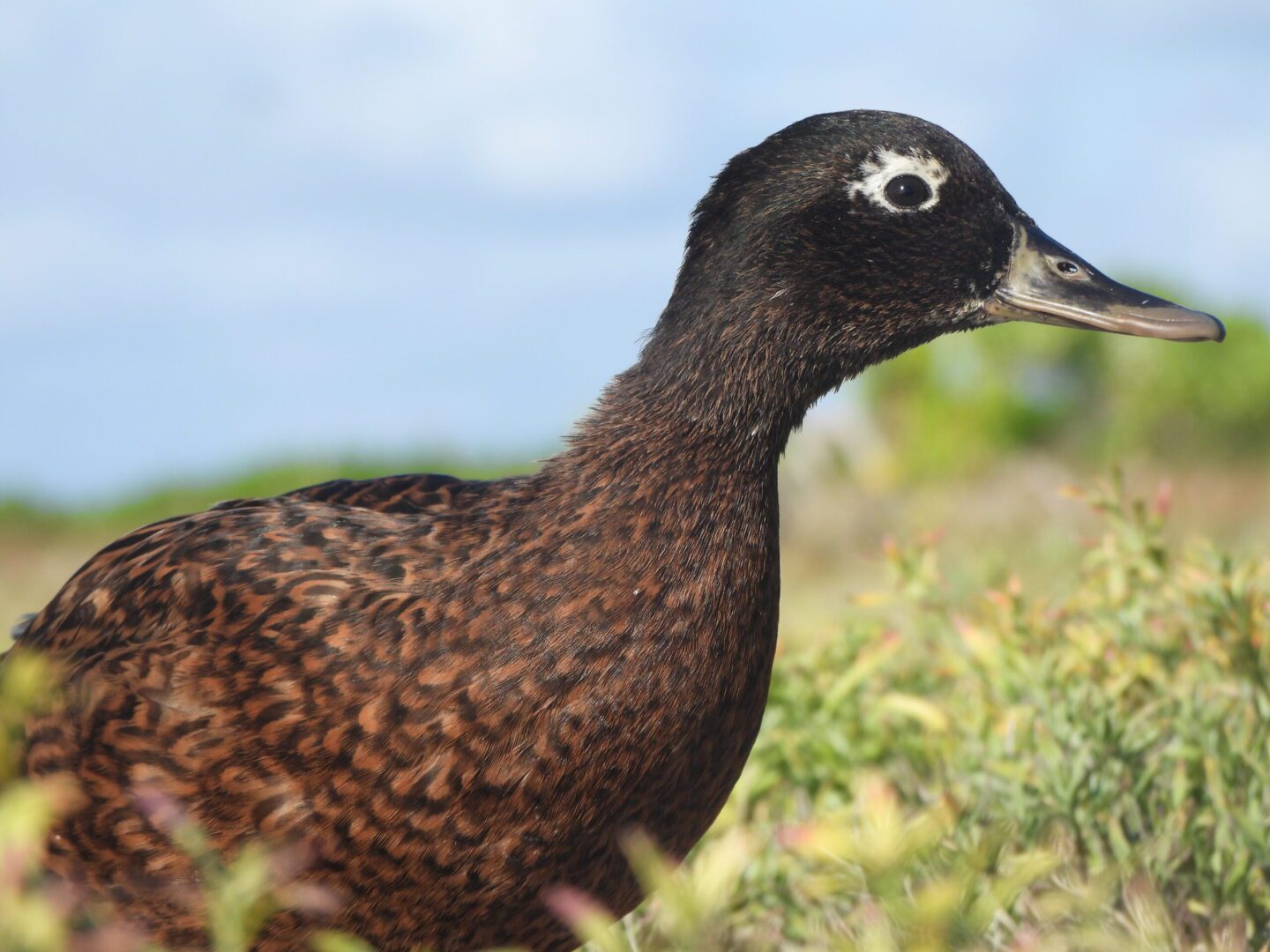
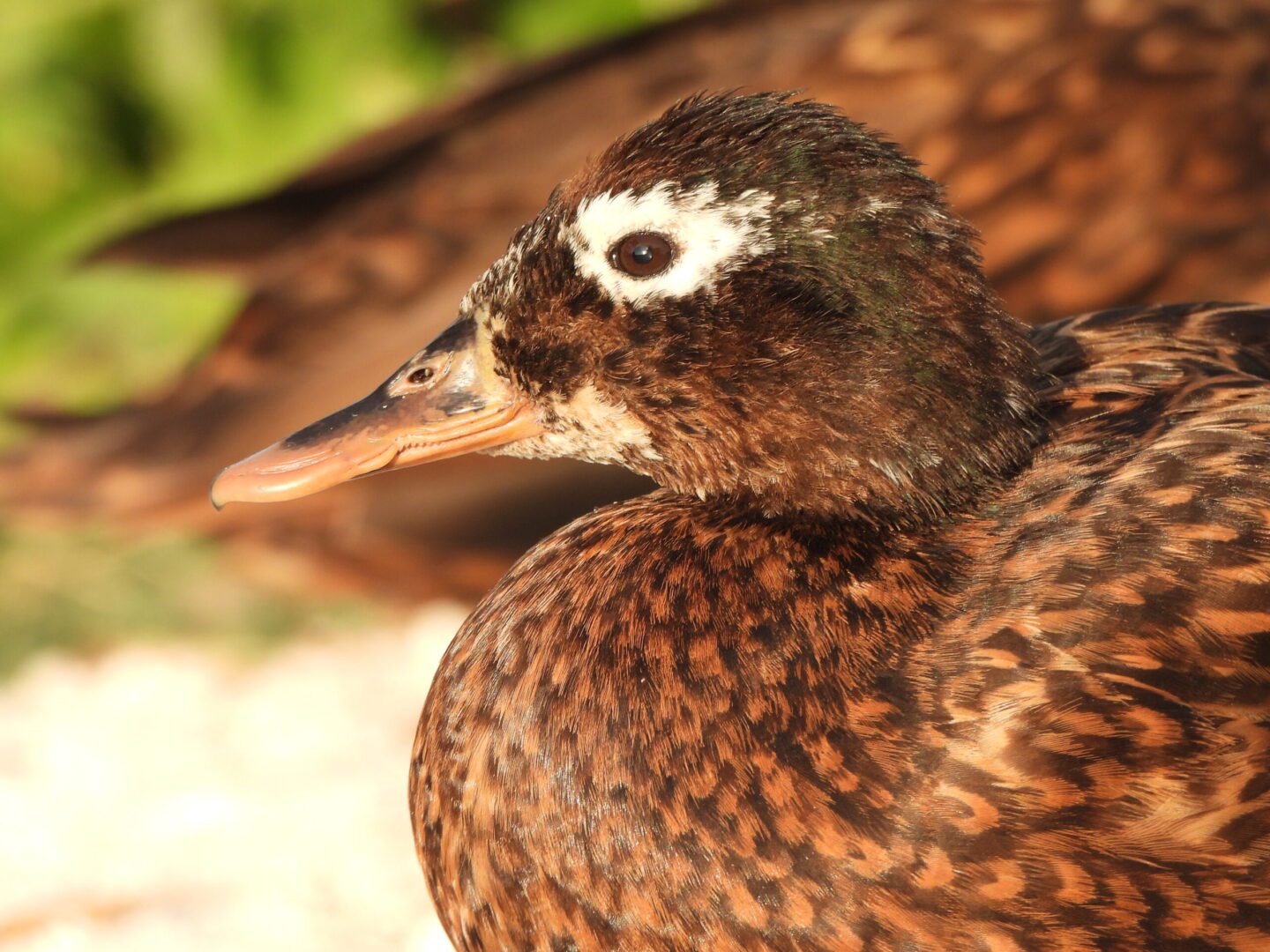
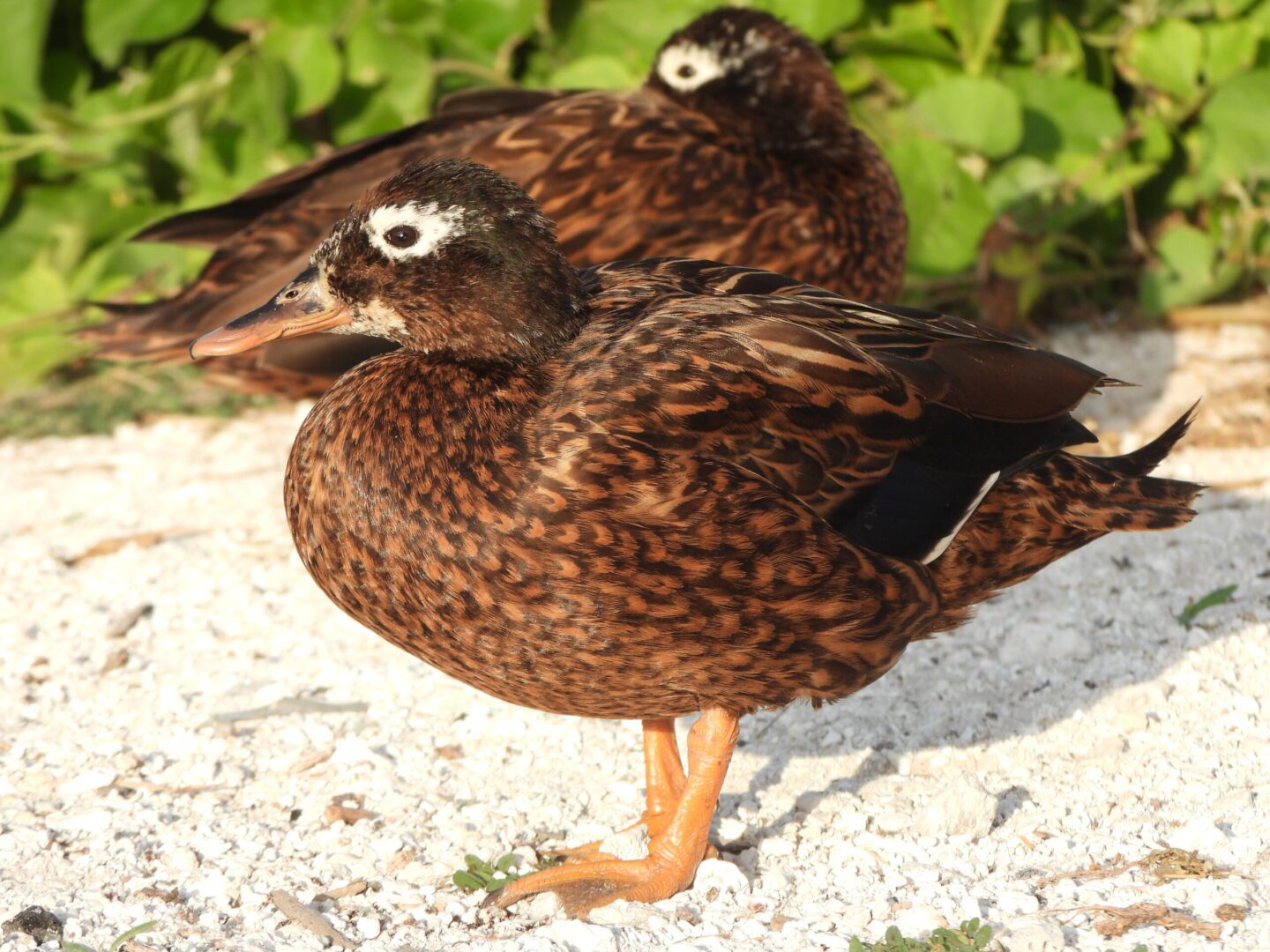
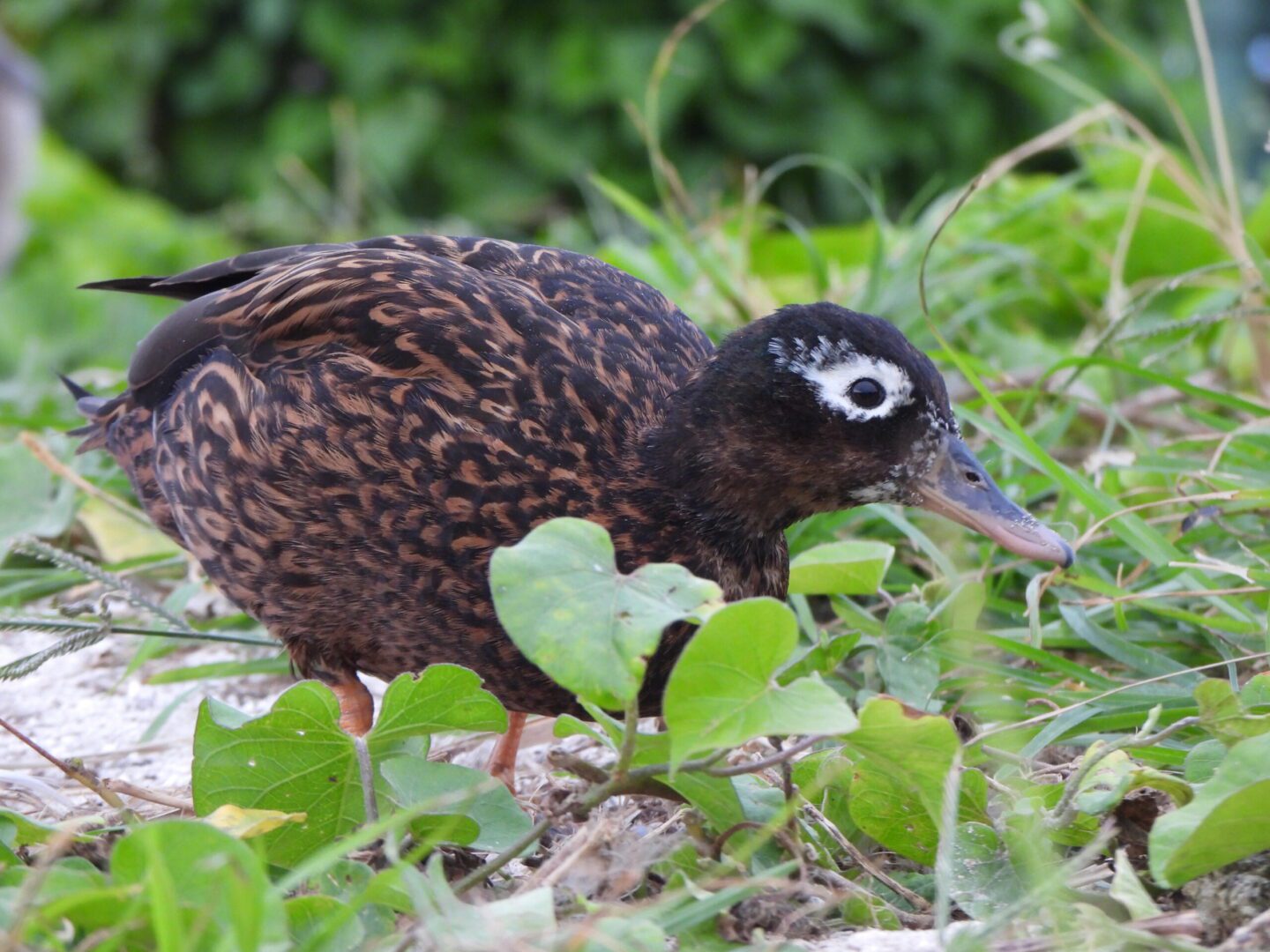
The Laysan duck is a small dabbling duck (Family: Anatidae) that is endemic to Hawai‘i. Until recently, it was restricted to Laysan Island (370 hectares or 911 acres) in the Northwestern Hawaiian Islands (NWHI). Despite successful translocation efforts that have established new populations on Midway and Kure Atolls, this species still has one of the smallest geographic ranges of any duck. Adults are dark brown overall, featuring a prominent white eye ring and varying amounts of white feathers on the head and neck; the sexes are similar in appearance. Unlike many other duck species, Laysan ducks exhibit low reproductive rates, are nocturnal, and are highly terrestrial and sedentary. The species also has a relatively long lifespan. During the day, the ducks take cover under vegetation such as bunchgrass or shrubs.
Their diet mainly consists of larvae and pupae of Dipteran brine flies, adult Dipteran brine flies, larvae and pupae of noctuid moths, and brine shrimp. They also consume seeds, leaves, algae, and other invertebrates. When foraging, Laysan ducks often run through swarms of adult brine flies, moving their heads back and forth to catch them. They also “filter feed” for moth larvae and pupae in the sand beneath low vegetation or dabble along the lake shore.
Nesting occurs from February to November, with most eggs laid between April and August. Nests are well concealed and typically found at the base of dense vegetation, especially bunchgrass. They consist of shallow scrapes lined with dead grass and some down, where females usually lay three to five eggs that hatch after 28 days. Ducklings are precocial, meaning they can move and feed independently right after hatching and do not rely on the female for food. When startled by predators, Laysan ducks tend to walk away rather than fly, and they often freeze instead of flushing.
Laysan ducks currently inhabit only Kamole (Laysan Island), Kuaihelani (Midway Atoll), and Hōlanikū (Kure Atoll) in the NWHI. The population on Midway Atoll was established through successful translocation efforts in 2004–2005. In 2014, 28 young adult birds were translocated from Midway to Kure Atoll. An additonal 24 young adult birds were translocated from Midway to Kure in 2023, further aiding reintroduction efforts. Fossil and subfossil evidence indicates that Laysan ducks were once widespread in the NWHI and Main Hawaiian Islands (MHI) before the arrival of Polynesians, with occurrences on Hawai‘i, Moloka‘i, O‘ahu, Maui, and Kaua‘i. The species was last seen on Lisianski in 1844.
Two habitats are critical to the survival of Laysan Duck: vegetated uplands and wetlands. Uplands supporting vegetation such as beach naupaka and bunch grass provide ducks with shelter and nesting habitat, and hypersaline lakes provide important foraging habitat. The importance of upland vegetation was demonstrated by the severe decline of ducks at the turn of the last century, when rabbits denuded Laysan, and by the species’ subsequent recovery after the rabbit population was eradicated in the 1920s and the vegetation recovered. Similarly, the number of ducks varies considerably depending on lake water levels; in 1987, there was a total breeding failure due to a drought and a lack of brine flies.
For more information and references, visit the DLNR State Wildlife Action Plan factsheets.
Historical threats included the introduction of rabbits, which subsequently denuded the island’s vegetation (see above), sport hunting, and guano mining. The species’ limited population size and geographic range exacerbates the risk of extinction from demographic and environmental stochasticity and catastrophes. These threats include:
Koloa Pōhaka
A webinar related to the research of the Papahānaumokuākea Native Hawaiian Cultural Working Group tasked with giving Hawaiian names to numerous other bird, plant, limu, and coral species unique to PMNM