Pōhuehue
Beach morning glory
Ipomoea pes-caprae
A native beach vine whose runners hold the sand; on Hōlanikū it survives in only a few places.
| Status in Hawaiʻi | Indigenous |
|---|---|
| On Hōlanikū | Uncommon (Landfill and camp) |

Species Information
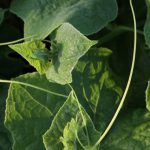
Pōhuehue (Ipomoea pes-caprae) is a strong trailing vine in the morning glory family (Convolvulaceae), with runners up to 16 feet long that root at the joints. Its thick, leathery leaves are notched at the tip like a goat's hoof, which gives the plant its scientific name (pes-caprae means "goat's foot"). The trumpet-shaped flowers are pink to light purple with a darker center.
Distribution & Habitat
Pōhuehue grows on sandy beaches throughout Hawaiʻi and the tropics, where its runners help hold the sand in place.
On Hōlanikū
Pōhuehue was first documented on Hōlanikū in 1979 but was missing from plant surveys until 2001. By 2006 only two plants remained. Today it grows mainly at the Landfill and in camp; outplantings elsewhere have not taken hold. It is far less common than its relative koali ʻawa (Ipomoea indica).
Restoration & Management
From 2006 to 2009, seeds and cuttings were brought from Kuaihelani (Midway Atoll) to restore pōhuehue on Hōlanikū, with little success. Plant experts who saw the dying plants suggested an iron deficiency. The Landfill, the old Coast Guard scrap metal dump, is one of the few places on the island with a source of iron, which may explain why pōhuehue does well there. It also grows best where water collects or the water table is close to the surface.

More plants of Hōlanikū
-
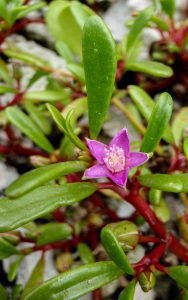 ʻĀkulikuli
Sesuvium portulacastrum
-
 ʻAlena
Boerhavia repens
- ʻĀnaunau Lepidium owaihiense
-
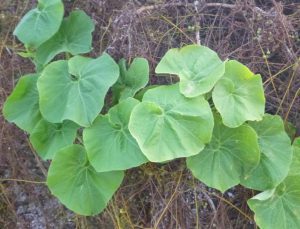 ʻĀnunu
Sicyos maximowiczii
-
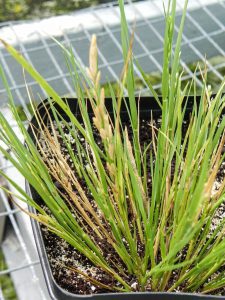 Dwarf eragrostis
Eragrostis paupera
-
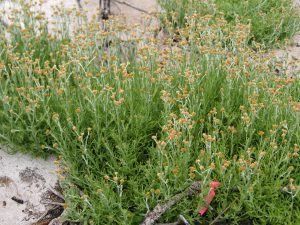 ʻEnaʻena
Pseudognaphalium sandwicensium var. sandwicensium
- ʻIliahi aloʻe Santalum ellipticum
-
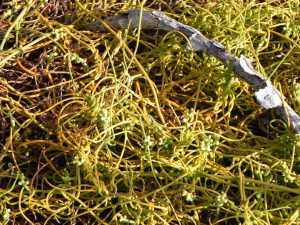 Kaunaʻoa pehu
Cassytha filiformis
-
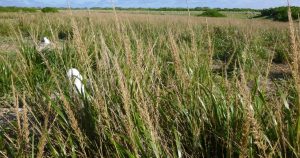 Kāwelu
Eragrostis variabilis
- Koali ʻawa Ipomoea indica
- Makaloa Cyperus laevigatus
- Maʻo Gossypium tomentosum
-
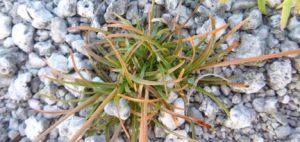 Mauʻu ʻakiʻaki
Fimbristylis cymosa
- Naio Myoporum sandwicense
- Nanea Vigna marina
-
 Naupaka kahakai
Scaevola taccada
-
 Nohu
Tribulus cistoides
-
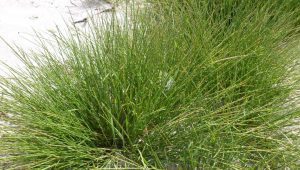 Pacific Island thintail
Lepturus repens
- Pōpolo Solanum nelsonii
Help protect native habitat on Hōlanikū
KAC/DLNR field crews monitor wildlife and restore habitat year-round. Your support keeps them on the island.