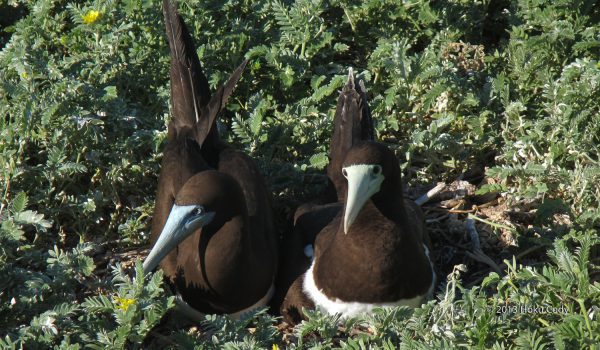
ʻĀ – Brown Booby
| Stated-recognized | Indigenous |
| NatureServe Heritage Rank | G3 – Vulnerable |
| North American Waterbird Conservation Plan |
High Concern |
| IUCN Red List Ranking | Vulnerable Regional Seabird Conservation Plan USFWS 2005 |
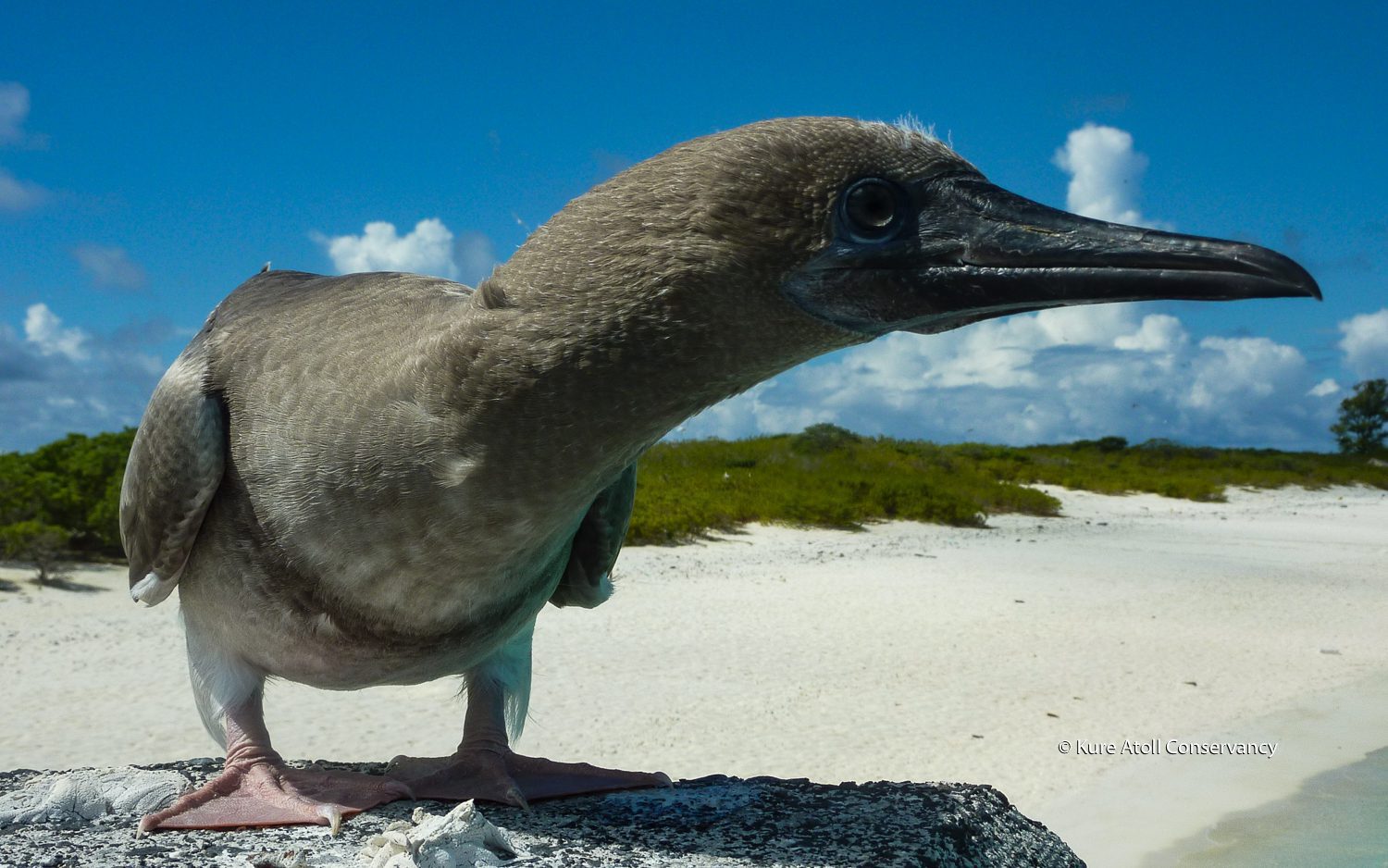
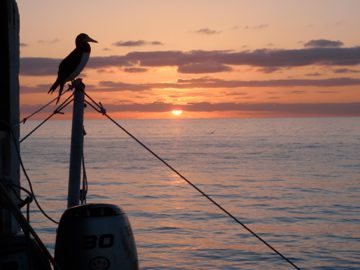
There are four brown booby subspecies. They have a pantropical distribution. It is a large, striking seabird and of the four brown booby species, there is one that resides in Hawaiʻi. The Hawaiian name, ʻā, is the same name shared with other Hawaiian booby congeners–the Masked Booby and the Red-footed Booby–due to their similar body characteristics such as beak, feet, tail, and relative size.
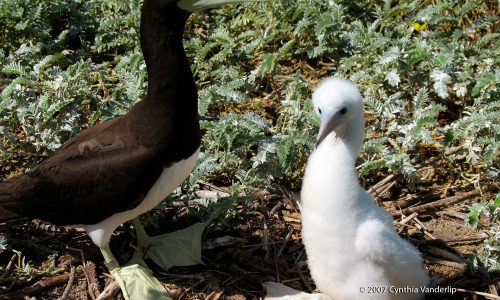
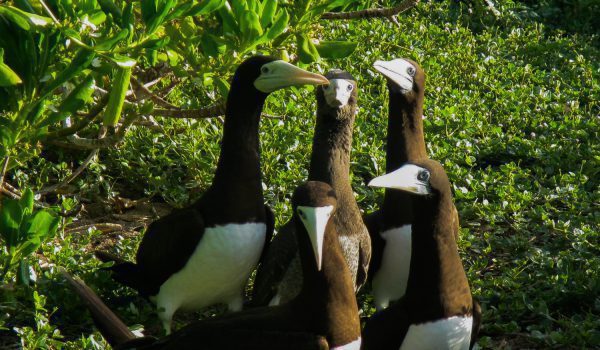
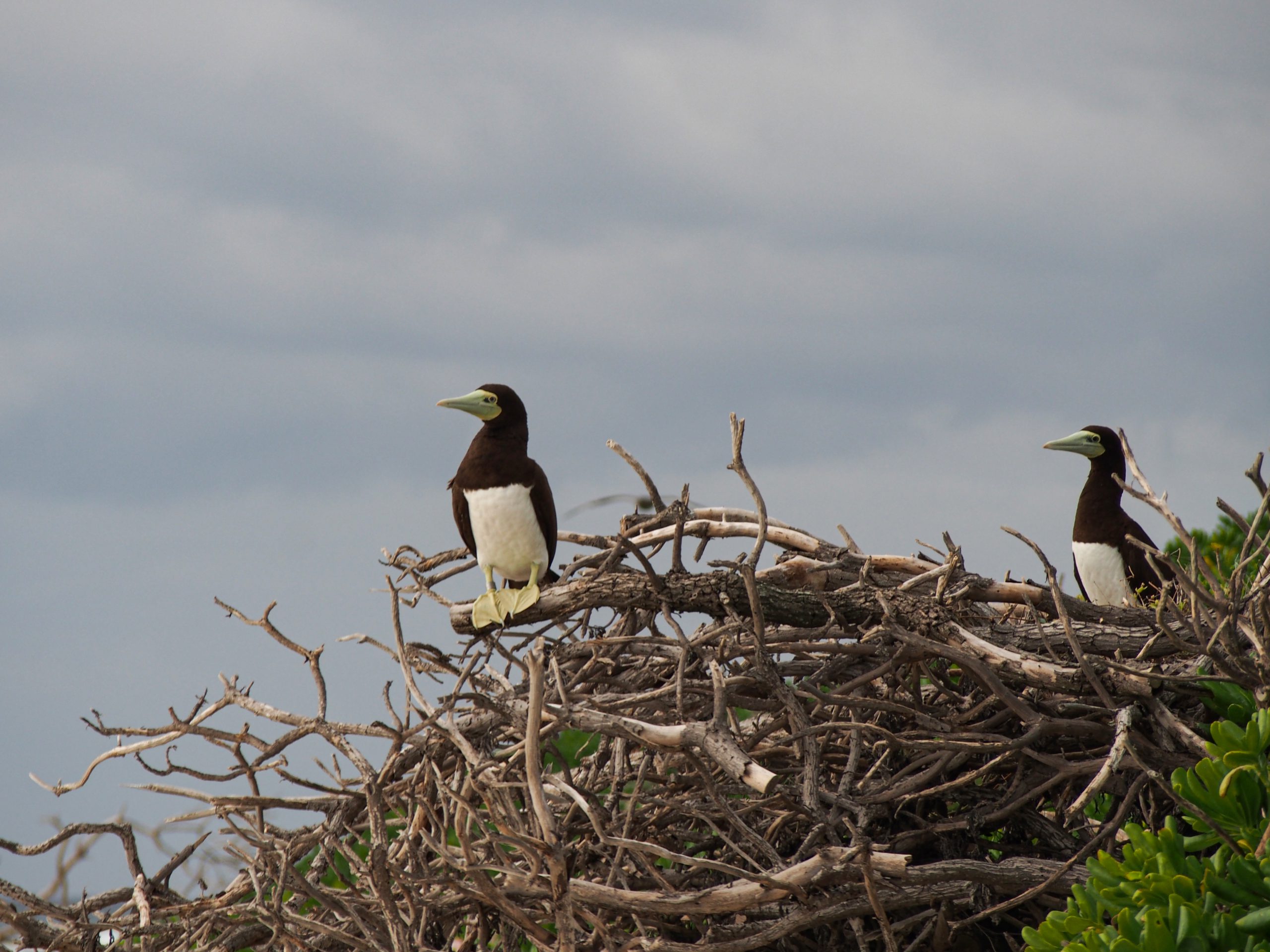
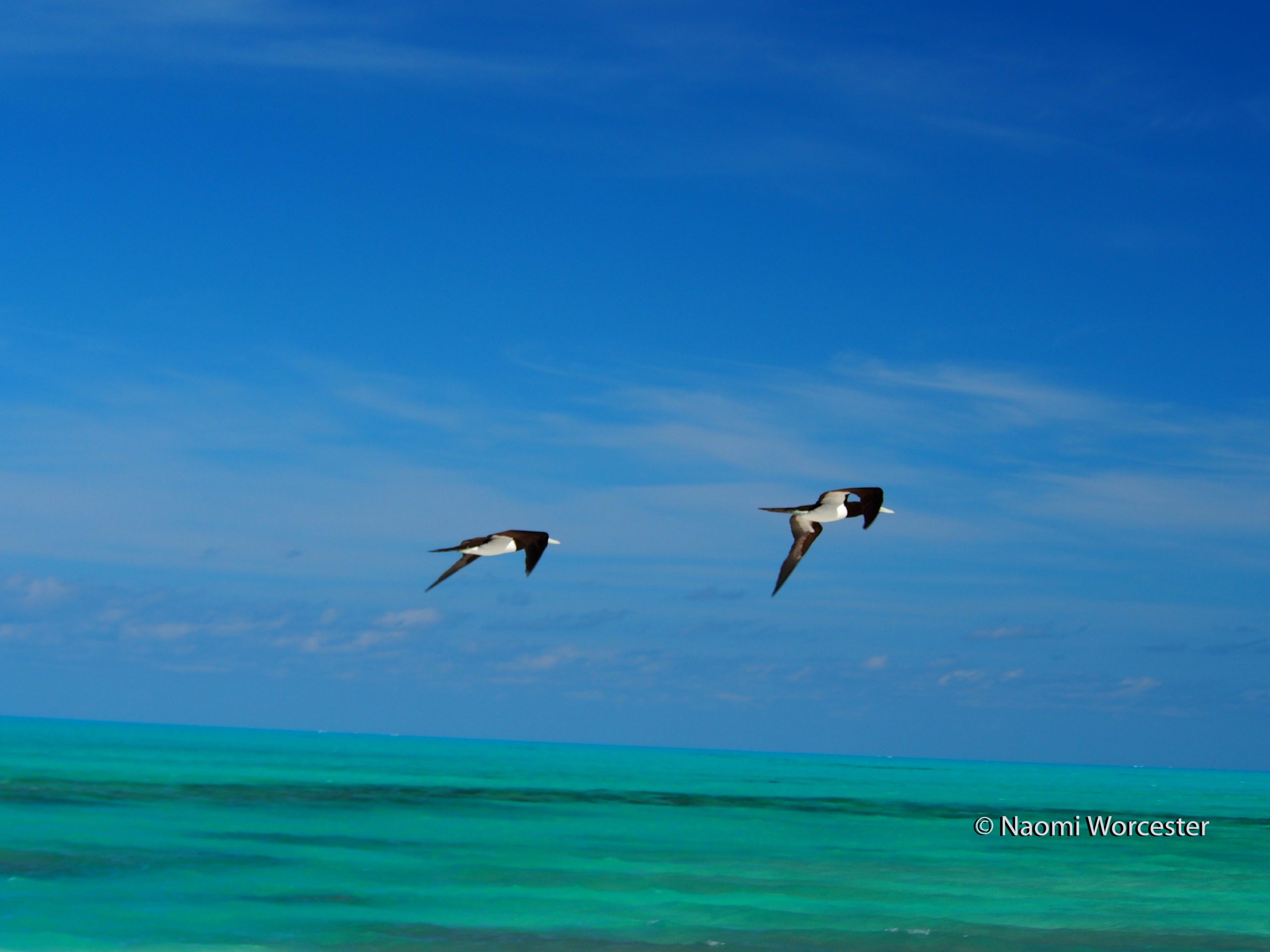
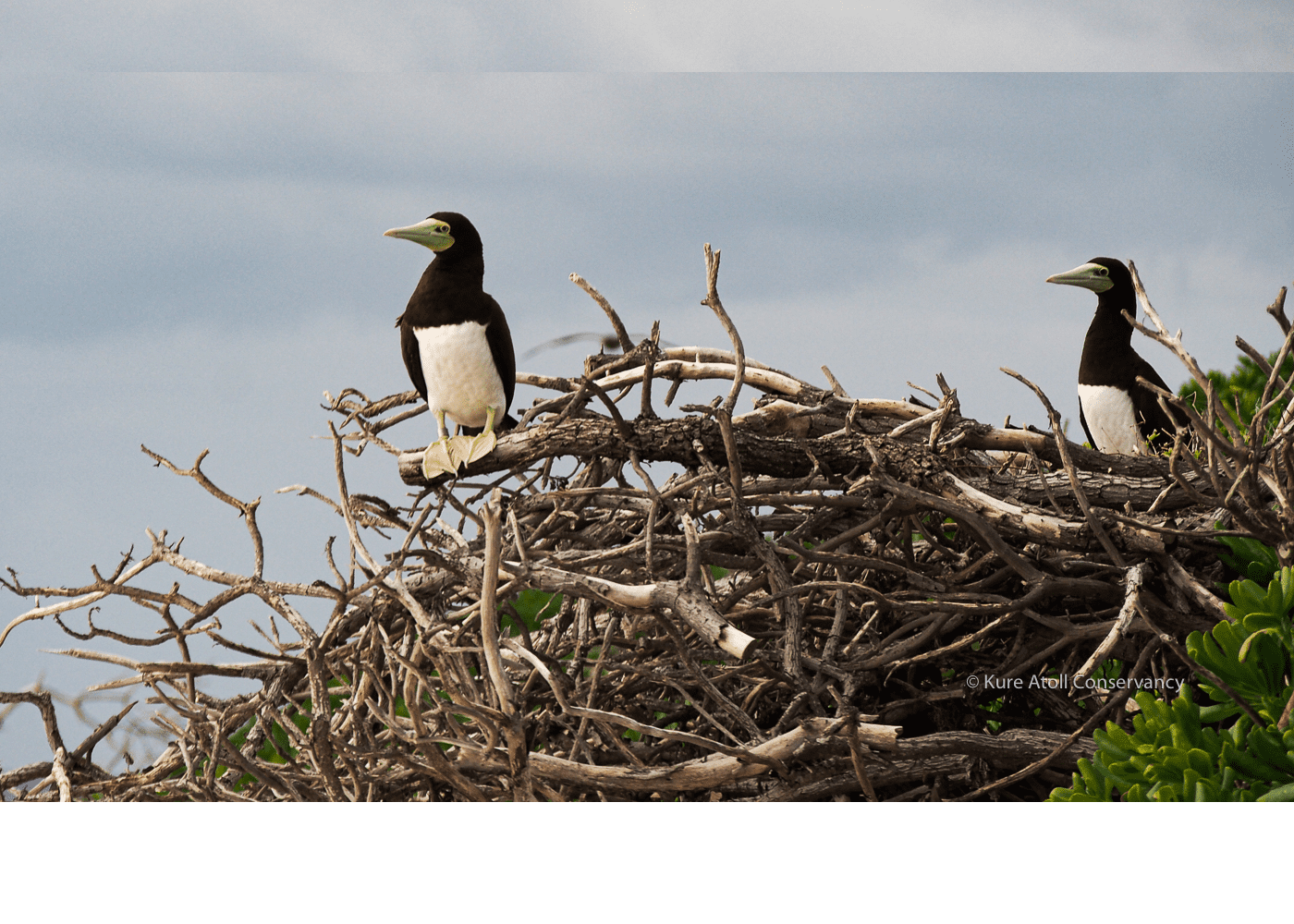
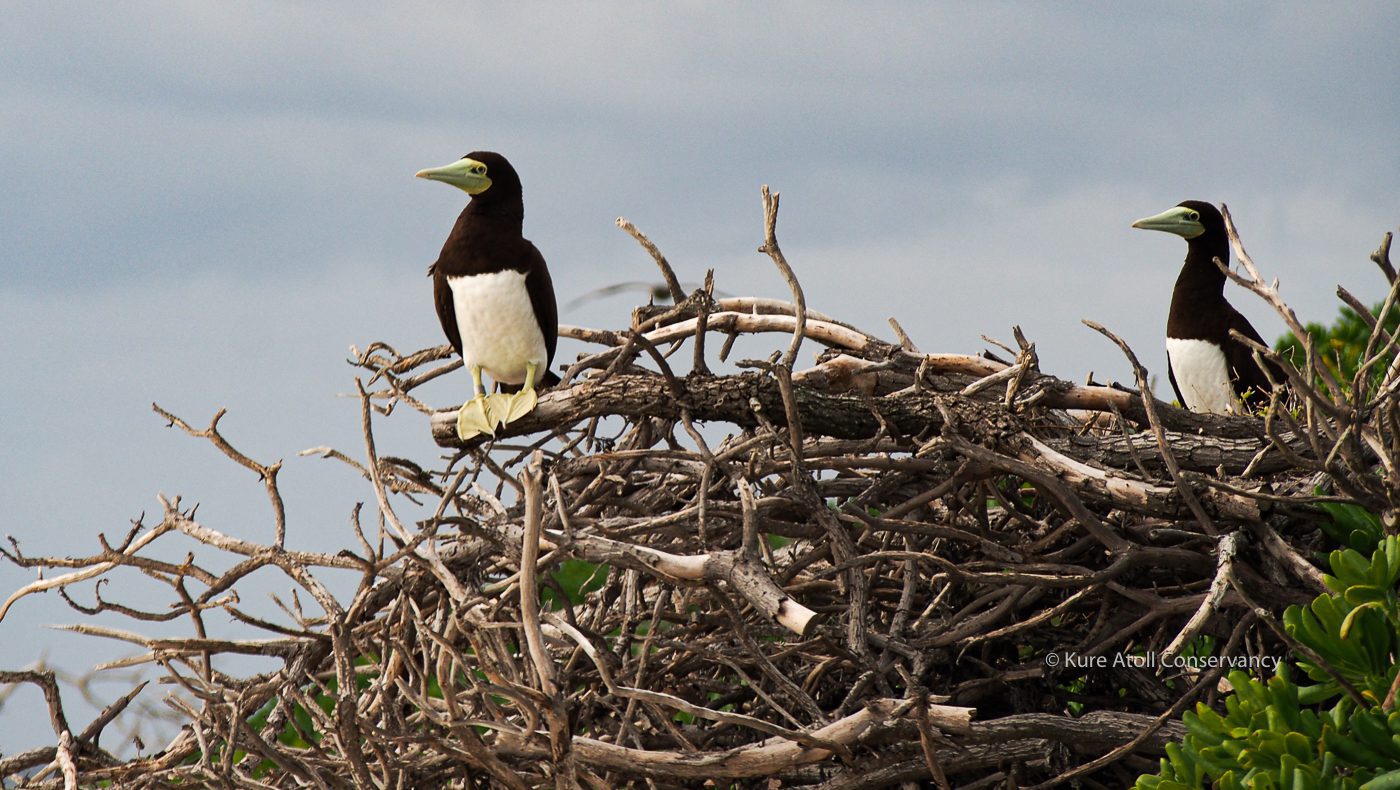
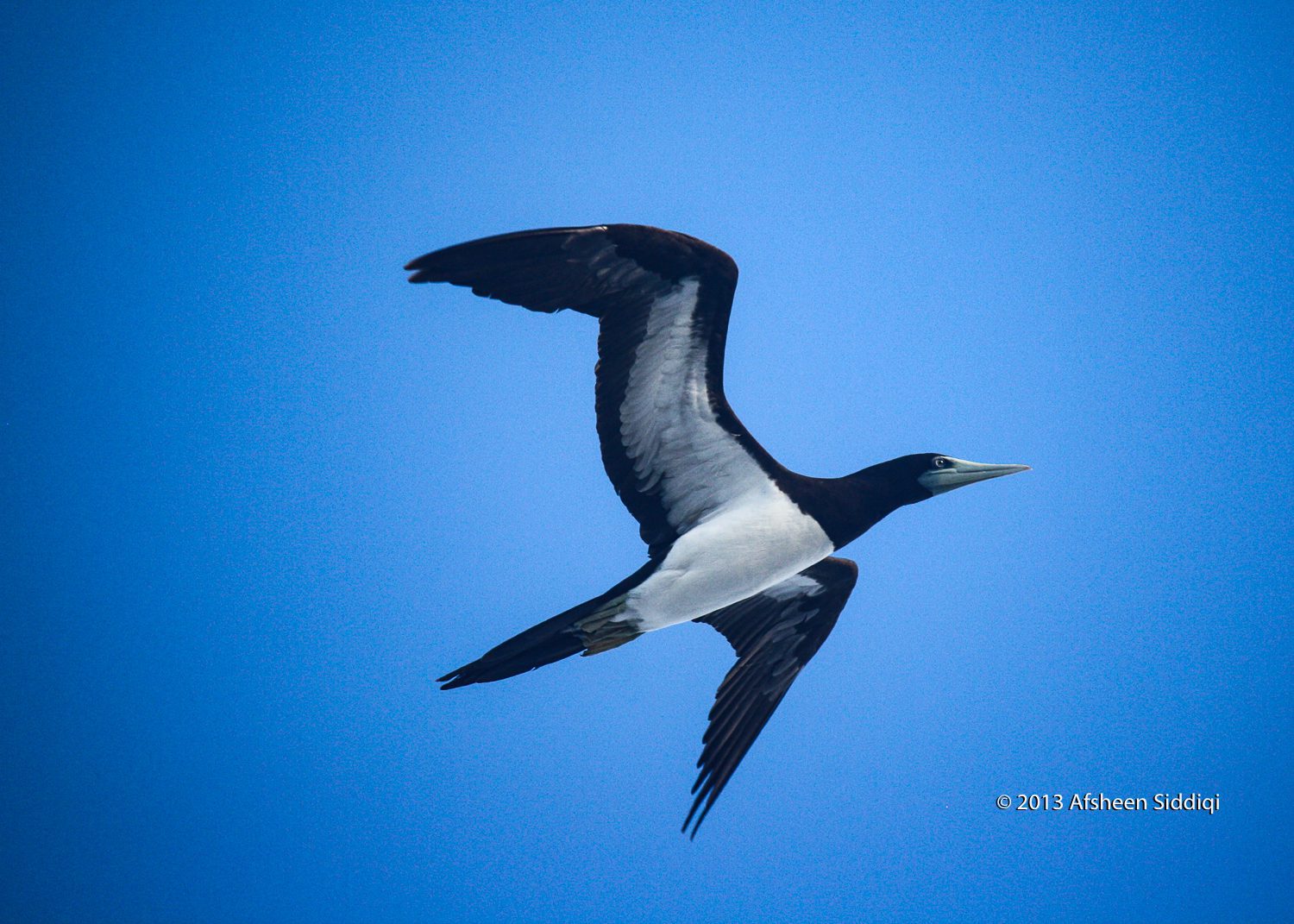
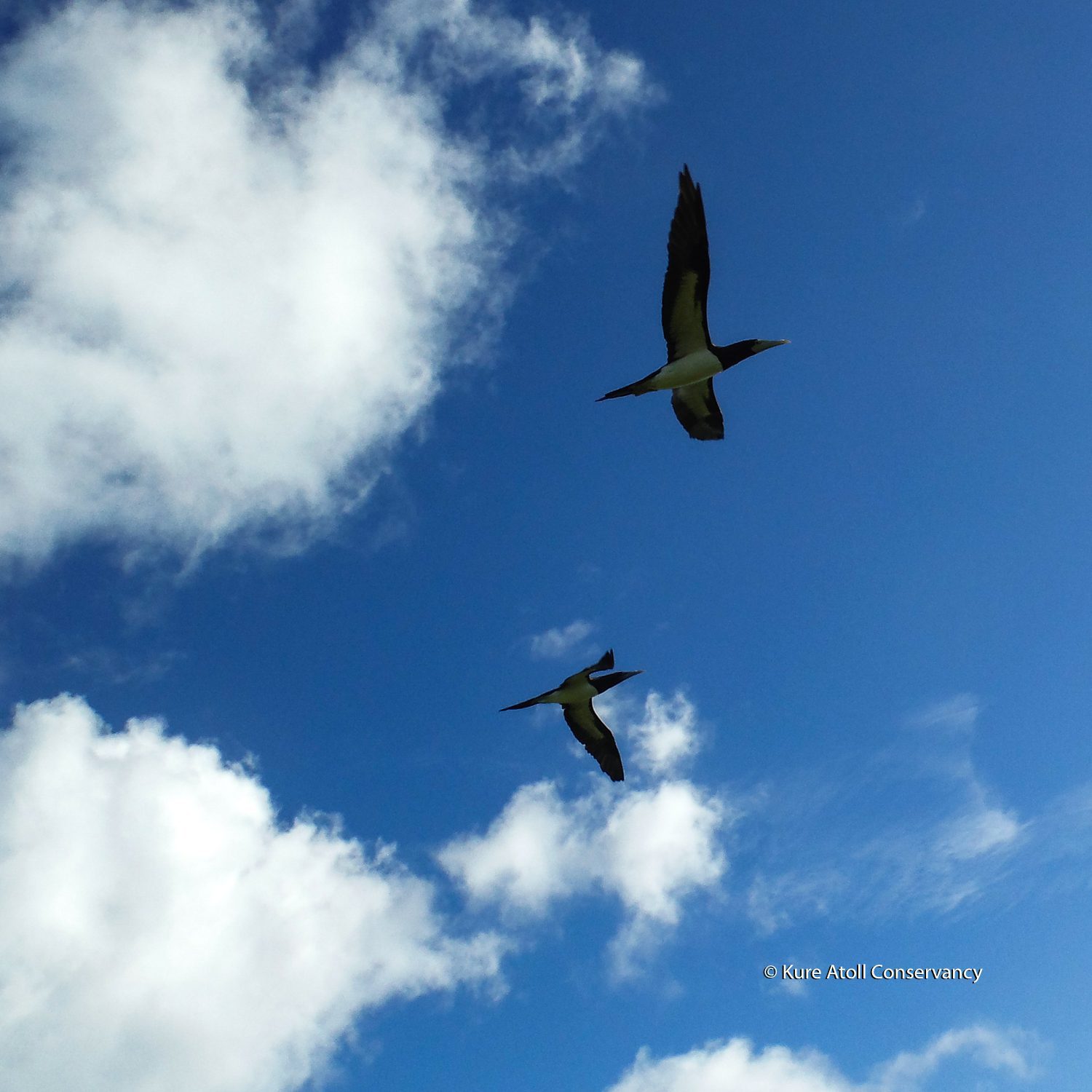
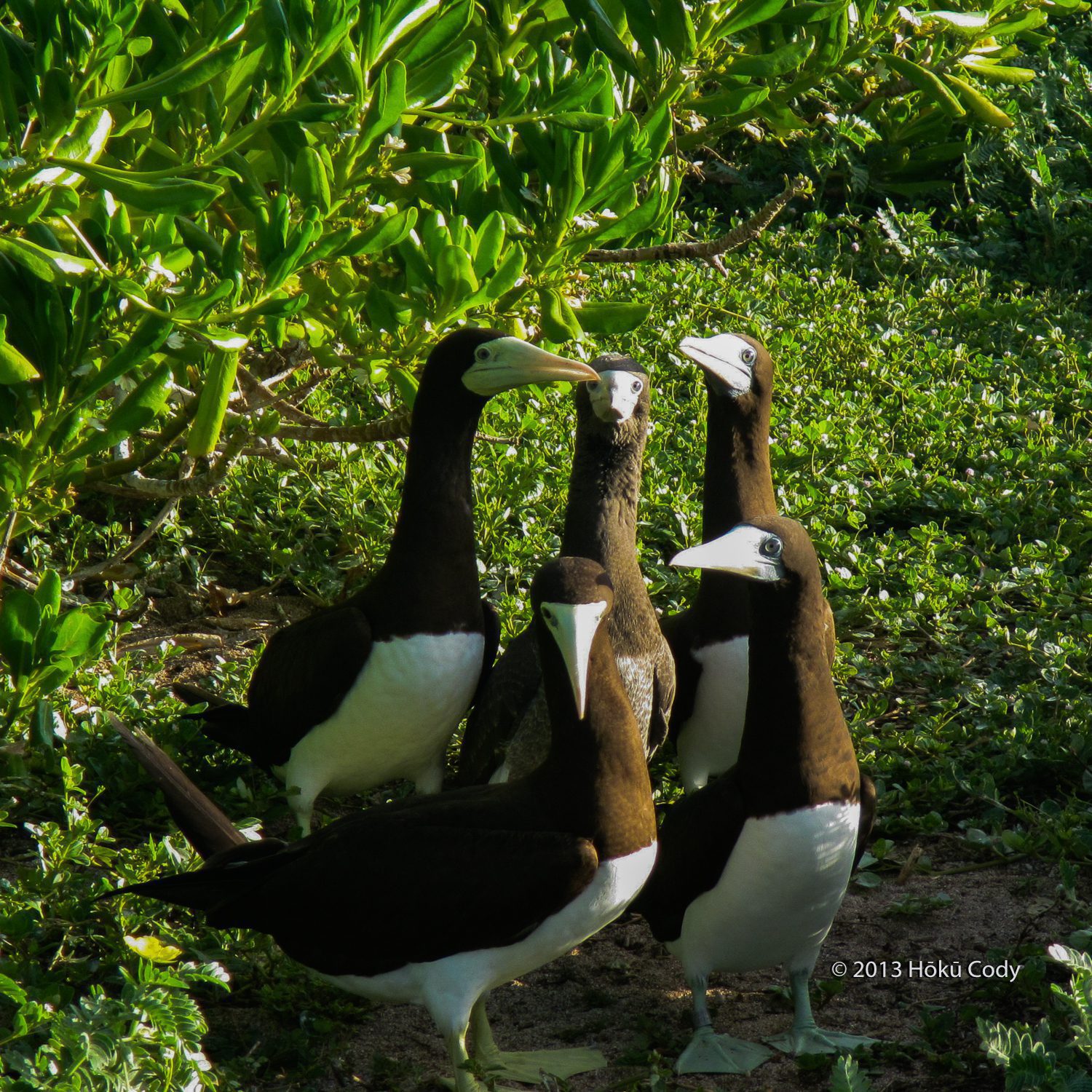
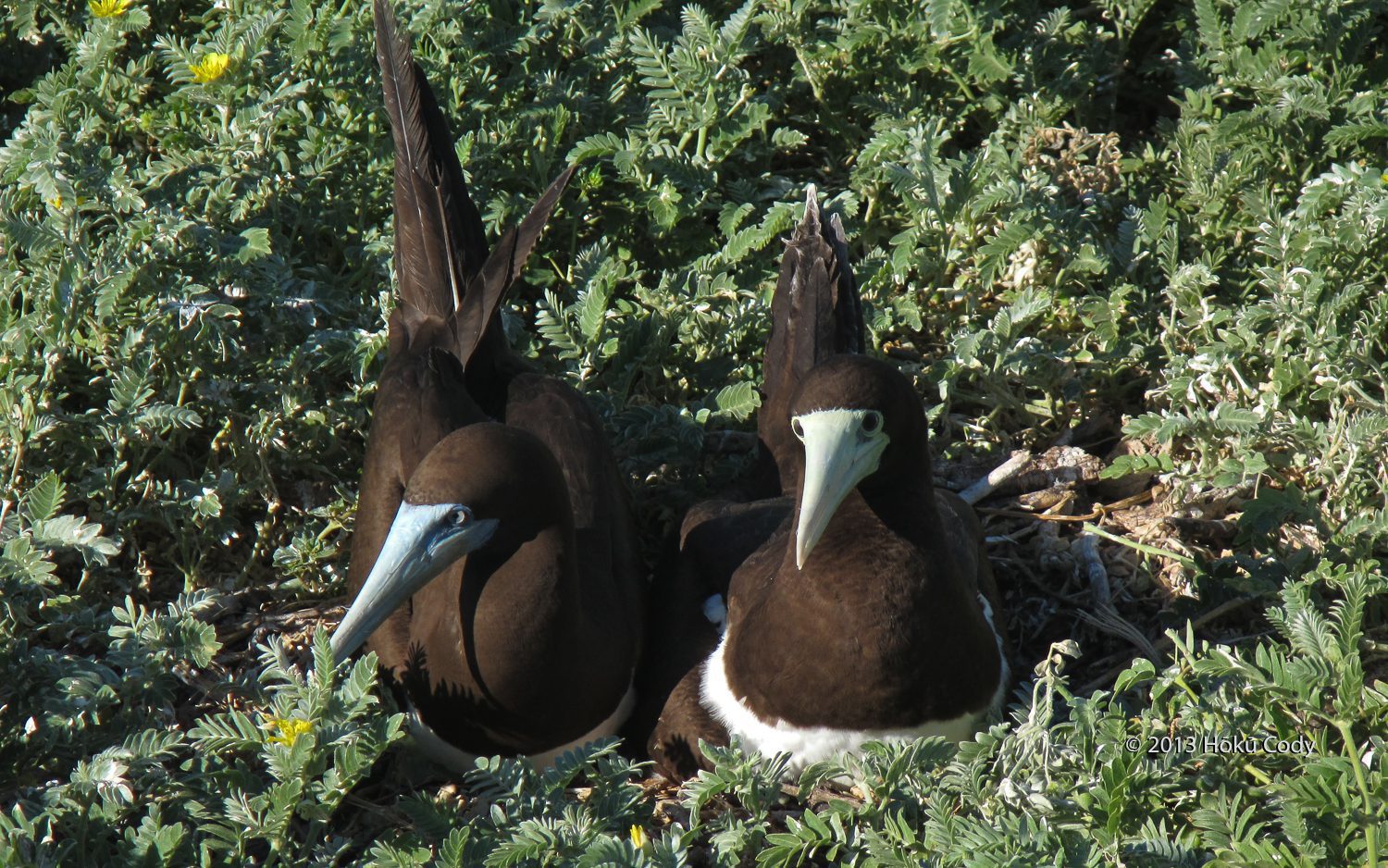
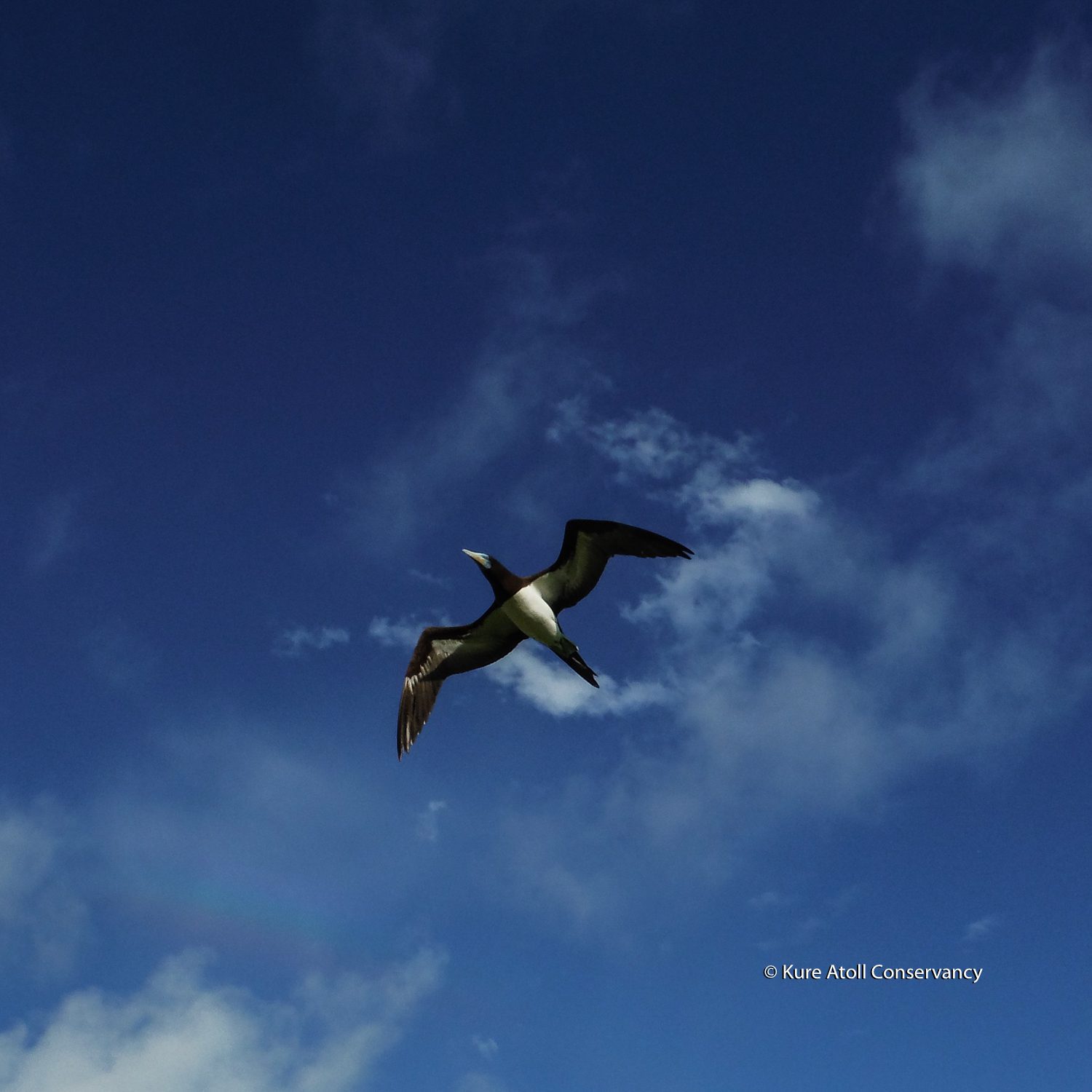
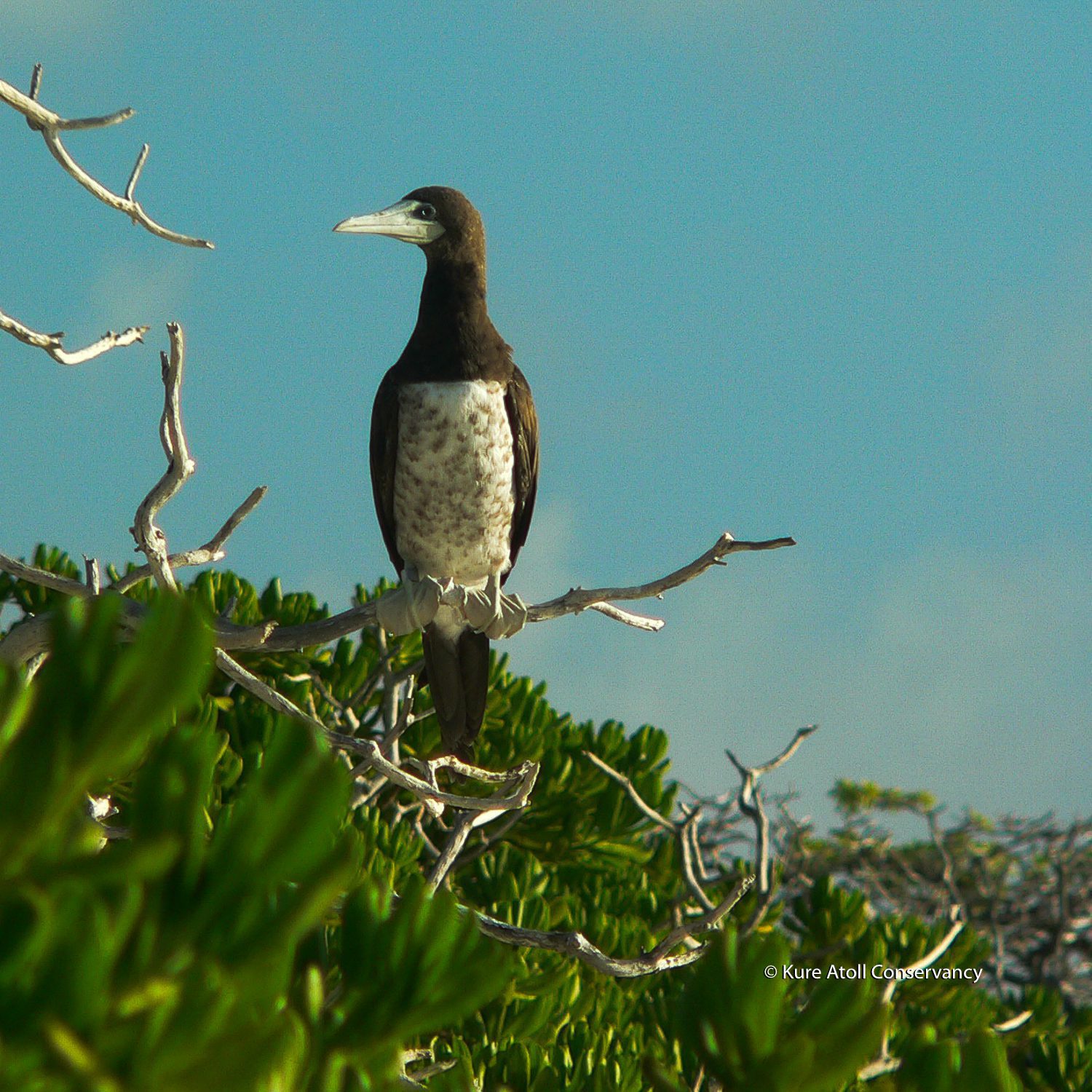
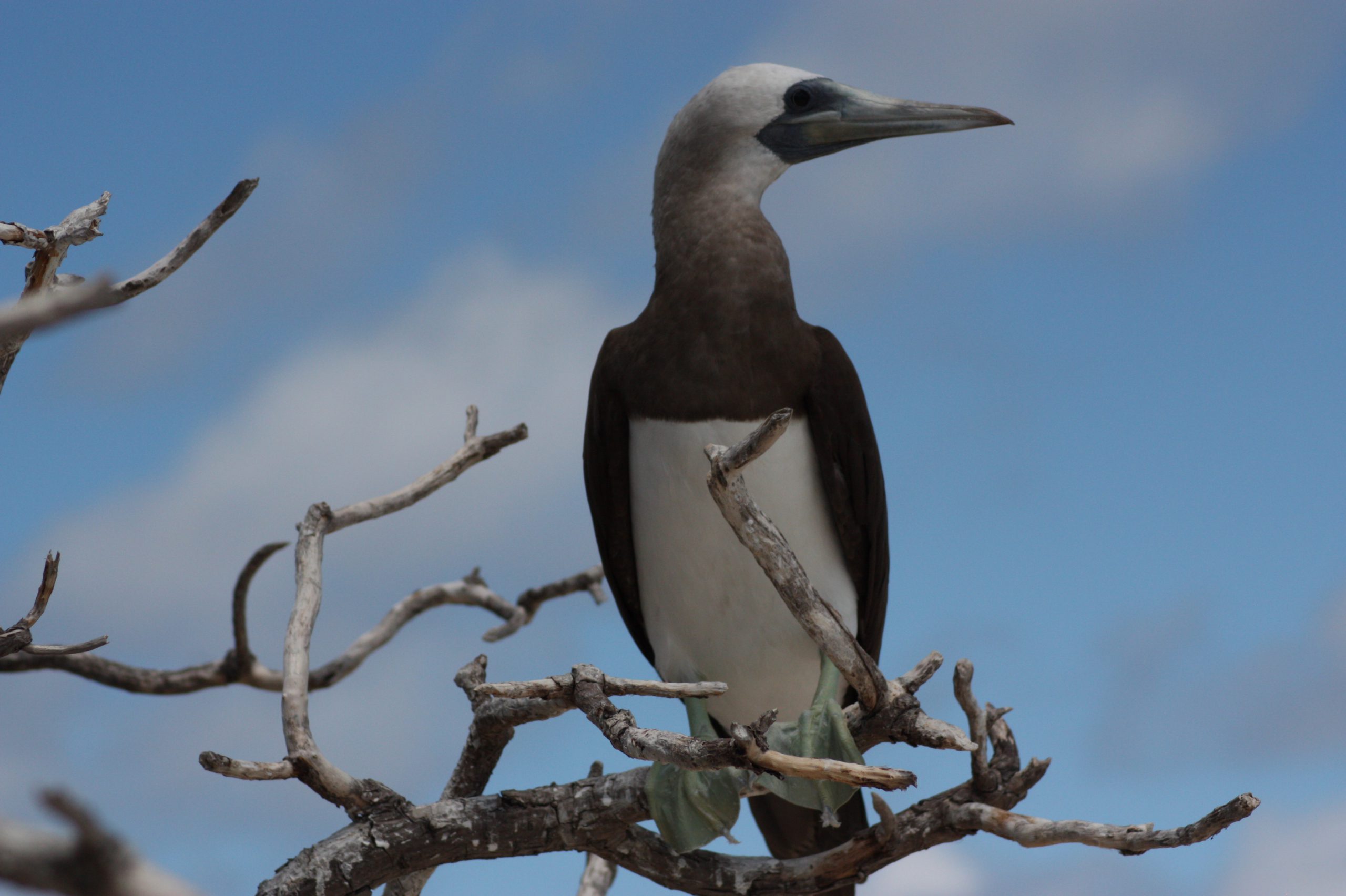
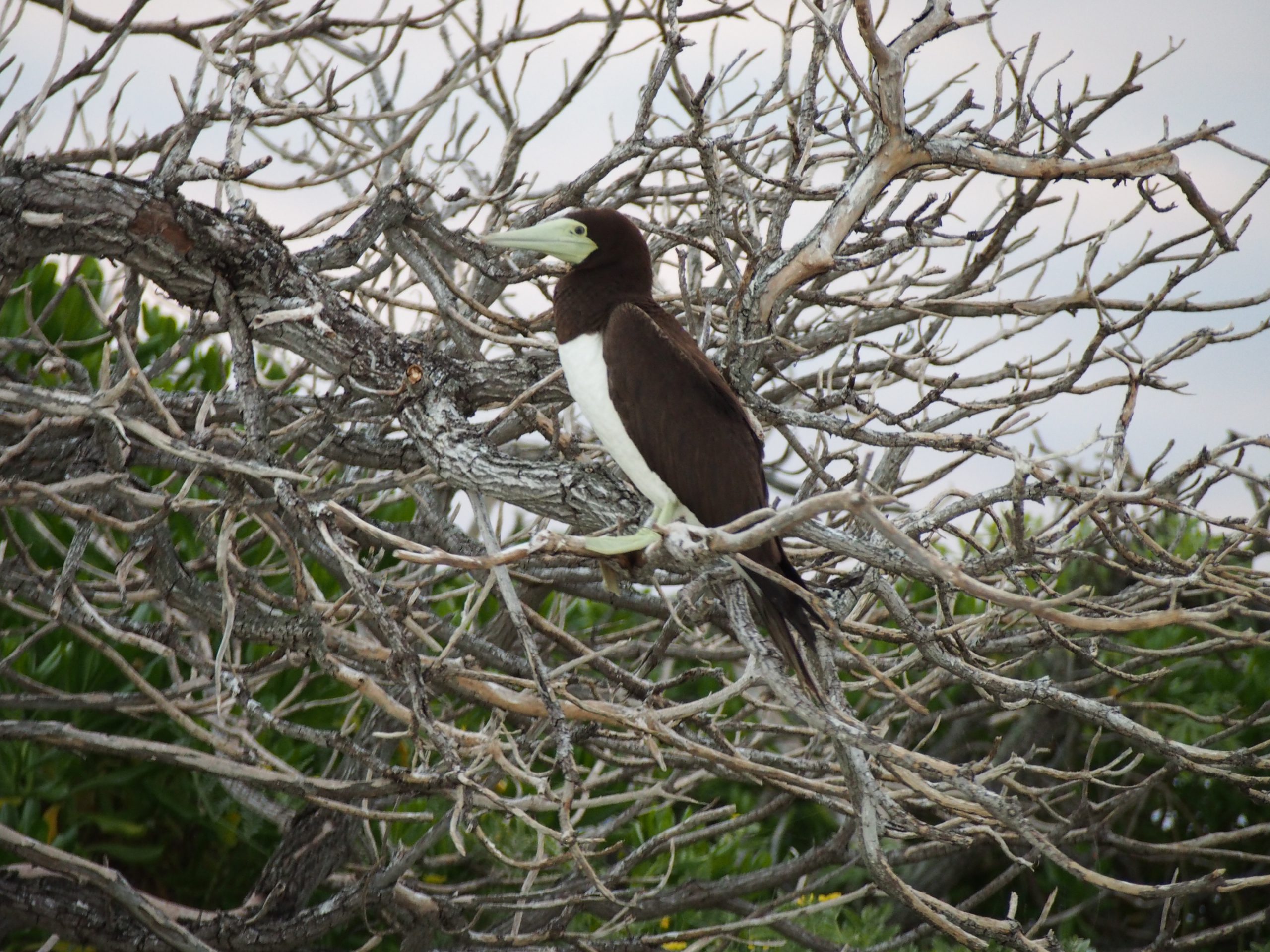
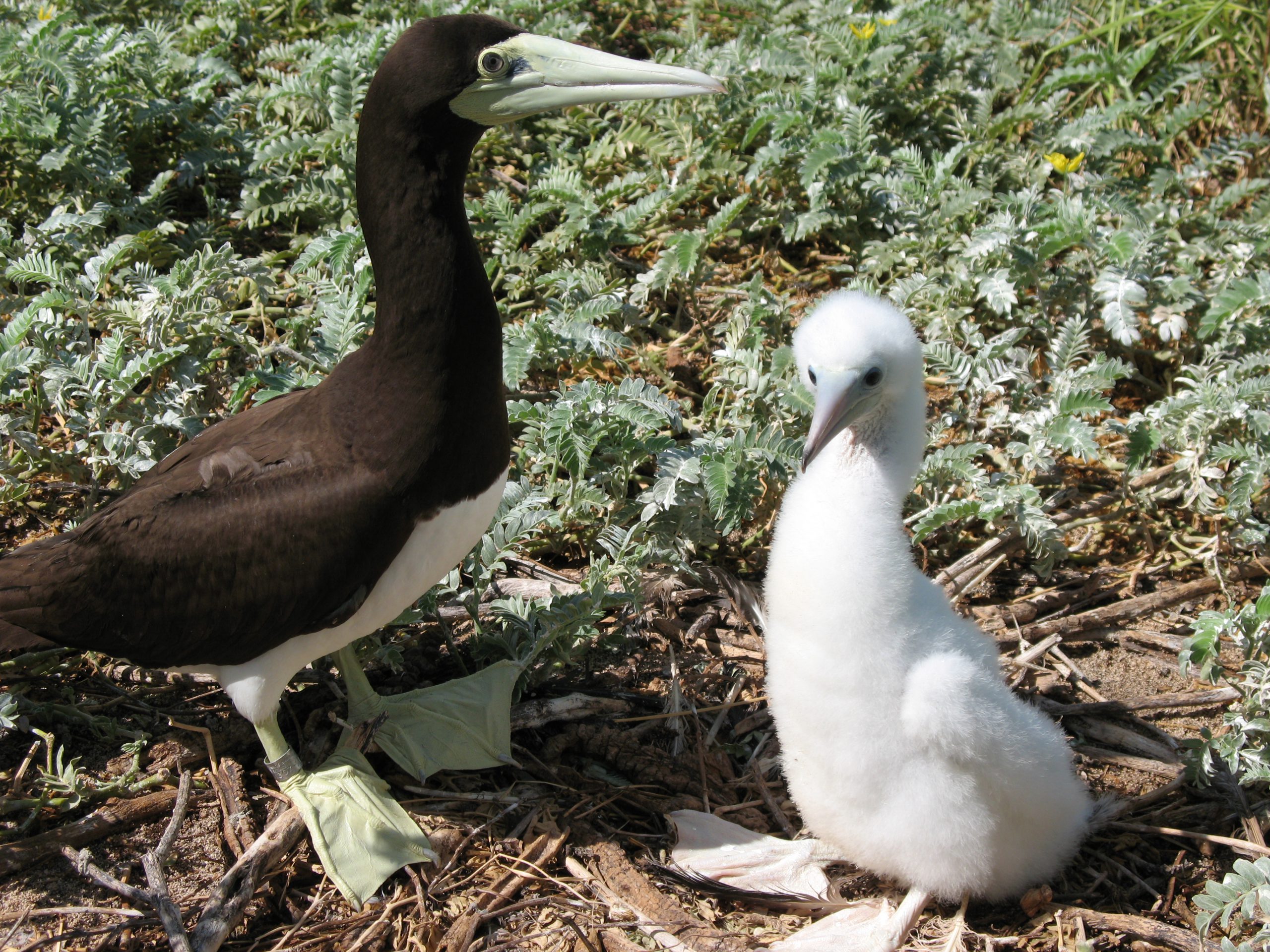
Individuals have long pointed wings and a relatively short, wedge-shaped tail. Adult males and females are overall dark brown with a white belly and underwings along with a sharp demarcation across the lower breast between the white belly and brown of their neck. They also have a large bill with yellow legs and feet for females, and grayish-green in males; females are larger than males.
Brown booby generally forage in nearshore waters and captures prey by plunge-diving from 50 meters above the water, usually remaining underwater for about half a minute. While some are observed foraging alone, most forage in large, mixed-species flocks associated with schools of large predatory fish that drive prey species to the surface. Their diet is comprised of flying fish, squid, mackerel scad, juvenile goatfish, and anchovy.
Most return to their natal colony to breed and usually nest in small colonies of tens of hundreds of pairs. As one of the only two ground-nesting booby species—the other is the Masked Booby (Sula dactylatra)—it is the only one that builds a nest as the construction is an important part of courtship. Nests are constructed from whatever is available including branches, seabird bones, and human debris.
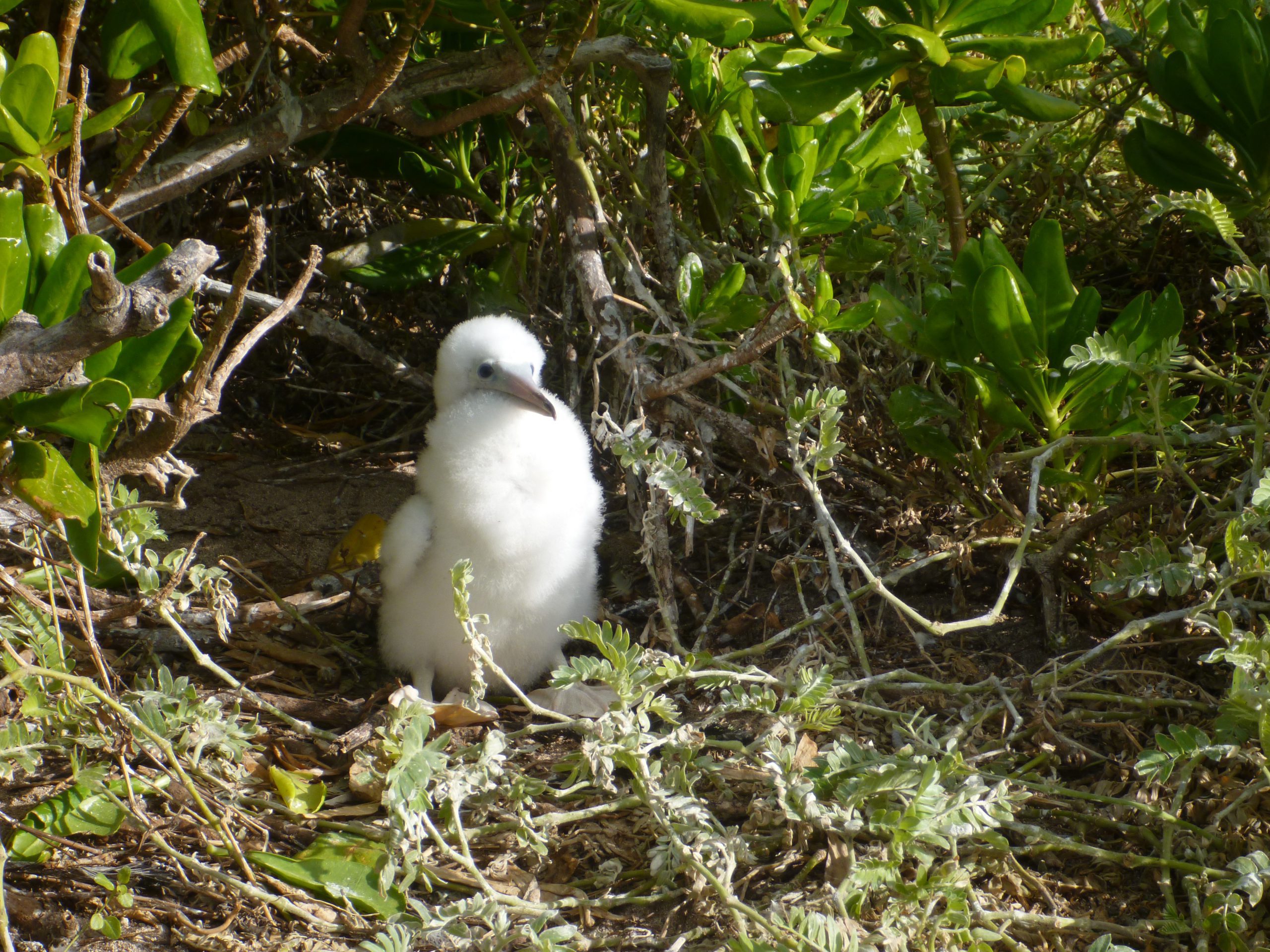
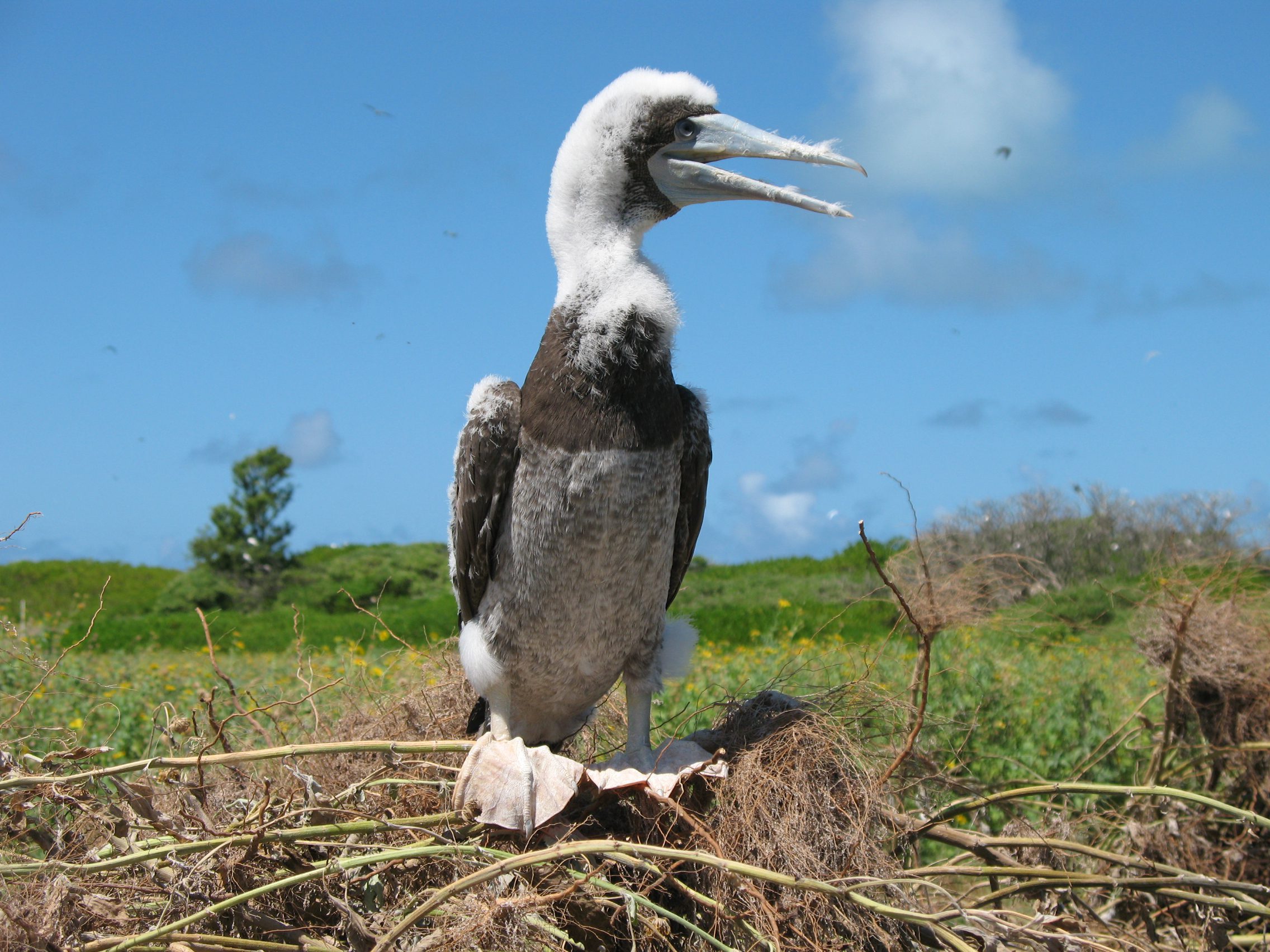
Contrary to the Red-Footed Booby nesting, both the Masked Booby and Brown Booby typically lay two eggs per breeding season. The eggs hatch asynchronously, and the first chick to hatch usually pushes the other sibling out of the nest. Peak egg laying occurs between March and May and chicks fledge by September. Both parents incubate eggs and brood and feed chicks. Adults continue to feed young up to 37 weeks after fledging. Birds first breed at four to five years of age and the oldest known individual was 26 years old.
‘Ā (brown booby) are residents of NWHI as well as on the offshore isles of the main Hawaiian Islands such as, for example, Moku Manu, Lehua and possibly on the island of O‘ahu on the cliffs of Ulupa‘u Head at the Kāne‘ohe Bay Marine Corps Base.
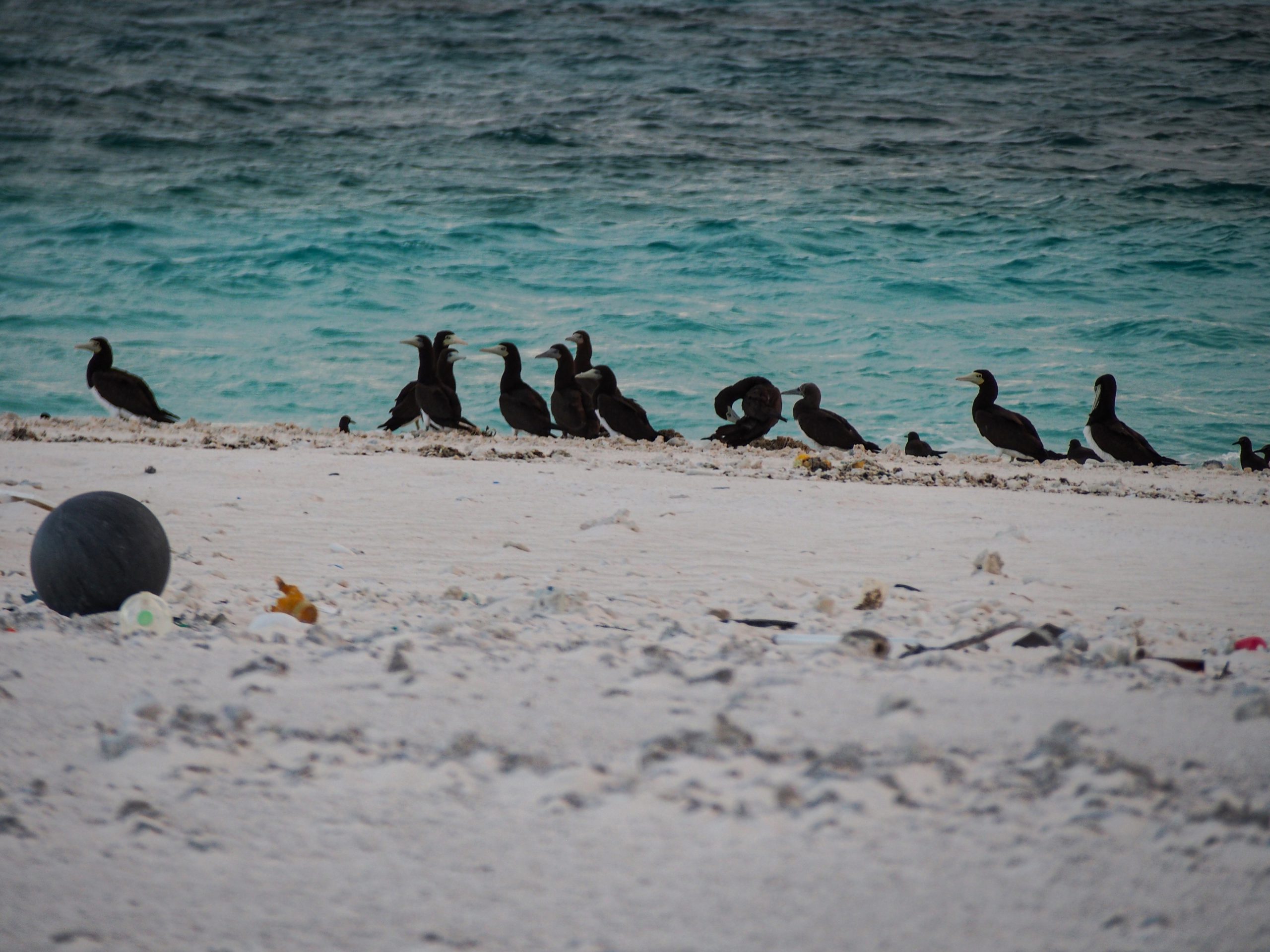
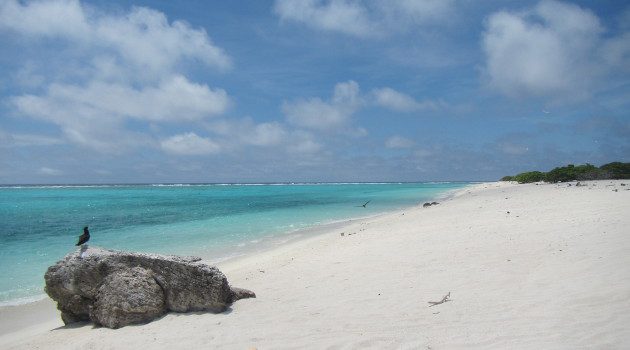
On Kure, they can usually be found on the interior sections of the atoll where there is open ground and sometimes near shrubs for shading.
Historically, wanton killing for feathers (i.e., millinery trade) greatly reduced populations. Populations extirpated from Johnston, Wake, and Marcus islands by Japanese feather hunters at the turn of the last century are only recently being recolonized. Untold numbers were killed as a result of military activities in the Pacific during World War II. Between 1954 and 1964, 54,000 albatross were killed on Midway to reduce the risk of collisions with aircraft. In 1909, 300,000 birds were killed on Laysan Island. Prior to banning drift net fisheries in 1993, thousands were killed annually. In the 1990s, longline fisheries killed thousands annually.
Like all seabirds, adults and nests are susceptible to mammal predation by pigs (Sus scrofa), rats (Rattus spp.), feral cats (Felis silvestris), and the small Indian mongoose (Herpestes auropunctatus).
Like all seabirds, adults and nests are susceptible to mammal predation by pigs (Sus scrofa), rats (Rattus spp.), feral cats (Felis silvestris), and the small Indian mongoose (Herpestes auropunctatus).
Non-native plants, specifically golden crown-beard (Verbesina encelioides), degrades nesting habitat and may limit nesting density, reduce productivity, and provide habitat for mosquitoes (Culex spp.) that carry avian pox. Introduced big-headed ants (Pheidole megacephala) at Kure may facilitate the destruction of native vegetation by a non-native scale insect.
Like all seabirds, adults and nests are susceptible to mammal predation by pigs (Sus scrofa), rats (Rattus spp.), feral cats (Felis silvestris), and the small Indian mongoose (Herpestes auropunctatus).
Like all seabirds, adults and nests are susceptible to mammal predation by pigs (Sus scrofa), rats (Rattus spp.), feral cats (Felis silvestris), and the small Indian mongoose (Herpestes auropunctatus).
Continue surveys of population and distribution in known and likely habitats.
The management goals are important to Pacific seabird conservation: maintain, protect, and enhance habitat; eradicate or control non-natives; minimize bycatch and other negative effects of fishing; improve the effectiveness of oil spill response efforts; identify contaminants and hazardous substances; and minimize the effects of powerlines, towers, wind turbines and lights (USFWS 2005). The goal of these management actions is not only to protect seabird populations and their breeding colonies, but also to reestablish former breeding colonies thereby reducing the risk of extinction. Past actions have included efforts to mitigate the impact of longline fisheries and predator control.
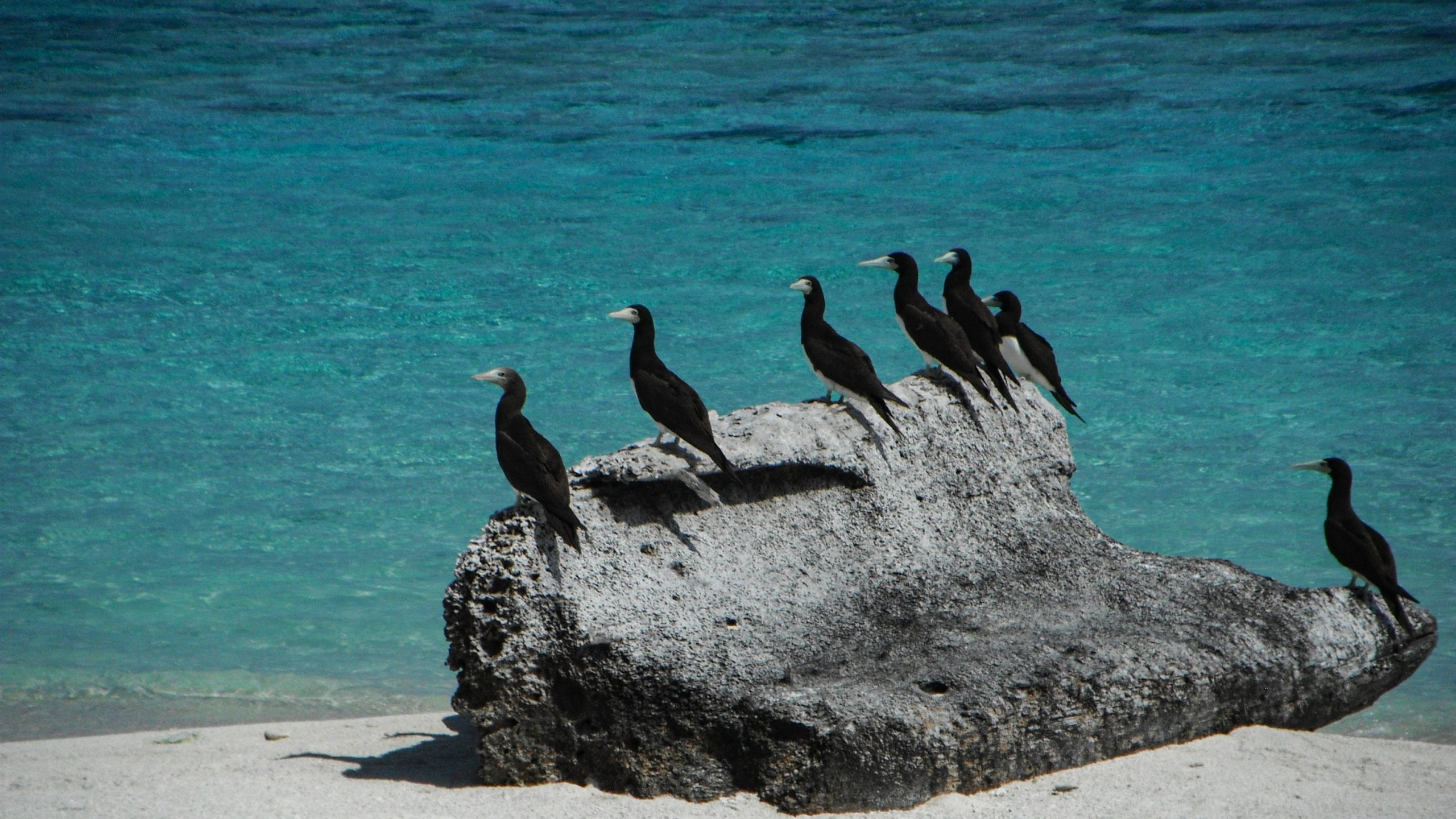
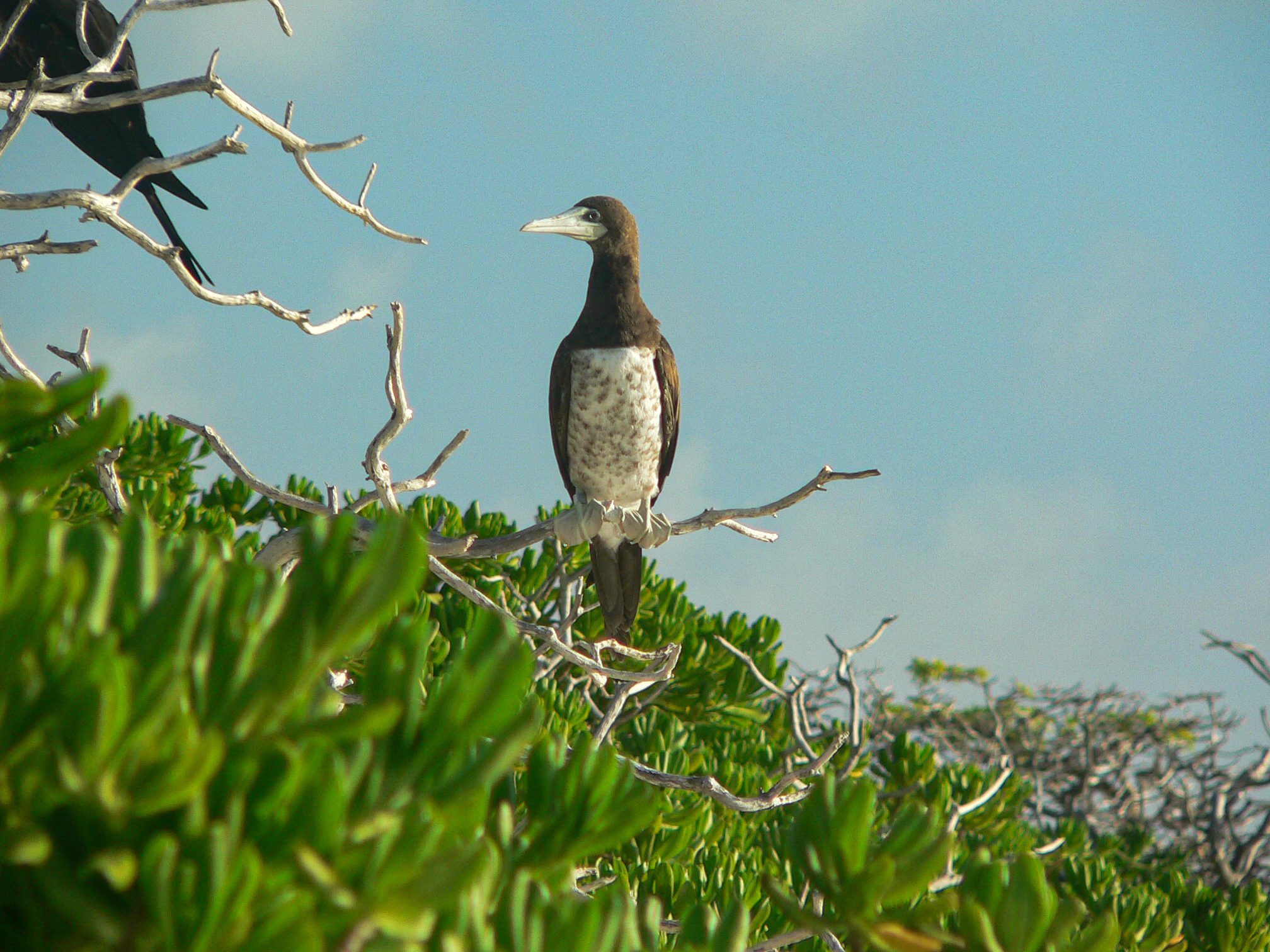
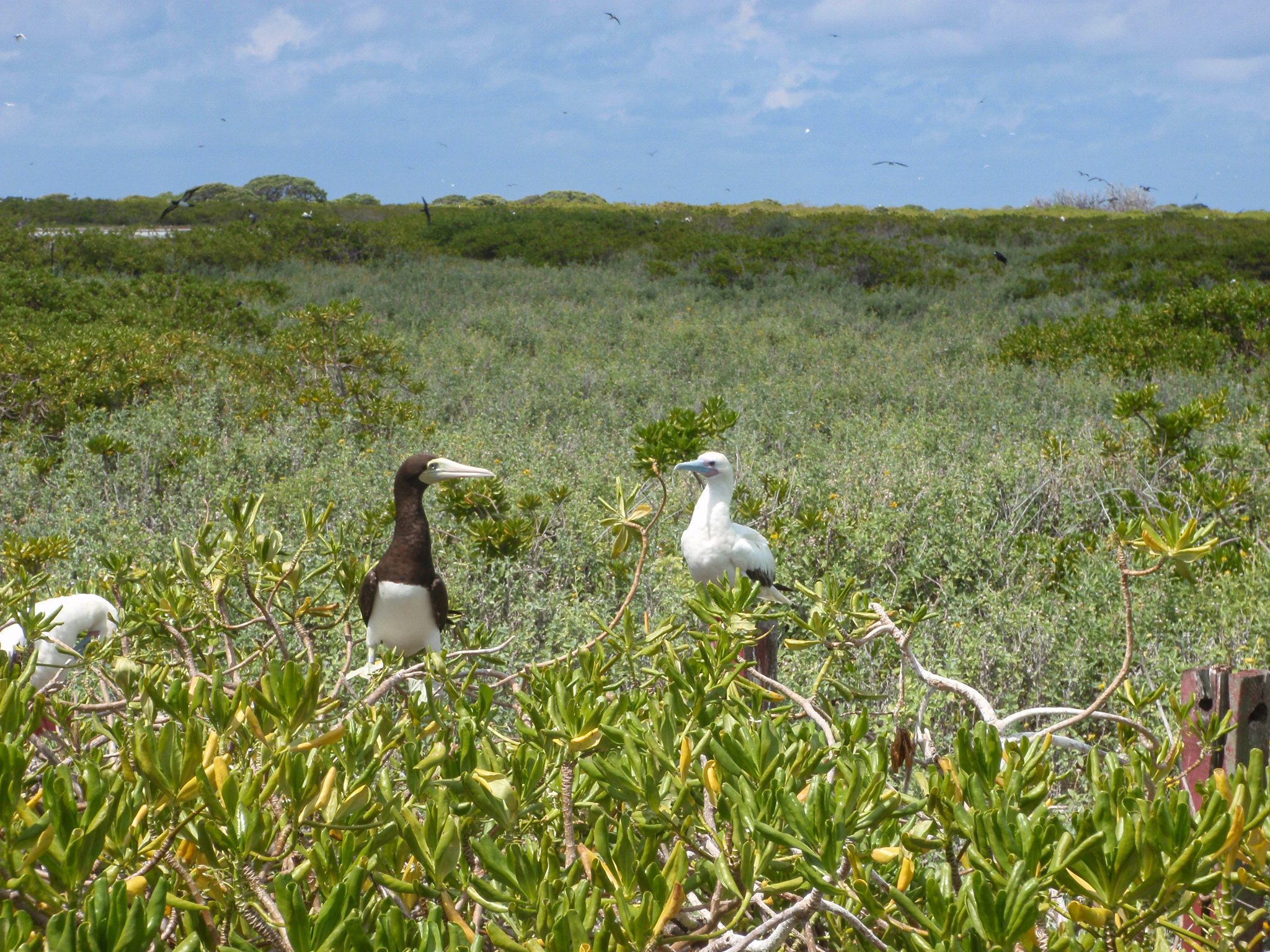


ʻĀ are revered through profound kinship in meaningful practices of traditional Hawaiian lifestyles. Many of those understandings are being re-awakened through the community, the Office of Hawaiian Affairs, and the Kiamanu Project.
1. nvi. Fiery, burning; fire; to burn, blaze. Fig., to glitter or sparkle, as a gem; to burn, as with jealousy or anger. ʻĀ akaaka, to shine brightly, as stars. ʻĀ ke kaimana, the diamond sparkles. hoʻā To set on fire, burn, ignite; to light, as a lamp. Fig., to incite, arouse. Ua hoʻā ʻia kona inaina, his anger was aroused. Hoʻā imu, to light an oven; one who lights an oven. (PPN kakaha, PNP kaa.)
2. nvi. Aa lava, or lava rock, as distinguished from smooth unbroken pāhoehoe lava (formerly preceded by ke); to flow, as aa lava.
3. Same as ʻaʻa 1, to dare. ʻAʻole ʻoia i ʻā e noho, he did not dare to stay.
4. n. Red-footed booby bird (Sula sula rubripes), brown booby (Sula leucogaster plotus), masked or blue-faced booby (Sula dactylatra personata); all indigenous and also breeding elsewhere. Also ʻaʻa. Legendary birds believed to have taken the shape of this bird are ʻā ʻaia, ʻā-ʻai-ʻanuhe-a-Kāne and ʻā-ʻaia-nui-nū-keu; ʻā by some were considered ʻaumākua. See also Kep. 33.